

If you want to get rid of fruit flies, the answer is simple to say and a little harder to do: find and remove what they are breeding in. Killing the adults you see does almost nothing on its own, because those flies have already laid eggs somewhere moist. Clear the breeding source, and the flies stop coming.
After more than five years as a licensed technician here in the DMV, I can tell you the kitchen fruit fly call is one of the most common we get, especially in late summer and fall. The good news is that most homeowners can win this one themselves. This guide walks you through exactly how, in the order that actually works.
Why You Have Fruit Flies
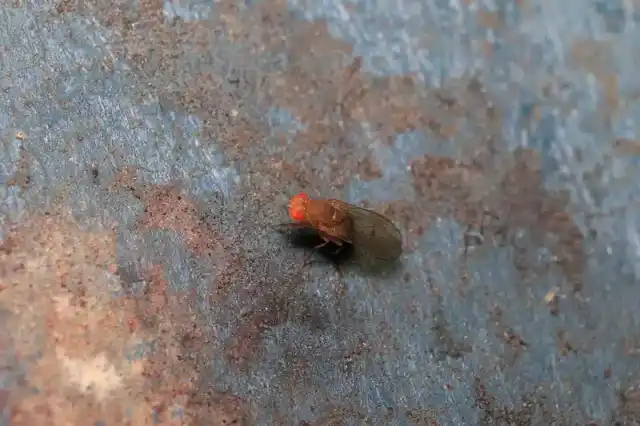
Fruit flies show up because your kitchen is giving them exactly what they need: sugary, fermenting organic matter and a little moisture. The common fruit fly is Drosophila melanogaster, a tan fly about 1/8 inch long with bright red eyes. They are drawn to overripe fruit and vegetables, plus fermenting liquids. According to the University of Maryland Extension, wine, beer, fruit juice, and vinegar all attract them too.
The reason they multiply so fast is biology. A single female may deposit up to 500 eggs, notes the University of Georgia Extension, and she lays them right on the surface of fermenting food. Those eggs hatch quickly and the whole cycle repeats within days. So a couple of flies on Monday can become a cloud by the weekend.
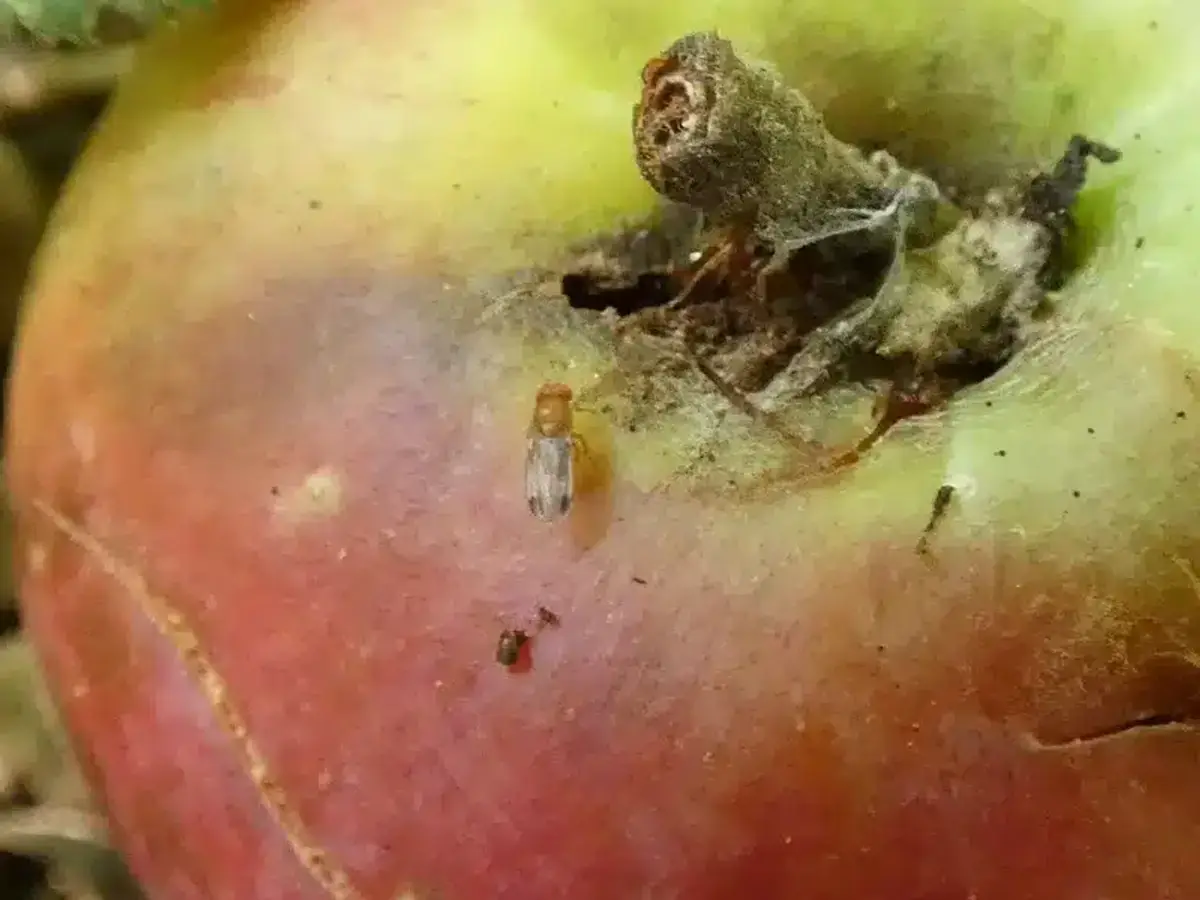
Here is the part people miss. Fruit is only the obvious source. Fruit flies also breed in drains, garbage disposals, recycling bins, empty bottles and cans, damp mops, and even spilled liquid under an appliance. All they really need is a thin film of fermenting material to lay eggs in. That is why you can toss the bananas and still have flies the next morning.
Start Here: Find the Breeding Source
Before you buy a single product, play detective. The whole battle is won or lost on finding where the flies are actually reproducing. If you skip this, no trap or spray will hold.
Walk your kitchen and check every one of these:
- Fruit bowls and produce on the counter, plus onions and potatoes in a bin
- The trash and recycling, including the residue at the bottom
- Drains and the garbage disposal, which trap a greasy film flies love
- Empty bottles and cans waiting to be rinsed
- Damp mops, sponges, and dish towels left balled up
- Under and behind appliances, where a spill can ferment out of sight
Once you find and remove the source, you have basically already won. As the University of Maryland Extension puts it plainly, the primary control for fruit flies is sanitation. Everything else is cleanup.
How to Get Rid of Fruit Flies Step by Step
Once you know where they are coming from, work through these steps in order. Do all of them, not just the trap. The trap is the last step for a reason.
Toss or refrigerate produce. Throw out anything overripe, bruised, or fermenting. Move the rest of your fruit and vegetables into the refrigerator until the problem is gone. This removes the number-one food source in one move.
Empty and rinse. Take out the trash and recycling, then rinse the bins and any bottles or cans before they go back. A little juice or beer residue in the bottom of a can is a full nursery to a fruit fly.
Scrub your drains and disposal. Fruit flies breed in the film inside your pipes. Use a stiff pipe brush to scrub the sides of the drain, run the disposal, and clean around the rubber splash guard, which hides a lot of gunk.
Wipe every surface. Clean counters, the sink, and behind the coffee maker and toaster. Wash out sponges and mops or replace them. You are removing the thin films of moisture and food they can lay eggs in.
Set an apple cider vinegar trap. Now catch the adults still flying. Fill a cup with apple cider vinegar, add one drop of dish soap, cover with plastic wrap, and poke a few tiny holes.
The order matters here. If you set the trap before you remove the source, you will catch a few flies and feel like you are winning, while the breeding site keeps pumping out more. Do the cleaning first, then trap the leftovers.
The Apple Cider Vinegar Trap, Done Right
The vinegar trap is the one DIY tool that genuinely earns its spot. The University of Maryland Extension describes the method well: pour apple cider vinegar into a jar, add a drop of dish soap, cover the top with plastic wrap secured by a rubber band, and poke a tiny hole so flies can enter but not escape.
The dish soap is the key. It breaks the surface tension of the vinegar, so when a fly lands, it sinks instead of skating across the top. Set two or three of these near where you see the most activity.
Just remember what the trap is and is not. It catches adults and helps you see whether your numbers are dropping. It does not remove the breeding source. Treat it as a monitoring and mop-up tool, not the cure.
What About the Drains?
Drains are the source people fight the longest, usually because they attack them the wrong way. The instinct is to pour bleach or boiling water down the pipe. The trouble is that the larvae live in the greasy, gelatinous film clinging to the pipe walls, and a poured liquid mostly runs straight through the center without scrubbing that film away.
The fix is mechanical. Use a stiff pipe brush to physically scrape the residue off the sides of the drain, as the University of Maryland Extension recommends, and keep the drain covered so flies cannot reach the water in the trap. Enzyme drain cleaners that digest the organic buildup can help too, but the brush does the real work.
Is It Really a Fruit Fly? Look-Alikes That Change Your Plan
Before you spend a week cleaning fruit bowls, make sure you actually have fruit flies. Three tiny pests get confused constantly, and each breeds somewhere different, so a wrong ID sends you cleaning the wrong thing.
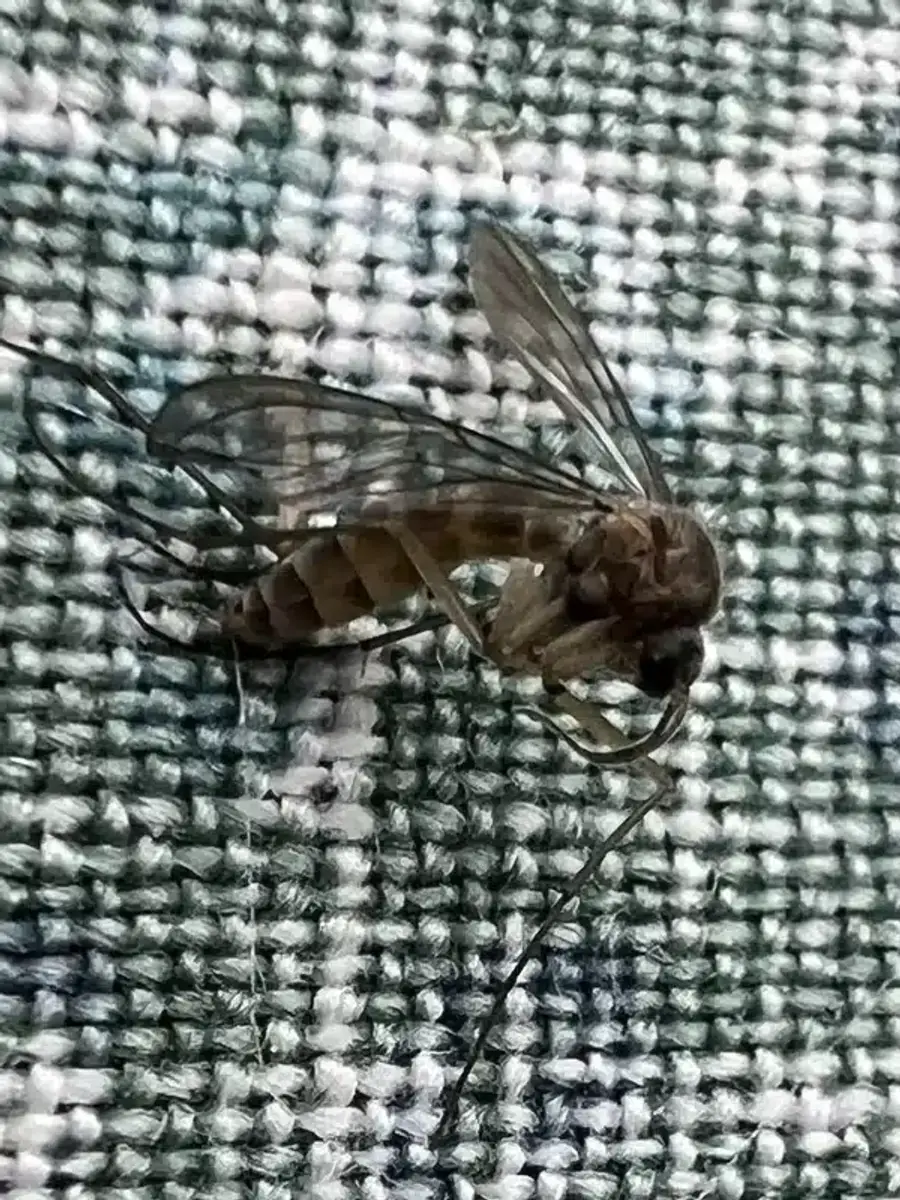
- Fruit fly: tan body, bright red eyes, hovers around ripe fruit and produce. This is the one this guide is about. See our fruit fly species guide for more.
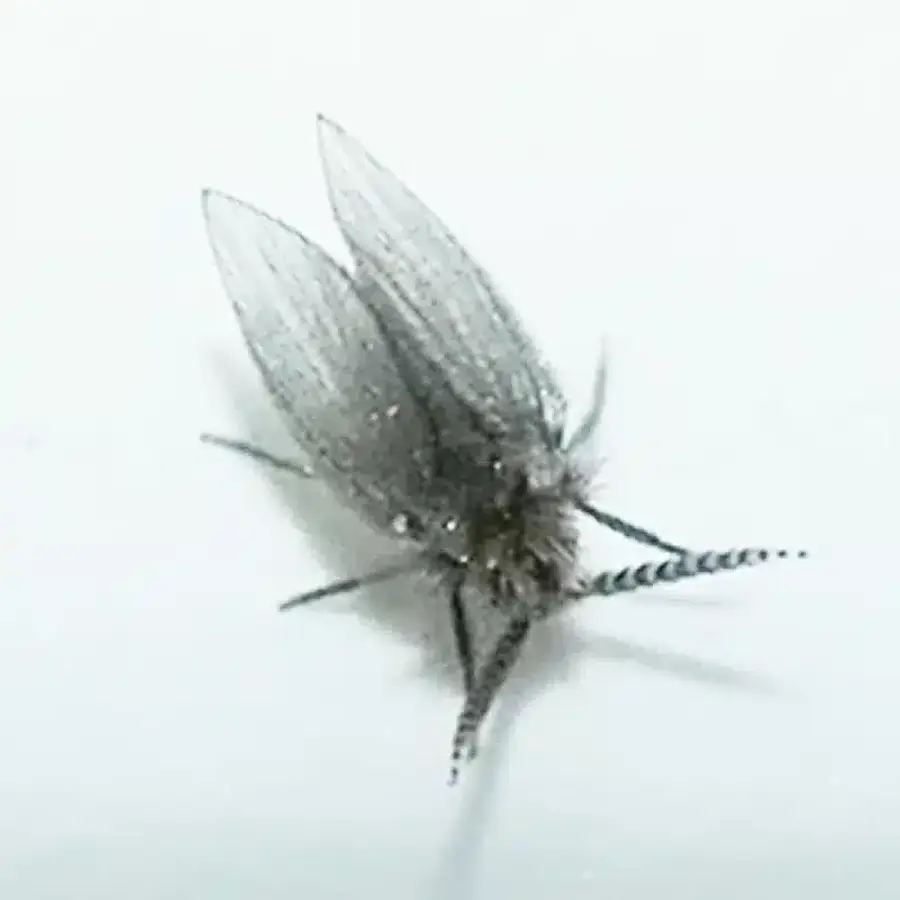
- Drain fly: fuzzy and moth-like, a weak flier that hops around sinks. It breeds in the slime inside drains. Our full drain flies vs fruit flies comparison breaks down the differences.
- Fungus gnat: slender, dark, and mosquito-like, breeding in the moist soil of houseplants. If you are stuck between these two, read gnats vs fruit flies.
If the fly is much larger and dull gray, you may be looking at a common house fly instead. Our guide on fruit fly vs house fly covers how to tell those apart by size.
Fruit fly development is driven by temperature. Virginia Tech Entomology reports that at 64 degrees Fahrenheit it takes 18 to 20 days to go from egg to adult, but at 77 degrees only 8 to 10 days are needed. Warm indoor kitchens sit right in that fast zone, which is why an infestation seems to explode overnight. It also explains the one-to-two week wait once the breeding source is gone. You are simply outlasting the final generation.
That speed is also why sanitation matters beyond the annoyance factor. The more generations that cycle through your kitchen, the more chances the flies have to move between your food and less clean spots.
Sometimes, though, you do everything right and the flies still hang on. When that happens, the source is usually hiding somewhere you would never think to look. Here is a case from our own team that proves the point.
One of the toughest small-fly cases our team ever solved belonged to Daren, a registered technician who has been with us close to ten years. He had a house where the flies just would not quit. Everyone had a theory, but nothing worked. In the back of his head, he kept thinking about the double-pane windows, which often trap moisture. Sure enough, when the family later started renovating and pulled the windows, there was a solid line of larvae inside them. That hidden pocket of moisture had been the breeding source the whole time. It is the perfect lesson: with small flies, you do not have a fly problem, you have a breeding-source problem. Find the source and the flies are already gone.
How to Keep Fruit Flies From Coming Back
Once you clear an infestation, a few habits keep it from returning. This matters most from the end of summer into fall, when produce ripens fast and the Virginia Tech Extension notes homeowners most often meet fruit flies in their kitchens. In heated DMV homes, they can breed indoors year-round, so prevention is a habit, not a season.
- Refrigerate ripe produce instead of leaving it on the counter
- Rinse recycling (bottles, cans, and jars) before it goes in the bin
- Run the disposal daily and brush your drains weekly
- Take out trash often and keep bins clean and covered
- Wring out sponges and mops and store them dry
- Wipe up spills right away, especially juice, wine, and beer
For homes that battle kitchen pests season after season, our ongoing pest control programs keep an eye on the conditions that draw flies in, and our pantry pest control service targets the kitchen and food-storage areas where small flies and other pantry pests tend to gather.
When to Call a Professional
Most fruit fly problems are a do-it-yourself win. But there is a clear point to call for help: when the flies keep coming back after you have carefully cleaned the produce, drains, and trash.
Persistent small flies almost always mean one of two things. Either the breeding source is somewhere you cannot easily reach, like deep in a drain line, a wall void, or under a slab, or the pest is not a fruit fly at all. If it turns out to be phorid flies, that matters. The University of Maryland Extension warns that large numbers of phorid flies on a first floor can indicate a broken drain or sewer line under the structure, which is a plumbing issue, not a housekeeping one.
That is where a professional inspection pays off. We can confirm the ID, trace the breeding source, and treat the right thing instead of guessing. Our registered technicians have served the DMV for 58 years, and finding the hidden source is exactly what we do.
If your fruit flies keep winning, give us a call at 703-683-2000 or email info@bettertermite.com for expert identification and a plan built for your home. All the products we use are EPA approved and have passed through our internal research team. Each one is something we would feel comfortable using in our own kitchens.