
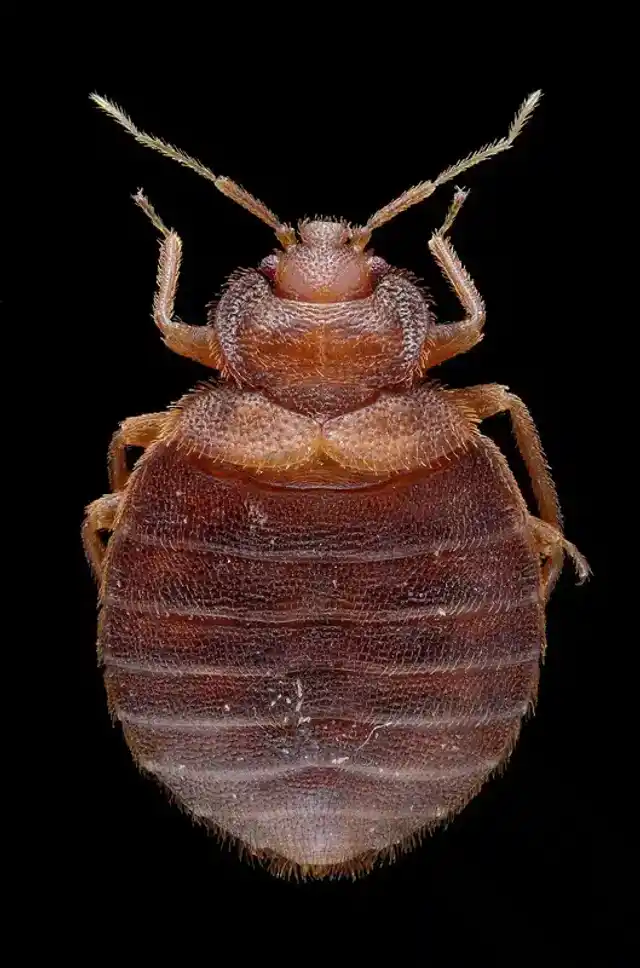

TLDR: Two types of bed bug bite people. Only one of them lives around here: the common bed bug, Cimex lectularius. An unfed adult is 5–7 mm, about an apple seed. Newly hatched nymphs are 1.5 mm and nearly clear. Look for fecal spots (dark dots that smear like ink), tan shed skins, and pinhead eggs in mattress seams. Bites often land in a line, but 20% to 30% of people never show a mark. Photos alone are not proof. You need a bug, a shed skin, or droppings.
I’m George Schulz, a licensed technician and the third generation in a family business that has worked the DMV since 1968. I’ve been on route since 2015. What follows is an ID guide, not a pitch. Better Termite does not treat bed bugs. Daren, one of our registered technicians, puts it plainly: “We don’t do much bed bug work at all. We won’t even typically take a call if it’s bed bugs, because we don’t do the work.” So when this page tells you something is or isn’t a bed bug, there is no job at the end of it for us.
Two facts from the CDC tell you where to point the camera. First, bed bugs “spread by getting into the seams and folds of luggage, overnight bags, folded clothes, bedding, furniture.” How clean a place is does not decide whether they are there. Second, a bed bug can travel more than 100 feet in a night, but it usually stays within 8 feet of where someone sleeps. That 8-foot radius is your search area. Virginia takes them seriously enough that VDACS publishes its own bed bug fact sheets for renters, landlords, and hotels.
The Different Types of Bed Bugs
When people search for pictures of different types of bed bugs, they usually mean one of two things: the different species, or the different life stages. Here are the species. Life stages are the next section.
Only two species bite people often enough to matter. Researchers who build DNA tests for the family put Cimex lectularius, the common bed bug, in the temperate zones. They put Cimex hemipterus, the tropical bed bug, in the tropics and subtropics, though it now turns up in Europe and Asia too. In a Northern Virginia or Maryland bedroom, it is the common bed bug.
| Type | Scientific name | Where it lives | What you see in a photo |
|---|---|---|---|
| Common bed bug | Cimex lectularius | Temperate regions, including all of the DMV | Flat oval, 5–7 mm, reddish brown, broad shield behind the head |
| Tropical bed bug | Cimex hemipterus | Tropics and subtropics; Florida and the Gulf Coast in the US | Same size and color; the shield behind the head is narrower |
| Bat bug | Cimex adjunctus | Where bats roost in an attic or wall | Looks like a bed bug with longer hairs near the head |
| Swallow and chimney swift bug | Cimicidae, various | Bird nests on the building | Bed-bug shaped; feeds on birds, not people |
Here is the difference the pictures actually show. Look at the shield behind the head on each one. Entomologists call it the pronotum, and its width-to-length ratio is the traditional way the two species are told apart. That is a measurement made under a scope. It is not a call you can make from a phone photo, which is the honest answer to “which type do I have.”
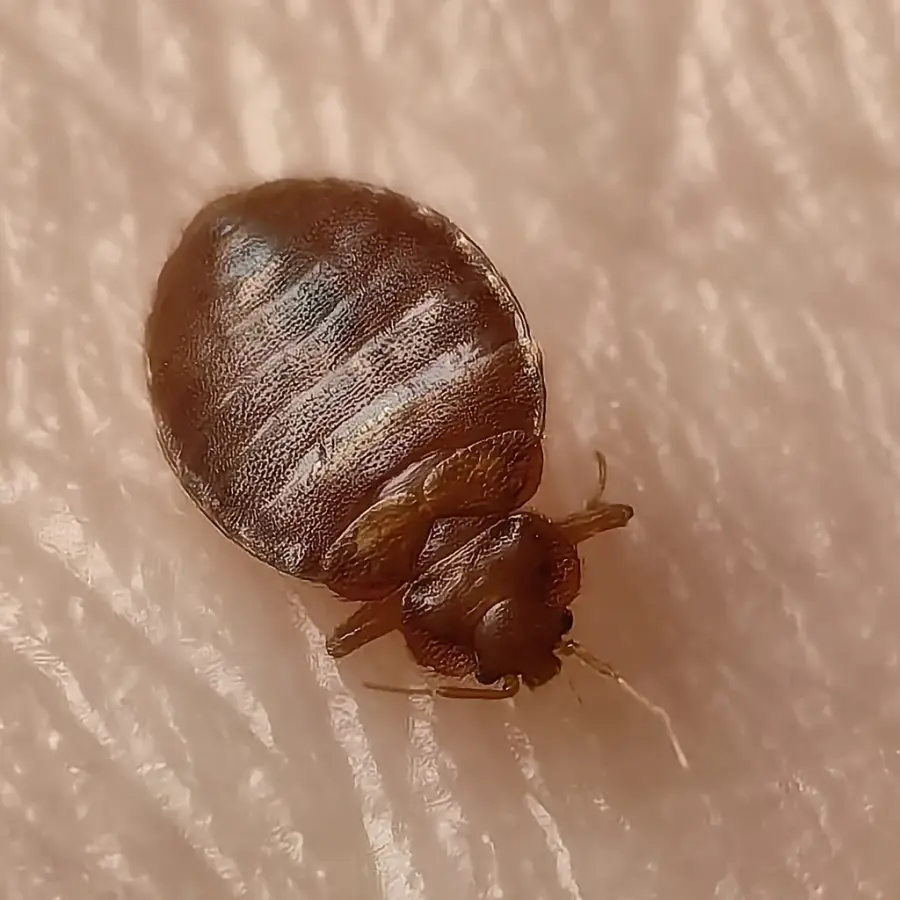
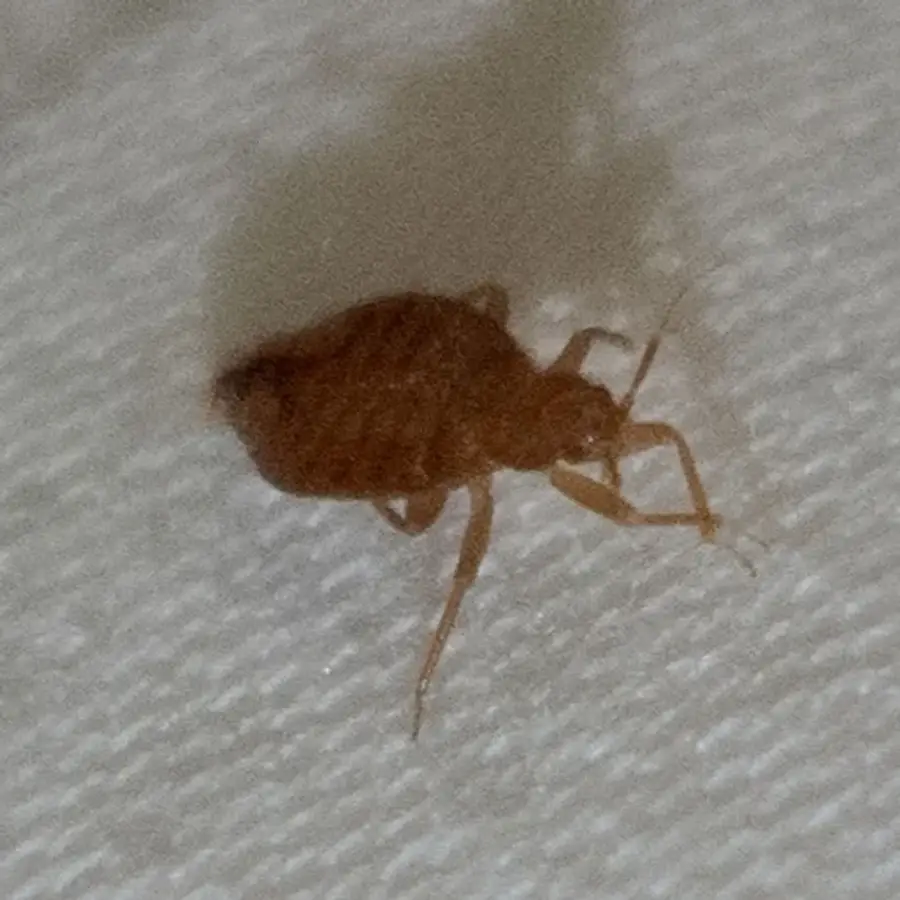
Bat bugs are the one that trips people up here, because we do have bats in older DMV attics. University of Minnesota Extension points to the giveaway: bat bugs have “longer hairs near the head.” If the bugs are showing up along a ceiling or an upper wall instead of around the bed, that is worth checking before anyone treats for bed bugs.
Bed Bug Pictures at Actual Size
Photos lie about size. A macro shot fills a phone screen with a bug you could hide under a grain of rice, so people go looking for something far too big and walk right past the real thing. Here is the actual size at every stage.
| Life stage | Actual size | Roughly as big as |
|---|---|---|
| Egg | about 1 mm | a pinhead |
| 1st-stage nymph | 1.5 mm | a poppy seed |
| 2nd-stage nymph | 2 mm | a sesame seed |
| 3rd-stage nymph | 2.5 mm | a grain of coarse salt |
| 4th-stage nymph | 3 mm | a flax seed |
| 5th-stage nymph | 4.5 mm | a split lentil |
| Adult, unfed | 5–7 mm | an apple seed |
| Adult, just fed | up to about 9 mm | a cooked grain of rice |
The stage-by-stage numbers come from the EPA, which puts the adult at “5-7 mm or 3/16 - 1/4 inch long.” You will also see 5 to 9 mm quoted, as University of Minnesota Extension does. Both are right. A bed bug full of blood stretches out and turns “more cigar-shaped,” so it measures longer than the same bug did an hour earlier.
The practical rule: nothing on this page gets bigger than a grain of rice. If what you found is clearly larger, it is not a bed bug, whatever the shape. German cockroach nymphs, carpet beetle larvae, and fleas all get called bed bugs, and each one is either the wrong size or the wrong shape.
What Bed Bugs Look Like Up Close
Adults
Adult bed bugs are about 5-7 mm long, roughly the size of an apple seed. They’re flat and oval, which lets them hide in tight spaces. When unfed, they look brown with a somewhat see-through quality.
After feeding, they change a lot. Blood-filled bed bugs go from flat and seed-like to swollen, deep red, and almost balloon-shaped. That is the single biggest reason people say the bug they caught “doesn’t match the pictures.”
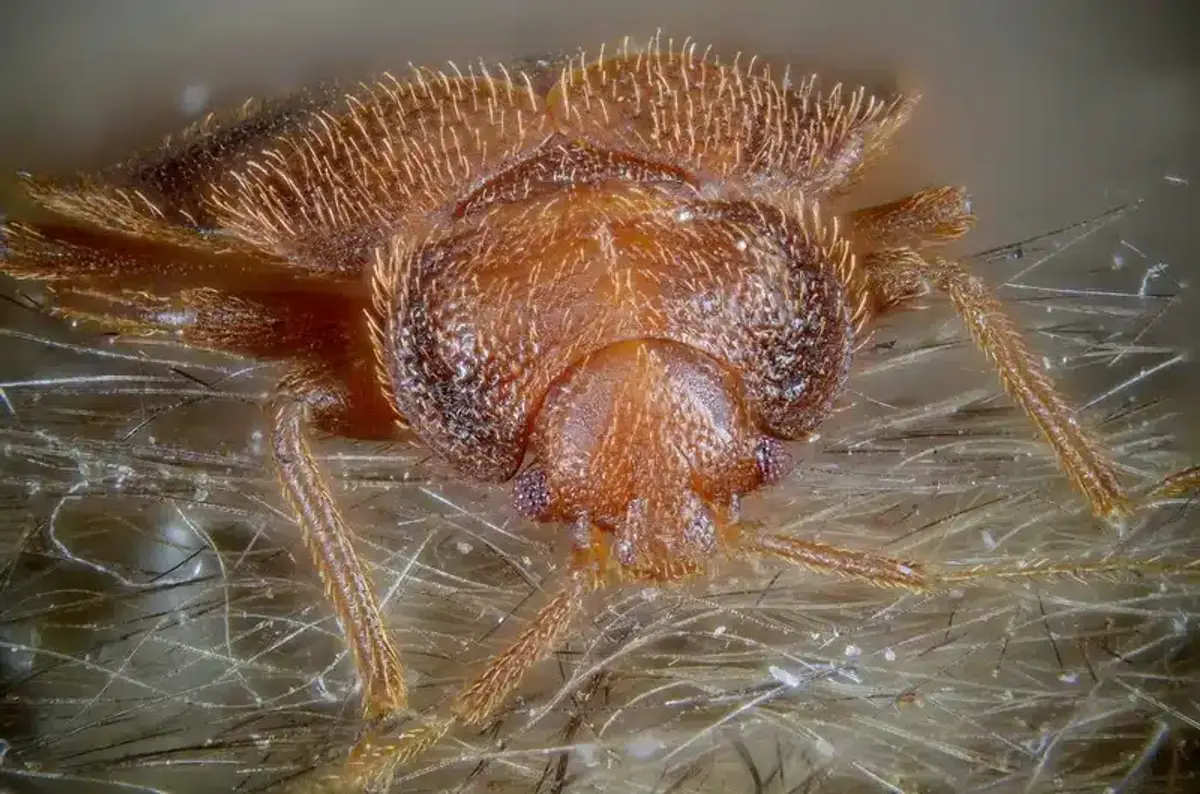
Up close, the details that settle it are the wing pads that never became wings, a 3-part beak folded under the head for piercing skin, and 4-part antennae. Under real magnification you can also see short golden hairs across the body.
Nymphs
Nymph bed bugs go through five stages before becoming adults. Each stage needs a full blood meal to molt to the next. Early-stage nymphs look clear or straw-colored when unfed, making them very hard to spot.
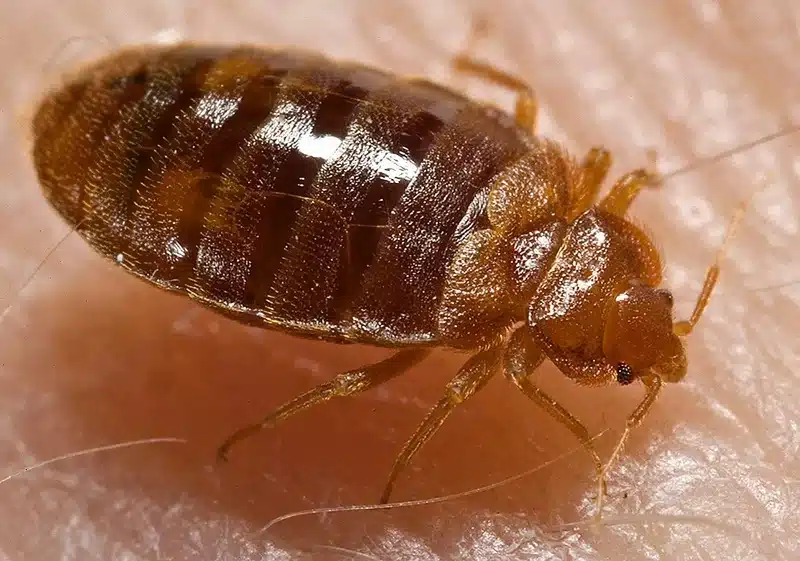
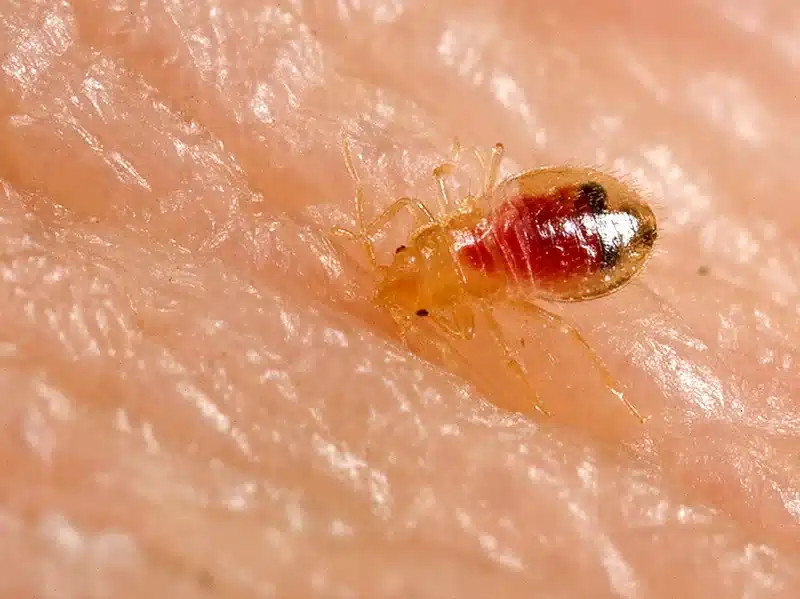
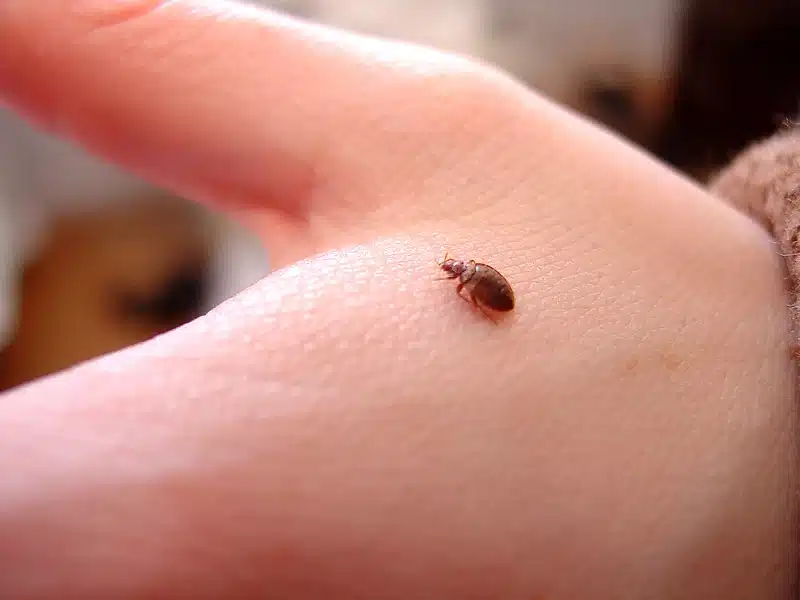

After feeding, nymphs become much easier to see, with bright red guts showing through their clear bodies. The smallest first-stage nymphs are only 1.5 mm. Fifth-stage nymphs reach 4.5 mm before their final molt.
Eggs
Bed bug eggs look like pearl-white, pin-head sized clusters glued into fabric seams and cracks. Females lay 1-3 eggs daily near sleeping areas. After about 5 days, red eye-spots form inside viable eggs.
University of Minnesota Extension puts the lifetime total at “200 to 250 eggs,” with hatching in “6 to 10 days.” That is the number that explains why a problem someone ignored for a month is a different problem than the one they had in week one.
These clusters hide in mattress seams, behind headboards, and in furniture joints. They are small and pale, so a phone flashlight held at a low angle finds them faster than an overhead light does.
Identifying Bed Bug Bites
Bite Patterns
Bed bug bites often appear in lines called “breakfast, lunch, and dinner” rows. The clinical description is a “linear or clustered grouping of bites, typically consisting of 3 or more lesions,” according to the bed bug bite review on NCBI Bookshelf. Look at the center of one and you may see a small dark red dot where the mouthparts went in.
But the pattern is not universal, and neither is the reaction.
The same review reports that “approximately 20% to 30% of exposed individuals may remain anergic and never develop visible skin findings.” A large US infestation study found skin reactions in only 70% of affected people. Source: Bedbug Bites, StatPearls / NCBI Bookshelf. Anergic means the immune system never mounts a visible response. The bites happen; the skin just does not show it. So a housemate with no marks is not proof that there are no bed bugs.
Bites usually show up as pink or red itchy bumps on exposed skin: arms, shoulders, neck, and face, or as the review puts it, anywhere left uncovered during sleep.
Stages of Bed Bug Bites
This is the part that confuses people most, and it is why bite photos are a weak way to identify anything. The same bug produces a different-looking bite depending on how many times it has bitten you before.
On a first exposure, most people see nothing. The NCBI bite review describes “no visible reaction or a delayed response appearing approximately 8 to 10 days after the first feeding.” Someone who got home from a trip last night and has marks this morning was probably bitten before, somewhere else.
With repeated bites, the same review says “latency progressively shortens with subsequent exposures, ultimately resulting in immediate wheal-and-flare reactions within seconds to minutes.” A wheal-and-flare is the raised pale bump with a red halo you get from a mosquito. That is why bites in a long-running infestation appear almost right away.
Most people photograph the bite here: a pink or red itchy bump, often with a darker red pinpoint at the center. Three or more in a line or a tight cluster on skin that was uncovered in bed is the classic look.
Most marks fade over several days. Some do not. The review notes reactions ranging from almost nothing to “large urticarial wheals exceeding 1 cm in diameter.” If you have trouble breathing or major swelling, that is a doctor, not a pest control question.
Two things this timeline should tell you. Bites cannot date an infestation, and bites cannot confirm one. Fleas, mites, and even a fabric reaction can all look like this. You need a bug, a shed skin, or droppings.
Skin Type Differences
Bites look different depending on skin tone and sensitivity. On lighter skin, bites appear as distinct red bumps. On darker skin, marks may look darker or less defined but cause similar itching.
Signs Beyond Live Bugs
Fecal Spots and Shed Skins
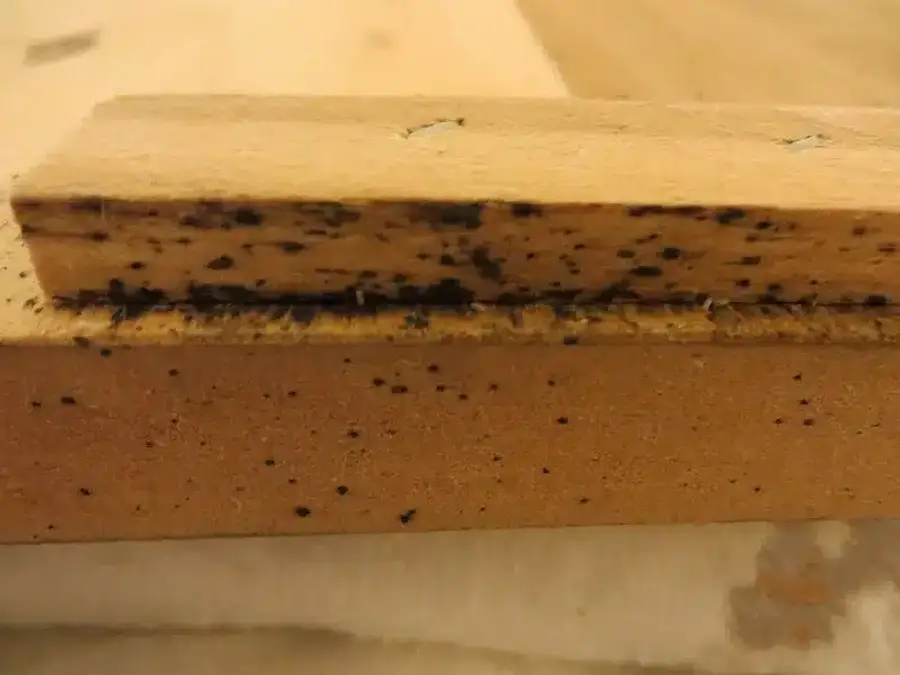
Bed bug droppings appear as small, dark dots that smear like ink when touched with a damp cloth. These spots gather around hiding spots where bed bugs rest during the day. You’ll find them along mattress seams, behind headboards, and in furniture.
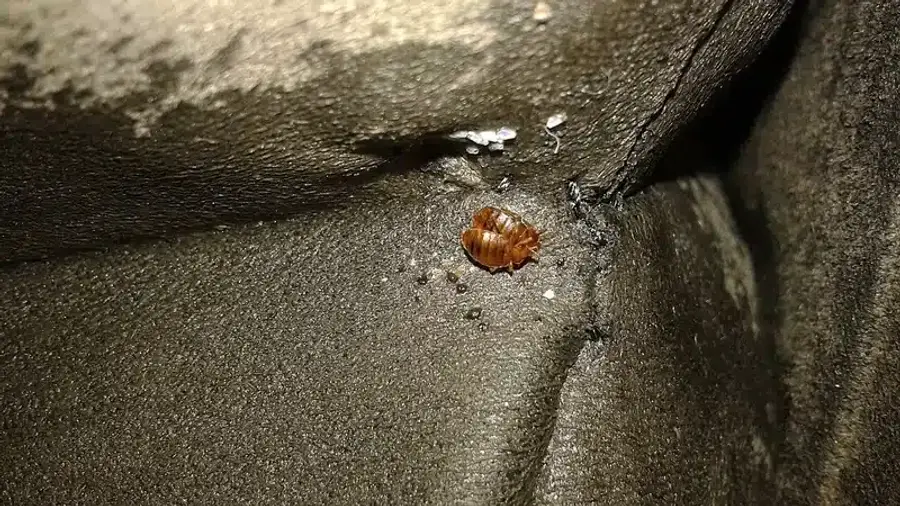
Shed skins look like tan, paper-thin husks near hiding areas. Nymphs molt five times during growth, so you might find several skins in one spot. These signs often last long after treatment.
Common Hiding Spots
Mattress seams are the most common hiding spots. Check carefully along the head of the bed where the mattress meets the box spring. Bed frames, especially wooden ones with joints and cracks, offer more shelter.
Other places include behind picture frames, inside alarm clocks, behind loose wallpaper, and in furniture joints. Any crack wide enough for a credit card could hold bed bugs.
Telling Bed Bugs From Look-Alikes
Bat Bugs
Bat bugs look nearly the same as bed bugs in photos. The difference is longer fringe hairs behind the head, and you need magnification to see them. Bat bugs usually only show up when bats are in attics or walls.
Fleas, Cockroach Nymphs, and Carpet Beetles
Fleas have compressed bodies and can jump. Bed bugs crawl only and can’t jump or fly. If you are working through that one, our bed bug vs. flea comparison puts them side by side. German cockroach nymphs move much faster and have long tail parts.
Carpet beetle larvae are fuzzy and bristly, not flat and smooth. They eat fabric fibers, not blood, so they leave no bite marks. Our carpet beetle vs. bed bug guide has the details. Masked hunters, a type of assassin bug, sometimes show up near bed bug problems because they hunt bed bugs. They’re larger (17-22 mm) and all dark.
How to Document Suspected Bed Bugs
Use a flashlight and thin card to probe mattress seams, box spring areas, and furniture joints. Take photos with good lighting and include a coin or ruler for scale.
Vacuum sampling with a nylon stocking insert lets you collect specimens without handling them directly. This captures live bugs and shed skins for professional review. Always inspect carefully first rather than spraying right away.
When comparing photos, use images from university extension services or EPA publications. These show accurate, labeled specimens rather than misleading stock photos. Virginia Tech Extension has verified bed bug ID guides.
- Shape: Flat and oval (unfed) or swollen (fed)
- Size: 1.5mm (young nymph) to 7mm (adult), about the size of an apple seed
- Color: Brown to mahogany (unfed), deep red (fed)
- Movement: Slow crawling only, no jumping or flying
- Evidence: Dark fecal spots, tan shed skins, pearl-white eggs in seams
Use this checklist when checking your home or comparing photos of suspected bed bugs.
If It Is Bed Bugs: What Happens Next
We do not treat bed bugs, so read this as a homeowner’s briefing rather than a service description.
Treatment has to reach every life stage, including eggs, which is why one visit almost never finishes it. Heat, steam, and targeted product placement in cracks and seams work better than spraying open surfaces. Encase the mattress and box spring so anything left behind is trapped and visible. Wash linens in hot water, at least 120 degrees, and vacuum around the bed. When you call a bed bug company, ask two questions: how many follow-up visits are included, and how they handle the room next door, because the CDC notes bed bugs can travel more than 100 feet in a night.
Prevention is the cheaper half. Check the seams of any used furniture before it comes through the door, curbside finds most of all. When traveling, keep luggage on a hard surface or the rack, not on the bed or an upholstered chair. And bed bugs are not drawn to dirt. They are drawn to warmth and the CO2 you exhale, which is why a spotless house gets them too.
Common Identification Mistakes
Many homeowners mistake other dark spots for bed bug droppings. Food stains, ink marks, or mold can look similar. The key test: dab the spot with a damp cloth. Bed bug droppings smear like ink.
Egg identification also causes confusion. Small white particles might be lint or dust, not eggs. Real eggs have a pearl-like look and stick firmly to surfaces.
Stock photo sites often have mislabeled images showing carpet beetles, fleas, or other insects tagged as bed bugs. Always use sources from university extension services or government agencies for accurate reference photos.
If you’re not sure what you’ve found, get a second set of eyes on it before anyone treats anything. University of Maryland Extension and Virginia Tech Extension both publish verified reference photos, and your county extension office will look at a specimen.
If it turns out to be one of the look-alikes instead, those we do treat: carpet beetle larvae, fleas, and German cockroach nymphs, across Northern Virginia, DC, and Maryland from Alexandria to Glen Burnie. Call 703-683-2000 or email info@bettertermite.com.