

If you’re waking up with itchy bites, you need to know what’s causing them. Bed bugs and fleas are very different pests that need different fixes. I’m a third-generation technician and I’ve been in this business since 2015, in Virginia and Maryland homes, and the right ID is where every one of these jobs starts.
Here is the short version, comparing the two bites side by side.
| Flea bites | Bed bug bites | |
|---|---|---|
| Where | Ankles, lower legs, waist | Face, neck, arms, hands |
| Itch starts | Within an hour | A day or more later |
| Looks like | Red bump, one puncture, red ring | Small welts, often in a line |
| Felt the bite | Sometimes, a sharp prick | No, they numb the skin |
| Tiebreaker | You have a pet, and it scratches | Started after a trip or used bed |
The timing of the itch is the single most useful clue. Fleas bite from carpet level and you know about it within the hour. Bed bugs feed while you sleep and you may not see anything for days.
How They Look: Bed Bug vs Flea
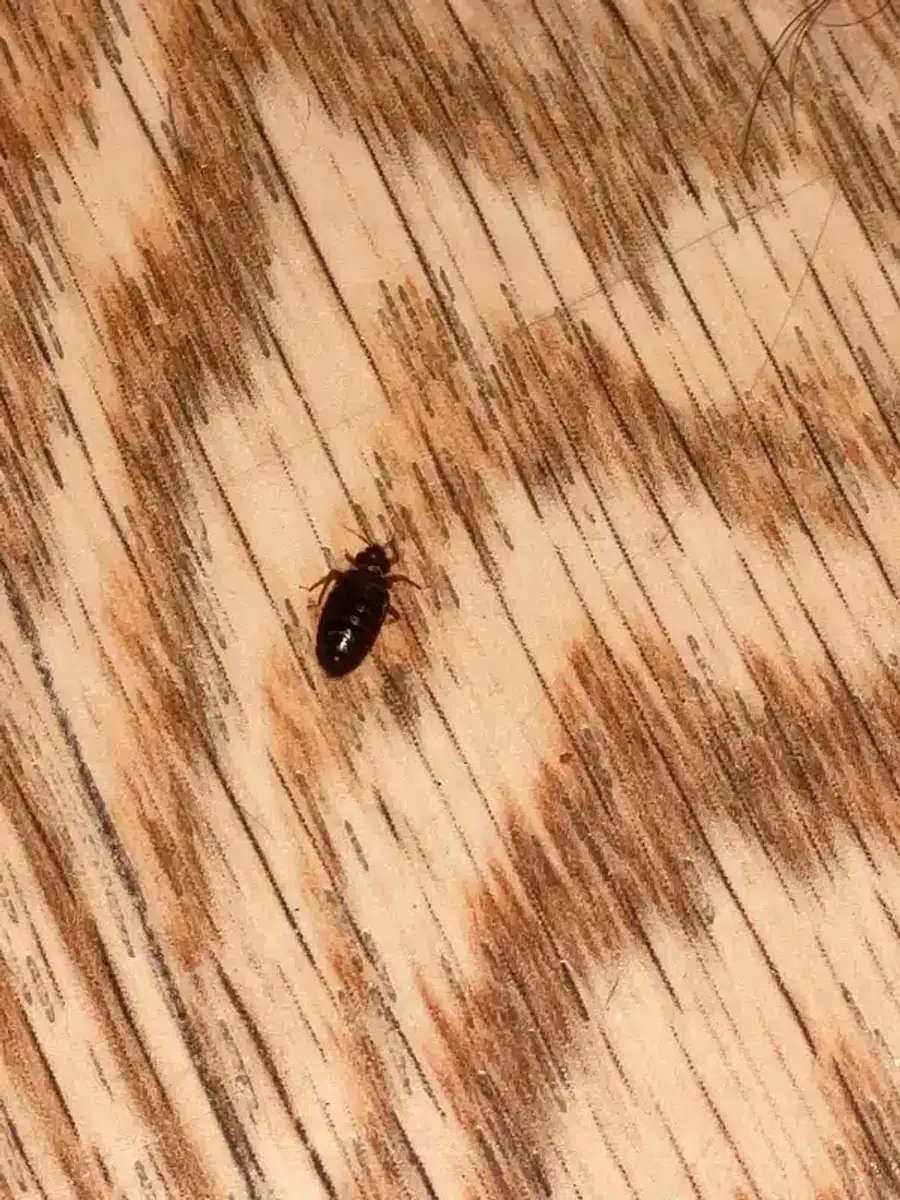
The easiest way to tell them apart is body shape. Bed bugs are flat and oval, like apple seeds. They’re reddish-brown, 1-7mm long, and crawl slowly.
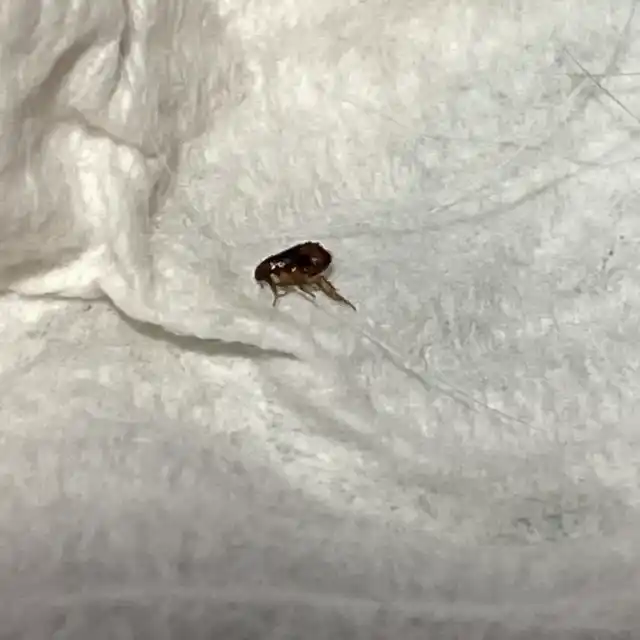
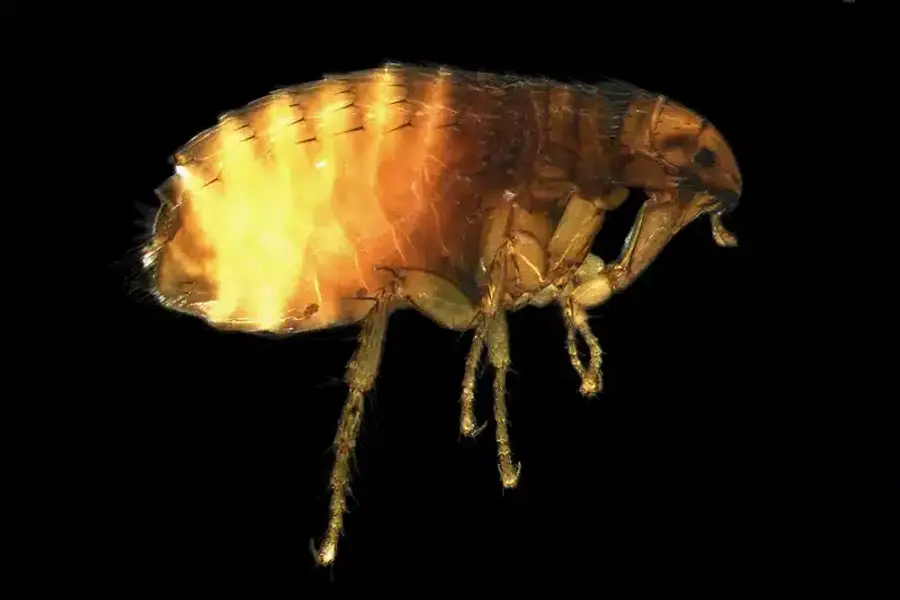
Fleas are thin from side to side and dark brown to black. University of Maryland Extension puts adult cat fleas at 1/16 to 1/8 inch long (about 1.5 to 3mm) and “flattened from side to side.” Purdue Extension says they jump 8 to 10 inches. If you see a small dark bug jumping, it’s a flea. Bed bugs can’t jump at all.
So a flea is smaller than a grown bed bug but bigger than a young one. Size is the weakest test of the three. Shape and movement are better. Flat and slow means bed bug. Narrow and springy means flea.
The CDC notes that bed bugs feed at night and target humans. On the flea side, Penn State Extension identifies the cat flea as the most common flea found on both cats and dogs, so a dog-only house still usually has cat fleas.
| Feature | Bed Bugs | Fleas |
|---|---|---|
| Size | 1-7 millimeters | 1.5-3 millimeters |
| Shape | Flat, oval (apple seed) | Laterally compressed |
| Color | Reddish-brown | Dark brown to black |
| Movement | Slow crawling | Powerful jumping |
Bite Patterns: Bed Bug vs Flea Bites
Bite patterns are the best way to tell these pests apart. Bed bug bites show up in lines or zigzag patterns, often called “breakfast, lunch, and dinner” because the bug feeds multiple times in a row.
Bed bug bites appear on skin that’s exposed while you sleep. The CDC lists “the face, neck, arms, hands, or any other body parts” and explains that bed bugs “inject fluids (anesthetic and anticoagulant) that prevents a person from feeling the bite when it happens.”
One caution before you lean too hard on the line pattern. A 2023 review in the Journal of Clinical Medicine notes that flea bites can show up in a line too. The line is a hint, not proof.
How Long Do Bed Bug Bites Take to Show Up?
Longer than most people expect, and it changes over time. The CDC says “most people do not notice the bite marks until they appear from one to several days after the initial bite.”
The first time you are ever bitten, it takes far longer. The same Journal of Clinical Medicine review reports that people who have never been bitten often show no reaction at all. On a later infestation, marks appear in 6 to 11 days. Keep getting bitten and the delay drops to 2 or 3 days, then to hours. That is why one person in a house wakes up covered in welts and another sees nothing for weeks.
Do Flea Bites Show Up Right Away?
Yes. That is the clearest split between the two. A flea bite bumps up and itches almost immediately, usually inside an hour. Purdue Extension describes it as “an itchy, red bump with a single puncture point at the center, that persists for one or two days.” Many people also get a red ring around the bump.
The itch can hang around. The University of California pest program notes that in sensitive people “itching can persist up to 5 days after the bite,” even though the bump itself fades sooner.
So if you felt nothing for several days and then broke out, that is not a flea pattern. If you got out of bed, walked across the carpet, and your ankles were itching before you finished your coffee, it is.
Where Flea Bites Land
Purdue Extension puts it plainly: “Flea bites occur most often near the ankles and lower legs of people.” Penn State Extension agrees that human bites are “most prevalent on the ankles and lower portion of the legs.”
There is a reason for that. Fleas launch from carpet level, so they reach whatever is closest to the floor. They also bite where clothing is tight, which is why waistbands and the backs of knees get hit. Bed bugs come from the mattress, so they work the other direction. Face, neck, arms, shoulders.
The CDC confirms bed bugs inject an anesthetic so you never feel the bite, and that marks usually appear one to several days later. A 2023 review in the Journal of Clinical Medicine found that first-time bite victims often show no reaction at all, then react in 6 to 11 days on the next infestation, dropping to hours once they are sensitized. Flea bites, by contrast, itch within about an hour.
Life Cycles: How They Breed
Knowing how these pests reproduce explains what treatment will work. Bed bugs go through five stages before adulthood, and every stage needs blood to grow.
Female bed bugs lay about 5 eggs a day (200-500 in a lifetime). Adults live 6-12 months and can go over 4 months without eating. The full cycle takes 5 weeks to 4 months.
How Fleas Multiply
Fleas go through egg, larva, pupa, and adult stages. The key fact: only adult fleas live on your pets. Eggs and larvae grow in your carpet, not on animals.
Female fleas lay 4-8 eggs after each blood meal (up to 800 in a lifetime). University of Maryland Extension says the pupal stage “may last 4 to 14 days under ideal conditions or up to a year under adverse conditions.” Pupae hold out until they sense vibration, heat, or breath. That is why a house that sat empty all summer can hand you a wave of fleas the week you move back in.
Where They Hide
Bed bugs stay close to the bed because that is where the meal is. The CDC lists their hiding spots as “the seams of mattresses, box springs, bed frames and headboards, dresser tables, inside cracks or crevices, [and] behind wallpaper.” Add screw holes, baseboards, picture frames, and outlet covers to that list. If you are inspecting, start at the mattress seams and work outward.
Where Fleas Hide
Flea larvae grow wherever pets rest: carpet, pet bedding, couch cushions, floor cracks, and under baseboards. Outside, they live in shady leaf litter, under decks, and beneath porches.
This is why treating just your pet won’t fix a flea problem. You have to treat the home too.
CDC research confirms that adult fleas spend most of their time on pets, while eggs, larvae, and pupae live in your home. Pupae can stay dormant for over a year, then hatch all at once when they sense a new host moving through the area.
Understanding these hiding patterns is key to getting rid of either pest. If you’re finding signs in your home, acting fast prevents the problem from spreading.
Signs of Each Infestation
Catching signs early keeps the problem from getting worse. With bed bugs, look for live bugs, shed skins, and rusty blood spots on your sheets. Heavily infested rooms may have a sweet, musty smell. Small dark spots along mattress seams are bed bug droppings.
Flea Signs
Pet scratching is usually the first clue. Comb your pet’s fur and look for adult fleas or “flea dirt” (black specks that turn red on a wet paper towel, because it’s digested blood).
The white-sock test works well too. Walk through carpeted areas in white socks. Fleas jump on and show up clearly against the white.
One warning on that test: the tiny jumper you catch may not be a flea at all. In damp basements and around bathroom drains here in Northern Virginia, springtails jump the same way and get called fleas constantly. If the bug is pale or slate gray and you have no pet, read springtail vs flea before you treat for the wrong thing.
Are Fleas or Bed Bugs Worse?
For most homeowners, bed bugs are the worse problem. They hide in more places. They do not depend on a pet you can treat. And they are the one pest where store-bought sprays reliably fail. Fleas bite more people, faster, but they have a weak spot. Treat the pet and the floor at the same time and the population drops off within a few weeks.
The one thing fleas have over bed bugs is disease risk. Bed bugs, per the CDC, “are not known to spread diseases to people.” Fleas can carry flea-borne typhus and tapeworm. So “worse” depends on whether you mean harder to kill or riskier to live with. Harder to kill is bed bugs. Riskier is fleas.
Treatment: Bed Bugs vs Fleas
Better Termite does not treat bed bugs. We treat fleas, so the flea half of this section is our work and the bed bug half is a homeowner’s briefing on what a bed bug specialist will propose. For bed bugs, specialists combine several methods: heat treatment is usually the most effective, raising temps to 120°F for at least 4 hours to kill all life stages, along with steam, mattress covers, targeted sprays, and thorough vacuuming.
Flea Treatment
Flea control means treating both your pets and your home at the same time. Pet treatment alone won’t work because new fleas keep hatching from carpets for weeks.
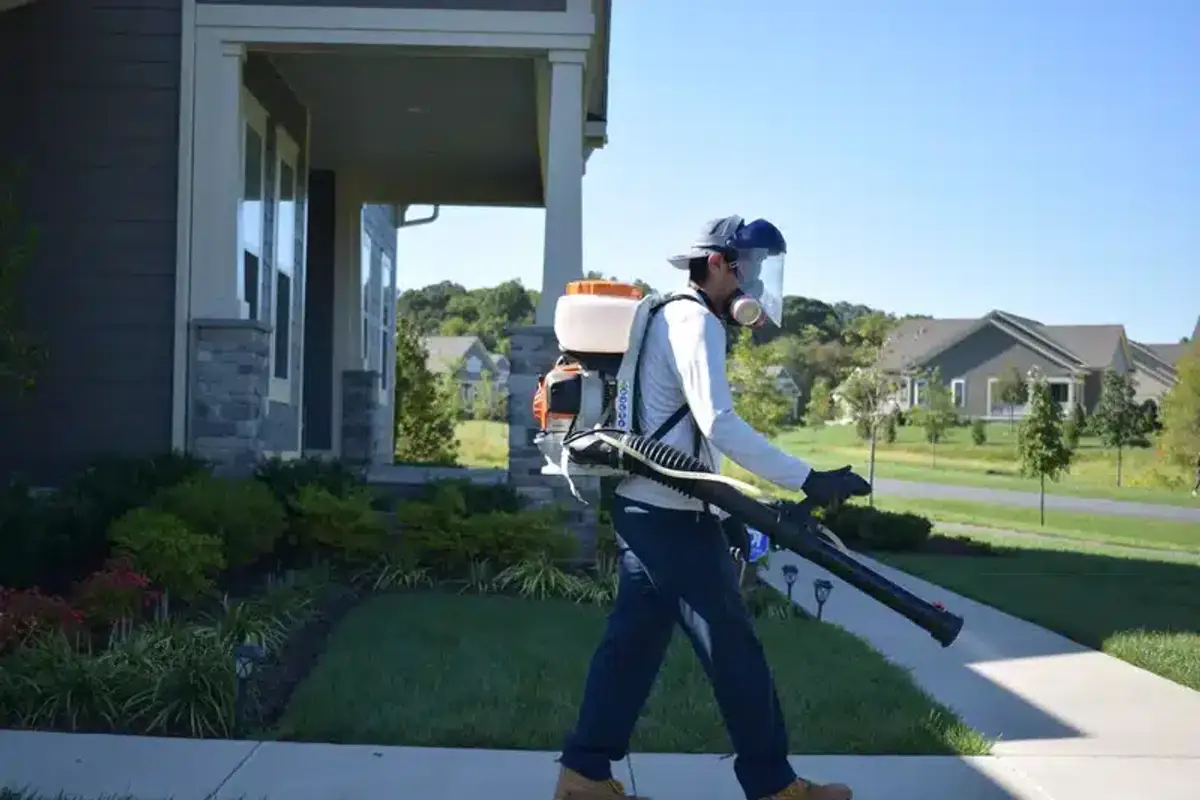
For your home: vacuum daily, steam clean carpets (UMD Extension calls thorough vacuuming the primary control strategy), and wash bedding at 130°F or higher. Carpet is where the eggs and larvae sit, so that is the part people skip and then wonder why the fleas came back. We walk through it step by step in how to get fleas out of carpet. Pro treatments combine fast-acting sprays with growth regulators that stop new fleas from developing.
Prevention
Stopping these pests is easier than fighting a full infestation.
For bed bugs: check used furniture before bringing it home. When traveling, inspect hotel rooms and keep bags in the bathroom while you look. At home, use mattress covers, cut clutter near beds, and seal cracks.
For fleas: keep pets on vet-approved flea prevention year-round. Vacuum often and keep humidity below 50%, which makes it hard for flea larvae to grow. Outside, trim bushes and block wildlife from getting under decks and porches.
- Monthly: Check beds for bed bug signs and pets for flea activity
- Weekly: Vacuum carpets, mattress seams, pet spots, and furniture
- Year-Round: Keep pets on flea prevention and humidity below 50%
- At First Signs: Call a licensed technician for the fastest fix
When to Call a Pro
With bed bugs, DIY almost never works. They hide too well and resist many store-bought sprays. Pro heat treatments, monitoring tools, and commercial products work much better. We are not that call. Daren, one of our registered technicians, puts it this way: “We don’t do much bed bug work at all. We won’t even typically take a call if it’s bed bugs because we don’t do the work.” So hire a licensed company that specializes in bed bugs and ask how many follow-up visits are included.
For fleas, call a pro when the problem spreads to multiple rooms or when DIY hasn’t worked after 2-3 weeks. That one we do treat.
Getting help early costs less than trying products that don’t fully solve the problem. Our team has treated over 100,000 homes in the DC Metro area.
A family called us sure they had bed bugs. Their daughter had itchy welts every night.
- Bites were on ankles and legs (not where bed bugs usually bite)
- White-sock test found jumping insects right away
- Pet check revealed flea dirt in the family cat’s fur
The right ID meant the right treatment from day one, and the family got relief fast.
If it turns out to be fleas, call us at 703-683-2000 or email info@bettertermite.com. We treat fleas, along with flea and mosquito treatments in Jeffersonton and across our Virginia-Maryland service area. If it turns out to be bed bugs, we do not treat those and will tell you so on the phone: you want a licensed bed bug specialist for that.