Pillbugs
Armadillidium vulgare
Pillbugs, also known as roly-polies or potato bugs, are small gray crustaceans that curl into a tight ball when disturbed. They thrive in damp environments and often enter homes seeking moisture.
Pillbug Identification Guide
Physical Characteristics
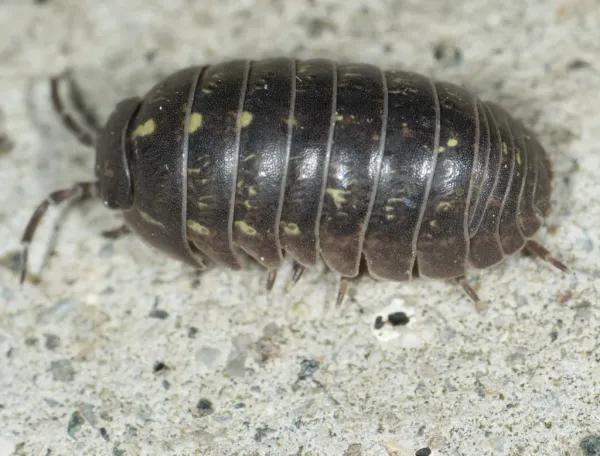
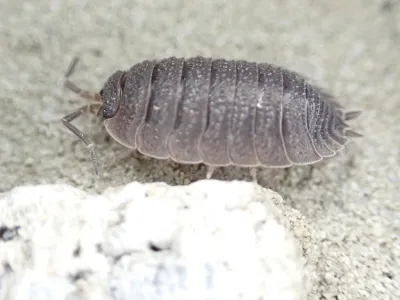
Pillbugs are small, oval crustaceans that measure 8 to 18 mm (about 1/3 to 3/4 inch) long. Their bodies are rounded on top and covered in overlapping plates that look like armor. This gives them a segmented look. Most pillbugs are slate gray to dark gray. Some may appear brown or nearly black. A virus can turn some pillbugs blue or purple.
Pillbugs have seven pairs of legs (14 total) and two pairs of antennae. One antenna pair is short and hard to see. The other is longer and easy to spot. The main feature that sets pillbugs apart from sowbugs is their ability to roll into a tight ball when scared. This rolling behavior gives pillbugs their nicknames: roly-poly, potato bug, doodlebug, and armadillo bug.
Common Species
-
Armadillidium vulgare (Common Pillbug): The most common species in North America. Gray to brown with a smooth, rounded look. Grows up to 18 mm long.
-
Armadillidium nasatum (Nosy Woodlouse): Smaller than the common pillbug. Has a pointed head. Less common but lives in similar places.
-
Cylisticus convexus (Curly Woodlouse): Can roll into a ball. Has a longer body shape. Often found in gardens and compost.
Pillbug Behavior and Biology
Despite their names, pillbugs are not insects or bugs. They are crustaceans that live on land. This makes them more closely related to shrimp and crabs than to any insect. Pillbugs came from Europe. They arrived in North America in the early 1800s. Today they live in every U.S. state, most Canadian provinces, and northern Mexico. Homeowners dealing with Pillbugs may also encounter Isopod, which can appear in similar environments.
Pillbugs need moisture to survive. They breathe through gill-like parts on their underside called pleopods. Unlike insects that have a waxy coating to hold in moisture, pillbugs lose water fast in dry air. This is why you find them in damp, dark places. It also explains why they rarely survive long indoors.
Habitat and Diet
Pillbugs hide under mulch, leaf litter, rocks, logs, and plant debris during the day. They come out at night when the air is more humid. Pillbugs like soil rich in organic matter. They avoid tilled soil, soggy areas, and acidic soil.
Pillbugs eat dead and rotting plant matter. Their diet includes fallen leaves, rotting wood, fungi, and decaying plants. When there are many pillbugs or not enough food, they may damage young seedlings, strawberries, and vegetables touching damp soil. They share this habitat with other moisture-loving pests like earwigs, millipedes, centipedes, slugs, and springtails.
Reproduction and Life Cycle
Female pillbugs carry eggs in a pouch on their underside called a marsupium. After 2 to 3 months, the eggs hatch inside this pouch. The young, called mancas, stay in the pouch for another 3 to 4 days before coming out. A single female can produce 25 to 200 young per brood.
Newly hatched mancas look like tiny adults but have only six pairs of legs. They grow their seventh pair after their first molt. Pillbugs keep molting as they grow. They shed their shell in two steps: first the back half, then the front half 1 to 2 days later. Most pillbugs live 1.5 to 2 years. Some may live up to 5 years in ideal conditions.
Pillbugs are social creatures. Studies show that pillbugs living alone die at much higher rates than those living in groups. They gather in good spots, often guided by scent trails left by other pillbugs.
How We Treat for Pillbugs
Pillbug infestations almost always point to excess moisture. Effective treatment addresses both the pests and the damp conditions that attract them.
Inspection and Assessment
Our technicians inspect your property, focusing on areas where pillbugs gather. Inside, we check basements, crawl spaces, bathrooms, laundry rooms, and any damp areas. Outside, we look at the foundation, mulch beds, landscaping, and drainage.
Treatment Methods
-
Interior Treatment: We apply insecticide along baseboards, in basements, and in areas where pillbugs have been seen. This creates a barrier that stops them from moving deeper into your home. Since pillbugs do not survive long in dry indoor air, interior treatment supports exterior control efforts.
-
Exterior Perimeter Treatment: We apply a granular insecticide around the foundation and in mulch beds where pillbugs breed and hide. This targets the source before they can move indoors. For bad infestations, we may also treat areas with dense plants and debris near the house.
-
Moisture Control Guidance: Pillbugs need moisture to live. Reducing damp conditions is key for long-term control. We give you tips based on what we find during our inspection.
Prevention Tips for Homeowners
- Remove leaf litter, grass clippings, and decaying plant material from around your foundation
- Pull mulch back at least 12 inches from the foundation wall, or replace it with gravel
- Ensure gutters and downspouts direct water at least 4 feet away from the house
- Repair any leaky faucets, pipes, air conditioning units, or other moisture sources
- Seal cracks and gaps in the foundation, around doors, and along basement walls
- Improve ventilation in damp areas like basements and crawl spaces with fans or dehumidifiers
- Store firewood away from the house and elevate it off the ground
- Remove boards, stones, and debris that provide hiding spots near the foundation
Note that woodlouse spiders are a natural predator of pillbugs. If you see these reddish-brown spiders around your home, pillbugs are likely nearby. Reducing the pillbug population will also reduce woodlouse spider activity.
For a detailed comparison of pillbugs and their close relatives, see our blog post on sow bug vs pill bug differences.
References
Types of Pillbugs
Click on any species below to learn more about identification, behavior, and control methods.
Common Questions about Pillbugs
Are pillbugs harmful to humans?
+
No, pillbugs do not bite, sting, or transmit diseases. They are completely harmless to humans and pets. However, finding many pillbugs indoors often signals a moisture problem that should be addressed.
What is the difference between pillbugs and sowbugs?
+
The easiest way to tell them apart is the roll test. Pillbugs curl into a tight ball when disturbed, which is why they are called roly-polies. Sowbugs cannot roll up and will run away instead. Sowbugs also have two small tail-like appendages that pillbugs lack.
Why are pillbugs in my house?
+
Pillbugs enter homes seeking moisture when outdoor conditions become too wet or too dry. They typically get in through cracks in foundations, gaps around doors, and basement openings. They cannot survive long indoors because the dry air causes them to lose moisture rapidly.
Will pillbugs die on their own indoors?
+
Yes, pillbugs require high humidity to survive because they breathe through gill-like structures. In typical dry indoor conditions, they will usually die within a few days without treatment.
Do pillbugs damage plants or gardens?
+
Pillbugs mainly eat dead and decaying plant matter. However, in large numbers they may feed on seedlings, strawberries, and vegetables that touch damp soil. Crop damage is most common in commercial agriculture settings.
How do I prevent pillbugs from entering my home?
+
Reduce moisture around your foundation by fixing drainage issues and moving mulch at least 12 inches away from the house. Seal cracks in the foundation and gaps around doors and windows. Remove leaf litter, grass clippings, and debris from around your home's perimeter.
Why do pillbugs curl into a ball?
+
Rolling into a ball protects the pillbug's soft underside from predators. This rolling ability sets pillbugs apart from sowbugs. It is also why they are called roly-polies and potato bugs.
Explore Other Pest Categories
Browse our comprehensive pest library for identification guides and control information.



With five years of hands-on experience in the pest control industry, George Schulz is a registered technician with the Virginia Pest Management Association and a proud third-generation professional in a family business that's been protecting homes for over 57 years.
Find Local Pillbug Control Services
We provide professional pillbugs control throughout Virginia, Maryland, and the DC Metro area.