Hag Moth Caterpillars Identification Guide
Phobetron pithecium
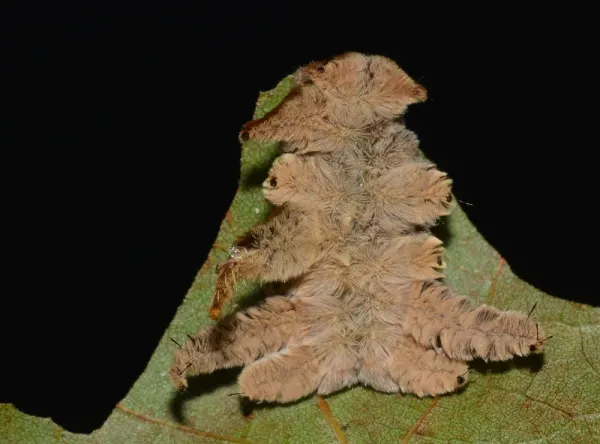
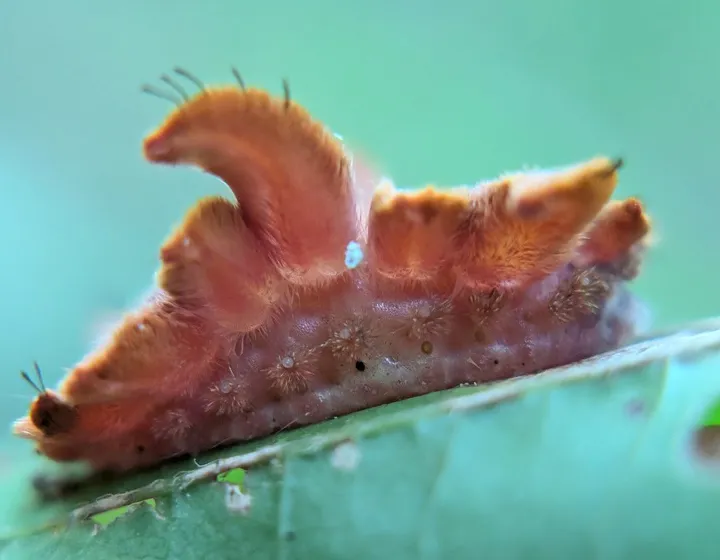
Hag moth caterpillars, also called monkey slugs, are fuzzy brown slug caterpillars with long, twisted, arm-like flaps along their sides. Hidden spines under those flaps can sting, causing burning pain, redness, and swelling.
Taxonomy
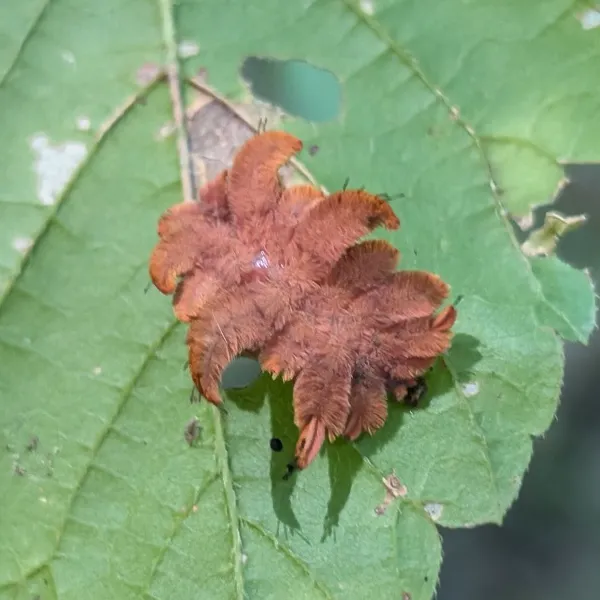
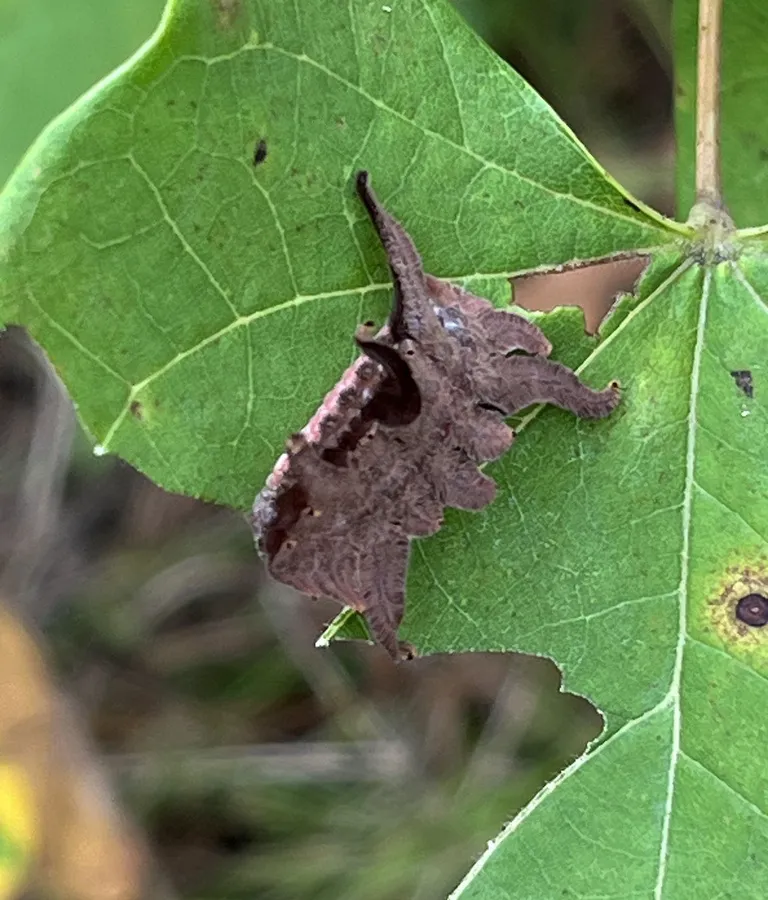
Hag Moth Caterpillars Coloration
Common color patterns to help identify hag moth caterpillars
Hag Moth Caterpillars
Seasonal Activity
When hag moth caterpillars are most active throughout the year

Where Hag Moth Caterpillars Are Found
Hover over states to see their names. Green regions indicate where hag moth caterpillars have been reported.
Hag Moth Caterpillar Identification Guide
The hag moth caterpillar is one of the strangest-looking insects you may find in a North American yard. It is also known as the monkey slug. At first glance, it looks like a hairy brown clump or a scrap of dead leaf. Look closer and you will see long, twisted “arms” sticking out from its sides. Those arms are harmless, but stinging spines are hidden beneath them. It is the larva of the hag moth, a member of the moth group.
Physical Characteristics
- Size: About 1 inch (2.5 cm) long when fully grown. Young caterpillars are much smaller.
- Shape: A flat, oval body with several pairs of fleshy flaps along the sides. Some flaps are short. Others are long, curled, and twisted.
- Color: Usually light brown, but it can be reddish brown, grayish brown, or almost chocolate brown.
- Texture: The whole body is covered in short, dense brown hairs, so it looks soft and fuzzy.
- Underside: Smooth, hairless, and yellowish. The real legs are tiny and hidden underneath.
- Movement: It glides slowly, like a slug, rather than walking like most caterpillars.
The side flaps look like legs, but the caterpillar does not use them to move. They can break off without real harm to the caterpillar. Experts think this helps it escape when a predator grabs one. Some caterpillars have short or missing arms for this reason.
The key danger is under the flaps. Tufts of short, stiff, hollow spines connect to venom glands in the skin. These spines cause the sting.
Adult Hag Moth
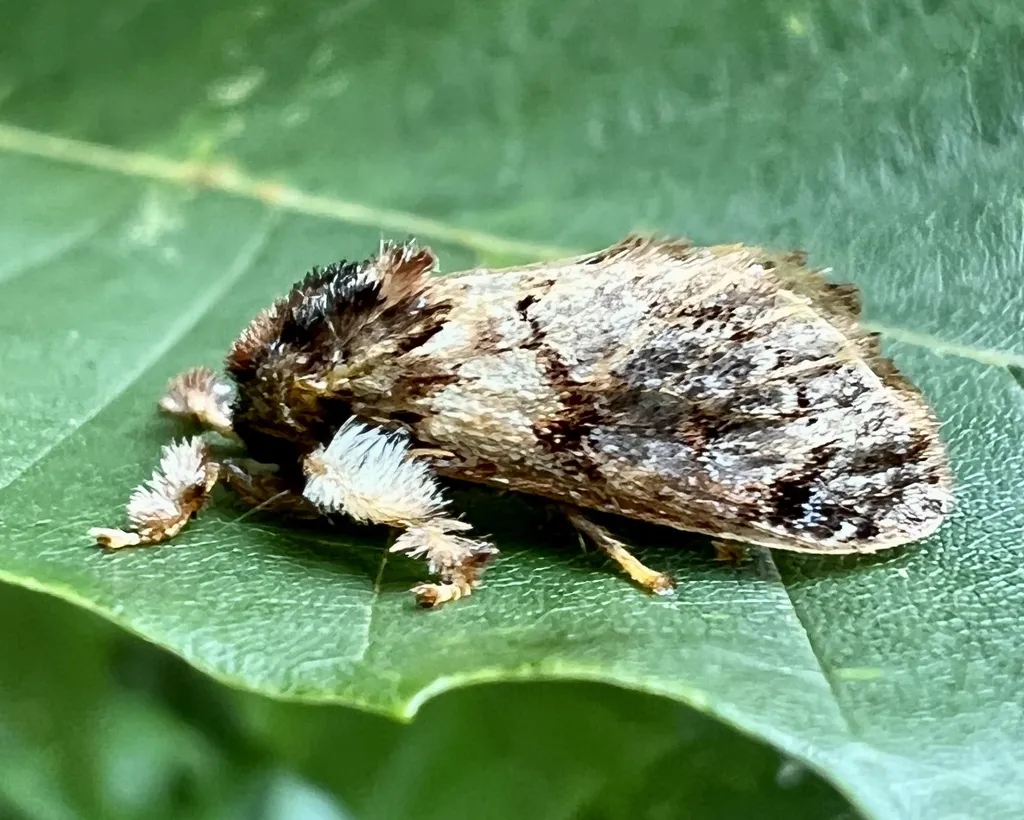
The adult hag moth is small, stout, and furry, with a wingspan of about 3/4 to 1 inch. Females are tan to dark brown with wavy brown lines on the front wings and bright white tufts of hair on their middle legs. Males are about the same size and color but have clear, see-through patches on their wings. Adults fly at night, come to porch lights, and do not sting.
Look-Alike Species
Several stinging caterpillars share the same yards and woods. Here is how to tell them apart:
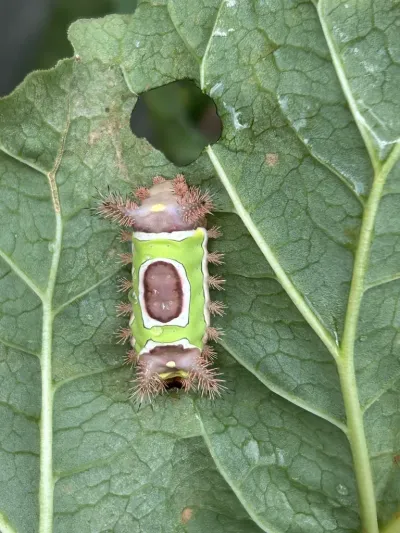
- Saddleback caterpillar (Acharia stimulea) is in the same slug caterpillar family. It is bright green with a brown “saddle” spot in the middle of its back and spiny horns at each end. The hag moth caterpillar is never bright green.
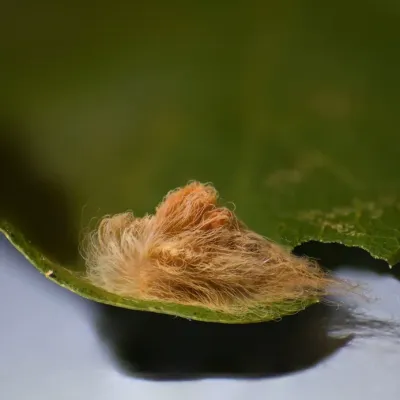
- Puss caterpillar (Megalopyge opercularis) is also fuzzy and brown. It looks like a smooth, teardrop-shaped tuft of fur or a tiny toupee, with no twisted side arms. Its sting is often much more painful.
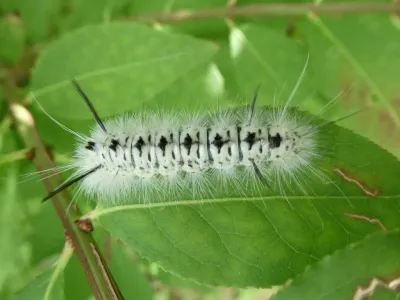
- Hickory tussock moth caterpillar (Lophocampa caryae) is white and fluffy with black tufts and long black hair pencils. It crawls like a normal caterpillar and causes an itchy rash rather than a true sting.
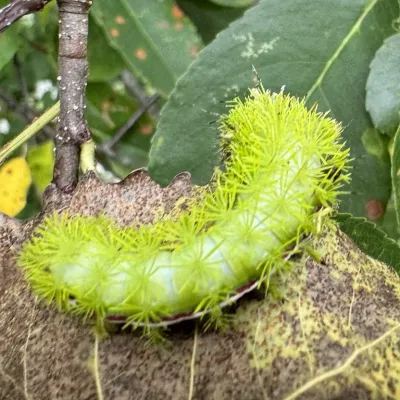
- Io moth caterpillar (Automeris io) is lime green with red and white side stripes and clusters of branching green spines.
- Spiny oak-slug (Euclea delphinii) and other slug caterpillars are flat and slow-moving like the hag moth caterpillar, but they have rows of colorful spiny knobs instead of long, hairy arms.
Hag Moth Caterpillar Behavior and Biology
Habitat
Hag moths are native to the eastern half of the United States and southeastern Canada. They live in shrubby fields, wood edges, and deciduous forests. In neighborhoods, they turn up on shade trees, ornamental shrubs, and hedges. The range runs from Maine and southern Ontario and Quebec south to Florida and west to Texas, Oklahoma, and Kansas.
Diet and Host Plants
The caterpillar feeds on the leaves of many trees and shrubs. Favorite hosts include:
- Rose, sassafras, alder, and spirea
- Dogwood and hickory
- Oak, ash, apple, and chestnut
Each caterpillar feeds alone, usually on the underside of a leaf. Because they rarely appear in large numbers, they do little lasting harm to plants.
Life Cycle
Hag moths go through a complete life cycle: egg, caterpillar, pupa, and adult.
- Eggs: Females lay eggs on host plant leaves in early to midsummer.
- Caterpillars: The larvae feed and grow through late summer. In the Mid-Atlantic, they are most noticeable from August through September.
- Cocoon: Mature caterpillars spin a tough, round brown cocoon, often among leaves or on a twig, and spend the winter inside it.
- Adults: Moths come out the next summer to mate and lay eggs.
Most areas have one generation per year. There may be more than one in the southern states.
Defense: Camouflage and Spines
The hag moth caterpillar relies on two defenses. First, it blends in. Its brown, ragged outline helps it pass for a dried leaf or plant debris. Some scientists think the hairy arms may also make it look like a spider to birds. Second, if anything touches it, the hidden spines deliver venom. That combination is why people often pick one up by accident while pulling weeds or pruning.
Treatment Methods for Hag Moth Caterpillars
Hag moth caterpillars almost never need treatment to protect plants. The goal is to avoid stings, especially where children and pets play.
Prevention and Avoidance
- Look before you grab. Check leaves and branches before pruning, weeding, or picking fruit in late summer.
- Wear gloves, long sleeves, and a hat when working around host shrubs where these caterpillars have been seen.
- Teach children to look at, but never touch, odd or fuzzy caterpillars.
- Shake out gloves, towels, and clothes left outdoors near trees and shrubs.
Physical Removal
For a caterpillar on a shrub near a walkway or play area, clip the leaf or twig it is on and move it away, or drop it into a bucket of soapy water. Use gloves and tongs or a stick. Never use bare hands, since even dead caterpillars can still sting.
Targeted Treatments
Sprays are rarely needed. Where many stinging caterpillars are present around a home, school, or play area, Bacillus thuringiensis var. kurstaki (Btk) is a common caterpillar treatment. It works best on young caterpillars that are actively feeding. Always read and follow the product label.
Treating a Sting
This information is for general education only and is not medical advice. Always consult a doctor or other healthcare provider about stings, allergies, or exposures.
- Do not rub or scratch the area. This can push spines deeper.
- Remove spines with tape. Press clear or adhesive tape on the skin and peel it off. Use a fresh piece each time so you do not spread spines to new skin.
- Wash gently with soap and water.
- Cool it down. An ice pack wrapped in a cloth helps reduce pain and swelling.
- Ease itching with a baking soda paste or hydrocortisone cream. The University of Kentucky notes that antihistamines often do little for caterpillar sting pain.
- Get help when needed. Call Poison Control at 1-800-222-1222 for advice. Get medical care right away if spines get in the eyes, the reaction spreads or blisters badly, or there is trouble breathing or swelling of the face or throat. People with known insect sting allergies should talk with a doctor after any sting.
References
- Virginia Cooperative Extension: Hag Moth Caterpillar (ENTO-19)
- Virginia Cooperative Extension: Stinging Caterpillars: Slug Caterpillars and Flannel Moths (ENTO-75)
- University of Florida IFAS Extension: Stinging or Venomous Caterpillars
- University of Kentucky Entomology: Stinging Caterpillars
- Poison Control: Caterpillar Stings
- Missouri Department of Conservation: Slug Caterpillar Moths
Other Moths
Explore other species in the moths family
Commonly Confused With
Hag Moth Caterpillars are often mistaken for these similar pests
Where Hag Moth Caterpillars Are Found
Hover over states to see their names. Green regions indicate where hag moth caterpillars have been reported.
Common Questions about Hag Moth Caterpillars
Do hag moth caterpillars sting?
+
Yes. Tufts of short, hollow spines sit under the caterpillar's side flaps, and each spine connects to a venom gland. Touching them can cause a burning, itching feeling with redness and swelling, much like a bee sting. Reactions vary from person to person. Many people have mild symptoms, but the spot can stay sore for several days.
What does a hag moth caterpillar look like?
+
It looks like a small, hairy brown clump about 1 inch long. Several pairs of fleshy flaps stick out from its sides, and some are long, curled, and twisted. People often compare it to a tiny monkey, a spider, or a dead leaf. Its color ranges from tan to reddish brown to dark brown.
Why is it called a monkey slug?
+
The fuzzy, arm-like flaps make it look a bit like a small hairy monkey. It is called a slug because it belongs to the slug caterpillar family. Its legs are tiny and hidden under its body, so it glides along leaves instead of crawling like most caterpillars.
What should I do if a hag moth caterpillar stings me?
+
Do not rub the area. Press clear tape on the skin and peel it off to pull out broken spines, using a fresh piece each time. Wash gently with soap and water, then use an ice pack for pain and swelling. A hydrocortisone cream can help with itching. Call Poison Control at 1-800-222-1222 for advice, and get medical care right away for eye contact, trouble breathing, or swelling of the face or throat.
Are hag moth caterpillars dangerous to pets?
+
A dog or cat that paws at or mouths one may get a painful sting on the nose, mouth, or paws. Signs include drooling, pawing at the face, and swelling. Rinse the area gently and call your veterinarian, especially if swelling is spreading or your pet has trouble breathing.
Will hag moth caterpillars damage my trees?
+
Rarely. They feed alone, not in large groups, and usually show up in small numbers. Virginia Cooperative Extension notes that they seldom cause major damage to their host plants. The main concern is the sting, not the feeding.
When are hag moth caterpillars most common?
+
In Virginia, Maryland, and nearby states, the caterpillars are most often found from late July through September. Adult moths fly in early to midsummer. Farther south, there may be more than one generation each year.

With five years of hands-on experience in the pest control industry, George Schulz is a registered technician with the Virginia Pest Management Association and a proud third-generation professional in a family business that's been protecting homes for over 58 years. He manages and trains a team of service pros while also leading internal research efforts—recently spearheading a deep-dive review of thousands of documents on pest control materials to hand-pick the most kid and pet friendly, most effective solutions tailored specifically for homes in the DC metro area.
Local Moths Help
Dealing with moths at home? Our licensed technicians provide pest control across Northern Virginia and Maryland.
