Codling Moth Identification Guide
Cydia pomonella
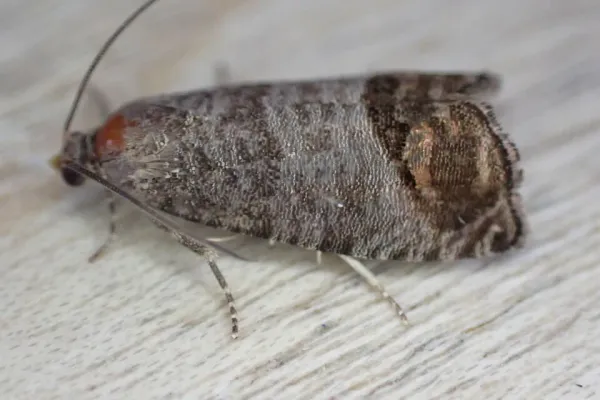
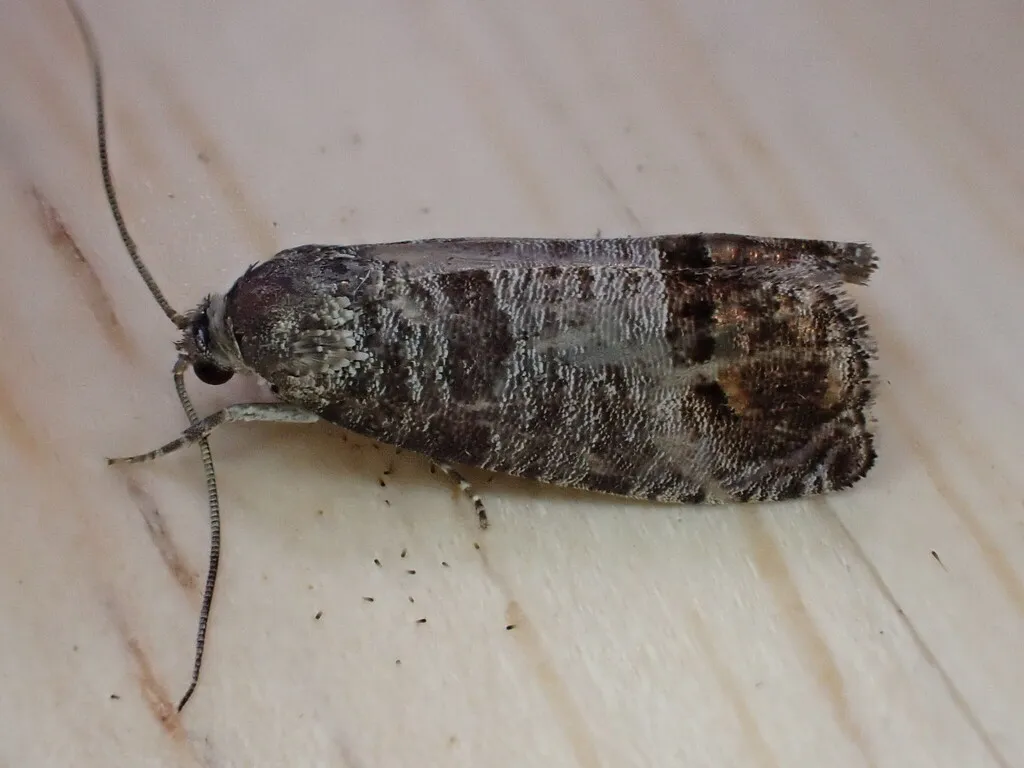
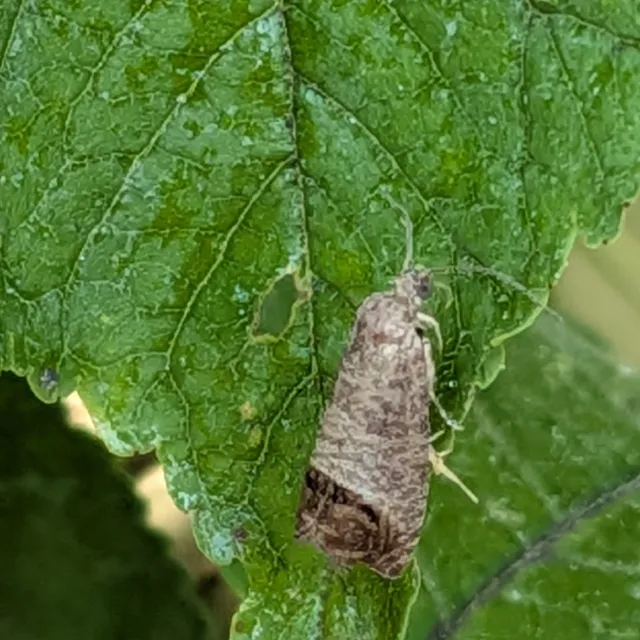
The codling moth is a small gray moth with a coppery patch on each wing tip. Its pinkish larvae are the classic worm in the apple, tunneling into apples, pears, quince, and walnuts to feed on the seeds.
Taxonomy
Codling Moth Coloration
Common color patterns to help identify codling moth
Codling Moth
Seasonal Activity
When codling moth are most active throughout the year

Where Codling Moth Are Found
Hover over states to see their names. Green regions indicate where codling moth have been reported.
Codling Moth Identification Guide
Physical Characteristics
The codling moth is the insect behind the “worm in the apple.” Adults are small moths about 3/8 to 1/2 inch long, with a wingspan of roughly 3/4 inch. At rest, they fold their wings like a low tent over the body.
Key features to look for:
- Wing color: Gray to gray-brown with fine, wavy darker bands that look like wood grain.
- Wing tips: A shiny, coppery-brown patch near the end of each forewing. This is the best field mark.
- Behavior: Adults hide on bark and leaves during the day and fly at dusk, so most people never see them.
The larva does all the damage. It is a pinkish-white caterpillar with a dark brown head. Young larvae are about 1/16 inch long and paler. Mature larvae reach about 3/4 inch and turn a light pink.
Look-Alike Species
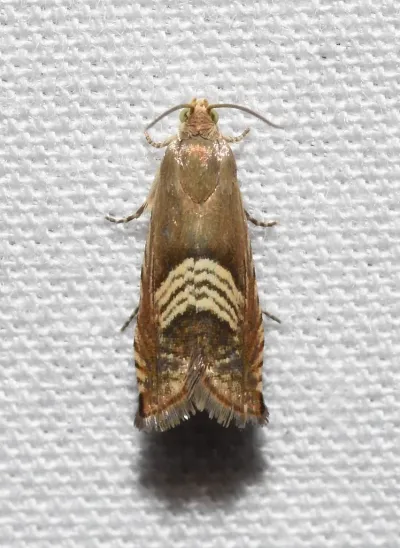
- Oriental fruit moth (Grapholita molesta): Smaller, plainer gray-brown, and no copper wing tips. It favors peaches and also bores into twig tips.
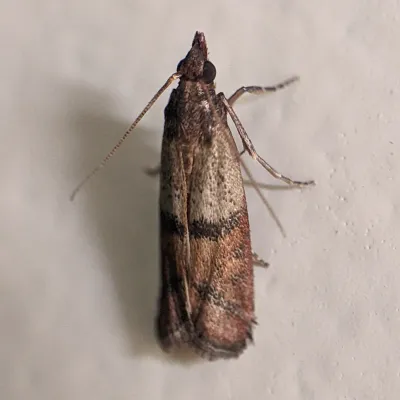
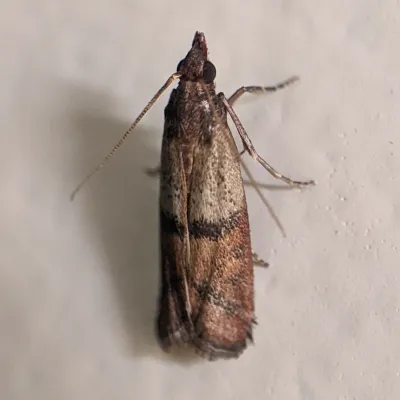
- Indian meal moth (Plodia interpunctella): Found indoors in stored food. Its wings are two-toned, pale near the head and reddish-copper toward the tips.
- Pantry moths: A general name for several moths that breed in flour, grains, and dried fruit, not in fruit on the tree.
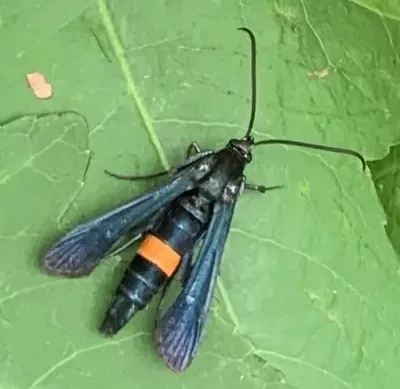
- Peachtree borer moth (Synanthedon exitiosa): A wasp-like clearwing moth. Its larvae bore into the lower trunk of stone fruit trees, not the fruit.
Codling Moth Behavior and Biology
Habitat and Host Plants
Codling moths are native to Europe and Asia. They arrived in North America with colonial apple growing and now live wherever apples grow, from southern Canada to northern Mexico. They are common in home orchards, abandoned trees, and commercial farms.
Main host plants include:
- Apples and crabapples
- Pears and quince
- Walnuts, especially in the western U.S.
- Occasionally apricots, plums, and other fruit
Diet and Damage
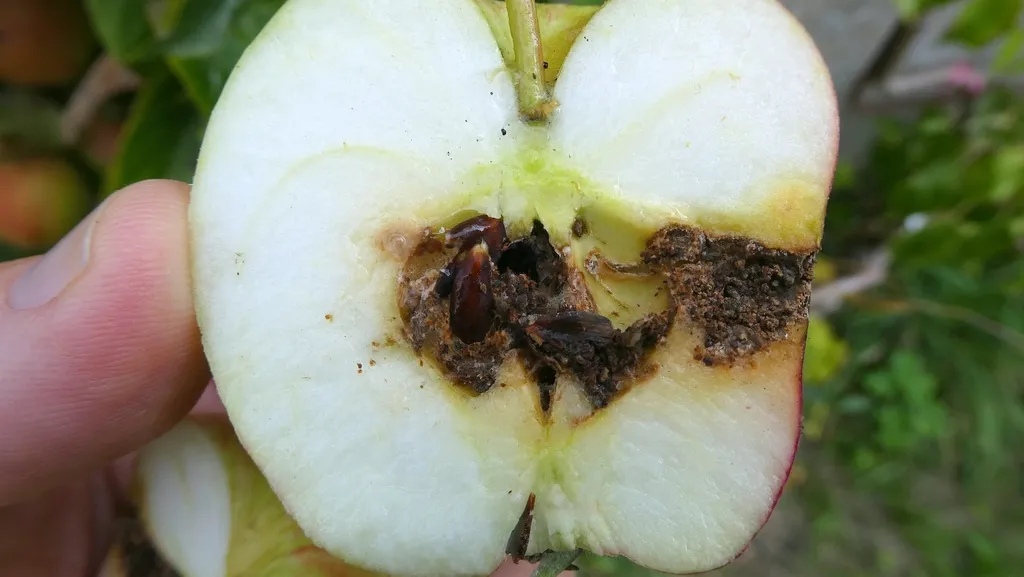
Larvae eat the inside of the fruit. After hatching, a larva wanders over the fruit surface for up to a day, then chews in through the side or blossom end. It tunnels straight to the core to feed on the seeds. Later, it chews a new tunnel back out.
Signs of codling moth damage:
- Entry holes plugged with brown, crumbly frass (waste) that looks like sawdust
- Tunnels running to the core, often with dark, rotting flesh along the path
- “Stings”: shallow, scab-like dimples where a young larva started to enter and died
- Early fruit drop in early to midsummer
The damage is cosmetic and nutritional loss for the fruit. Codling moths do not harm homes or structures, and they do not bite or sting.
Life Cycle
Codling moths spend the winter as full-grown larvae inside silk cocoons. They hide under loose bark, in trunk cracks, in fruit bins, or in debris at the base of the tree.
- Pupation and emergence: Larvae pupate in spring. Adults emerge around apple bloom, which is late April to May in the Mid-Atlantic.
- Mating and eggs: Adults mate at dusk when evenings are warmer than about 60°F. Each female lays 30 to 70 flat, pearly eggs one at a time on leaves and young fruit.
- Larvae: Eggs hatch in about 6 to 20 days, depending on heat. Larvae feed inside the fruit for about 3 to 4 weeks.
- Cocooning: Mature larvae leave the fruit and crawl down the trunk or drop to the ground to spin a cocoon. Some pupate for a summer generation. The rest wait until next spring.
Northern areas see one to two generations a year. Warmer regions, including Virginia, Maryland, and much of the South, see two to three. Because each generation overlaps, larvae can enter fruit from late spring through early fall.
Coming Indoors
Codling moths do not infest houses. A larva may crawl out of harvested apples on a counter or in a garage, looking for a place to spin a cocoon. It cannot reproduce indoors. If you see small moths in your cabinets or around dry goods, you are more likely dealing with pantry pests.
Treatment Methods for Codling Moths
Codling moths live on fruit and nut trees rather than in or around the home. Control is a matter of orchard and yard care, timed to the moth’s life cycle. For backyard trees, combining several methods works better than any single step.
- Monitoring: Pheromone traps hung before bloom show when males begin to fly. Growers pair trap catches with degree-day models from their local extension office to time other controls to egg hatch.
- Fruit thinning and bagging: Thin clusters so fruits don’t touch, since larvae often enter where two apples meet. Covering each young fruit with a paper bag or nylon sleeve stops larvae from reaching the skin.
- Sanitation: Pick up dropped fruit every few days in summer and dispose of it before larvae leave. Remove unmanaged apple or crabapple trees nearby, which can serve as a source of moths.
- Trunk bands: Corrugated cardboard wrapped around the trunk gives larvae a place to spin cocoons. Remove and destroy the bands every few weeks in summer and after harvest.
- Biological options: Codling moth granulosis virus, spinosad, and kaolin clay particle films are used in organic orchards. Parasitic wasps and birds also take a share of larvae and pupae.
- Mating disruption: Pheromone dispensers confuse males so they can’t find females. This works best across several acres, so it rarely helps a single backyard tree.
Any insecticide must be applied as the label directs and timed to egg hatch. Once a larva is inside the fruit, sprays will not reach it. For a plan fitted to your trees and region, your state’s cooperative extension service is a strong resource.
References
Other Moths
Explore other species in the moths family
Commonly Confused With
Codling Moth are often mistaken for these similar pests
Where Codling Moth Are Found
Hover over states to see their names. Green regions indicate where codling moth have been reported.
Common Questions about Codling Moth
What does a codling moth look like?
+
The adult is a small moth about 3/8 to 1/2 inch long. Its wings are gray with thin, wavy darker bands, and each wing tip has a shiny coppery-brown patch. At rest it folds its wings like a tent over its back. The larva is a pinkish-white caterpillar with a brown head that grows to about 3/4 inch.
Is the worm in my apple a codling moth larva?
+
Most likely, yes. Codling moth larvae are the most common worm found in apples and pears across North America. Look for a small hole on the side or blossom end with brown, crumbly frass pushed out of it, and a tunnel that runs straight to the core. The larva feeds on the seeds before chewing its way back out.
Can you eat an apple with codling moth damage?
+
You can cut away the tunneled and frass-filled parts and use the rest, for example in sauce or cider. Damaged fruit does rot faster in storage, so use it soon and keep it apart from clean fruit.
Do codling moths infest homes or pantries?
+
No. Codling moths only develop in fruit and nuts on or near the tree. A larva may crawl out of an apple you brought inside, but it cannot breed in your kitchen. Small moths flying around cabinets and dry goods are usually Indian meal moths or other pantry moths, which need a different approach.
How many generations do codling moths have each year?
+
In the northern U.S. and Canada, codling moths usually have one to two generations a year. In warmer areas like the Mid-Atlantic, the South, and California, they have two to three, and sometimes a partial fourth. Adults first fly around apple bloom and remain active into early fall.
What is the difference between a codling moth and an Oriental fruit moth?
+
Codling moths are a bit larger and have a distinct coppery patch on each wing tip. Oriental fruit moths are smaller and plain gray-brown. Codling moth larvae head straight for the seeds in apples and pears, while Oriental fruit moth larvae prefer peaches and also bore into young shoots. Under magnification, only the Oriental fruit moth larva has a small comb on its last segment.
When should I bag apples or put out traps for codling moths?
+
Hang pheromone traps just before apple bloom to learn when males start flying. Bag or wrap young fruit soon after thinning, when apples are about the size of a nickel to a quarter. Waiting until midsummer lets the first generation of larvae get inside.

With five years of hands-on experience in the pest control industry, George Schulz is a registered technician with the Virginia Pest Management Association and a proud third-generation professional in a family business that's been protecting homes for over 58 years. He manages and trains a team of service pros while also leading internal research efforts—recently spearheading a deep-dive review of thousands of documents on pest control materials to hand-pick the most kid and pet friendly, most effective solutions tailored specifically for homes in the DC metro area.
Local Moths Help
Dealing with moths at home? Our licensed technicians provide pest control across Northern Virginia and Maryland.
