Earwigs
Forficula auricularia
Earwigs are flat, reddish-brown insects with curved pincers at the end of their body. They are active at night, love damp spots, and often get into homes through cracks and gaps.
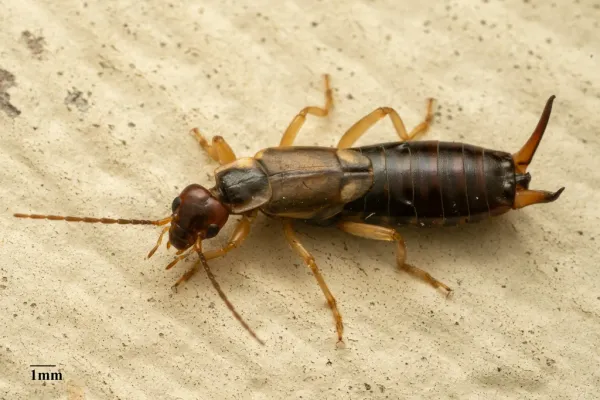
Earwig Identification Guide
Physical Characteristics
Earwigs are flat, reddish-brown insects that grow 1/2 to 1 inch long. Their most notable feature is a pair of curved pincers at the tip of their abdomen. These pincers are called cerci. Males have large, curved pincers that spread wide at the base. Females have straighter, thinner pincers that sit closer together.
These insects have six legs and medium-length antennae. They have short front wings and fan-shaped back wings that fold up tight. Despite having wings, earwigs rarely fly. When spread out, the back wings look like human ears. This is where their common name comes from.
Young earwigs look like small adults. They are lighter in color and do not have fully grown wings. They shed their skin several times before becoming adults.
Common Species in North America
-
European Earwig (Forficula auricularia): The most common species in homes and gardens across North America. It came from Europe in the early 1900s.
-
Ring-legged Earwig (Euborellia annulipes): A smaller species that is dark brown to black. It lives mainly in southern states.
-
Striped Earwig (Labidura riparia): Found in sandy soils near coasts and in southern areas. It does not usually harm plants.
Earwig Behavior and Biology
Earwigs are active at night and hide during the day. They like dark, damp spots. You may find them under rocks, logs, mulch, leaf piles, or potted plants. They also hide in cracks around foundations. Earwigs are drawn to light. You may see them near porch lights or lit windows at night. Learn more about this pest family in our Earwig guide.
Diet and Feeding
Earwigs eat many things. They feed on rotting plant matter, fungi, and small insects like aphids and mites. They also eat insect eggs. In gardens, earwigs chew holes in leaves, flower petals, and soft fruits like strawberries. They can harm seedlings and corn silks.
Reproduction and Lifecycle
Female earwigs are good mothers. This is rare among insects. After mating in late summer or fall, the female digs a small hole in the soil. She lays 30 to 55 eggs there. She guards the eggs all winter and keeps them clean by licking them often.
Eggs hatch in spring, usually from late May to early June. The mother cares for the young for several weeks after they hatch. Young earwigs shed their skin four to five times over about 70 days before they become adults. Most earwigs have one batch of young per year. In warmer areas, females may have a second batch.
Seasonal Activity
Earwigs are most active from late spring through early fall. During very hot, dry weather or after heavy rain, they may move in large groups. They often enter homes and buildings looking for moisture and shelter. Most earwigs die in late fall. Mated pairs survive winter by hiding in soil burrows.
How We Treat for Earwigs
We treat earwigs the same way we treat other pests that love moisture, like millipedes, centipedes, pillbugs, and slugs.
Inspection and Assessment
Our licensed technicians check your property carefully. They look at:
- Areas where you have seen earwigs
- Damp spots like basements, crawl spaces, bathrooms, and laundry rooms
- Entry points like foundation cracks, door gaps, window frames, and pipe openings
- Outdoor areas that attract earwigs, like mulch beds, leaf piles, and wet spots
Interior Treatment
We treat areas inside your home where earwigs are active:
- We apply insecticides along baseboards in affected rooms
- We treat cracks and gaps around entry points and hiding spots
- We focus on damp areas where earwigs gather
Exterior Perimeter Treatment
We also treat the outside of your home for lasting protection:
- We apply granular or liquid insecticides around your foundation
- We treat mulch beds, landscape timbers, and areas with plant debris
- We treat around doors, window wells, and utility access points
Prevention Tips
Our technicians share ways to make your home less inviting to earwigs:
- Reduce moisture. Fix drainage problems, adjust sprinklers, and add ventilation to damp areas.
- Change the habitat. Pull mulch away from your foundation, clear leaf litter, and remove hiding spots.
- Seal entry points. Fill cracks in the foundation, add door sweeps, and caulk gaps around windows.
- Change your lights. Swap white outdoor bulbs for yellow ones, which attract fewer earwigs.
Ongoing Maintenance
Earwigs can keep coming back if conditions are right. We offer a tri-annual service plan with three treatments per year to keep them under control. This plan includes:
- Scheduled treatments before peak earwig season
- Checks at each visit to track activity
- Free callbacks if earwigs return between visits
References
Common Questions about Earwigs
Do earwigs bite or pinch people?
+
Earwigs rarely pinch people. They use their pincers mainly for defense and mating. If you handle one roughly, it may pinch. This causes only mild pain and does not break the skin.
Do earwigs crawl into ears?
+
No, earwigs do not crawl into human ears. This is a myth. Their name comes from their ear-shaped back wings. Earwigs prefer dark, damp hiding spots, not warm bodies.
Why are earwigs in my house?
+
Earwigs come inside looking for moisture and shelter. This happens most during hot, dry weather or heavy rain. They get in through foundation cracks, door gaps, or on items like firewood and potted plants.
Are earwigs harmful to my garden?
+
Earwigs can harm seedlings, soft fruits, and flower petals, similar to [slugs](/pests/slugs/) and [garden snails](/pests/slugs/garden-snails/). But they also eat aphids and other pests. In most gardens, they cause little damage unless there are many of them.
How do I prevent earwigs from entering my home?
+
Fix drainage issues near your foundation and point sprinklers away from the house. Clear mulch, leaves, and debris from entry points. Seal cracks and gaps around doors, windows, and the foundation.
How long does earwig treatment take to work?
+
You should see fewer earwigs within a few days after treatment. Full control may take one to two weeks. Severe problems may need extra treatments.
Will earwigs damage my home?
+
Earwigs do not damage the structure of your home. They do not eat wood, fabric, or building materials. They are just a nuisance and may sometimes harm houseplants or stored paper.
Explore Other Pest Categories
Browse our comprehensive pest library for identification guides and control information.



With five years of hands-on experience in the pest control industry, George Schulz is a registered technician with the Virginia Pest Management Association and a proud third-generation professional in a family business that's been protecting homes for over 57 years.
Find Local Earwig Control Services
We provide professional earwigs control throughout Virginia, Maryland, and the DC Metro area.