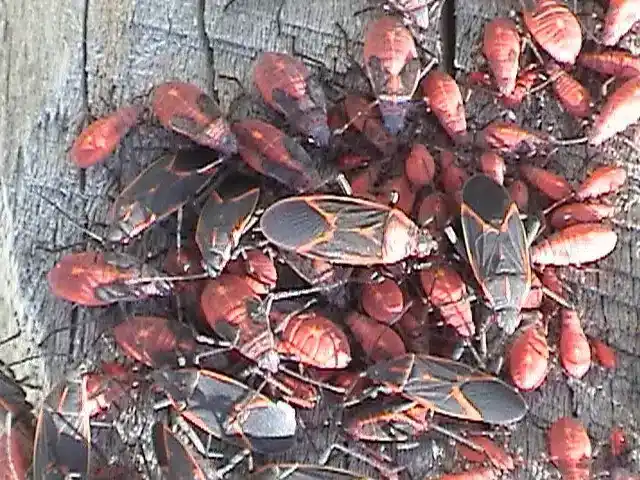

The fastest way to kill boxelder bugs is dish soap and water, sprayed straight onto the cluster outside. Indoors, skip the spray and use a vacuum. That’s the short answer. The rest of this page is about the part homeowners get wrong: killing the bugs you can see does nothing about the ones arriving next week.
I’m a third-generation technician here at Better Termite, and boxelder bugs generate more September phone calls than almost anything else we treat. The complaint is nearly always the same. Someone knocked hundreds of bugs off the siding on Saturday and had hundreds more on Sunday.
What Kills Boxelder Bugs
Three things kill them reliably, and they work in different places:
- Soapy water. Kills on contact outdoors, on siding, trunks, and fences. No residue, no lasting effect.
- A vacuum. The right tool indoors. No stain, no odor, no chemical in your living space.
- A residual perimeter insecticide. The only one that keeps working after you walk away. It has to go down before the bugs arrive to be worth anything.
Bleach, rubbing alcohol, and most of what turns up in a search will kill a bug you hit directly. So will stepping on one. None of them change how many show up tomorrow.
Does Dawn Dish Soap Kill Boxelder Bugs?
Yes, and it’s the method I hand out most often because it costs nothing and it’s hard to get wrong.
Mix about a tablespoon of liquid dish soap into a quart of water in a spray bottle. Soak the cluster until the bugs are visibly wet. They’ll drop within a minute or two. Boxelder bugs carry a waxy layer on the shell that keeps water out. The soap cuts through that layer, so the bug dries out.
Two limits worth knowing. It only works while it’s wet, so nothing protects the wall an hour later. It can also spot some paint and stress the plants below if you go heavy. Rinse the siding when you’re done.
A simple solution of dish soap and water kills boxelder bugs on contact, and University of Minnesota Extension notes the bugs are susceptible to drowning. A forceful stream of water alone will wash clusters off walls and tree trunks.
How To Get Rid Of Boxelder Bugs Outside
Outside is where the work pays off, because that’s where the bugs still are before they become your problem.
- Hose the clusters down. A hard stream knocks them off siding and trunks. Do it on a cool morning, when they’re slow and less likely to fly back up.
- Follow with soapy water on anything that regroups.
- Rake up the seedpods. Boxelder bugs feed on the seeds of female boxelder trees and other maples. Clear what’s fallen and you remove the reason they gathered on that side of the yard.
- Clear a strip along the foundation. Pull leaves, mulch piles, boards, and rocks back from the wall, especially on the south and west sides where the siding gets hot.
Timing matters more than any of the individual steps.
Virginia Cooperative Extension recommends that perimeter sprays aimed at boxelder bugs be applied around the foundation in mid to late August, ahead of the fall congregation rather than during it.
That lines up with what we see in the field. University of Maryland Extension puts the heavy clustering at “usually October in central Maryland,” and Northern Virginia runs close behind. By the time a homeowner calls us because the wall is covered, the useful window has mostly closed for that year.
How To Get Rid Of Boxelder Bugs Inside
Vacuum them. That’s the recommendation from every extension service I’ve read, and it’s what I do in my own house.
Use a shop vac if you have one, empty the canister outside, and don’t crush anything on the way. A squashed boxelder bug leaves a rust-colored stain on curtains, carpet, and painted trim, and it smells.
Do not reach for a spray can indoors.
University of Maryland Extension calls boxelder bugs “minor nuisance pests” and states plainly that “an insecticide is not necessary or recommended to control them.” University of Minnesota Extension adds that because the bugs don’t live long once they’re inside, insecticides aren’t recommended after they’ve emerged indoors. University of California is blunter: “Do not use sprays for boxelder bugs inside the house.”
There’s a practical reason for that, not just caution. Bugs that die inside a wall stay there. Dead insects in a wall void draw carpet beetles and dermestid larvae, so you trade a visible nuisance for a hidden one.
Seal The Gaps They Actually Use
Sealing is the piece that changes next year’s numbers. It’s also where most advice online goes soft. “Seal cracks and crevices” is easy to write and hard to act on.
I asked Daren, one of our registered technicians, which openings he actually seals on exclusion work. His answer wasn’t the windows and doors everyone expects:
“Utility lines are always going to be your biggest ones, because somebody’s always coming out there working on something and doesn’t seal it back up. After that, the door trim at the bottom of the garage doors. And the small ones people never think of are weep holes, crawl space vents, and old cable lines. There’s often a hole around an old dead cable line just hanging out of the house.”
Daren also said the thing most pest control articles won’t:
“Trying to exclude insects out would be a very, very expensive and tedious process of caulking everything and anything in the house. It’s just not a realistic thing. You can help by caulking some stuff, but they’re going to get in if they want to.”
Take that seriously before you spend a weekend with a caulk gun. Full exclusion is a rodent strategy. For an insect this small, sealing cuts the number that get in. It won’t take it to zero. Put your effort into the openings Daren listed and the ones you can actually reach, and expect a few to still get through.
University of Minnesota Extension advises sealing openings 1/8 inch or larger, and doing it before August, ahead of the fall move rather than during it.
Door sweeps, a rubber seal along the bottom of the garage door, and intact window screens cover the routes you can actually fix in an afternoon.
Why They Keep Coming Back
Here’s the part that frustrates homeowners most. You can cut down the boxelder tree in your own yard and still get bugs.
Adult boxelder bugs “can fly several blocks, and may travel as far as two miles,” according to University of Minnesota Extension.
Two miles covers a lot of Arlington or Alexandria. Unless you own everything in that radius, cutting one tree is a partial fix at best. I’d think hard before taking down a healthy shade tree over a nuisance insect. Pulling a female, pod-bearing tree right against the house is a fair call. Clearing the neighborhood is not on the table.
They aren’t damaging anything on the way in. They feed on seeds and leaves, and Maryland Extension notes the trees aren’t hurt by it. They don’t bite, don’t carry disease, and don’t breed indoors. Every one you find on a warm January window came in last fall and has been dormant in a wall since.
Identifying Boxelder Bugs
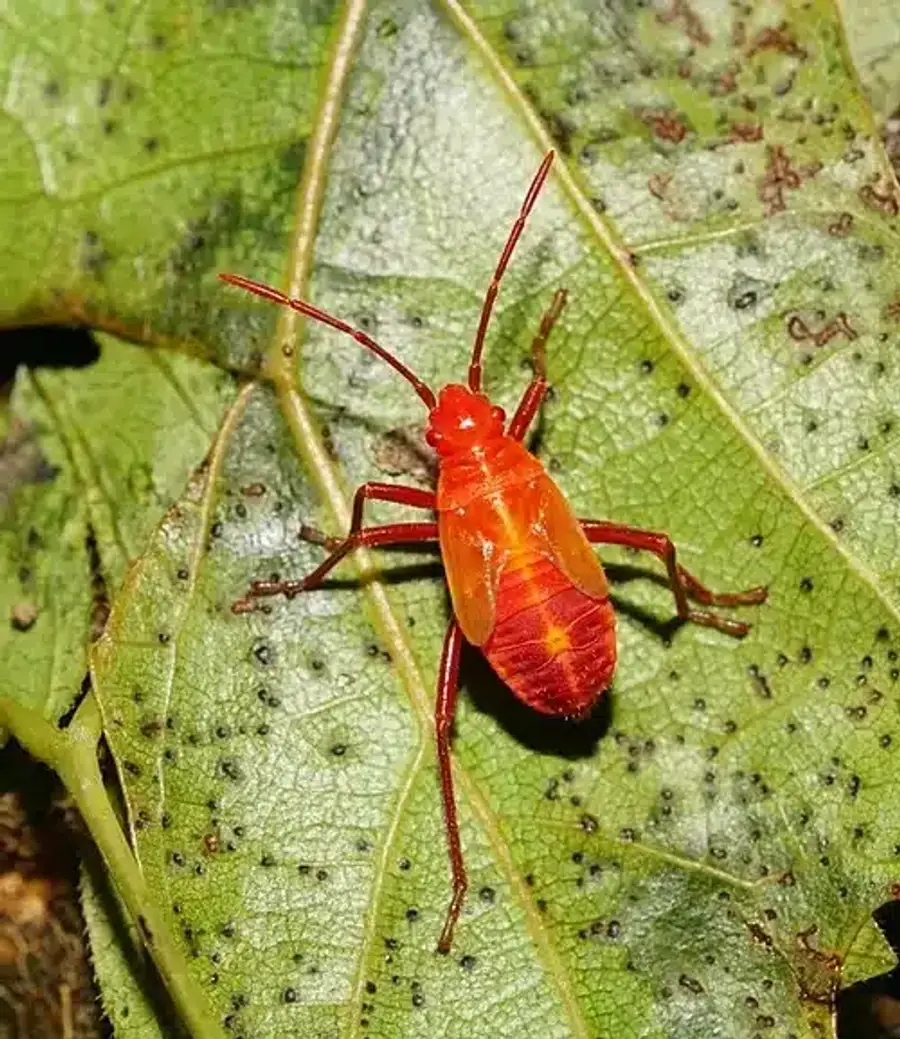
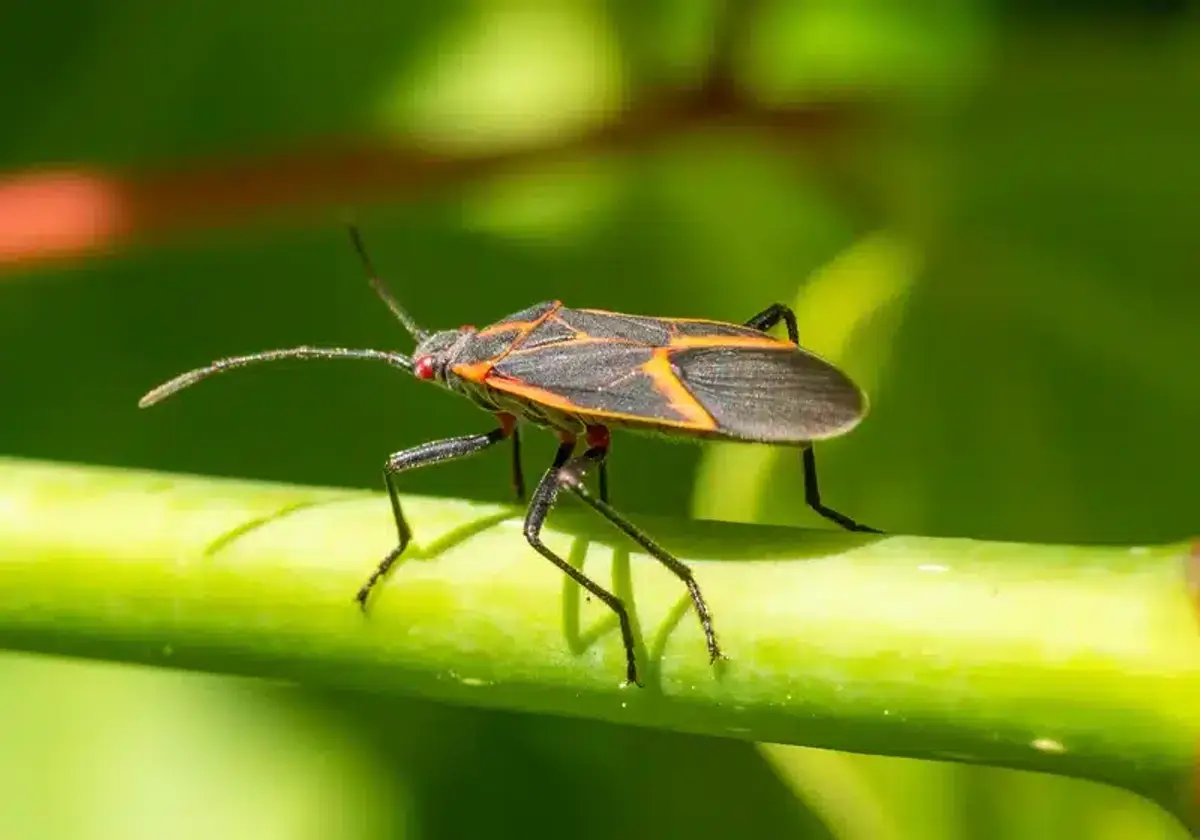
Adults run about half an inch long, flat, black, with red or orange lines along the wing edges. Nymphs are bright red and much smaller.
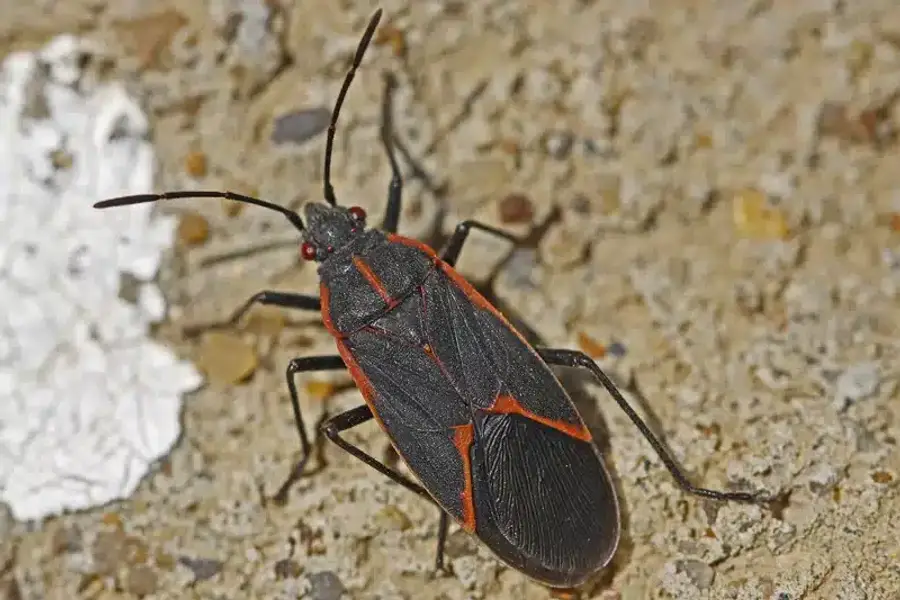
The common mix-up is with brown marmorated stink bugs, which show up on the same walls in the same weeks. Stink bugs are broader, shield-shaped, and mottled brown. Boxelder bugs are narrow and flat with clean red markings. If you want a closer look at the red-and-black insects people confuse with each other, our red and black beetle identification guide walks through them side by side.
Despite the nickname “boxelder beetle,” they’re true bugs, not beetles, which is why they pierce seeds to feed instead of chewing.
Boxelder Bug Season In DC, VA, And MD
- Spring: overwintered adults wake up and head for host trees. You’ll see them at windows on the first warm days. Vacuum what shows up inside and note where they’re coming out, because those are the gaps to close before fall.
- Summer: nymphs feed on fallen seedpods. This is the quiet stretch, and it’s when sealing work should happen.
- Mid to late August: the window for a perimeter treatment, per Virginia Cooperative Extension.
- September through November: clustering on south- and west-facing walls, then entry. October is the peak in our area.
- Winter: dormant in wall voids and attics. Warm spells bring a few to interior windows.
When A Perimeter Treatment Is Worth It
Soapy water and a vacuum handle a light year. A residual perimeter band is the only approach that keeps working after you put the sprayer down. It earns its keep in two cases: a mature female boxelder or maple close to the house, or a wall that gets covered every fall no matter what you do.
The timing is the whole thing. Applied in mid to late August, a perimeter band intercepts bugs on the siding before they find a gap. Applied in mid-October, it kills what it touches and little else.
Boxelder bugs are one of the 35 common pests covered under our ongoing home pest plan. That starts around $49 a month for an average DMV home, plus a one-time $200 setup fee on the first visit. We don’t sell one-time treatments. For a pest that comes back on a calendar, one visit isn’t honest value. Our registered technicians will also walk the utility penetrations, weep holes, and garage trim Daren described and tell you which are worth sealing.
We work throughout DC, Virginia, and Maryland, including Northern Virginia and Ashburn.