

Do termites spread from house to house? Yes. Termites can move between homes through underground tunnels and mud tubes, often covering most of a football field. This guide explains how they spread, how fast they move, how a house gets them in the first place, and how to protect your home. See our Termite Control page for service details.
Termites build mud tubes, move through wall voids, and use moisture in the soil to travel undetected. As they spread, they eat wood and other materials in your home.
- Eastern subterranean termite workers regularly travel up to 200 feet from the nest in search of food
- They build protective mud tubes to move between structures undetected
- Subterranean termites are the species that spread house to house in Virginia and Maryland; drywood termites are rare here
- Early detection through regular inspections is critical to preventing damage
Understanding Termite Behavior
Termites are social insects that live in colonies. These colonies have complex roles that include reproductive termites, worker termites, and soldier termites. Termites travel together, consuming wood and building extensive networks. They spread from one house to another in search of food and shelter. Every termite colony depends on a steady food source, commonly wood from your house. The colonies can spread rapidly if not controlled. NC State Extension describes how a mature colony can form satellite nests, creating a network of chambers and tunnels that all belong to one large colony.
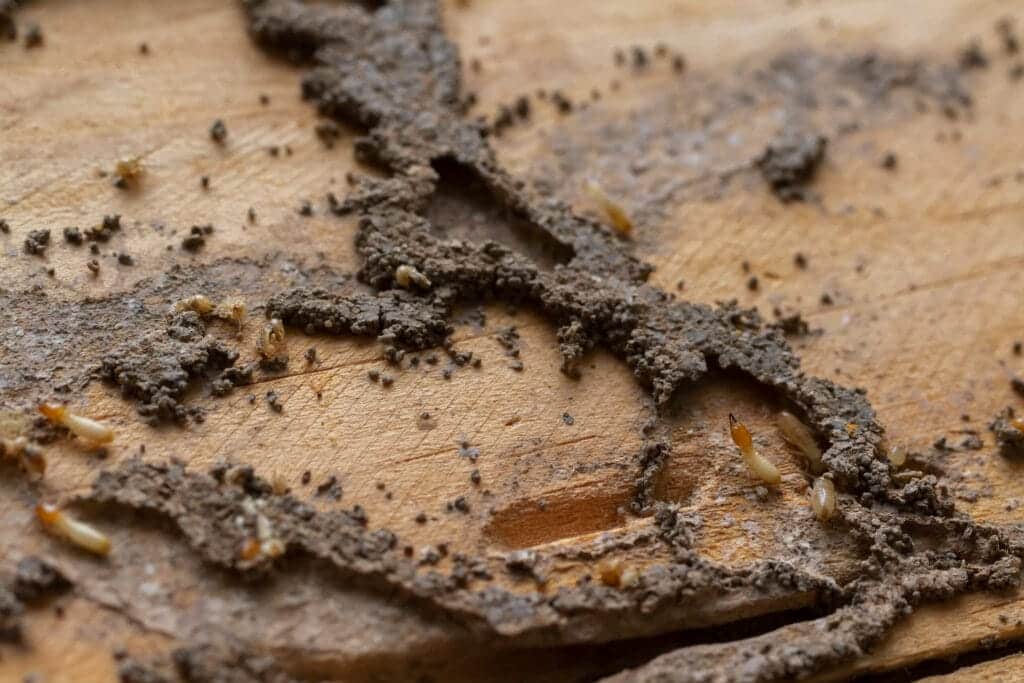
Termite colonies consist of thousands of termites working together. Their foraging behavior centers on finding wood and moisture in crawl spaces or wooden structures. The termites build mud tubes and mud tunnels to move between rooms and houses without being noticed. They even build mud tubes along the foundation and crawl spaces to stay hidden while they spread.

How Do You Get Termites in the First Place?
How do you get termites? Almost never by bringing them home. In Northern Virginia and Maryland, eastern subterranean termites are native and already live in the soil of most yards. A house gets termites one of two ways:
- A foraging colony finds your foundation. Workers tunnel through the soil looking for wood. When they hit a deck post in the dirt, a mulch bed piled against siding, or a crack in the slab, they follow it inside. According to the National Pest Management Association, subterranean termites can enter through cracks less than 1/16 of an inch wide. Virginia Tech’s Dini Miller notes they come up through cracks in the slab, utility conduits, and expansion joints, then build mud tubes to reach the framing.
- Swarmers start a new colony near the house. Each spring, winged reproductives leave a mature colony, land, shed their wings, and pair off in the soil. A new colony that starts against your foundation will find the house within a few years.
Daren, one of our registered technicians, finds termites most often in three places: the mulch beds around the house, the band board and sill plate in the basement, and the garage. Outside, the two most common spots are around the chimney and around a front stoop. That is why he always starts an inspection at one side of the stoop and works his way around the whole house. If you want to know what he is looking for, our guide to signs of termites in your yard covers the outdoor clues.
I remember one house in Alexandria from my training here, less than a quarter mile from the company owner’s house. The homeowners had no idea anything was wrong. What tipped them off was a small bulge in a window sill in a newer addition. The termites had eaten up to the paint and were starting to break through. When we got into the crawl space under that addition, we found years of feeding and tunnels running up the inside of the foundation. Nobody carried those termites in. The colony was in the soil the whole time, and the addition gave it a fresh route up.
The Basics of Termite Spread
When we consider whether termites spread from house to house, the answer lies in their natural behavior. Termites spread by building mud tubes, which provide a protected passage from one area to another. These mud tubes appear as small piles on the foundation or walls. They are the first telltale signs that termites are active. Regular inspections can reveal these mud tubes, revealing early termite activity.
Termites spread not only in one house but can spread from one house to another. They do this by moving along common pathways like tree stumps, soil channels, and shared gardens. Wood left exposed in outdoor structures can be an easy food source. In short, when termites spread, they target every weak link in the food chain. Keeping an eye out for what are flying termites can also help determine possible active infestations.
Termite Movement and Distance Traveled
The question “How far will termites travel from house to house?” is common among homeowners. Research shows that termites spread to neighboring houses, often covering most of a football field. They spread along the foundation and in crawl spaces, using moisture and wood as guides. In neighborhoods, termites spread by exploring the ground, bridging gaps between wooden structures.
According to NC State Extension, eastern subterranean termite workers regularly travel up to 200 feet from the nest and can forage across an area of up to one-third of an acre. A mature colony averages roughly 300,000 termites, and some reach several million. University of Maryland Extension adds that a single colony can use food sources more than 200 feet apart. On a typical suburban lot in Fairfax or Montgomery County, that puts three or four houses inside one colony’s reach.
When one termite finds a food source, it sends signals to the colony. This behavior helps them build new colonies and spread rapidly. Subterranean termites, for example, travel underground and can move from one house to another without interruption. Drywood termites, although not as dependent on soil, also spread in search of wood. If you live in Reston, you can find service options nearby. Pest Control Reston
How Fast Do Termites Spread?
How fast do termites spread? The honest answer is slowly, then all at once. Termites are not fast movers, and a colony does not level a house in a season. NC State Extension estimates that a colony of roughly 60,000 termites eats about one foot of 2x4 lumber in five months. A mature colony of 300,000 or more eats several times faster, but even then, serious structural damage usually takes a year or more to build.
The reason termites feel fast is that all of this happens out of sight. They feed inside the wood and leave the painted surface intact, so a year of feeding can go unnoticed until something gives.
Daren’s worst termite job shows how that plays out. It was a single-family house in Kingstowne. The termites had tubed up from under the back deck into a bay window. When he tapped the sill with a screwdriver, it went straight through the paint. The whole bay window had to be replaced. His estimate was that feeding had gone on for at least a year, and the only reason anyone caught it was a deck contractor who recognized the tubing from termites at his own house.
So when you ask how fast termites spread in the house, the practical answer is this: the spread from the soil to your framing can take months, but the window to catch it cheaply is that same stretch. That is why we recommend a yearly termite inspection, which is free for homeowners.
Signs of Termites in Your House
Telltale signs of termites can be subtle at first. Many homeowners spot discarded wings near window sills, signs of termites spread after a swarming season, or small piles of mud tubes on walls. Other common signs include:
- Mud tubes on the foundation
- Scratched or pockmarked wooden structures
- Cracked or soft walls
- Discarded wings near entry points
If you notice these common signs of termites, it might be time for a termite inspection. Early recognition of these signs, such as mud tubes and winged termites, leaves less chance for termite damage. Termites eat wood relentlessly, so early detection may help prevent expensive repairs. One caution from experience: a lot of what gets called termite damage is actually wood rot. Our guide to termite damage vs. wood rot shows the difference.
Different Types of Termites
There are two main types of termites that homeowners worry about: subterranean termites and drywood termites. Subterranean termites are the most common and are known for their extensive underground networks. They build mud tubes and travel along foundations and crawl spaces. In Virginia, Maryland, and DC, nearly every termite job we see is the eastern subterranean termite.
Drywood termites live in the wood itself. They spread more slowly than subterranean species but can create hidden damage inside wooden structures. They are a Southern and coastal problem and rarely show up in the DMV. Both types of termites display similar signs, such as discarded wings and damaged wood, but only subterranean termites build mud tubes. Recognizing these signs early can help prevent the termites spread from one house to another.
Subterranean termites build mud tunnels that give them protected paths between food sources. Drywood termites work inside the wood itself. Either way, the result is the same: colonies grow and cause damage.
Termite Colonies and Their Impact
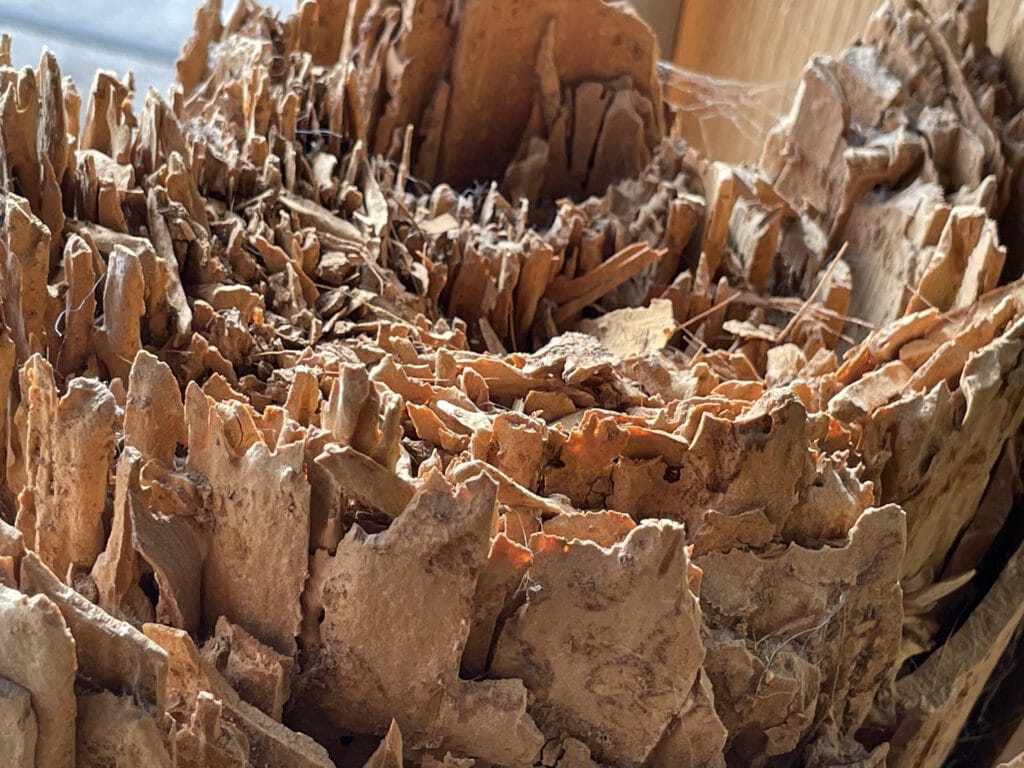
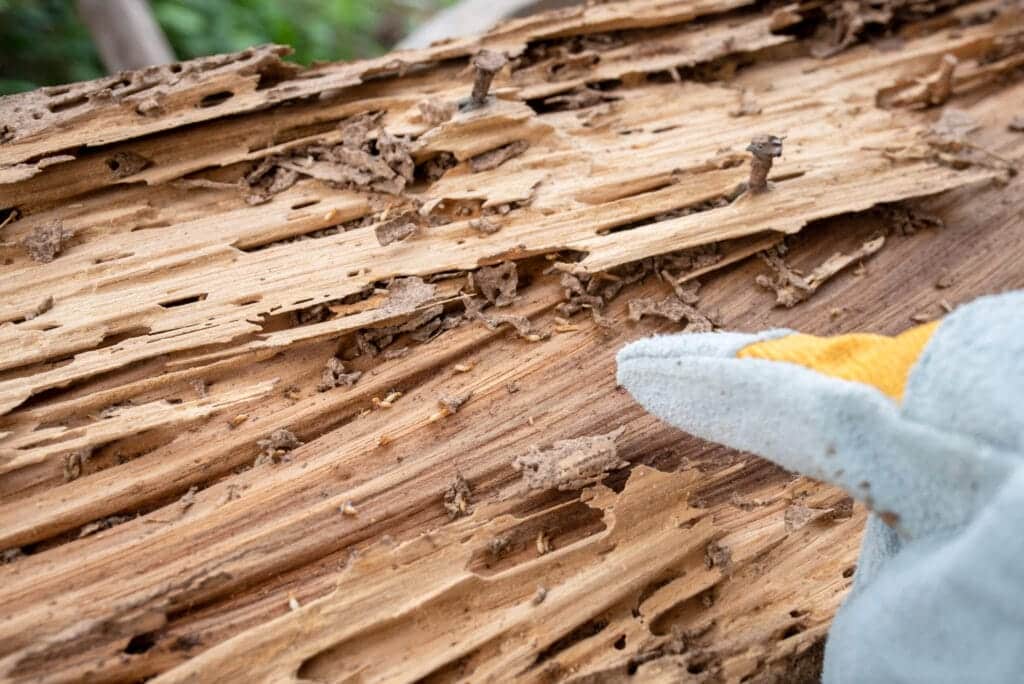
Each termite colony is a powerhouse of activity. Termite colonies can build mud tubes, tunnel through walls, and eat away at wooden structures. Over time, the colonies spread and lead to a termite infestation. Homeowners will notice termite damage as wooden parts become riddled with tunnels and small piles of mud.
When termites spread from house to house, the damage can multiply quickly. It is common for colonies in one house to form new colonies in a neighbor’s house. This natural progression of termite activity is why regular inspections are so important. Termites eat wood and spread at a pace that can lead to costly repairs if left unchecked. The National Pest Management Association puts the cost at an estimated $6.8 billion in property damage each year in the United States, and notes that standard homeowners insurance almost always excludes it.
New colonies form when reproductive termites, sometimes called dispersal or winged termites, find new food sources. These new colonies can begin another cycle of termite spread, building mud tubes and consuming wood in multiple houses. Consider getting an annual termite inspection to catch problems early.
Do Termites Spread from House to House? The Facts
The question “Do termites spread from house to house?” gets to the heart of the threat these insects pose. Numerous studies support that termites spread widely and can travel long distances in search of food. Termites spread from one house to another through continuous tunnels and mud tubes that they build. They spread underground, where walls and foundations provide little resistance.
Termites spread quickly when conditions are right: damp soil, wood near the foundation, and poor maintenance. When termites spread, this can create a domino effect in the neighborhood. The colonies share foraging paths and will feed on any wood or paper left in contact with the ground. Homeowners need to stay vigilant and scheduled for regular inspections to catch termite colonies before they cause real damage.
Are Termites Contagious?
Are termites contagious? Not the way a cold is. You cannot catch termites from a neighbor who comes over, from touching infested wood, or from a contractor who worked on an infested house. Termites are not a germ. They are a colony living in the soil, and the colony is what spreads.
What people mean by “contagious” is that termites seem to move down a street from one house to the next. That part is real, but the mechanism is underground foraging and spring swarms, not contact. One colony can feed on several houses at once, and the swarmers it releases each spring start new colonies nearby. So a neighbor’s termites are a warning about the soil you share, not something that rubs off.
Can You Bring Termites From One House to Another?
Can you bring termites from one house to another when you move? In our area, it is rare. Eastern subterranean termites need constant contact with soil moisture. A handful of workers carried inside a dresser or a moving box has no queen and no soil, and they die off. Virginia Tech notes that above-ground infestations with no soil connection do happen, but they are rare in most of Virginia because they need a constant structural moisture source, like a long-term roof or plumbing leak.
The two things that can carry live termites onto a property are firewood and mulch. Even then, the workers you bring in do not start a colony on their own. The risk is that the pile gives an existing colony in your soil a food source right next to the house. Keep firewood off the ground and away from the foundation, and keep mulch a few inches below the siding.
Drywood termites are the species that travels in furniture, and they do come home in antiques from Florida or the Gulf Coast. They rarely survive our winters outdoors and almost never spread house to house here.
How Termites Travel Through Neighborhoods
Understanding how termites travel can help you protect your house. Termites spread by traveling along the soil and through the wood of neighboring houses. Their movement is aided by structures like mud tubes, which allow them to travel unseen. They even build mud tubes along the foundation of a house to bridge gaps with a neighbor’s house.
In many cases, termites spread from one structure to another due to shared moisture issues. Wood that touches the ground can quickly become an easy route for termites to spread. This spread means that, even if one house has been treated, nearby houses must remain vigilant. Termites eat wood, and if one structure is attacked, the potential for spread is high. Dense subdivisions make this worse because homes sit close together on the same wet ground, so when a neighbor finds termites I tell people to get their own home looked at — that is most of what Aldie termite inspections in the Stone Ridge area are about.
Stopping Termites From Spreading
If you’re wondering how to stop termites from spreading, there are several proactive steps you can take. Regular maintenance and careful treatment can slow down the termite spread.
In addition, working with a pest control professional can help you stop termites from spreading. Expert treatments may include termite treatment programs designed to target mud tubes, colonies, and foraging behavior. These programs are structured to reduce termite activity and stop termites from attacking wooden structures in your house.
The Importance of Regular Inspections
Regular inspections are critical to detect early signs of termite activity. A termite inspection can reveal mud tubes along the foundation, tiny tunnels in the walls, or even discarded wings that point to a swarming season. Homeowners should schedule a termite inspection if they notice any common signs of termites.
Pest control professionals emphasize the need for regular inspections. These experts check every crawl space, wall, and wooden structure for signs of termite spread. By staying on top of these regular inspections, you can catch termite colonies before they lead to major termite damage. Consider looking into Sentricon® FAQ’s: How Does Sentricon Work? as well.
Expert Advice from a Pest Control Professional
When dealing with termites spread throughout a community, getting expert advice is key. A knowledgeable pest control professional can assess your termite problem and provide targeted solutions. They evaluate termite colonies, mud tubes, and signs of termites to recommend effective termite treatment.
Experts reveal that even one termite can begin to spread a colony rapidly across boundaries. They check walls, crawl spaces, and foundations for termite damage. Using lower-impact products, many pest control companies now help prevent termites and limit termite spread without using harsh chemicals.
How Far Will Termites Travel from House to House?
Homeowners often ask, “How far will termites travel from house to house?” Termites travel wherever food takes them. Workers regularly forage up to 200 feet from the nest, and a colony can feed on sources more than 200 feet apart. Termites spread by following moisture and wood, making crawl spaces and foundation walls prime pathways.
Termites spread more easily during swarming season. When winged termites take off, they can cover long distances. This rapid spread means that you should be alert if you notice termite colonies near your home. The potential for termite spread is huge when neighboring houses provide ample food and moisture.
Should I Be Worried If My Neighbor Has Termites?
If my neighbor has termites, do I need to do anything? Yes. If termites spread from house to house, the problem could soon affect your property. Termites spread through shared foundation walls, soil, and even tree stumps. A colony that is feeding on the house next door is, by definition, inside 200 feet of yours.
There is a second reason to act. NC State Extension warns that termites settling away from your home are still a concern, because the swarmers that colony produces later may attack your home. In the DMV, those swarms show up on warm, humid days from roughly March through May. Penn State Extension puts the Mid-Atlantic window at February through June. If your neighbor saw termite swarmers this spring, a mature colony is within flying distance of your foundation.
What to do: get a termite inspection, which is free for homeowners. If the inspection is clean, a Sentricon baiting system starting around $35 per month for an average DMV home protects the whole perimeter before workers reach it. If it is not clean, we treat what we find and set up protection from there. Either way, you know instead of guess.
Can Termites Move from One House to Another?
It’s common to wonder, “Can termites move from one house to another?” The answer is straightforward. They certainly can. Subterranean termites spread by migrating underground, while drywood termites may move within wooden structures. Termites travel along mud tubes and soil, forming a continuous network from one house to the next.
This termite spread happens gradually as new colonies form and expand. When one termite finds a food source, the colony quickly builds mud tubes and tunnels to reach it. Homeowners who stay vigilant will notice the common signs of termites, such as mud tubes and dried mud packed into damaged wood, forming along their foundations.
How Do You Stop Termites from Spreading?
To stop termites from spreading, proactive measures are essential. Begin by eliminating moisture around your house, sealing any cracks in walls, and removing any wood debris near the foundation. These steps cut off the food source and foraging paths that termites rely on.
Hiring a pest control professional who specializes in termite control can significantly reduce termite spread. Their termite treatment often includes targeted products that interfere with termite colonies, disrupt mud tubes, and reduce termite activity in your house. Effective termite treatment stops termites from spreading to new colonies and damaging your wooden parts.
Additional Tips for Homeowners
Homeowners should remain aware of termite behavior. Termites spread across the house quietly by consuming wood and building tunnels. Look for common signs of termites such as mud tubes on walls, discarded wings near window sills, and small piles of soil near the foundation.
With many homeowners finding that termites spread fast during the swarming season, keeping an ear to the ground goes a long way. An early termite inspection can reveal the subtle signs before termite colonies spread and cause significant property damage.
If you need help with termites, call us at 703-683-2000 or email info@bettertermite.com. We’ll inspect your property and build a plan to stop the spread.