
When homeowners see bees buzzing around their yard, the first question is usually: is it a honeybee or a bumblebee? Getting the ID right matters because each one nests in different places and needs a different approach when problems come up.
In my years in the field, I’ve seen many homeowners mistake bumblebees or honeybees for wasps or carpenter bees. This mix-up often happens when people spot bees going in and out of gaps in siding or near the ground. Most calls come when bees are nesting too close to doors, walkways, or play areas.
How to Tell Honeybees and Bumblebees Apart
The easiest way to tell these two bees apart is by looking at their bodies.
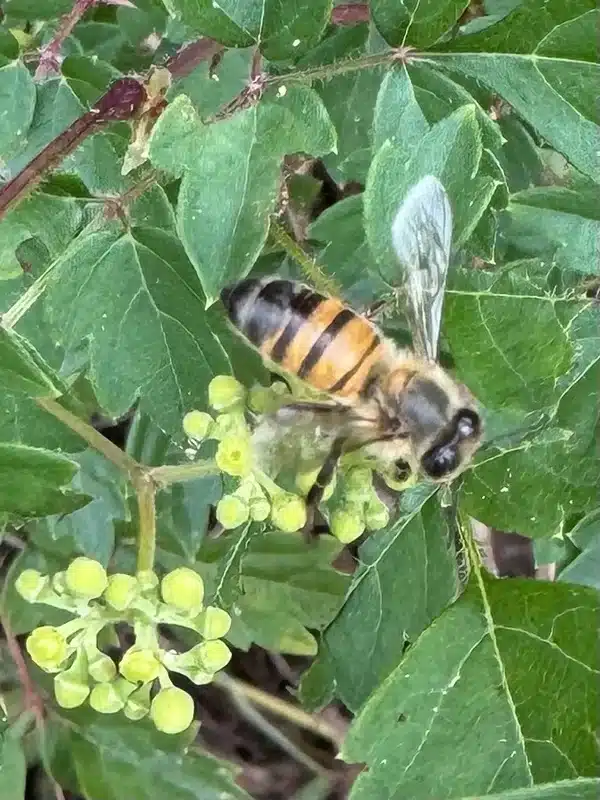
A honey bee measures about 1/2 to 5/8 inch long with a slender build. Their bodies are mostly brown-amber with even stripes across the belly. They have thin hair that gives them a somewhat shiny look compared to other bee species.
When loaded with pollen, honeybees carry compact wet pellets on their hind legs. You’ll often see them moving in a steady, direct flight path between flowers and their hive.
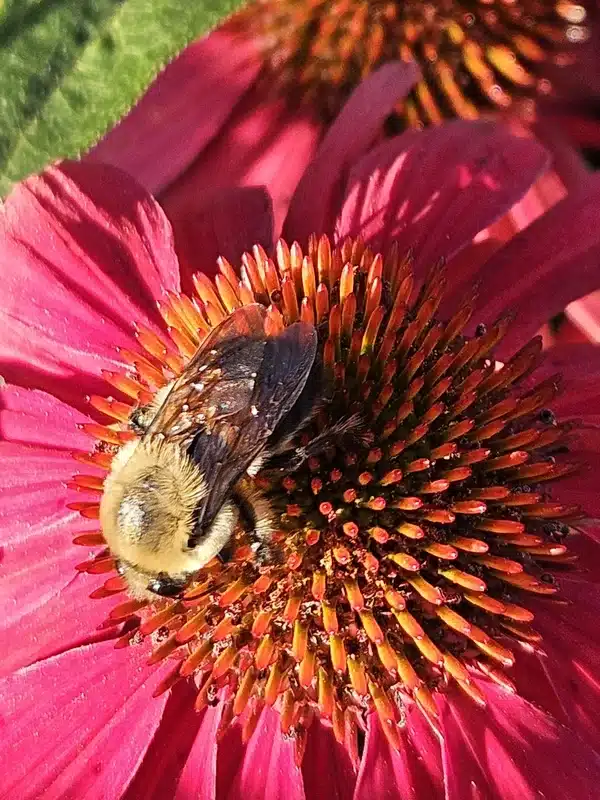
A bumblebee is much bigger and rounder. They range from 1/2 to 1 inch long, with queens being the largest. They have bold bands of black, yellow, orange, and white. Their entire body is covered in dense, fuzzy hair, making them easy to spot.
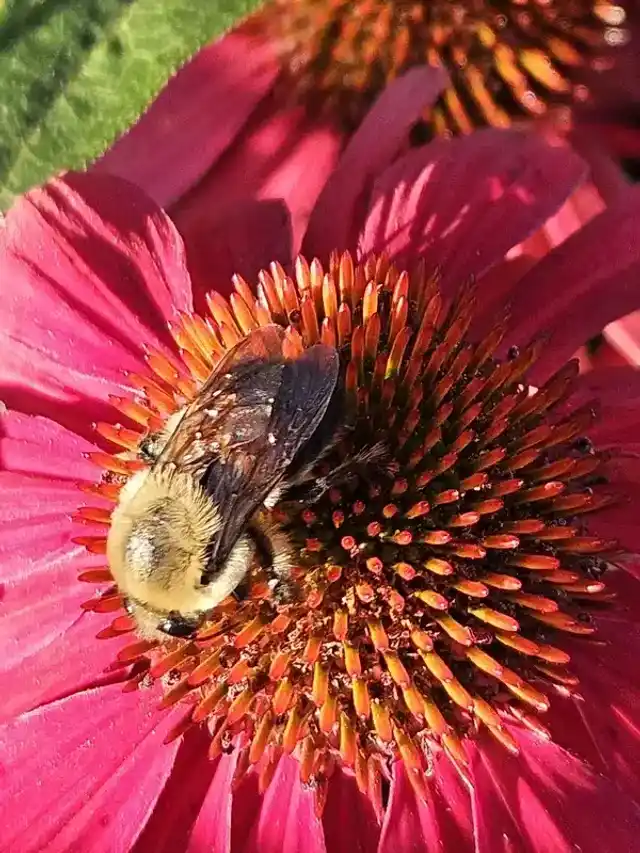
Bumblebees look dusty when loaded with pollen because loose grains stick to their fuzzy bodies. They fly with a heavier, more bumbling flight pattern.
Here’s a side-by-side look so you can compare the two.
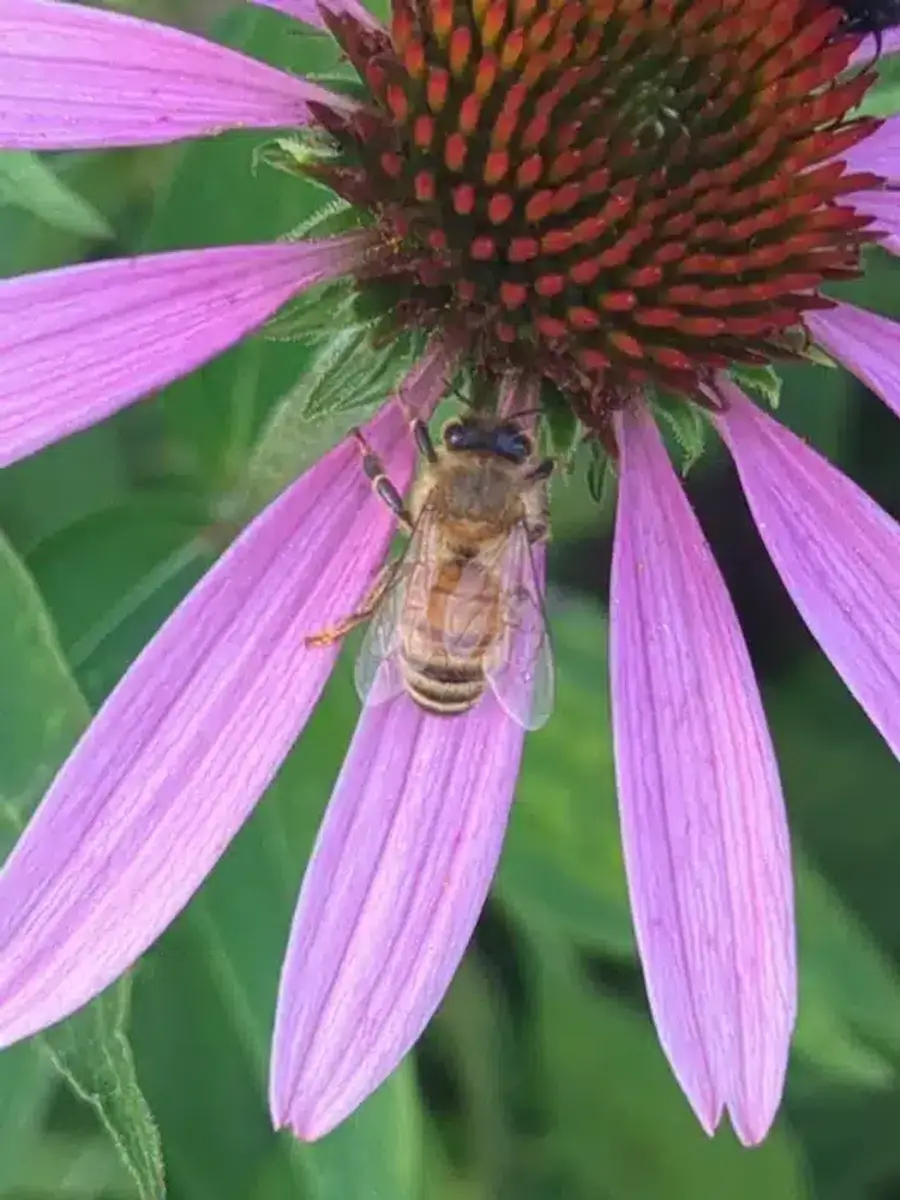
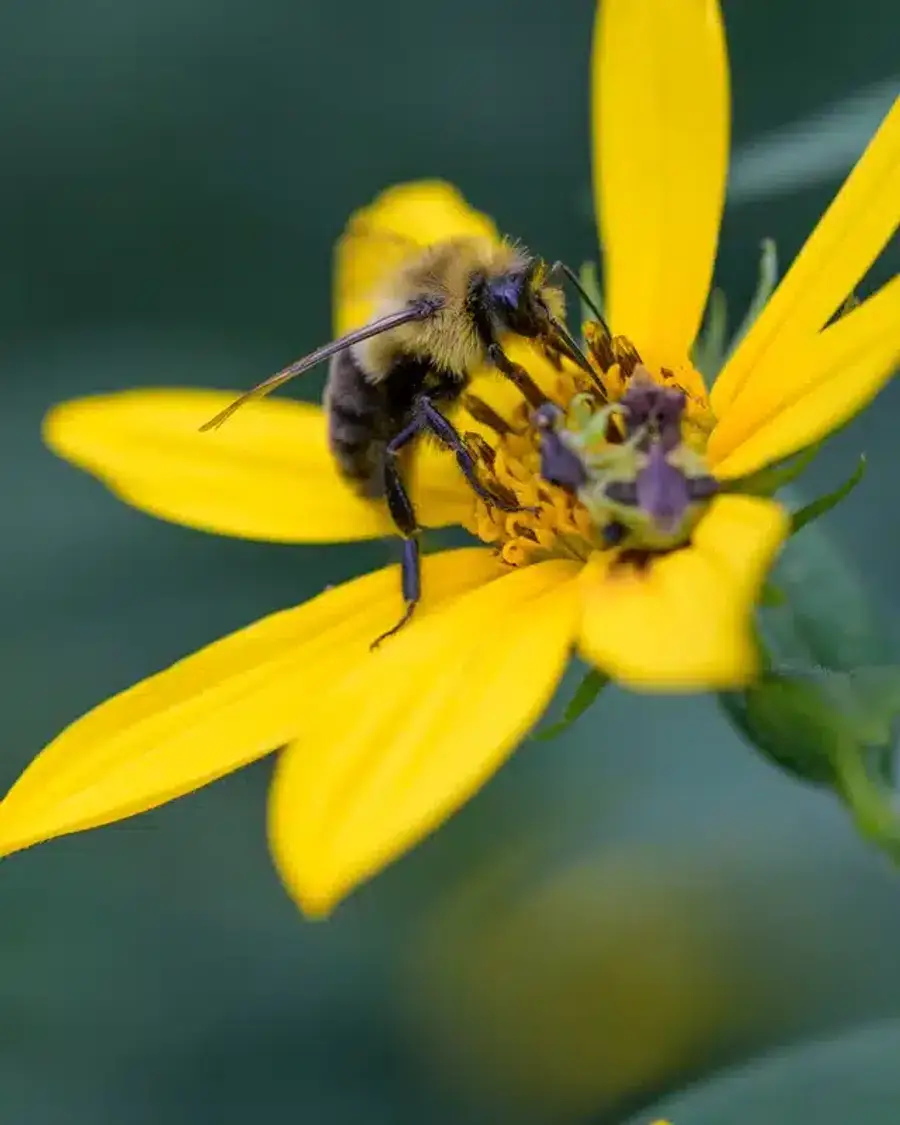
| Honeybee | Bumblebee | |
|---|---|---|
| Size | 1/2 to 5/8 inch | 1/2 to 1 inch |
| Look | Slender, amber-brown | Round, fuzzy, bold colors |
| Colony Size | Thousands of bees | 100-300 bees |
| Nesting | Above-ground cavities | Underground (70%) |
| Honey | Large surplus stores | Small amounts only |
Use this quick test to tell them apart at a glance.
Where Each Bee Nests
Where you find the nest tells you a lot about which bee you’re dealing with.
Honeybees build large colonies that can last for many years. A single queen can live several years, and the colony overwinters as a group. They prefer cavities about 40 liters in size.
In nature, they pick tree hollows. Around homes, they often move into wall voids, soffits, or eaves. When they swarm, you might see a ball of bees hanging on a tree limb or fence post while scouts look for a permanent home.
Bumblebees start fresh every spring. A lone queen comes out of hibernation, finds a nesting spot, and builds a new colony from scratch. About 70% of bumble bee nests are underground in old rodent burrows, compost piles, or grass clumps.
The rest nest in rock walls, under shed floors, or in thick leaf litter. Most colonies top out at 100-300 workers by midsummer. The whole colony dies in fall except for new queens, who hibernate alone through winter.
Stinging Behavior
Both bees are calm when visiting flowers. They only get defensive near their nests.
Honeybees have barbed stingers that get stuck in skin. Each bee can only sting once, and the bee dies after. But a large colony can mount a strong defense if the hive feels threatened. The barb stays in the skin and keeps pumping venom, so scrape it out quickly rather than pinching it.
Bumblebees have smooth stingers and can sting more than once. But they rarely do. You’d have to step on one or bump into their nest to provoke a sting. Their smaller colonies also mean fewer bees defending the nest.
According to research published in WIRED, native bee diversity, especially Bombus species (bumblebees), added about $300 per acre in blueberry yield value in Mid-Atlantic trials. Multiple bee species working together provide more reliable pollination than any single species alone.
Both bee species play a role in the garden, but that doesn’t help when they’re nesting in your walls or near your front door.
When Bee Activity Becomes a Problem
Most bee activity around your yard is normal and doesn’t need treatment. But there are times when bees nest in spots that create real problems.
- Wall voids or soffits: Honeybees in walls can cause honey to melt and stain in summer heat, and attract secondary pests
- High-traffic areas: Nests near doors, walkways, or play areas increase the risk of stings
- Allergy concerns: If someone in the household has a severe bee allergy, even nearby nests may need to be addressed
- Repeat nesting: Old nest sites attract new colonies year after year if not sealed
How to Handle Each Situation
The right response depends on which bee you have and where it’s nesting.
A swarm is a ball of bees hanging on a branch or structure. This is temporary. The bees are calm and usually move on within 24-48 hours. If they don’t, contact a local beekeeper. The Northern Virginia Beekeepers Association offers free swarm pickup.
Bumblebee nests near walkways or play areas can be marked off and avoided until fall, when the colony dies on its own. If the nest is in a spot where someone could step on it or trip, flag the area and redirect foot traffic. Direct removal is an option when the nest poses a real risk to household members with allergies.
What I See in the Field
The most common mix-up I see is homeowners thinking they have a carpenter bee problem when it’s actually bumblebees nesting in the ground nearby. Carpenter bees are solo insects that drill into wood. Bumblebees are social and nest underground.
I also get calls about “aggressive bees” that turn out to be wasps or yellow jackets. Wasps have smooth, shiny bodies with a pinched waist. If the insect looks hairless and has a narrow midsection, it’s not a bee. That’s why every bee nest removal call we run starts with figuring out what actually built the nest.
When to Call a Professional
Call a pro when honeybees have moved into your walls, when you can’t ID the species, or when someone in the household has a severe allergy. For bumblebees, most situations resolve on their own by fall. But if the nest is in a spot that creates a real risk, professional help can address it quickly. Our bee removal service starts with that ID, because honeybee colonies go to a local beekeeper for relocation while bumble bee nests we look at one at a time.
At Better Termite & Pest Control, we’ve served the DC metro area for over 58 years with more than 1,800 reviews. Our licensed techs can ID the species and recommend the right approach for your situation.
Call us at 703-683-2000 or email info@bettertermite.com for a free check.
Here’s what honeybees and bumblebees look like up close so you can compare them to what you’re seeing at home.