
Seeing large, buzzing bees around your home can leave you guessing. Carpenter bee vs bumblebee matters because one of them drills into your deck and fascia boards, while the other nests in the ground and leaves your home alone.
In my years as a licensed tech, I’ve helped hundreds of homeowners figure out which bee they’re dealing with. The good news: you can tell them apart with one quick look.
Carpenter bees have shiny, smooth abdomens that look almost metallic. Bumblebees are fuzzy all over, like tiny teddy bears. This works from several feet away.
How to Tell Them Apart
The fastest way to ID these bees is by looking at their bodies.
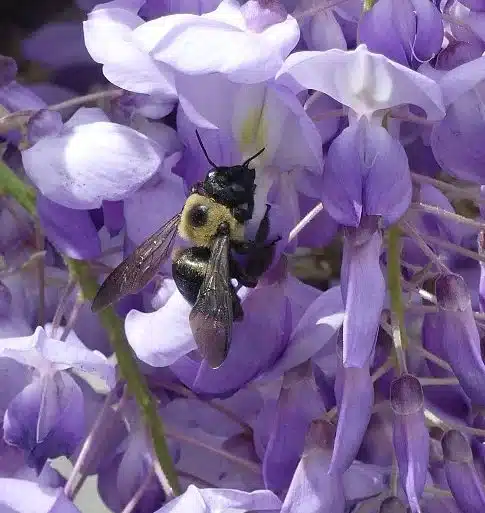
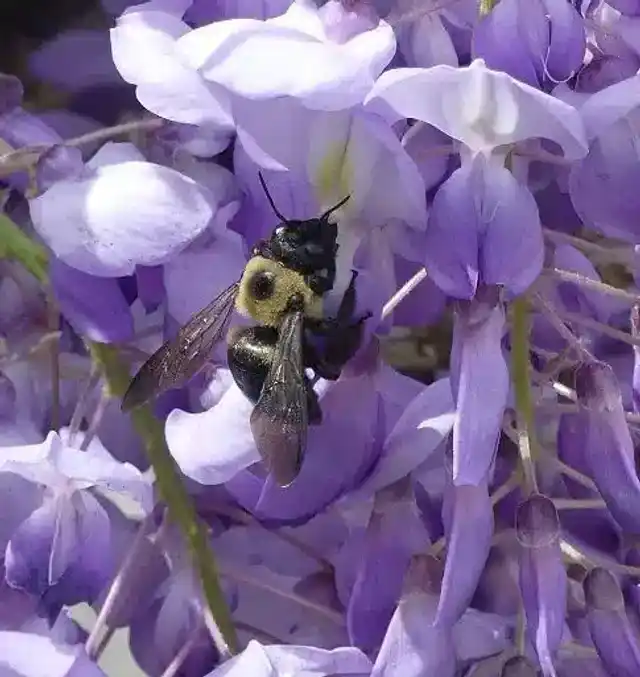
Carpenter bees have a bare, black abdomen with very few hairs. It looks polished or metallic. The middle section (thorax) is covered in yellow or golden fuzz, but that smooth rear end is the giveaway.
Eastern carpenter bees are the species we see most in Virginia, Maryland, and DC. They measure about 20-25 mm long. Males often have a white or yellow patch between their eyes.
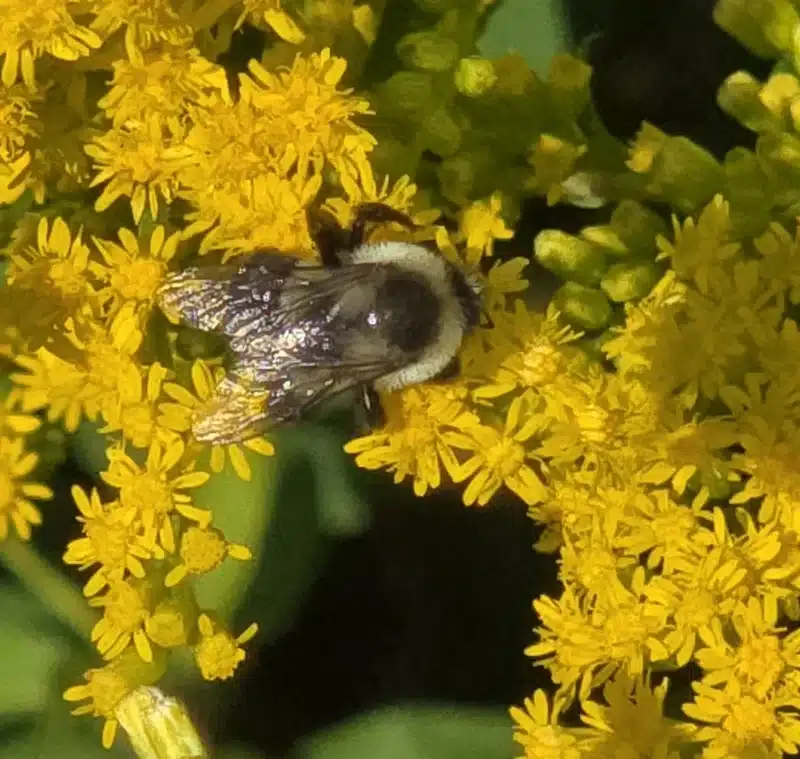
Bumblebees are covered in thick, fuzzy hair from head to tail. They come in various color patterns, with yellow and black stripes being the most common. Some species show orange or brown bands.
Workers range from 9-17 mm, but queens can reach 25 mm in early spring, making them just as large as carpenter bees. Our area hosts about 20 bumblebee species, with the common eastern bumblebee being the most frequent.
Here’s what each bee looks like side by side.
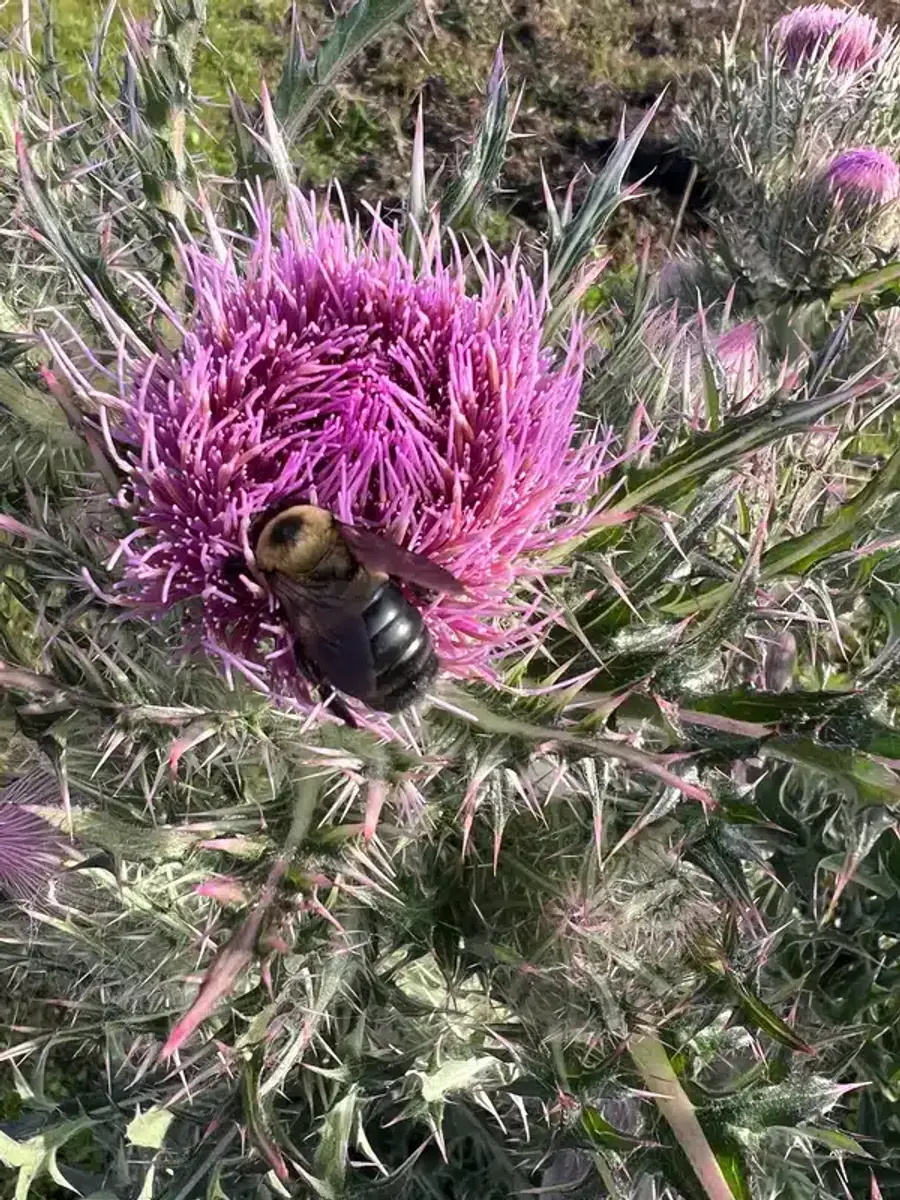
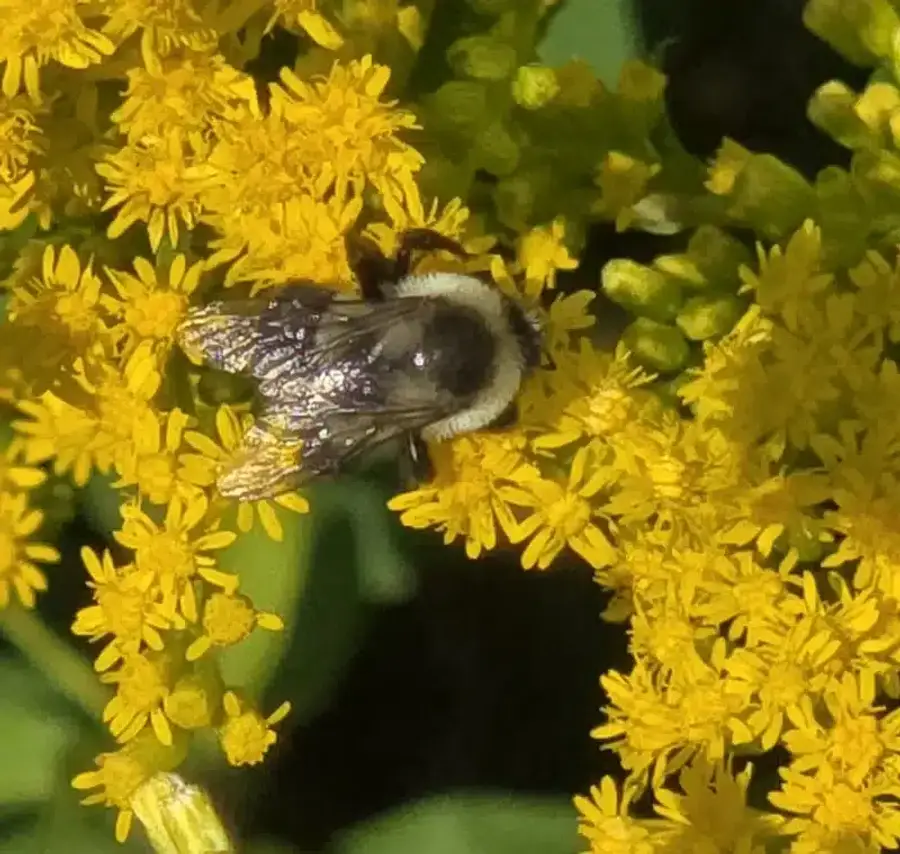
Here’s a quick comparison to help you figure out which one you have.
| Carpenter Bee | Bumblebee | |
|---|---|---|
| Abdomen | Shiny, smooth, metallic black | Completely fuzzy |
| Nesting | Bores holes in wood | Uses ground cavities |
| Social? | Solitary | Colonies of 50-400 |
| Property Damage | Yes, drills into wood | None |
| Male Behavior | Hovers and dives (can’t sting) | Calm, ignores people |
Behavior: Solitary vs Social
These two bees live very different lives, and that shapes how you deal with them.
Carpenter bees are loners. Each female works on her own, digging her own tunnel and raising her young without help. You might see several around the same area, but they’re not working together. They just like the same type of wood.
Male carpenter bees are the ones people notice most. They hover near nesting areas and dive at anyone who walks by. It looks scary, but males cannot sting. It’s all show. Female carpenter bees can sting but rarely do unless you grab one.
Bumblebees are team players. A single queen starts a colony each spring, and by midsummer she’ll have 50-400 workers helping her. The bees you see on flowers are usually workers out gathering food for the colony.
Bumblebees are calm while feeding and ignore people. But they can sting more than once if their ground nest gets stepped on or disturbed.
Nesting: Wood Borers vs Ground Dwellers
Where these bees nest explains why only one of them causes property damage.
Carpenter bees earn their name by boring perfectly round, half-inch holes into bare or weathered wood. They go for soft woods like cedar, pine, and fir, which is exactly what’s used for deck rails, fascia boards, and outdoor furniture.
Once inside, they create tunnels that can run 10-30 cm along the wood grain. Each tunnel has chambers for eggs. The real problem: these tunnels get reused and expanded year after year, weakening the wood over time.
Bumblebees take a different approach. They look for existing holes in the ground, like old mouse burrows, hollow logs, or spaces under stone walls. Some nest in dense grass clumps or under decks.
The key point: bumblebees don’t create these spaces. They just move in. And the whole colony dies by fall except for new queens that hibernate through winter, so nests are short-lived.
Understanding where each bee nests helps you decide how to handle them. Now let’s look at the damage carpenter bees can cause.
Damage: What Carpenter Bees Do to Your Home
When comparing these two bees, carpenter bees are the clear concern for homeowners. A few holes may seem minor at first, but the damage adds up over time.
Carpenter bees leave sawdust (called frass) around entrance holes, staining siding and decking. Woodpeckers often follow up by pecking at the holes to reach larvae, making the damage worse. I’ve seen deck rails, fascia boards, and even support beams weakened by years of carpenter bee tunneling.
According to the University of Maryland Extension, carpenter bee damage starts as cosmetic but can become structural when multiple rounds of bees tunnel in the same wood over several years. Tunnels can run 10-30 cm and get reused each season, with each new round expanding the gallery system.
Bumblebees, on the other hand, cause no property damage. Their ground nests might leave a small bare spot in the lawn, but that’s it. The only concern is if a colony sets up near a doorway or walkway where someone might step on the nest.
For more on what carpenter bee damage looks like, check our guide on carpenter bee damage signs and prevention.
When They’re Most Active
In the DC metro area, both bees follow clear seasonal patterns that affect when you’ll see them and when treatment works best.
Carpenter bees come out in late March and April after spending winter in old tunnels. They’re most active on warm, sunny days above 70 degrees. This is when you’ll first notice fresh sawdust around holes.
Bumblebee queens also come out in mid-March to start new colonies. You’ll see single large bees searching for nest sites in the ground.
Carpenter bees produce a second round of young that comes out in July. Both the spring and summer groups stay active, so you may see more drilling mid-summer.
Bumblebee worker numbers peak from June through August. This is when you’ll see the most bumblebee activity on flowers and in gardens.
Both bee types stay active into September. New bumblebee queens and males appear in August and September before the colony dies off. Carpenter bees go dormant in their tunnels by late fall.
Late fall and winter is the best time to fill and paint over carpenter bee holes, since the tunnels are empty.
How to Get Rid of Carpenter Bees
Treatment for carpenter bees focuses on two things: fixing existing damage and keeping them from coming back.
The best defense is paint or stain on all exposed wood. Carpenter bees target bare, untreated softwoods. Here’s what works:
- Paint or varnish all exposed cedar, pine, and fir trim
- Use composite or PVC for new deck rails and fascia boards
- Choose hardwoods or pressure-treated lumber when wood is needed
- Keep space between flower beds and wood structures
For existing holes, timing matters. Wait until late fall or winter when tunnels are empty. Fill holes with wooden dowels and wood glue, then paint over the repair.
For active nests in spring, a licensed tech can treat tunnels directly during evening hours when females are inside. This targets the problem without broad spraying.
Learn more in our full guide on how to get rid of carpenter bees.
Bumblebee colonies die off each fall on their own. Most nests just need a few weeks to run their course. If a colony sets up too close to a door or walkway, contact a pro for help moving it.
- Paint all wood: Apply fresh paint or stain to bare cedar, pine, and fir trim
- Swap materials: Use composite decking, PVC trim, or hardwoods for rails and fascia
- Fill old holes: Plug tunnels with dowels and wood glue in late fall, then paint
- Watch for sawdust: Fresh frass around holes means active drilling
- Call a pro: For big tunnel systems or hard-to-reach areas like high fascia boards
Even with the right prevention steps, existing damage needs attention sooner rather than later.
When to Call a Pro
Most bumblebee situations don’t need a pro. But carpenter bees are a different story.
Call a licensed tech when:
- You see fresh sawdust around multiple holes in your deck or trim
- Woodpeckers are pecking at your fascia or siding
- The same areas keep getting drilled into year after year
- Holes are in hard-to-reach spots like high fascia boards or eaves
- You’re not sure whether you have carpenter bees or bumblebees
Our approach starts with an inspection to find all active tunnels and check for structural weakening. We treat the tunnels directly and help you plan repairs and prevention so the problem doesn’t come back. You can see how we handle carpenter bees from the inspection through the follow-up visit.
For help telling bees apart from wasps and hornets, check our guide on wasps, bees, and hornets.
At Better Termite & Pest Control, we’ve served the DC metro area for over 58 years with more than 1,800 reviews. Call us at 703-683-2000 or email info@bettertermite.com for a free check.
Here’s what carpenter bees and bumblebees look like up close so you can compare them to what you’re seeing at home.