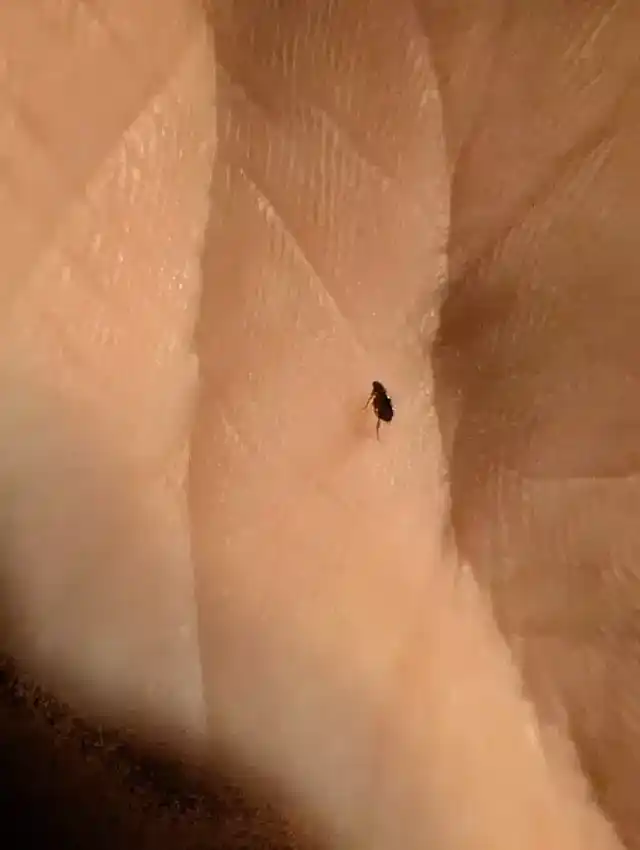

TLDR: Fleas do not live in human hair long-term. They prefer animal fur and jump off people within 24 hours. If you find fleas in your hair, wash with regular shampoo, comb through wet hair with a fine-tooth comb, and repeat for 3 to 5 days. The real fix is treating your pets and home, since that is where fleas breed.
Finding fleas in hair is alarming, but these tiny pests do not actually make their home on people. I’ve been a licensed pest control tech since 2015, and flea calls are common across the DMV area. The key thing to know is that fleas want your pets, not you.
Several things bring fleas into contact with your hair. You might pick them up while cuddling an infested pet, lying on bedding where pets sleep, or during a heavy home infestation when fleas are jumping onto any warm body they can find.
Why Fleas End Up in Human Hair
Cat fleas are the most common type found on people. Despite the name, they infest both cats and dogs. These fleas may feed once or twice on a person before jumping off, usually within 24 hours.
Fleas prefer animal fur because it is thicker and warmer than human hair. Our hair does not give them the cover they need to hide, breed, or lay eggs. When a flea lands on you, it is looking for a quick meal, not a new home.
The CDC says fleas can jump up to 200 times their body length. Their legs store and release energy like a spring, letting them leap from carpets, furniture, or pets straight onto your head.
Can Humans Get Fleas, and Which Kind Lands on People?
People do get fleas, just not the way pets do. A flea will bite a person and even feed, but it treats you as a stopover rather than a host. Three species turn up in Virginia, Maryland, and DC homes, and one of them causes nearly all of the trouble.
Cat fleas account for more than 90% of the indoor flea calls we run. They feed on cats, dogs, and people alike, and the rows of spines near their head are built for moving through dense pet fur. Dog fleas look nearly identical but are rare in US homes, and most homeowners cannot tell the two apart without a lens. True human fleas lack those combs and have rounder heads; the University of Florida Entomology Department notes they are now uncommon across temperate North America.
| Cat Fleas | Dog Fleas | Human Fleas | |
|---|---|---|---|
| How common | 90%+ of cases | Very uncommon | Very rare |
| Preferred hosts | Cats, dogs, humans | Dogs mainly | Humans, pigs |
| Key feature | Has combs | Similar to cat fleas | No combs, rounder head |
So when someone asks whether dog or cat fleas can live in human hair, the honest answer is that it is almost always a cat flea, and it is not living there. It is feeding and moving on.
How Long Can a Flea Survive in Human Hair?
Most fleas feed for four to eight minutes and then drop off the scalp. They are after a meal, not a new address. A flea tangled in long hair or trapped under tight clothing might hang on for 24 to 48 hours, but there is no evidence of fleas surviving in human hair for weeks the way they do in pet fur.
Research published through the National Center for Biotechnology Information found that cat fleas kept on human blood lay only about 3 eggs a day, compared with roughly 18 on dog blood. That collapse in fertility is why people never become a lasting host, no matter how many fleas are in the house.
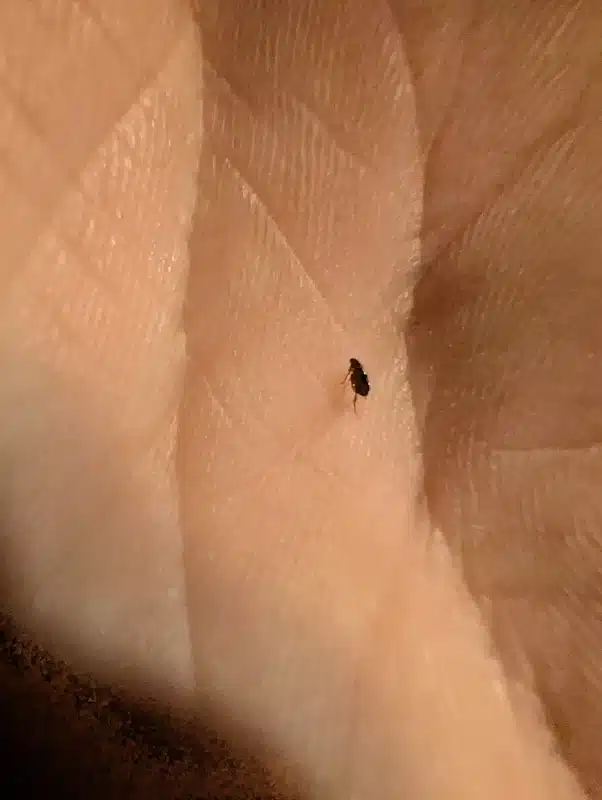
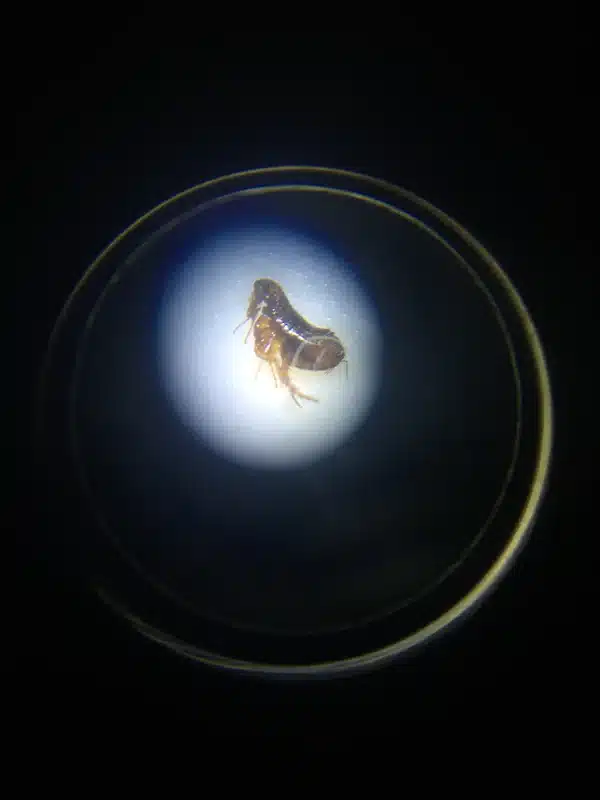
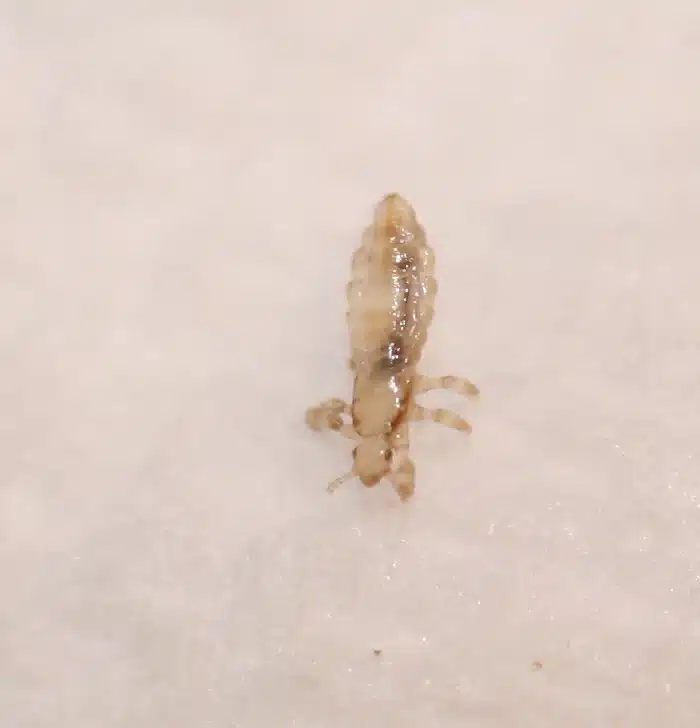
Here is what fleas look like up close compared to head lice, which are often confused with fleas.

How to Tell Fleas from Lice
The fastest way to tell fleas from lice is to watch how they move. Fleas jump when you touch them. Lice crawl and grip onto hair strands with tiny claws.
Body shape is the other big clue. Fleas are flat from side to side, like a tiny seed standing on its edge. Lice are longer and flatter from top to bottom.
Lice glue their eggs (nits) directly to hair strands. Fleas do not lay eggs on people at all. If you see small white specks stuck to hair, you are dealing with lice, not fleas.
| Feature | Flea | Louse |
|---|---|---|
| Body Shape | Flat, compressed laterally | Flat, longer body with claws |
| Movement | Jumps when touched | Crawls and grips hair |
| Eggs | Not laid on people | Glued to hair strands (nits) |
| Size | 1 to 4 mm | 2 to 3 mm |
Signs of Fleas in Hair
The clearest sign is seeing small, dark brown bugs that jump when you try to touch them. But other clues can point to flea activity on your scalp.
Flea bites on the scalp show up as small, red, itchy bumps. They often appear in clusters or short lines. You may also notice bites along your hairline, behind your ears, and on your neck.
Medical research shows flea bites on the scalp are less common than bites on legs and ankles. Fleas prefer exposed skin on the lower body because it gives them easier access and a quick escape route.
Another sign is flea dirt, which looks like tiny black specks. These specks are digested blood. Place them on a damp white cloth. If they turn rust-red, you have confirmed fleas.
How to Check Your Own Scalp
You do not need anything more than a metal flea comb and a white towel to settle the question.
- Set up. Drape a white towel over your shoulders and stand over a light-colored sink so you can see whatever falls.
- Section your hair. Split it into roughly 1-inch sections and work from one side to the other.
- Comb from the scalp out. Run the comb slowly from the roots to the tips of each section, keeping it close to the skin.
- Tap the comb out. After each section, tap the comb against the towel and look for fast-moving dark specks. Anything that jumps is a flea.
- Test the debris. Add a drop of water to any dark specks. Flea dirt dissolves rust-red; ordinary dirt does not change color.
Movement is the tell: fleas jump, lice crawl and cling.
How to Remove Fleas from Hair
When you find fleas in hair, act fast to remove them before they bite more or jump to other family members.
Step 1: Wash with Soap
Wash your hair with regular shampoo or dish soap using hot water (above 104 degrees). The soap breaks down the flea’s outer coating and drowns them. Spend extra time working the lather through all parts of your hair and scalp.
Step 2: Comb Through Wet Hair
While hair is still wet, use a fine-tooth metal flea comb or lice comb. Start at the scalp and pull through to the ends. Wipe the comb on a damp white towel after each pass so you can see what you have pulled out.
Step 3: Repeat Daily
Do this every day for 3 to 5 days. This catches any fleas you missed and helps you track whether new ones are jumping on from your home.
Permethrin Rinse
Permethrin 1% rinse, the same product used for head lice, also kills fleas. Leave it on for 10 minutes, then rinse out. You may need a second round after 7 days if the home infestation has not been treated yet.
Pyrethrin Shampoo
Pyrethrin-based shampoos with piperonyl butoxide work against fleas but do not last as long as permethrin. These are best as a single application alongside home and pet treatment.
What About Essential Oils?
Tea tree, rosemary, and eucalyptus oils may help repel fleas, but they do not kill them well. Use these as an extra step after the main problem is under control, not as your main treatment. Always patch-test first to avoid skin irritation.
No matter which method you pick, the real fix is treating your pets and home at the same time. Removing fleas from your hair alone will not solve the problem if fleas are breeding in your carpets and on your pets.
Preventing Fleas from Coming Back
The best way to stop fleas in hair is to cut off the source. That means treating your pets and your home.
Pet Treatment
Year-round flea prevention on your pets is the single most important step. In Virginia, Maryland, and DC, our mild winters let flea cycles keep going indoors all year. Skipping winter treatments is the number one reason we see flea problems in February.
The American Veterinary Medical Association recommends talking to your vet about the right product for your pet. Common options include oral tablets and spot-on treatments.
Home Treatment
Fleas spend most of their life in carpets, bedding, and furniture, not on hosts. Thorough cleaning breaks the breeding cycle.
- Vacuum all carpets, rugs, and furniture crevices, especially where pets rest
- Wash all bedding and pet bedding in water at least 130 degrees
- Empty the vacuum bag outside right away so fleas cannot escape back in
- Repeat vacuuming every other day for two weeks to catch newly hatching fleas
Yard Care
Keep your lawn short and dry, since fleas need shade and moisture to survive outside. Focus on shaded spots where pets spend time. Seal crawl spaces and fix screens to keep raccoons, skunks, and stray cats from bringing fleas onto your property.
When to Call a Pro
Handle minor flea situations yourself, but call a pro when:
- Home treatments have not worked after 2 to 3 weeks
- More than one family member is getting bitten
- You are not sure whether you are dealing with fleas or another pest
- The infestation keeps coming back despite treatment
- Full inspection of indoor and outdoor areas to find all flea sources
- Interior treatment of cracks, baseboards, and areas where pets rest
- Exterior perimeter treatment to stop fleas from coming in from the yard
- Follow-up visit 5 to 10 days later to catch newly hatched fleas that were in the pupa stage during the first treatment
Flea pupae are protected inside cocoons and resist most treatments. That is why a follow-up visit is needed to catch them after they hatch.
Health Risks from Flea Bites
Flea bites on the scalp are mostly a nuisance, but they can cause problems in some cases.
Some people develop raised, itchy bumps that last for weeks. Scratching can lead to skin infections, especially on the scalp where bacteria can get into broken skin. See a doctor if you notice increased redness, warmth, pus, or red streaks around bite sites.
Fleas can also carry diseases like cat scratch disease and flea-borne spotted fever. Spread to people is not common, but it is one more reason to deal with flea problems fast. Children face slightly higher risk because they spend more time close to pets and may touch fleas while playing.
At Better Termite & Pest Control, our licensed techs have treated flea problems across every type of home in the DC metro area, from townhouses handled by our Burke pest control team to older single-family homes across Maryland. With 58+ years of experience and 1800+ five-star reviews, we know how to find the source and stop the cycle.
We have removed nine of the harshest chemicals from our programs and use products we would use in our own homes.
If you are dealing with fleas in hair or a flea problem in your Virginia, Maryland, or DC home, call us at 703-683-2000 or email info@bettertermite.com. We will find the source and put together a plan that works.