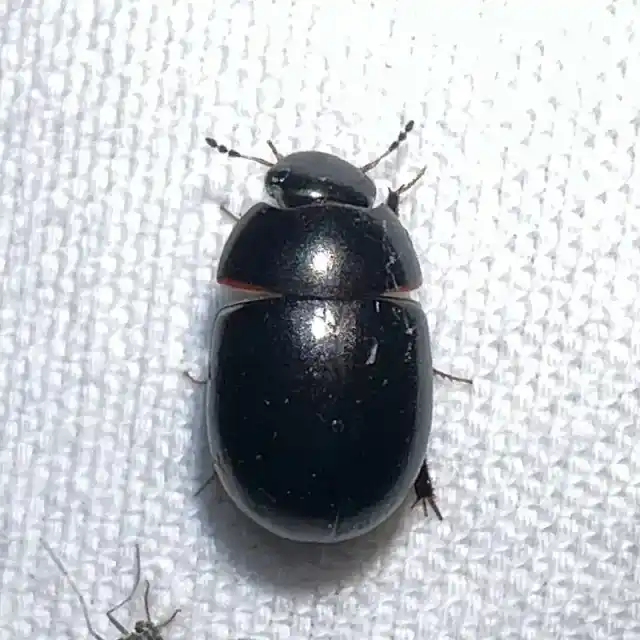

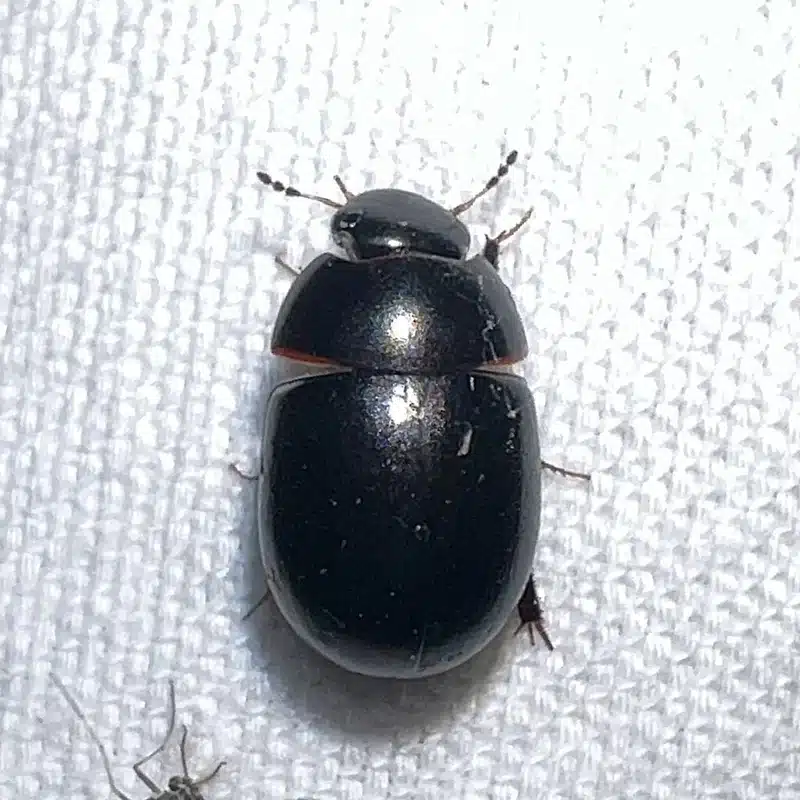
You found a black beetle inside and want to know what it is before you decide whether to worry. This page is the identification step: the size, shine, wing covers and behavior that separate the harmless black beetles from the ones that eat your clothes, your flour, or your framing. After four years in pest control across the DMV area, I can tell you that nearly every wrong beetle treatment I have been called to fix started with a wrong ID.
The Most Likely Answer: A Ground Beetle
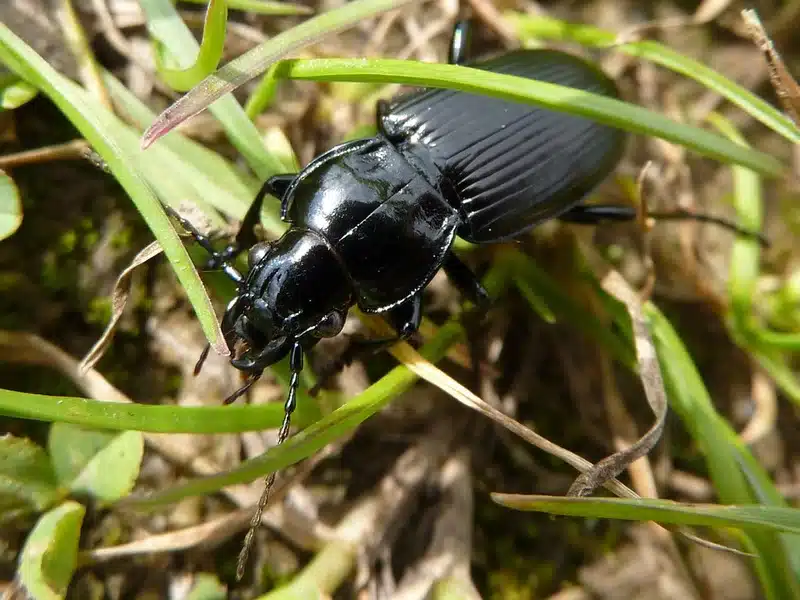
Ground beetles belong to the family Carabidae. They range from half an inch to over 1 inch long. Most are solid black, though some show metallic or rainbow-colored highlights on their hard wing covers.
Key features that help with ID:
- Strong jaws (mandibles) used for catching prey
- Long legs built for fast running
- Clubbed antennae
- Lengthwise grooves on their wing covers
- Active at night, hiding during the day
Ground beetles are predators that eat other insects, slugs, and garden pests outdoors. They don’t feed on fabrics, stored food, or wood. They live and breed outside in soil and don’t set up colonies inside homes.
Ground Beetle vs Other Black Beetles
Many homeowners mix up ground beetles with more harmful species. Knowing the difference matters because treatment changes based on what you’re dealing with.
Ground beetles are fast-moving, shiny black, and usually half an inch or larger. They run quickly when disturbed and head for dark spots. They don’t cluster around food and aren’t found in groups indoors. They show up as lone wanderers, often near lights or doors.
Carpet beetles are much smaller (1/8 inch) and rounder. Their larvae eat natural fibers like wool, silk, and feathers. Finding carpet beetles means you likely have an active indoor problem that needs treatment. Check our guide on signs of carpet beetles.
Young cockroaches can look like small dark beetles. But roaches have longer antennae, flatter bodies, and move differently. Cockroach nymphs signal a breeding problem that needs pro treatment. See our guide on little black beetles in house.
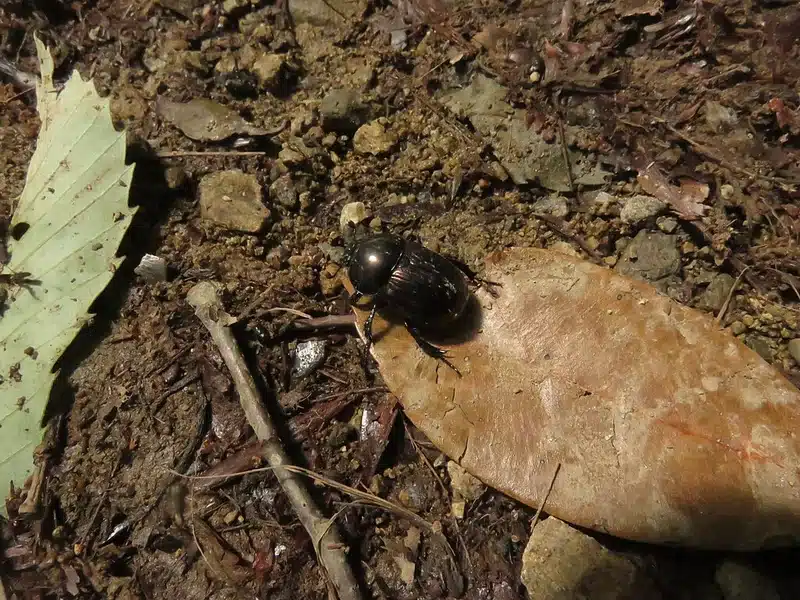
Here’s what ground beetles look like in their natural habitat.

Life Cycle
Female ground beetles lay eggs in soil during spring and early summer. Larvae develop in the soil, feeding on other insects and going through several molts. The pupal stage happens underground before adults emerge.
Adult ground beetles can live several months to over a year. They hunt at night and hide under mulch, rocks, or debris during the day. Peak activity happens during warmer months, which is when they most often wander indoors.
Why They Come Inside
Ground beetles don’t seek out homes on purpose. They end up inside because of:
- Lights: Outdoor lighting draws the insects they hunt, bringing beetles near your home
- Weather: Heavy rain, heat, or cold drives them toward sheltered areas
- Gaps: Small cracks around doors, windows, and foundations let them crawl in
- Habitat nearby: Thick mulch, dense plants, and moisture near your foundation increases activity
Once inside, they can’t survive long. They don’t breed indoors and usually die within a few days if they can’t find their way back out.
Signs You Have Ground Beetles
Ground beetles indoors are usually lone wanderers, not groups. You might find:
- Single fast-moving black bugs near doors, windows, or in basements
- Dead beetles near light fixtures (they couldn’t find their way out)
- Beetles that run quickly when disturbed
- No damage to food, fabric, or property (if you see damage, it’s a different pest)
If you’re finding multiple black beetles regularly, make sure they’re actually ground beetles and not carpet beetles or another species that does cause damage.
Once You Have the ID, What Next
The identification decides the treatment, and each answer sends you somewhere different.
If it turned out to be a ground beetle, the fix is exclusion and lighting rather than pesticide: our guide to ground beetles in the house covers sealing the entry points, pulling mulch back from the foundation, switching to yellow outdoor bulbs, and what a mass invasion in fall actually means.
If it is one of the small indoor beetles — carpet beetles in a closet, pantry beetles in the flour, powderpost beetles in a floor joist — those are real infestations that breed inside, and little black beetles in the house walks through each species and its treatment.
When to Call a Professional
Most ground beetle visits are one-off events. But call a pro when:
- Large numbers appear indoors regularly despite sealing work
- You can’t find where they’re getting in
- You’re not sure if they’re ground beetles or something more harmful
- Other pest species are showing up at the same time
Proper ID is important. Ground beetles, carpet beetles, and cockroach nymphs can all look similar to homeowners. A trained tech can tell them apart quickly and recommend the right treatment.
If you’re seeing black beetles in your home and want help with ID or prevention, call us at 703-683-2000 or email info@bettertermite.com. We’ll figure out what you have and how to keep them out — whether that’s pest control in Waldorf or anywhere else in the DMV.