
Chimney Bees Identification Guide
Anthophora abrupta
A solitary native bee known for building distinctive mud chimney turrets at the entrance to its ground nests, commonly found on clay banks and exposed soil throughout eastern North America.
Taxonomy
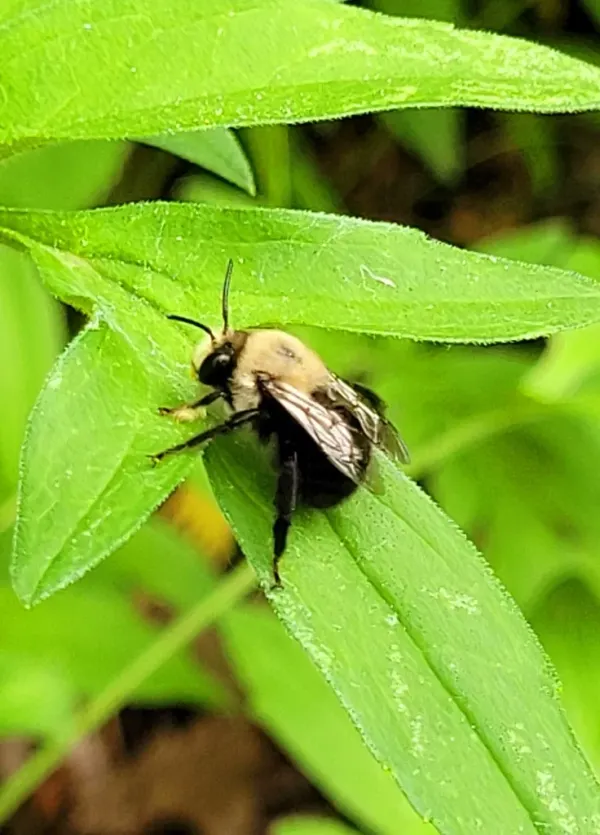
Chimney Bees Coloration
Common color patterns to help identify chimney bees
Chimney Bees
Seasonal Activity
When chimney bees are most active throughout the year

Where Chimney Bees Are Found
Hover over states to see their names. Green regions indicate where chimney bees have been reported.
Chimney Bee Identification Guide
Physical Characteristics
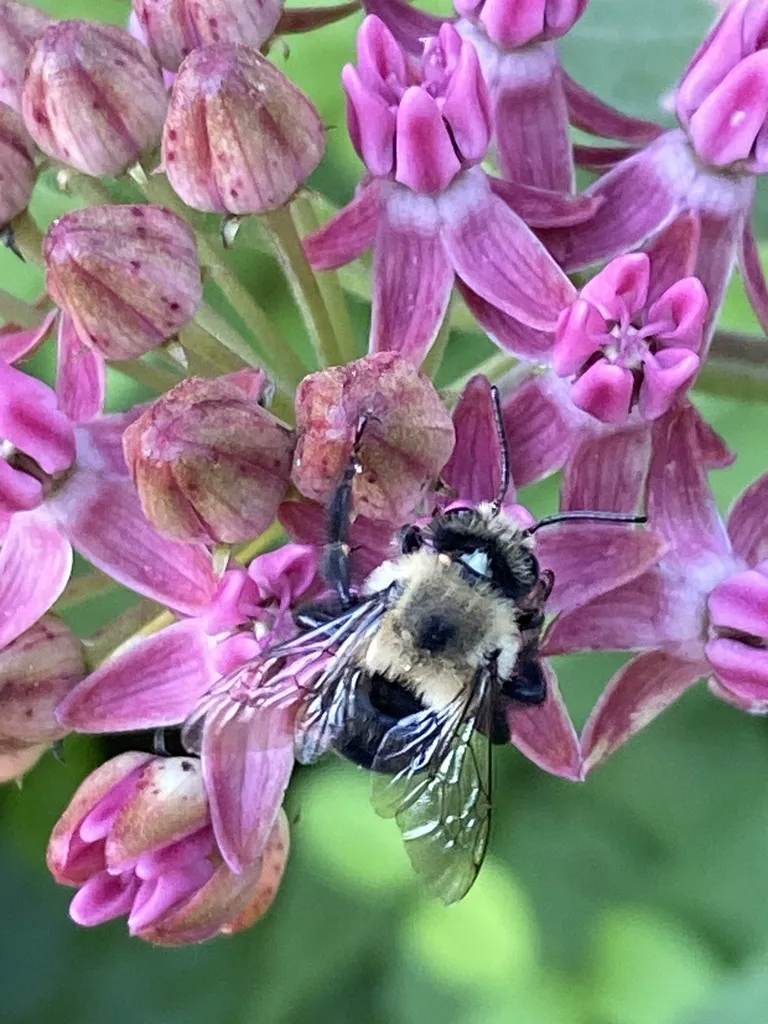
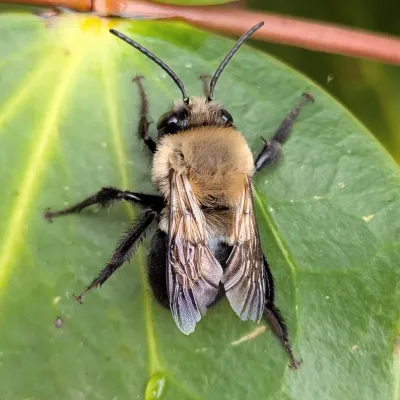
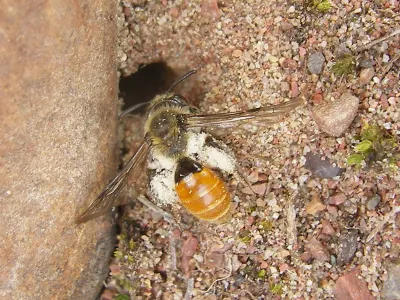
Chimney bees are about half an inch to two-thirds of an inch long. They have fuzzy bodies that look a lot like bumble bees, but chimney bees are smaller. The upper body is covered in pale yellow-orange hairs that give the bee a warm, golden look. The belly area is darker with bands of lighter hair.
Males have a fringe of hairs on the lower face that looks like a small mustache. This marking is one of the easiest ways to tell males from females in photos. Females have darker faces without this fringe. Both sexes have mostly clear wings with darker veins.
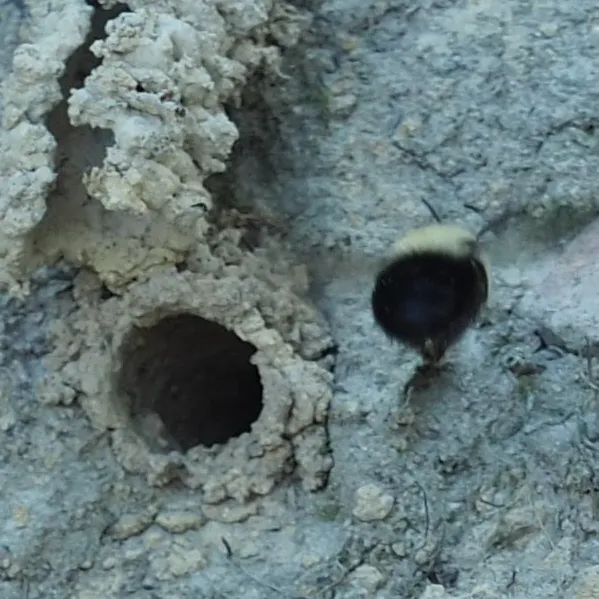
The easiest way to identify chimney bees is by their nests. They build small mud tubes at nest entrances that look like tiny chimneys or turrets. These tubes are made from wet soil pellets and rise about half an inch to one inch above the ground. No other common bee in North America builds structures like these.
Common Species
The name “chimney bee” almost always refers to one species:
- Abrupt Digger Bee (Anthophora abrupta): The primary chimney-building bee in eastern North America. Found from Texas to New England and throughout the Mid-Atlantic. This is the species most homeowners encounter.
Other digger bees in the Anthophora group nest in the ground but do not build chimney turrets. Some Diadasia species in the western U.S. are also called chimney bees, but they rarely nest near homes.
Chimney Bee Behavior and Biology
Chimney bees live alone. Unlike honeybees or bumble bees, they have no queen, no workers, and no shared hive. Each female digs and takes care of her own nest. That said, many females often nest close together in the same patch of soil. A single nesting area can hold dozens or even hundreds of nests.
Nesting and the Mud Chimneys
What makes this species stand out is how it builds its nest. Females pick sites with bare clay or packed soil. Common spots include sunny banks, roadcuts, hillsides, root balls of fallen trees, and bare patches in yards. The female digs a tunnel about four to five inches deep. As she digs, she carries wet soil to the surface and stacks it into a turret around the opening. These turrets are usually about three inches long but can vary.
The turrets help keep rainwater out of the nest. They may also help the bee find her own opening among many neighbors. The chimneys are fragile and can wash away in heavy rain, but the bee will rebuild them. Inside the tunnel, the female coats each brood cell with a waxy layer. She fills each cell with a ball of pollen and nectar, lays an egg on top, and seals it with mud. A single female builds about seven cells in her life.
Diet
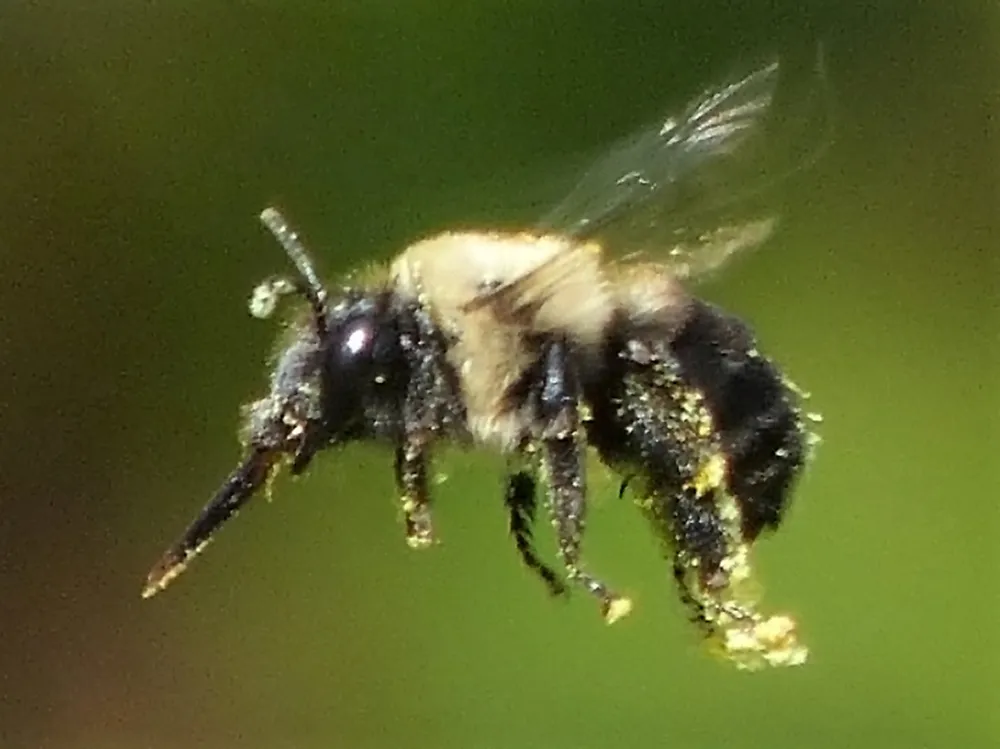
Chimney bees feed on nectar and pollen from many types of flowering plants. They visit milkweed, blackberry, clover, rhododendron, penstemon, iris, and wildflowers. Their fuzzy bodies pick up and transfer large amounts of pollen as they move from flower to flower.
These bees can forage in a wide range of weather, from about 51 to 102 degrees Fahrenheit. They start early in the morning and are busiest when flowers are blooming in late spring.
Lifecycle
The chimney bee lifecycle takes a full year, but adults are only active for about six to eight weeks in late spring and early summer. After the female seals her nest, the eggs hatch within a few days. The larvae eat the stored pollen through late spring and early summer. They then go dormant and stay underground for nine to ten months through fall and winter. New adults form and come out the following spring.
Males emerge first and patrol the nesting area looking for females. Males cannot sting. Females emerge shortly after, mate, and begin building their own nests. There is one generation per year.
Treatment Methods for Chimney Bees
Chimney bees are solitary and non-aggressive. They rarely sting and are active for only a few weeks each year. Their nesting causes mostly cosmetic damage to soil or old mortar. If they are nesting in an area that creates a concern, there are several ways to address the situation.
When Treatment May Be Needed
Homeowners may want chimney bee nesting addressed in these situations:
- High-traffic areas: Nesting in walkways, patios, or play areas where people walk barefoot
- Allergy concerns: Someone in the household has a known allergy to bee stings
- Mortar nesting: Bees nesting in old or crumbling mortar joints on brick structures
Treatment Approaches
A pest control professional can apply insecticide or dust directly to active nest openings. Treatment works best in the early evening when the bees have gone back into their burrows. For nests in mortar joints, a dust applied into the openings is usually the best option.
Habitat Modification
Changing the area around nesting sites can keep chimney bees from coming back:
- Cover bare soil: Add mulch, ground cover plants, or landscaping fabric over bare clay to remove nesting spots
- Fix drainage: Direct water away from banks and slopes to change the soil
- Grow thicker grass: Keep dense turf over bare patches so bees have fewer places to nest
- Fix mortar: Repair crumbling mortar joints on brick walls to block access
- Set up barriers: Fence or rope off active nesting areas during peak activity to keep foot traffic away
What to Expect
Chimney bees often return to the same area each year because new adults come out of the same soil where they grew up. Changes to the nesting area work best when done in fall or winter before the next group comes out in spring. Even without treatment, the bees will finish their activity within a few weeks and will not be active again until the following year.
References
- Miner Bee, Chimney Bee Anthophora abrupta - University of Florida IFAS Extension
- Miner Bee (Anthophora abrupta) - U.S. Forest Service Pollinator of the Month
- Anthophora abrupta - Global Biodiversity Information Facility (GBIF)
- Ground-Nesting Bees in Turf - NC State Extension
- Wasps and Bees - University of Minnesota Extension
Other Bees
Explore other species in the bees family
Commonly Confused With
Chimney Bees are often mistaken for these similar pests
Where Chimney Bees Are Found
Hover over states to see their names. Green regions indicate where chimney bees have been reported.
Common Questions about Chimney Bees
What are chimney bees?
+
Chimney bees (Anthophora abrupta) are solitary native bees named for the small mud turrets they build at the entrances to their ground nests. These chimneys are made of moistened soil pellets and can extend up to an inch above the surface. They are native to eastern North America and are most active from late spring through early summer.
Are chimney bees dangerous?
+
Chimney bees are not aggressive and very rarely sting. Males cannot sting at all, and females will only sting if directly handled or trapped against the skin. They do not form defensive colonies like yellowjackets or honeybees, so they pose minimal risk to people.
Do chimney bees damage my house or property?
+
Chimney bees cause little to no structural damage. They nest in exposed soil or clay banks, not in wood or building materials. Their mud turrets are purely cosmetic and wash away with rain. They may occasionally nest in soft mortar joints of old brick walls, which can cause minor cosmetic damage but is uncommon.
How do I identify chimney bee nests?
+
Look for small, finger-like tubes of dried mud rising about half an inch to one inch from the soil surface, typically on sloped clay banks, exposed soil, or south-facing hillsides. Each turret has a single opening at the top. You may see dozens or even hundreds clustered together, though each nest belongs to an individual female.
How long do chimney bees stay active?
+
Chimney bees are active for roughly six to eight weeks, typically from late April through June in most of the eastern United States. After mating and provisioning their nests, the adults die off. The next generation develops underground through fall and winter, then emerges the following spring.
Why do chimney bees nest in the same spot every year?
+
Chimney bees often return to the same nesting sites year after year because the next generation emerges from the same soil where they developed. Suitable nesting sites with the right soil type, sun exposure, and drainage are limited, so established aggregations tend to persist in favorable locations.
How can I tell chimney bees apart from carpenter bees?
+
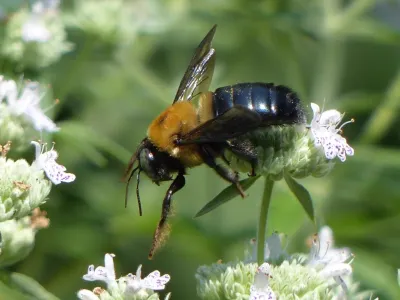
Chimney bees are slightly smaller than carpenter bees and have a fuzzy, hair-covered abdomen rather than the shiny, smooth black abdomen of eastern carpenter bees. Chimney bees nest in the ground and build mud turrets, while carpenter bees drill into wood. Their body shape and nesting behavior are the easiest ways to tell them apart.
Should I remove chimney bee nests from my yard?
+
If chimney bees are nesting in a high-traffic area or someone in your household has a bee allergy, habitat changes like covering exposed soil with mulch or ground cover can discourage future nesting. Since their activity only lasts a few weeks, some homeowners choose to wait it out. A pest control professional can assess the situation and recommend the right approach.

With five years of hands-on experience in the pest control industry, George Schulz is a registered technician with the Virginia Pest Management Association and a proud third-generation professional in a family business that's been protecting homes for over 58 years. He manages and trains a team of service pros while also leading internal research efforts—recently spearheading a deep-dive review of thousands of documents on pest control materials to hand-pick the most kid and pet friendly, most effective solutions tailored specifically for homes in the DC metro area.
Local Bees Help
Dealing with bees at home? Our licensed technicians provide pest control across Northern Virginia and Maryland.
