Aquatic Insects
Various
Aquatic insects spend all or part of their lives in or near water. While most are harmless and even beneficial to ecosystems, some can become nuisances around pools, ponds, and homes near water sources. These insects range from graceful mayflies to intimidating giant water bugs.
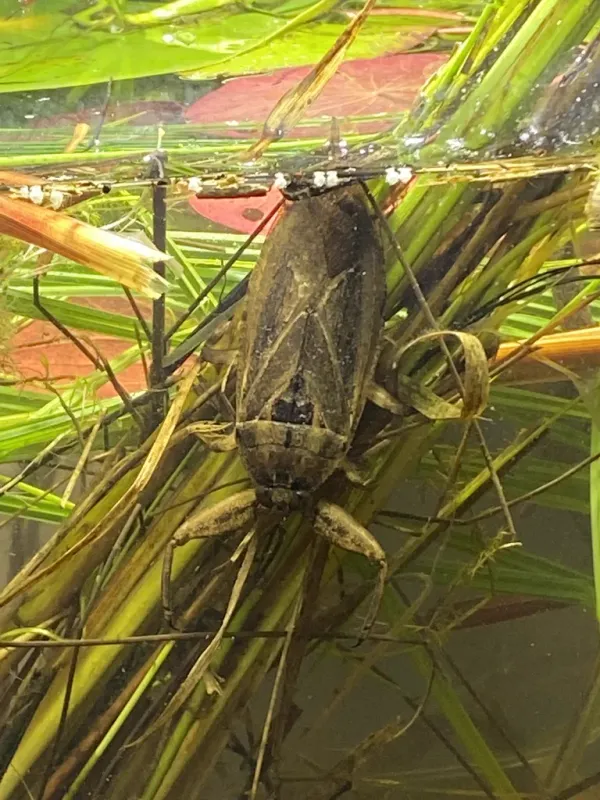
Aquatic Insect Identification Guide
Physical Characteristics
Aquatic insects vary greatly in appearance depending on the species. They share adaptations for life in or near water, including streamlined bodies, modified legs for swimming, and in some cases, gills for underwater breathing. Adults often have wings for dispersal, while immature stages may look completely different and live exclusively in water.
Common Species
-
Giant Water Bugs: Large, flat, brown bugs up to 4 inches long with powerful front legs for catching prey. Can deliver a painful bite and are attracted to lights.
-
Mayflies: Delicate insects with upward-curving wings and long tail filaments. Adults emerge in large numbers and live only a day or two.
-
Water Boatmen: Small, oval bugs that swim using oar-like hind legs. Common in pools and ponds, feeding on algae and organic matter.
-
Backswimmers: Similar to water boatmen but swim upside down. Predatory and can bite if handled carelessly.
-
Dragonflies and Damselflies: Colorful flying insects that breed in water. Beneficial predators of mosquitoes and other pests.
Aquatic Insect Behavior and Biology
Aquatic insects have diverse life cycles. Many undergo complete metamorphosis with distinct larval stages that live underwater. Others, like dragonflies, have aquatic nymphs that breathe through gills and may spend years developing before emerging as flying adults.
Most aquatic insects are either predators feeding on other insects and small aquatic organisms, or herbivores consuming algae and plant material. Adult flying stages are often attracted to lights at night, leading to concentrations around homes and businesses near water.
How We Treat for Aquatic Insects
Our approach focuses on exclusion and habitat management:
-
Light Management: We assess outdoor lighting and recommend changes to reduce attraction, such as switching to yellow bulbs or relocating fixtures away from entry points.
-
Exclusion: We inspect and recommend repairs to screens, doors, and other potential entry points to keep flying adults out of your home.
-
Water Source Assessment: We identify nearby water sources that may be producing aquatic insects and recommend management strategies where appropriate.
-
Perimeter Treatment: For persistent problems, we can apply targeted treatments around the exterior of your home to reduce populations of crawling aquatic insects seeking shelter.
Types of Aquatic Insects
Click on any species below to learn more about identification, behavior, and control methods.
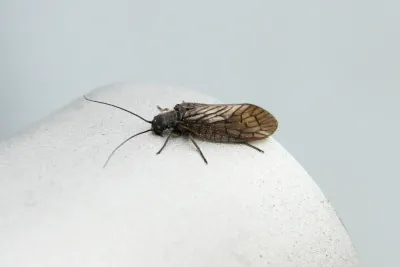
Alderflies
Sialis spp.
Alderflies are small, dark-winged aquatic insects often found near streams and ponds. They are harmless to humans and indicate healthy water quality.
View identification guide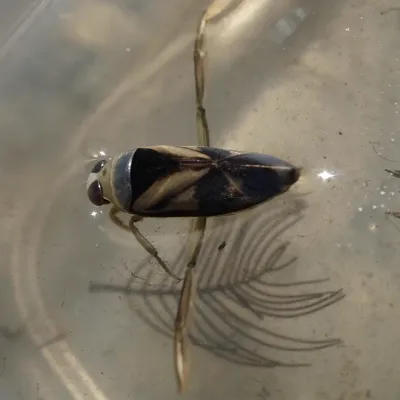
Backswimmers
Notonecta spp.
Backswimmers are aquatic insects that swim upside down just below the water surface. They are commonly found in swimming pools, ponds, and other still water and can deliver a painful bite when handled.
View identification guide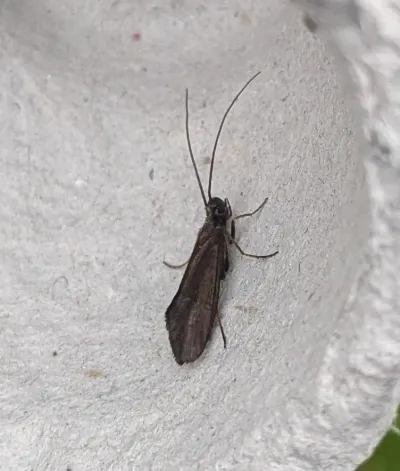
Caddisflies
Trichoptera
Caddisflies are moth-like insects with aquatic larvae that can become nuisance pests when attracted to lights near homes and water sources.
View identification guide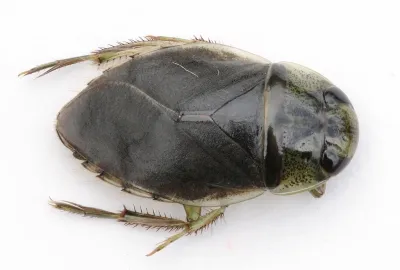
Creeping Water Bugs
Naucoridae
Creeping water bugs are flat, oval-shaped aquatic insects found in freshwater habitats throughout North America. While primarily aquatic, they occasionally appear near homes located close to water sources.
View identification guide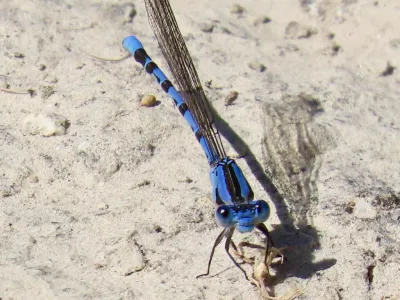
Damselflies
Zygoptera
Damselflies are slender flying insects related to dragonflies. They prey on mosquitoes and other small insects near ponds and streams.
View identification guide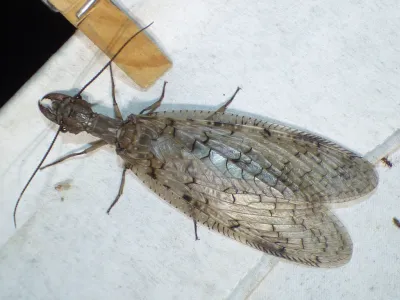
Dobsonflies
Corydalus cornutus
Dobsonflies are large, winged insects with aquatic larvae called hellgrammites. Though intimidating in appearance, adult dobsonflies are harmless to humans and indicate healthy stream ecosystems.
View identification guide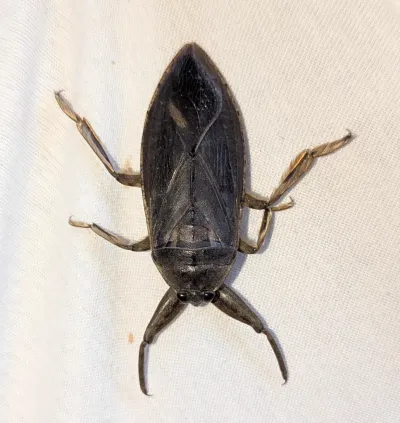
Giant Water Bugs
Lethocerus americanus
Giant water bugs are large aquatic insects that can grow over 2 inches long and deliver a painful bite when handled. They occasionally enter homes attracted to lights at night.
View identification guide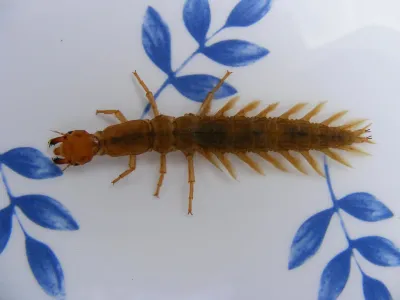
Hellgrammites
Corydalus cornutus (larva)
Hellgrammites are the aquatic larval stage of dobsonflies. These large larvae have a fierce appearance and can deliver a painful bite if handled.
View identification guide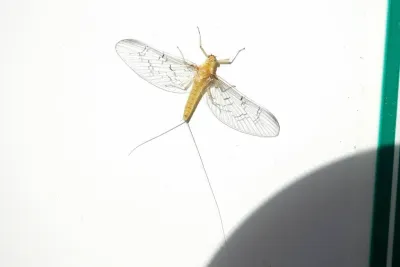
Mayflies
Ephemeroptera
Mayflies are delicate aquatic insects known for their extremely short adult lifespan and mass emergences near bodies of water during summer months.
View identification guide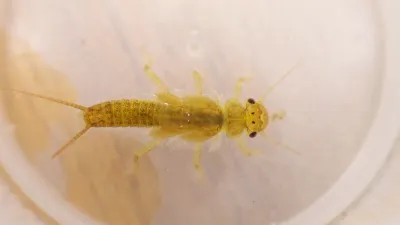
Stoneflies
Plecoptera
Stoneflies are aquatic insects that live near clean streams and rivers, occasionally appearing around homes close to water sources.
View identification guide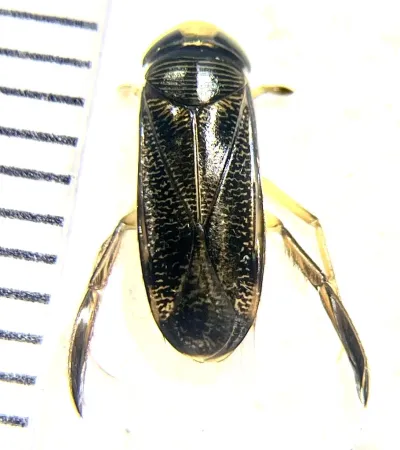
Water Boatmen
Corixidae
Water boatmen are small aquatic insects that swim right-side up in pools, ponds, and lakes. Unlike their look-alike relatives the backswimmers, water boatmen feed on algae and do not bite humans.
View identification guide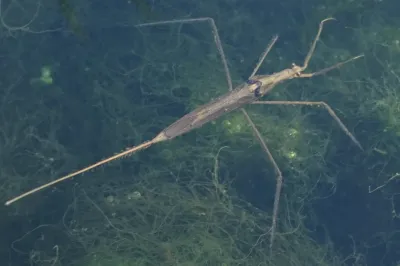
Water Scorpions
Nepidae
Water scorpions are aquatic insects with raptorial front legs and a long breathing tube resembling a tail. Despite their name, they are not true scorpions and cannot sting, though they can deliver a painful bite if handled.
View identification guideCommon Questions about Aquatic Insects
Are aquatic insects dangerous?
+
Most aquatic insects are harmless to humans. However, some like giant water bugs can deliver a painful bite if handled. They are not aggressive but will defend themselves. Most species you encounter near homes are simply nuisances attracted to lights.
Why are aquatic insects attracted to my pool?
+
Aquatic insects are attracted to pools because they mistake the water surface for a natural habitat. Lights around pools also attract flying adults at night. Some predatory species are drawn to pools that have other insects or small organisms in them.
Can aquatic insects live in swimming pools?
+
Most aquatic insects cannot survive long in properly chlorinated pools. However, backswimmers and water boatmen can tolerate chlorinated water better than others and may establish themselves if pool maintenance is neglected.
What are those large bugs flying around lights near water?
+
These are likely [mayflies](/pests/aquatic-insects/mayflies/), [stoneflies](/pests/aquatic-insects/stoneflies/), or [caddisflies](/pests/aquatic-insects/caddisflies/) that have emerged as adults from nearby water sources. Adults of these species live only briefly to mate and lay eggs, often swarming around lights during their emergence period.
How do I keep aquatic insects away from my home?
+
Reduce outdoor lighting near entry points, use yellow bug lights instead of white lights, maintain proper pool chemistry, remove standing water sources, and ensure window screens are in good repair to prevent entry.
Explore Other Pest Categories
Browse our comprehensive pest library for identification guides and control information.



With five years of hands-on experience in the pest control industry, George Schulz is a registered technician with the Virginia Pest Management Association and a proud third-generation professional in a family business that's been protecting homes for over 57 years.
Find Local Aquatic Insect Control Services
We provide professional aquatic insects control throughout Virginia, Maryland, and the DC Metro area.