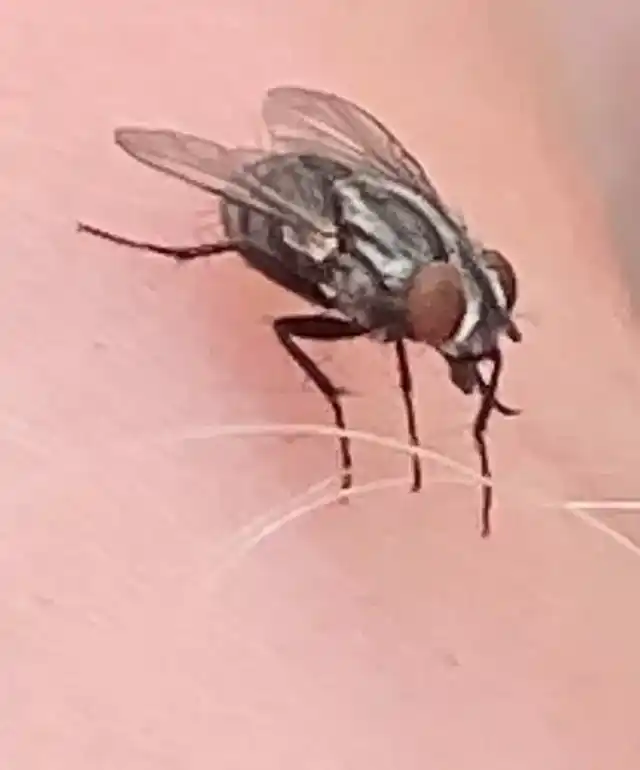

TLDR: A flesh fly is about twice the size of a house fly, has three stripes on its back instead of four, and has a gray-and-black checkerboard belly. House flies breed in trash and manure. Flesh flies indoors usually mean something died in a wall, attic, or chimney. For both, you fix the problem by removing what they breed in.
Flesh Fly vs House Fly at a Glance
| Feature | Flesh Fly | House Fly |
|---|---|---|
| Size | 8 to 14 mm (about 3/8 to 1/2 inch) | 4 to 6 mm (about 1/6 to 1/4 inch) |
| Stripes on back | 3 dark stripes | 4 dark stripes |
| Belly | Gray-and-black checkerboard | Gray, no checkerboard |
| Eyes | Red | Reddish-brown |
| Young | Drops live larvae (maggots) | Lays eggs in batches of 75 to 100+ |
| Breeds in | Dead animals, garbage, dung | Garbage, manure, rotting plant matter |
| Egg or larva to adult | About 2 to 3 weeks | As little as 7 days in summer |
| What it means indoors | A dead animal nearby | Trash or food waste nearby |
Sizes come from University of Minnesota Extension, UF/IFAS, and UMN’s fly guide. Life cycle figures are from UF/IFAS and University of California’s pest program.
I’ve been a licensed pest control tech for more than ten years. Most “what fly is this?” calls I get in Northern Virginia and DC come down to two checks: how big is it, and does the belly look like a checkerboard?
What Are Flesh Flies?
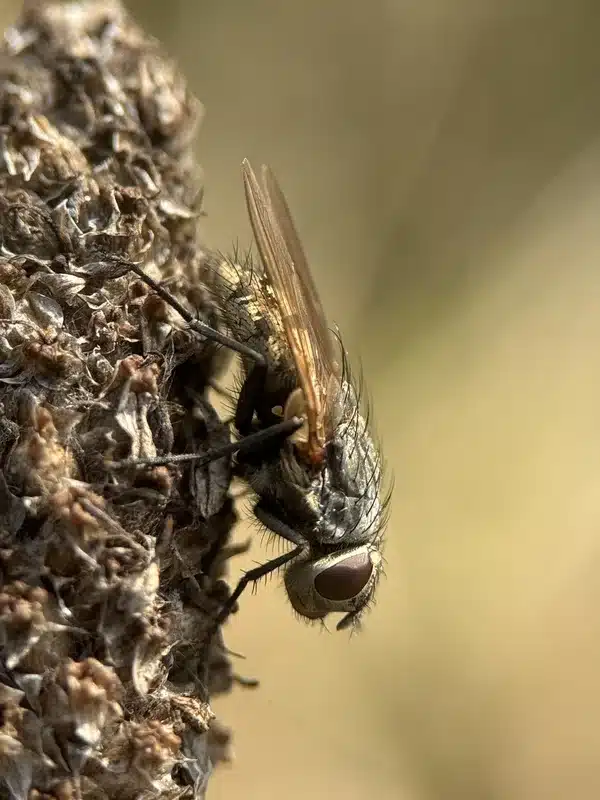
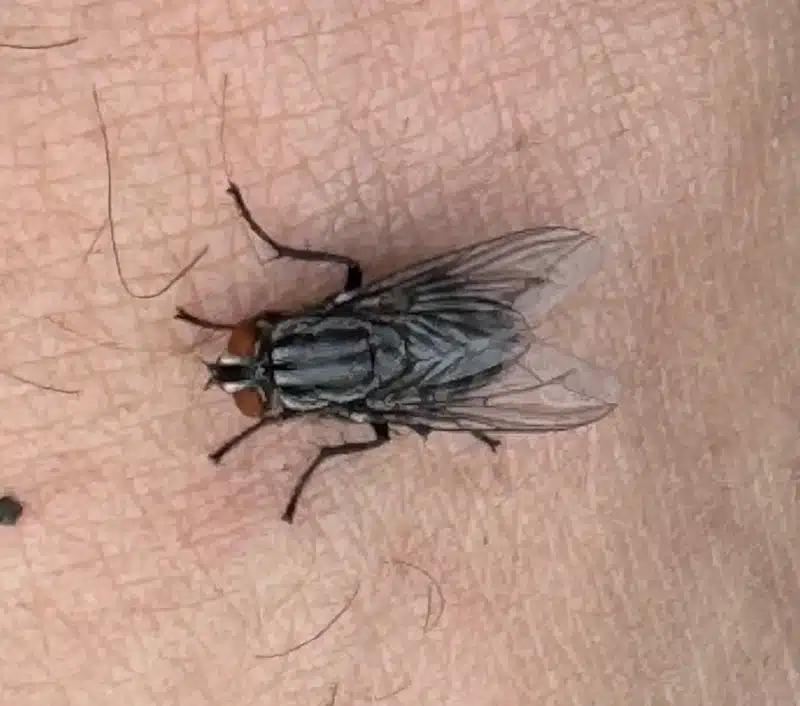
Flesh flies are a family of large gray flies (Sarcophagidae) that breed on dead animals, dung, and rotting waste. The name comes from where their larvae feed. They look like an oversized house fly, but they have a checkerboard belly, three stripes on the back, and bright red eyes. Some species also have a red tip at the end of the abdomen.
They don’t bite people. Most of the year they live outdoors, and a few in the yard mean nothing. They matter when a bunch of them show up inside at once.
Flesh Fly Size and How to Spot One
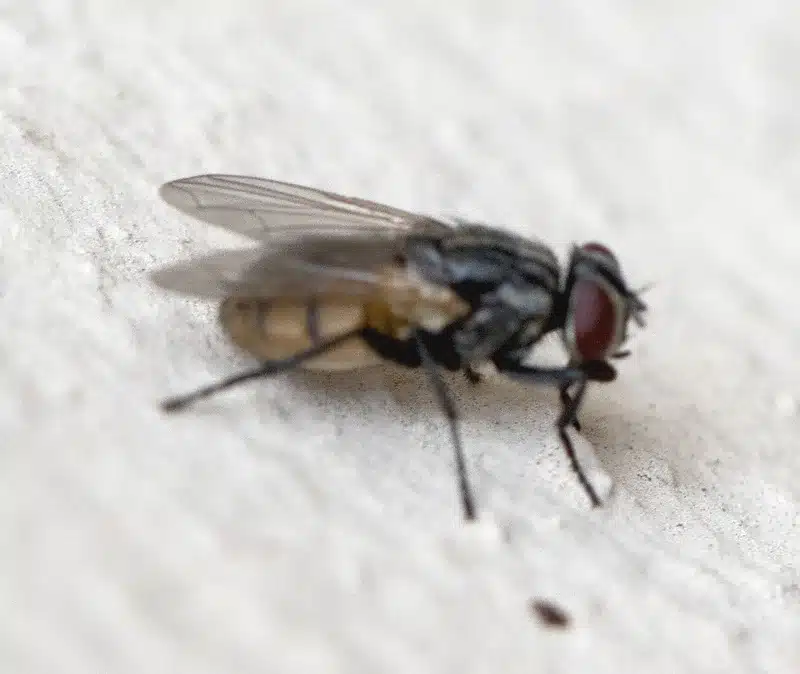
Flesh flies are big. University of Minnesota Extension lists them at 3/8 to 7/16 inch, and UF/IFAS measures the red-tailed flesh fly at 8 to 14 mm. A house fly is about 6 mm, per Virginia Tech’s house fly fact sheet. So a flesh fly is roughly one and a half to two times as long.
If you searched “big house fly” or “fly with stripes,” check these three things:
- Stripes: Flesh flies have three dark stripes running down the back. House flies have four.
- Belly: Flesh flies have a checkerboard of gray and black squares. House flies don’t have it.
- Color: A shiny metallic green or blue fly of the same size is a blow fly, not a flesh fly. A big, slow, dull fly that shows up in fall windows is probably a cluster fly (see cluster fly vs house fly).

Flesh Flies in the House All of a Sudden?
This is the call that matters. You had no flies yesterday, and today there are a dozen big gray ones at the windows. That almost always means an animal died somewhere inside the house.
University of Minnesota Extension says that when a lot of flesh flies suddenly appear indoors in summer, they are probably coming from a dead animal in a wall void, attic, or similar space. Utah State University Extension gives the same warning.
Here’s how it plays out. A mouse, rat, bird, or squirrel dies in a hidden spot. Flies find it fast and drop larvae on it. The larvae feed, crawl off to pupate, and two to three weeks later a wave of adults comes out into your rooms. Sprays can’t reach the source, so you need to find it.
Where to look first:
- Follow the smell. A sweet, rotten odor near one wall or ceiling spot points you in the right direction.
- Check where the flies gather. They collect at the nearest window or light to where they came out.
- Look for larvae. Pale maggots crawling along a baseboard or dropping from a ceiling light mean the source is close above or behind.
- Check the usual spots. Attics, crawl spaces, chimneys, basement ceilings, and the gap behind the dishwasher or fridge.
Where Each Fly Breeds
House flies aren’t picky. According to UMN Extension, females lay batches of 75 to 100 eggs, usually in garbage but also in manure and rotting plants. In a home, that means trash cans, compost, pet waste, and spilled food.
Flesh flies go for animal tissue first: carcasses, dung, and sometimes spoiled meat in the garbage. USU Extension also lists dumpsters and rotting organic matter. That’s why a few flesh flies around an outdoor trash can in July aren’t a red flag, but a swarm in a closed bedroom is.
How They Reproduce
House flies lay eggs. Virginia Tech notes clusters of up to 100 eggs at a time, and University of California’s pest program says a house fly can go from egg to adult in as little as 7 days in summer. That speed is why a trash problem gets out of hand in a week.
Flesh flies skip the egg stage outside the body. The eggs hatch inside the female, and she drops live first-stage larvae right onto the food. The UF/IFAS profile of the red-tailed flesh fly says one female deposits 40 to 80 larvae per cycle, and the whole trip from larva to adult takes about 23 days. That’s why flesh flies come in waves instead of a steady stream.
Are Flesh Flies Dangerous?
Not very, for most homes. They don’t bite. The bigger daily risk is still the house fly, because it lands on food and counters all day.
A 2018 systematic review of 99 studies counted more than 130 human pathogens carried by house flies, mostly bacteria such as E. coli and Salmonella. Virginia Tech calls them mechanical vectors: germs ride on their legs and mouthparts from waste to food.
Flesh flies pick up bacteria from what they breed on, so treat them as dirty too. UF/IFAS lists the red-tailed flesh fly as one of about 20 species known to cause intestinal myiasis, which is an infestation by fly larvae. That happens when someone eats food that already has larvae in it, or when a fly drops larvae into an open wound.
For house flies, the habits that help are simple: cover food, wipe prep areas, and take out the trash before it smells. For flesh flies, wear gloves and a mask when you remove a dead animal, then clean the spot with disinfectant.
Black Fly vs House Fly
Plenty of people search “black fly vs house fly” when they mean a big dark fly in the kitchen. True black flies are something else. UMN Extension describes them as small, humpbacked biting flies, also called buffalo gnats, that breed in running streams. They are about 2 to 5 mm, smaller than a house fly, and they bite outdoors in spring and early summer.
If the “black fly” is inside and bigger than a house fly, it’s more likely a black blow fly or a flesh fly. Use the size and belly checks above.
Life Cycle and Seasons in the DMV
House flies are around from late spring into fall here and speed up in hot, humid weeks. Adults live three to four weeks, per UMN Extension, and new ones keep coming as long as there’s trash to breed in.
Flesh flies don’t build up steadily. They show up in bursts tied to a carcass. Summer is the peak because heat speeds up both decay and fly growth. In winter, a wave of flesh flies indoors is unusual, but a warm attic or furnace room can still produce one.
How to Get Rid of Each Fly Type
For both species, finding and removing the breeding source comes first. Sprays alone just kill the adults you can see.
Take trash out often and use cans with tight lids. Rinse cans every week or two in summer. Clean up pet waste daily. Don’t leave compost or food scraps near doors.
Fly lights and sticky strips work for the few that get in. Keep them away from food areas. Repair torn screens and add door sweeps.
Find the dead animal and remove it. Bag it, wipe the area with disinfectant, and seal the hole the animal used to get in.
Vacuum or swat the adults that are already out. More may keep coming for a short time as the last larvae finish, then they stop. Spraying the room does little.
When to Call a Pro
If you can’t find the source, or the dead animal keeps getting replaced by a new one, the real problem is how animals are getting in.
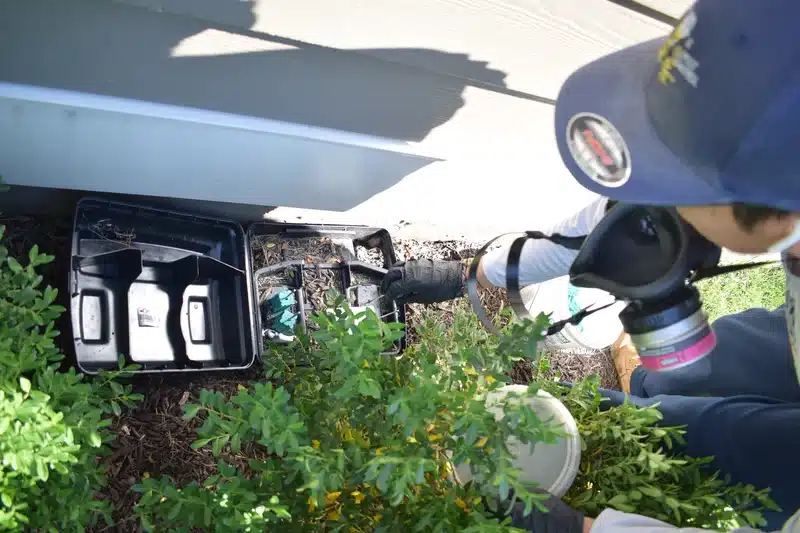
If mice or rats are the ones dying in your walls, that’s our wheelhouse. Our rodent control work finds and seals the gaps rodents use, so you don’t end up with the next carcass. We serve homes across Northern Virginia, DC, and Maryland, from Merrifield out to the suburbs.
We don’t handle wildlife. If it’s a bird, squirrel, raccoon, or bat in the chimney or attic, you need a wildlife removal company to take it out and close the entry point.

For other small flies, the same rule applies: find where they breed. See drain flies vs fruit flies or horse fly vs house fly if what you’re seeing doesn’t match either fly on this page.
Prevention Tips
For House Flies
- Keep trash in sealed bins and take it out often
- Clean up pet waste right away
- Fix leaks and damp spots under sinks and around drains
- Keep window and door screens tight
For Flesh Flies
- Seal gaps around pipes, vents, and the foundation where mice and rats get in
- Cap the chimney and screen attic vents so birds and squirrels can’t nest
- Check crawl spaces and attics for droppings or nesting after you hear scratching
A few flies of either kind outdoors is normal. A crowd of house flies inside points to trash or food waste. A sudden crowd of flesh flies points to a dead animal. If rodents are the cause, call us at 703-683-2000 or email info@bettertermite.com and we’ll help you close them out.