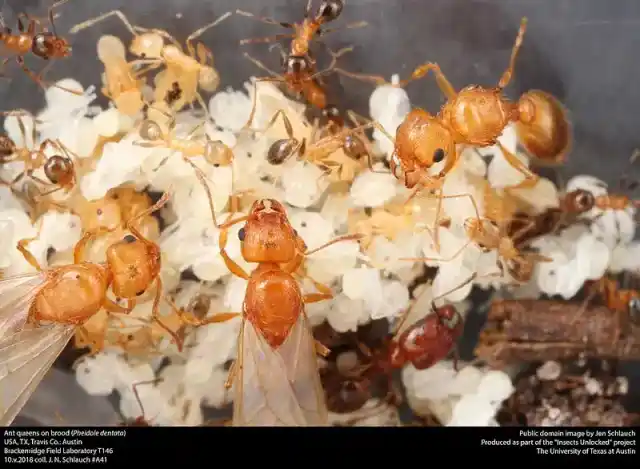

Ants may seem tireless, but they do sleep. They take hundreds of short naps instead of one long rest. Understanding how long ants live and when they rest helps explain how colonies stay productive around the clock.
The Biology of Ant Sleep
Insects need rest to stay sharp. Sleeping ants hold very still and show a much lower level of brain activity.
According to a PubMed study, sleep in insects is a state of reduced responsiveness. Using brain activity recorders, researchers monitored brain activity in soldier ants and saw a decline in brain wave fluctuations during deep sleep.
In contrast, during wakeful periods, ants display a higher level of brain activity. This deep sleep phase features mandible and antennae activity and rapid antennal twitches akin to rapid eye movement. Some tests even saw ants slumber for eight minutes when undisturbed.
Ant Sleep Cycles and Polyphasic Rest
Ants generally rely on polyphasic sleep. In contrast to humans who sleep in one long block, ants take many short naps throughout the day.
A journal of insect study of fire ant sleep cycle found that the average worker ant takes approximately 250 one-minute naps each day, each lasting just over a minute. These short power naps add up to about 4 hours and 48 minutes of sleep per 24-hour period, or 288 minutes of sleep per day.
In contrast, queen ants enjoy longer and deeper rest, napping around 90 times a day, each about 6 minutes, for an average of nine hours a day.
This means workers and queens have very different rest schedules.
- Worker ant naps: 250 one-minute naps per day
- Nap length: one-minute to two minutes
- Total hours of sleep: 4 hours and 48 minutes
- Queen ants: about 90 naps, averaging nine hours of sleep
This polyphasic approach keeps tasks staffed throughout the colony while 80 percent of workers stay active.
Circadian Rhythms and Social Sleep
Many species of ants have an internal clock for a 24-hour period. Some show a wake-sleep cycle every 12 hours when isolated.
Research conducted in PLOS One shows Camponotus rufipes foragers forage for food mainly at night, while nurse ants skip their solo sleep pattern to tend brood. Ants also communicate with pheromones to sync rest shifts in irregular intervals, allowing ants the ability to take turns resting.
Colonies use this shift system to keep work going nonstop.
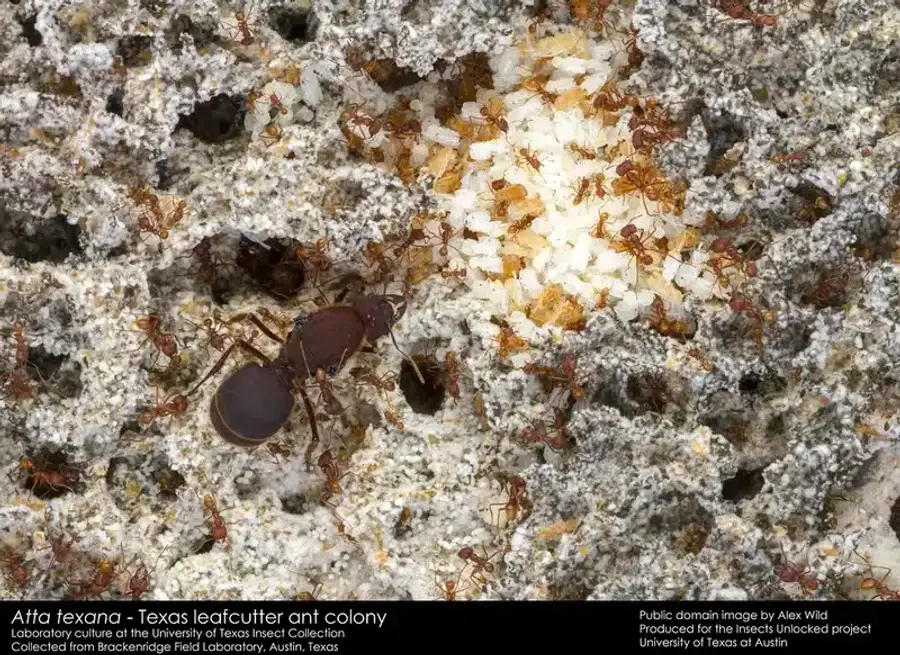
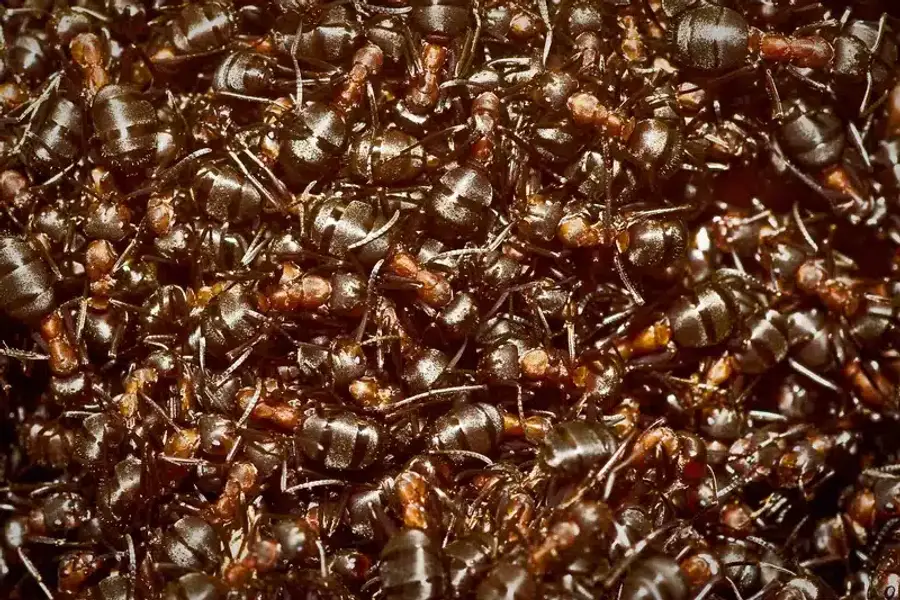
However, in a full colony, social cues often override individual sleep schedules. Isolated ants stick to their cycle, but within the colony, workers rest in staggered shifts so work never stops.
Ant Sleep in Common Mid-Atlantic Species
Let’s look at some common ant species in our area.
Carpenter Ants
Carpenter ants are mainly nocturnal foragers. They enter a deep resting phase in wood galleries during the day. When night falls, they come out to forage for water and sugar. Spot their trails around dusk and learn more in our Short Guide To Carpenter Ants. That night shift is why carpenter ants hide so long in older, heavily wooded neighborhoods, and why most of the carpenter ant calls behind our ant control in Leesburg come from homeowners who only noticed the trails after dark.
Pavement Ants
Pavement ants forage at twilight and through the night, nesting in cracks under pavement. Their rest period is mostly under stones and soil, where they take short naps throughout the day. The majority of ant workers roam in cool evenings, while the rest slumber underground.
Odorous House Ants
Odorous house ants are partly diurnal, foraging in kitchens in daylight. By late night they return to nest cavities, entering restful sleep until morning. For tips on blocking these invaders, see How to Prevent Ants in Virginia.
Within a colony, worker ants may take shifts resting while others patrol.
How Ant Sleep Affects Pest Control
Understanding ants’ sleep helps you time treatments. Since ants never all sleep, there’s always someone awake to dodge traps. It is also why spring is when most of our ant control work in Alexandria happens: the colonies are fully active again, so bait actually moves back to the nest instead of sitting there.
Our approach uses non-repellent products that workers carry deep into the colony. All products are EPA approved and passed our internal research review. We’ve dropped nine harsh chemicals from our lineup.
If you need help with ants, call us at 703-683-2000 or email info@bettertermite.com.