
TLDR: Most “water bugs” found indoors are actually Oriental or American cockroaches, not true aquatic water bugs. The nickname stuck because these roaches love damp areas. True water bugs live in ponds and rarely come inside. Treatment for cockroach “water bugs” focuses on moisture control, sealing entry points, and targeted baiting. If you see them often, you likely have a moisture problem that needs fixing.
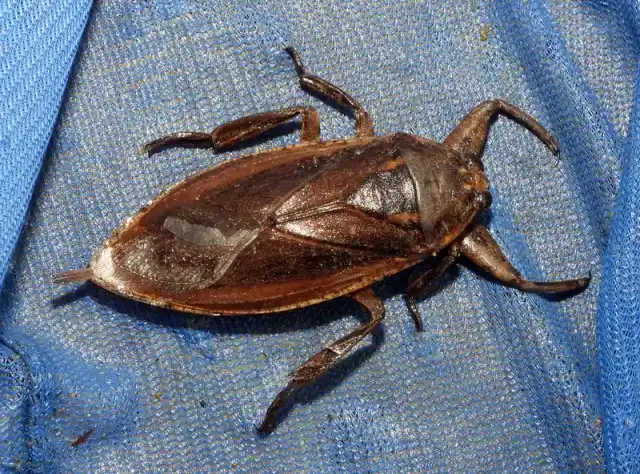
A water bug is one of two very different insects. The real one is an aquatic predator that lives in ponds and slow streams and almost never comes indoors. The one in your basement is a cockroach. It is an Oriental or an American roach, and it likes damp, dark, cool places. That is how it picked up the nickname. Almost every “water bug” found indoors here is that second insect, so everything below is built around it.
This is the treatment page: where to inspect, what actually kills a water bug population, and the moisture work that stops them coming back. I have been in this business since 2015, at a family company that has worked the DMV for over 50 years, and the pattern has not changed. Treatment fails when the moisture source is left alone.
If you have not settled what you actually found, our water bug vs cockroach guide is the identification page and covers the size, wings and habitat tells in detail.
First, Confirm What You Are Treating
Treatment only works if the target is right, and there are two very different insects behind the same nickname. True giant water bugs are aquatic predators that live in ponds and streams and turn up indoors only by flying to a porch light — they need releasing outside, not treating. The insect in your basement or crawl space is nearly always an Oriental roach or an American roach, both of which are drawn to damp and both of which do infest.
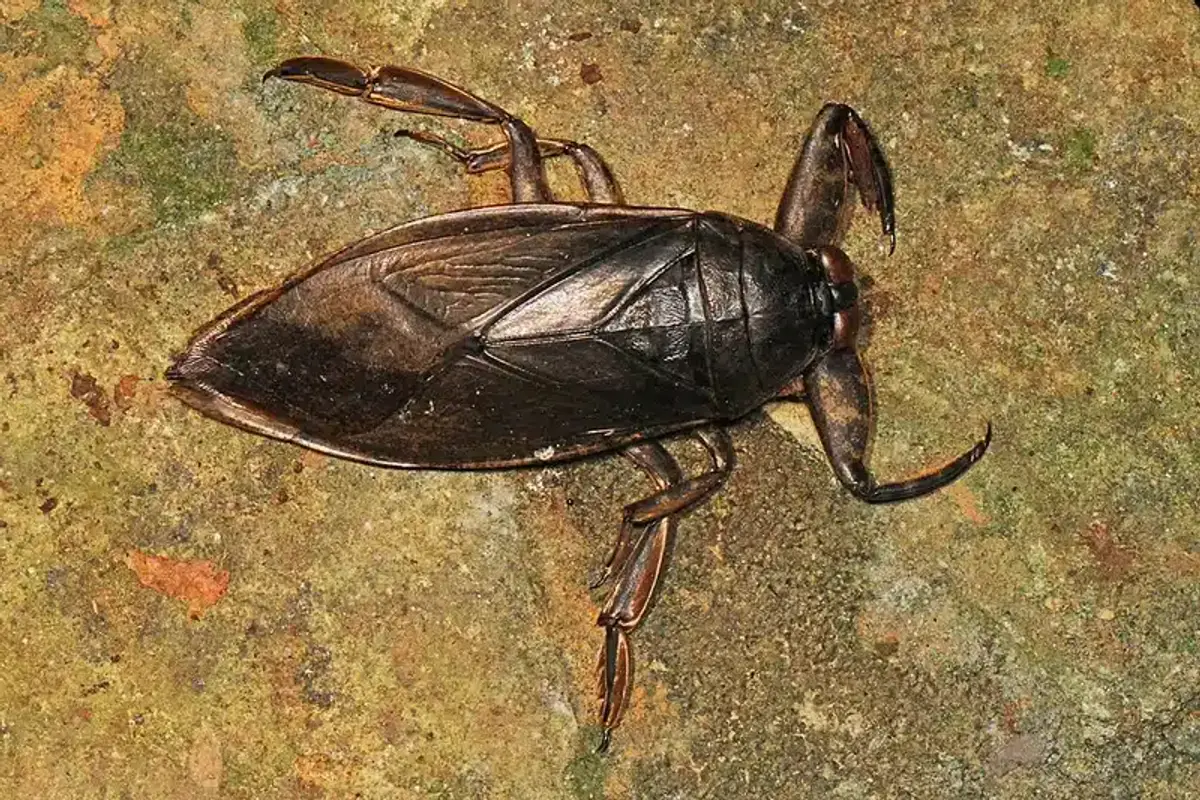
The short version: found in the basement, bathroom or kitchen means cockroach; found at the pond or pool means a true water bug. For the full comparison — size, wing covers, the figure-8 marking, and how each one moves — see our water bug vs cockroach guide. Everything from here on assumes the moisture-loving roach.
Water Roach, Water Cockroach, Black Water Bug: All the Same Insect
Water roach, water cockroach, sewer roach, black water bug. People use all of these for one insect, and it is almost always an Oriental cockroach. About an inch long, glossy and close to black, wing pads too short to fly. That is the “black water bug” most people are searching for at eleven at night after one crossed the basement floor.
The other one is reddish-brown, closer to an inch and a half, with full wings and a habit of coming up out of drains. That is an American cockroach, and our American cockroach treatment page covers that program.
Daren, one of our registered technicians, runs into this naming problem on almost every roach call. “A big brown-red or black roach is almost always an outdoor roach,” he says. “Tiny roaches all through the cabinets and bathrooms are German roaches, and that’s a real issue.” The difference is worth getting right. German roaches breed indoors and are a much harder job. Water bugs are outdoor insects. They came in for a reason, and you can usually find that reason and fix it.
Life Cycle and Seasonal Patterns
Oriental cockroaches grow slowly compared with other roaches. The female makes an egg case and glues it somewhere hidden, like behind an appliance or inside a wall void. According to Penn State Extension, each case holds about 16 eggs and hatches in roughly 60 days at room temperature. One female averages eight cases, or close to 200 offspring over her life.
The nymphs are the slow part. Penn State puts that stage at 24 to 130 weeks, and adult females then live 5 to 26 weeks. Their numbers peak in late spring and early summer. They come indoors when it turns cold, or when a dry spell bakes out the damp spot they were living in.
One more number explains a lot of basements. An Oriental roach can go about a month without food if it has water. Without water it dies in two weeks. Water is what it is really after.
Where They Live and How They Behave
Oriental roaches thrive in high humidity and temps below 84 degrees. This makes basements, crawl spaces, and utility rooms perfect for them. Outdoors, they hide under mulch, in leaf litter, storm drains, and sewer systems.
During inspections, I most often find them where too much mulch sits against the foundation or where clogged gutters have kept one corner of the house wet all season.
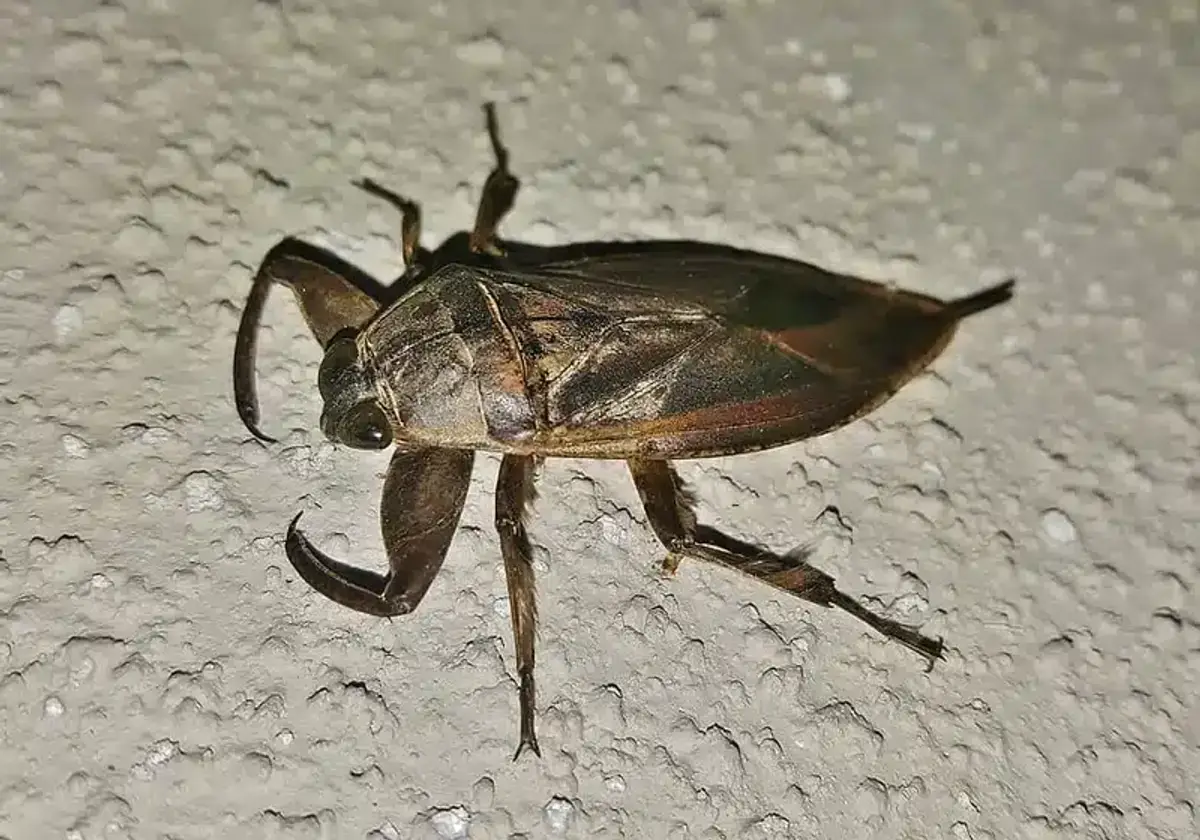
True giant water bugs need standing or slow-moving water with plants. They hunt tadpoles, small fish, and other water creatures, They grow to 2 to 4 inches. That makes them the largest true bugs in the country, according to University of Maine Cooperative Extension. Maine Extension also explains their other nickname. Adults fly at night and head for bright lights, so people call them electric-light bugs. Around here that means a porch light or a pool skimmer from May through September.
The key difference: Oriental roaches actively seek indoor shelter. Giant water bugs only end up inside by accident. If you keep seeing the same insects, you have cockroaches.
Where Water Bugs Come From
Water bugs come from outside. Oriental and American roaches live under mulch, in leaf litter, in storm drains and in sewer lines. They come in when something pushes them in or a gap lets them in. Three routes cover most of what we find:
- Up through drains and sewer connections. A floor drain that dries out loses its water trap. What is left is an open pipe running from the sewer line into your basement. Older homes with worn connections are the usual case.
- Ground-level gaps. Door sweeps that no longer touch the threshold, holes where pipes and utility lines pass through the foundation, unscreened crawl-space vents, weep holes.
- The mulch bed itself. Heavy mulch piled against the foundation holds water and parks a roach population against your wall.
Daren has seen the rain version of this many times. “When it rains a lot and there’s heavy rain, they will get pushed up out of the sewer system into houses, especially floor drains.” He adds a step most homeowners skip. If the activity stays around one basement drain, that drain may need cleaning and snaking. Gunk building up inside it is feeding them.
Why You Are Seeing Water Bugs All of a Sudden
A sudden wave of them usually traces back to one of four changes.
- Heavy rain or flooding. They get driven out of the soil, the mulch and the storm drains all at once. This is the most common reason for a one-night invasion.
- A dry spell. The opposite problem. Their outdoor harborage dried out and they followed moisture inside.
- Cold weather. In the DMV, indoor Oriental roach activity climbs from November through February.
- Something changed in the house. A slow leak under a slab, a sump pump that stopped running, a dehumidifier that quit, a floor drain that went dry while you were away for two weeks.
Storm-driven appearances tend to settle on their own. If you are seeing them week after week with no weather to blame, treat it as a moisture problem first and a bug problem second.
Health Risks
The health impact is very different between the two.
That risk is not limited to homes with an active problem. The proteins the roaches leave behind settle into dust and carpet, and they show up in far more houses than people expect.
Cockroach allergen is not rare. In the National Survey of Lead and Allergens in Housing, published in Environmental Health Perspectives, detectable cockroach allergen turned up in an estimated 63% of U.S. homes. Kitchen floors in 10% of homes carried enough of it to sit above the level researchers link with worse asthma.
Oriental roaches also leave behind allergen proteins that stick around long after the infestation is gone. That is why the cleanup and the ongoing prevention matter for families with breathing problems, not just the treatment itself.
Giant water bugs can deliver a painful bite. Maine Extension notes their other nickname is “toe-biters.” But they do not spread disease or contaminate living space, the bite only happens when one is handled, and they do not infest homes.
Cockroach “water bugs” create serious, ongoing health concerns. True water bugs are mostly harmless to human health.
How to Inspect for Water Bugs
Night inspections work best because Oriental roaches are nocturnal. Use a flashlight to check around exterior foundation cracks, pipe holes, and trash container areas. Look for live adults, shed skins, and dark brown egg cases.
Inside, focus on moisture-rich areas like basements, laundry rooms, and areas near water heaters. Check behind appliances, around floor drains, and in utility closets where pipes create moisture.
Monitoring tools include:
- Sticky traps along baseboards in suspect areas
- Shallow jar traps baited with beer-soaked bread for outdoor groups
- Dye tablets in floor drains to find sewer entry points
Check traps weekly and note any catches. This shows activity patterns and measures treatment results over time.
What Kills Water Bugs, and What Does Not
Nothing kills a water bug population instantly. A contact spray kills the roach in front of you and does nothing about the rest. That gap between “I killed one” and “they keep coming back” is behind most of the frustrated calls we get on this pest.
Here is what actually moves the number, in order of how much it matters:
- Gel and containerized baits. The University of California’s statewide pest program calls bait products “the primary pesticides used to treat cockroach infestations.” It also says plainly that “an effective bait program does not give immediate results but instead may take 7 days or longer.” Fipronil and indoxacarb gels work well on these roaches, because they have not built up resistance the way German roaches have. Replace the gel when it dries out.
- Dry dusts in voids. Boric acid kills on contact and again when the roach grooms it off. The same University of California guide notes that if it stays dry and undisturbed it “provides control for a very long time.” Thin layers only. A visible pile just gets walked around. Our guide to using boric acid for roaches covers placement.
- Growth regulators such as hydroprene, which stop the next generation from reaching breeding age.
- Fixing the water. Without this, the first three buy you a season.
What does not work is the bug bomb. The University of California guide is blunt about it. Total-release foggers are “often ineffective since they don’t reach the crevices where cockroaches harbor and breed.” Worse, they can scatter roaches into other parts of the building, where they wait and come back.
Professional Treatment Methods
Good water bug control takes several approaches working together.
Moisture control is the foundation. Fix plumbing leaks right away and add dehumidifiers to basements. Keep floor drains wet-trapped or install screens to block sewer entry. Point downspouts at least 3 feet from foundations.
Sealing entry points includes installing door sweeps and weatherstripping. Seal gaps around pipes with silicone caulk backed by steel wool. Install 1/4-inch mesh on crawl-space vents.
Targeted products are the baits, dusts and growth regulators above. They go where the roaches actually travel: under appliances, along the base of foundation walls, into voids. Not sprayed across an open floor.
DIY vs Professional Treatment
Many homeowners try store-bought sprays and baits first. While some products give short-term relief, most DIY treatments miss key parts of a full control program.
Professional treatment makes sense when you see 5 or more roaches per night on traps or find egg cases on walls. Our technicians focus on moisture control, sealing, and targeted baiting rather than just spraying. When the water bugs turn out to be the big reddish-brown kind coming up from drains, our American cockroach treatment is the program we run on them.
Our Better Promise means unlimited callbacks if you’re not getting results. We keep coming back until the problem is solved at no extra cost.
What Attracts Water Bugs, and What Keeps Them Away
What attracts them is a short list: water, dark, and a cool place to sit. Food matters less than people expect. These roaches will eat leaf litter, garbage film, grease, even the paste behind old wallpaper. Take the damp away and you take away the reason they stay.
What repels them is a shorter list still, and most of it is not a product. There is no spray that keeps water bugs away for a season. These are the things that change the outcome:
- Get the indoor humidity down. The EPA recommends keeping indoor humidity below 60 percent, and ideally between 30 and 50 percent relative humidity. A basement dehumidifier is the highest-value purchase for this problem.
- Pull mulch back off the foundation and thin out the plantings against the wall.
- Run downspouts at least three feet out and keep the gutters clear.
- Keep floor drains wet-trapped, or screen them.
Daren makes people prove the moisture point with a meter rather than argue about it. “Plenty of times a customer swears their house is dry and the relative humidity comes back at 72%,” he says. “You want to be around 45 to 50%.” A hygrometer runs about ten to fifty dollars, less than a decent bait kit, and it settles the question in an afternoon.
Prevention Checklist
Spring: Remove excess mulch from foundations, clean gutters, trim plants away from walls, seal foundation cracks
Summer: Run dehumidifiers in basements, check door sweeps and screens, monitor floor drains, remove standing water
Fall: Seal gaps around pipes, screen crawl-space vents, place monitoring traps, schedule professional perimeter treatment
Winter: Check traps monthly, maintain good humidity levels, keep sealing intact, fix any new moisture issues right away
Getting Rid of Water Bugs Permanently
Permanent is a fair goal with these roaches, and more realistic than people assume. But only if the water gets fixed. Oriental and American roaches would rather be outside. They are not German roaches, which will happily breed in a dry kitchen. If water bugs are living in your house, something in that house is wet.
The clearest case I know of is one of Daren’s. He serviced a Fort Hunt house for years that had a heavy American and Oriental roach problem. Treatment held the numbers down but never finished the job. Then the homeowners replaced their water pipe. In Daren’s words: “Ever since they’ve done that… I was already reducing numbers heavily, but now it’s like almost non-existent.” The chemical was never the missing piece. The pipe was.
Old Town is the neighborhood version of the same story. “Old Town is so prevalent with them because of all the moisture in these older homes,” Daren says. A lot of that housing stock predates anything we would now call moisture control.
So the order is: bait and dust to bring the population down, sealing to cut the routes in, then go find the water. Skip that last step and you will be treating the same basement next spring.
What Professional Water Bug Treatment Costs
Oriental and American roaches are covered under our regular home pest control plan. It starts around $49 a month for an average DMV home, plus a one-time $200 setup fee on the first visit. If the population is heavy enough to need its own roach initial, that starts around $450. Ongoing service folds into the plan after that.
We do not sell one-time treatments for this. With a moisture-driven pest, a single visit only treats the symptom. The roaches outside your foundation are still there, and so is whatever is drawing them in.
Call us at 703-683-2000 or email info@bettertermite.com and we will inspect the house, find the moisture, and give you the plan in writing.