Leaf-Footed Pine Seed Bugs Identification Guide
Leptoglossus corculus
The leaf-footed pine seed bug is a reddish-brown, 3/4-inch insect with distinctive flattened hind legs that commonly enters homes in the fall seeking winter shelter. While harmless to people and structures, they can become a nuisance in large numbers.
Taxonomy
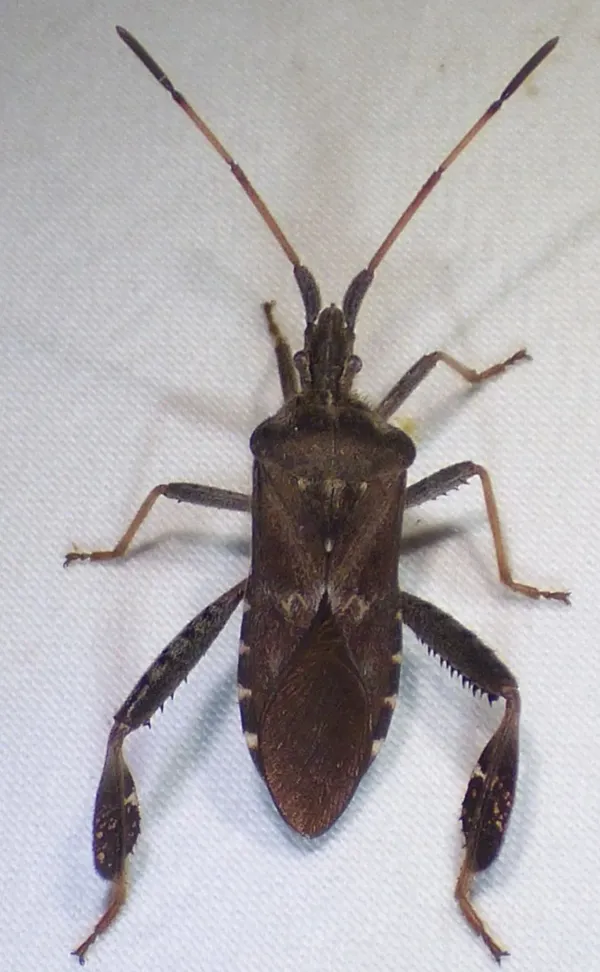
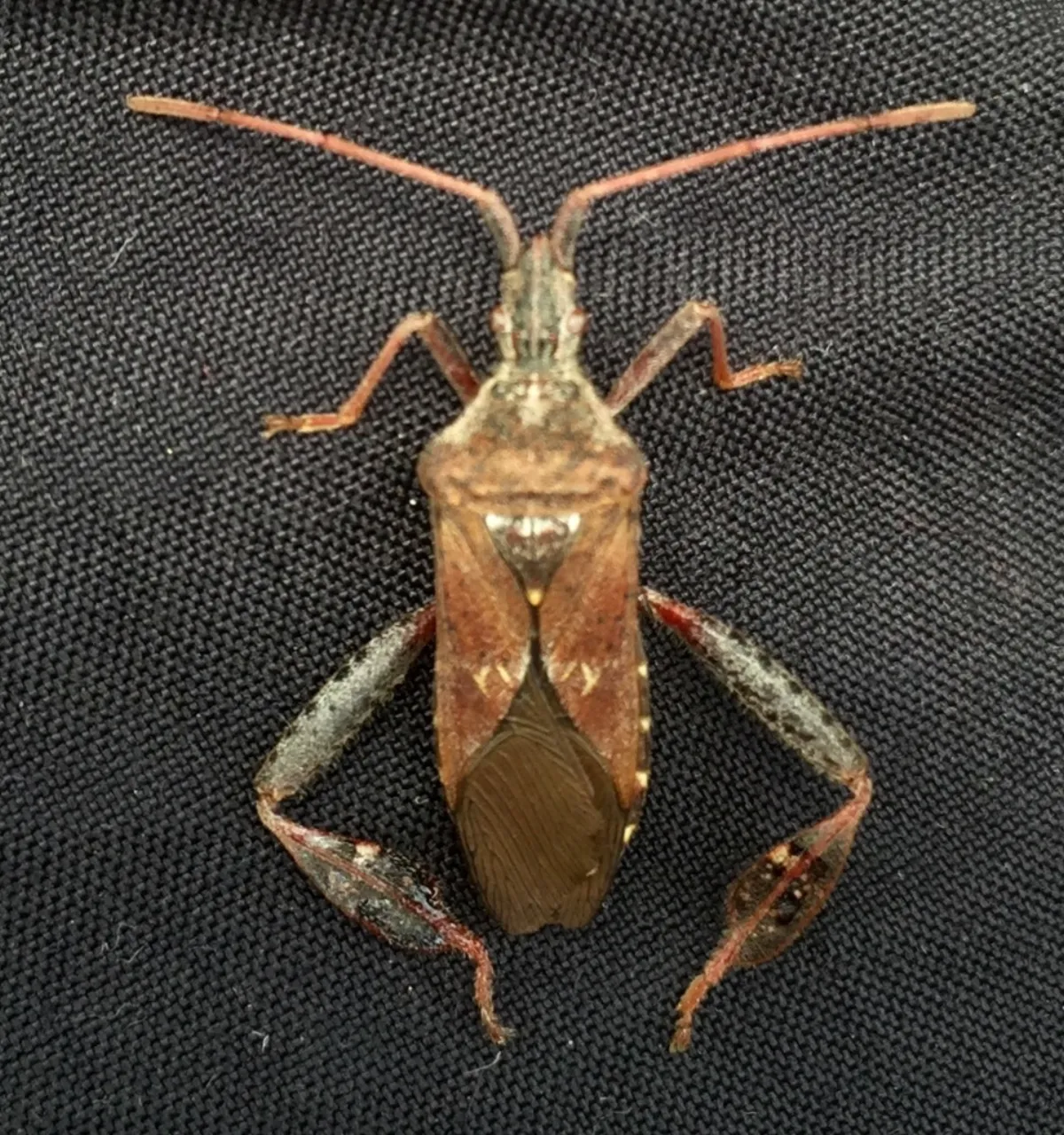
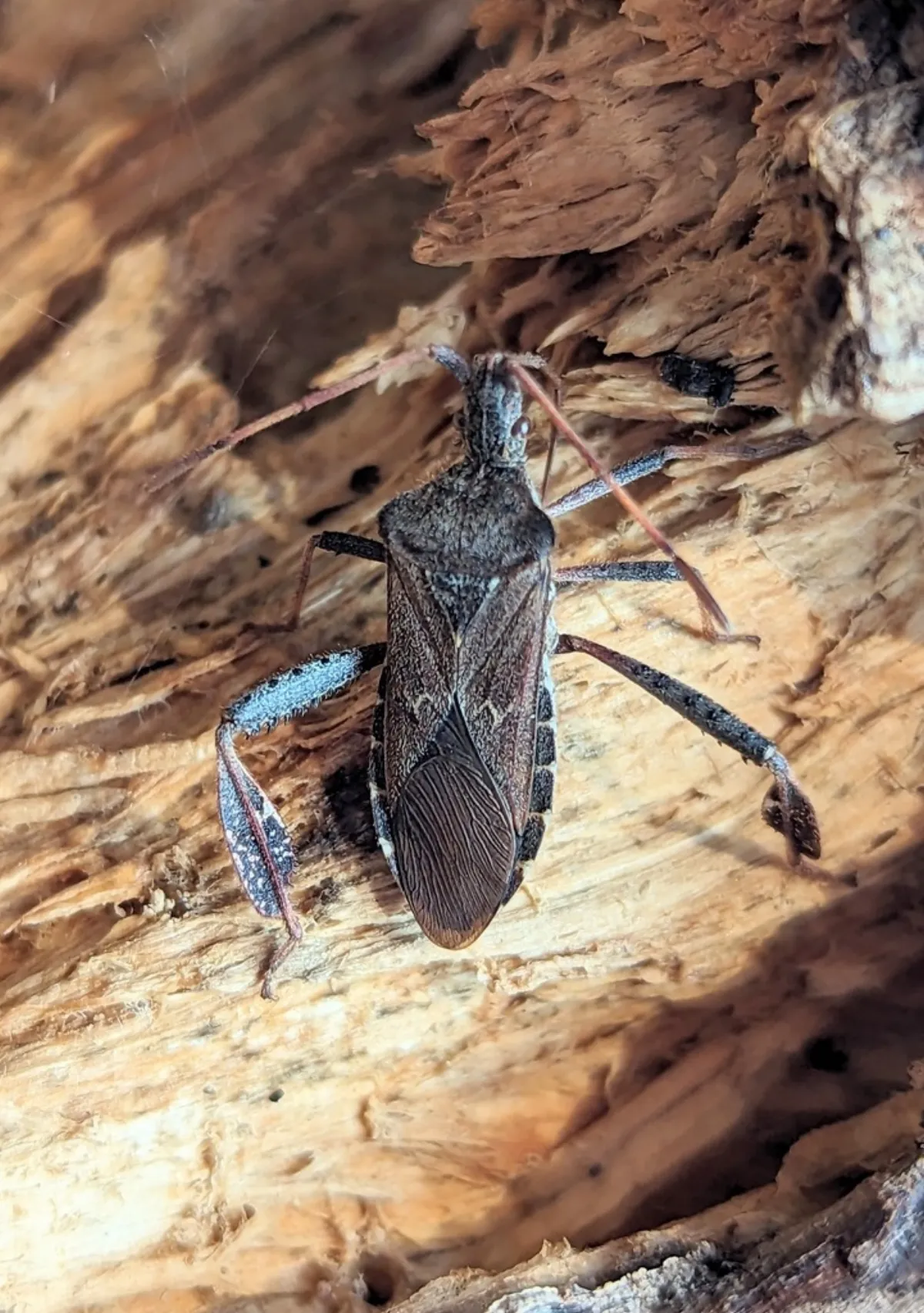
Leaf-Footed Pine Seed Bugs Coloration
Common color patterns to help identify leaf-footed pine seed bugs
Leaf-Footed Pine Seed Bugs
Seasonal Activity
When leaf-footed pine seed bugs are most active throughout the year

Where Leaf-Footed Pine Seed Bugs Are Found
Hover over states to see their names. Green regions indicate where leaf-footed pine seed bugs have been reported.
Leaf-Footed Pine Seed Bug Identification Guide
Physical Characteristics
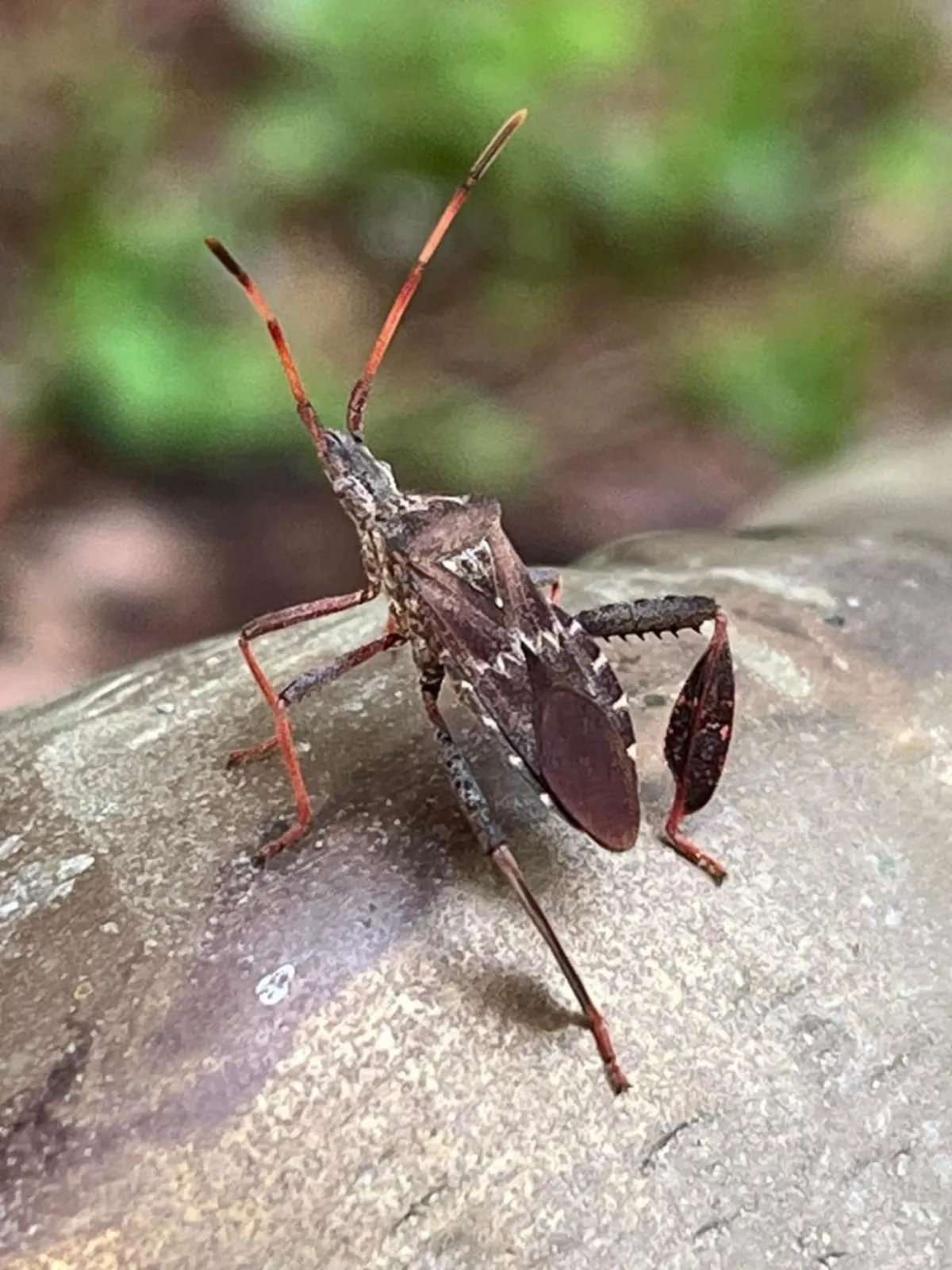
Leaf-footed pine seed bugs (Leptoglossus corculus) are about 15 to 19 mm long, or roughly 3/4 of an inch. They have long, slightly flat bodies that range from reddish-brown to dark brown. The easiest way to spot any leaf-footed bug is by looking at the back legs. These bugs have flat, leaf-shaped plates on their hind legs. On this species, the outer edge of the leg plate is longer than the inner edge. That detail is one of the best ways to tell it apart from close relatives.
Adults have wings and can fly. They often make a loud buzzing sound when they take off. Their mouthparts work like tiny needles, sitting under the head and piercing plant tissue to feed on pine seeds and young cones.
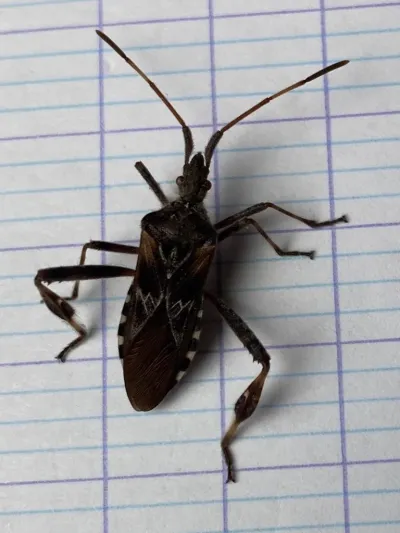
The body is darker than the related western conifer seed bug. When the wings are open, the belly is mostly black. A faint white zigzag line across the wings, common in other Leptoglossus species, is usually faint or missing on this species.
Common Look-Alikes
People often mix up leaf-footed pine seed bugs with several other insects:
- Western Conifer Seed Bug (Leptoglossus occidentalis): Very similar in size and shape. The western conifer seed bug has a clearer white zigzag line across the wings, more even hind leg plates, and lighter coloring with yellow and black belly markings.
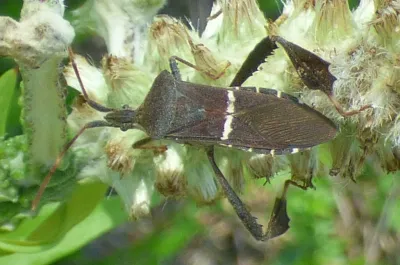
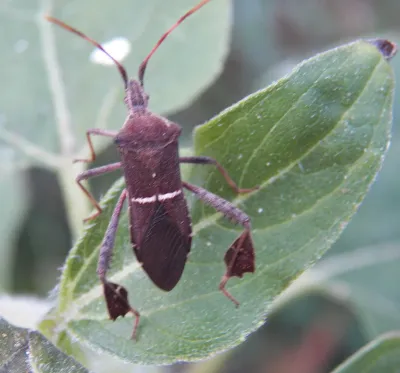
- Eastern Leaf-Footed Bug (Leptoglossus phyllopus): Same group with the classic leaf-shaped hind legs, but has a bold white band across the forewings and different belly markings.
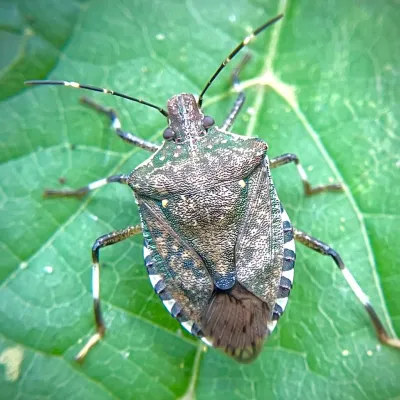
- Stink Bugs: Similar in size and also common fall invaders. Stink bugs have a wider, shield-shaped body and do not have the leaf-like hind leg plates.
Leaf-Footed Pine Seed Bug Behavior and Biology
Habitat and Diet
These bugs live in and around pine forests across the eastern and southeastern United States. They only feed on plants. Their needle-like mouthparts poke into young pine cones and seeds to draw out nutrients. In pine seed farms, large numbers can kill young cones and destroy seeds. This makes them a real problem for southern pine seed growers.
For homeowners, these bugs are just a nuisance. They do not eat household items, stored food, fabrics, or wood. They do not breed indoors and cause no damage to your home.
Life Cycle
These bugs go through three life stages: egg, nymph, and adult. There is no cocoon stage. In spring, females lay small barrel-shaped eggs in rows on pine needles. One female may lay several batches over the season.
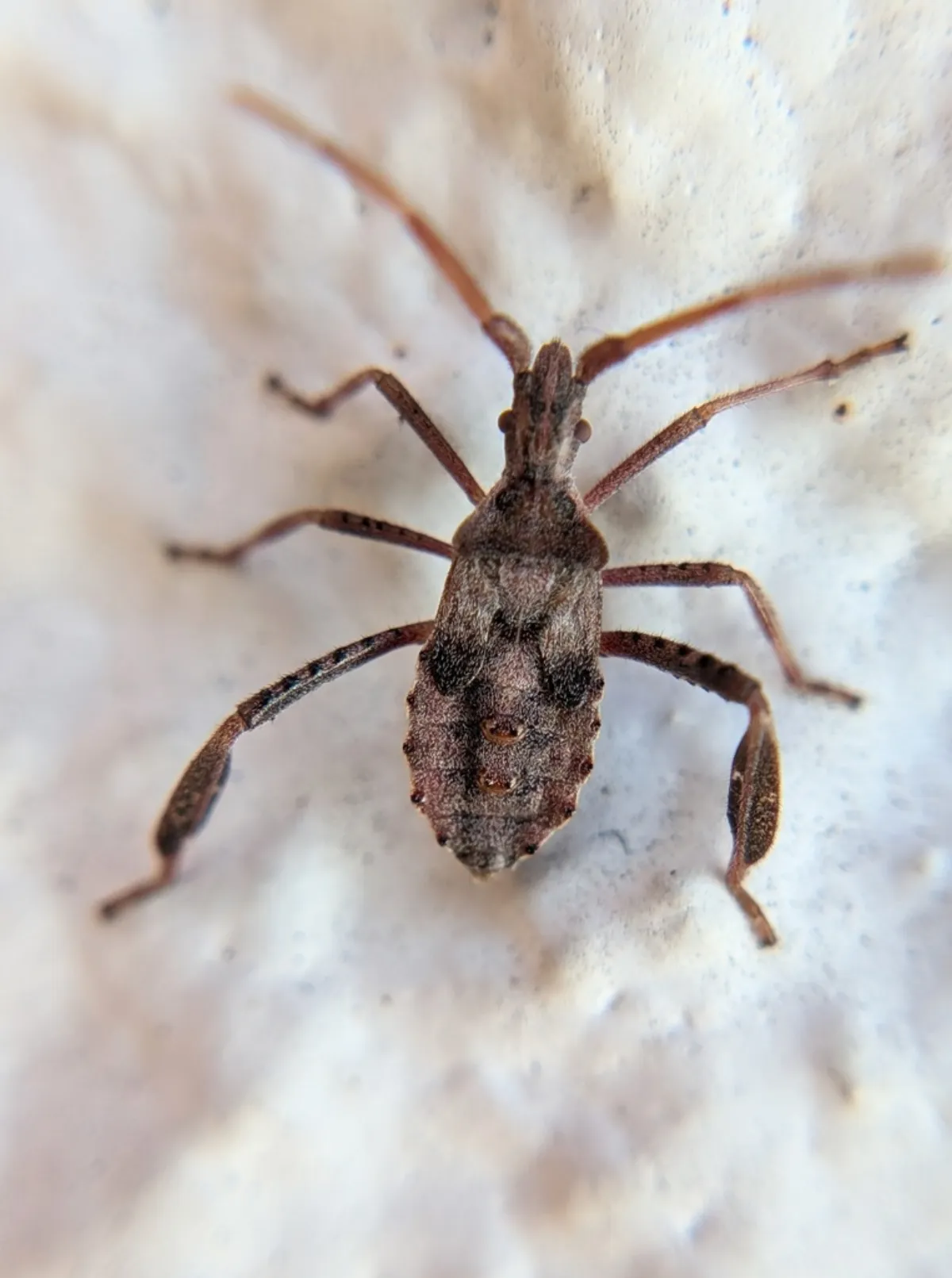
Nymphs hatch looking like tiny wingless adults. They start feeding on needles and young cones right away. They shed their skin five times as they grow. Wing pads show up in the later stages. By late summer, nymphs have grown into adults with full wings.
In most areas, there is one generation per year. Adults spend the winter in sheltered spots and come out in spring when the weather warms up. In the Deep South, adults may stay active longer because winters are milder there.
Overwintering Behavior
Like brown marmorated stink bugs and Asian lady beetles, leaf-footed pine seed bugs are classic overwintering pests. When temperatures drop in early to mid-fall, adults look for warm places to ride out the winter. They gather on the sunny sides of buildings and squeeze inside through gaps around windows, doors, pipes, weep holes, and damaged siding.
Once inside wall voids or other protected spaces, they go dormant and stay quiet through winter. They do not feed or breed during this time. On warm winter days, some may wake up and wander into living spaces. This is usually when homeowners first spot them. In spring, they try to move back outside to feed and mate.
Treatment Methods for Leaf-Footed Pine Seed Bugs
These bugs enter homes only to overwinter, so the best approach focuses on keeping them out in the first place.
- Seal Entry Points: Caulk cracks and gaps around windows, doors, eaves, and utility pipes. Fix or replace torn window screens and add door sweeps. Seal gaps where siding meets the foundation. Blocking entry points is the single most important step.
- Fall Exterior Treatments: A repellent barrier sprayed around the outside of your home, near windows, doors, eaves, and weep holes, can cut down on the number of bugs that get inside. Dust treatments in exterior gaps, behind siding, and around window and door frames add another layer of defense. These treatments work best when applied in September or October before the bugs start looking for shelter.
- Vacuum Removal: For bugs already inside, vacuuming is the best removal method. Use a shop vac or a dedicated vacuum bag to contain any mild odor. Do not crush them indoors because they can give off a smell similar to stink bugs. Dump collected bugs into soapy water outside.
- Reduce Attraction: Outdoor lights near entry points can draw these bugs in at night. Switching to yellow or sodium vapor bulbs near doors may reduce the number that gather on your home.
Indoor sprays are usually not needed for these bugs. Sealing up entry points and applying well-timed fall treatments give the best long-term results.
References
- Leaf-Footed Pine Seed Bug, BugGuide
- Cone and Seed Insects of North American Conifers, Springer
- Leptoglossus corculus, GBIF Backbone Taxonomy
- Western Conifer Seed Bug Identification and Comparison, Penn State Extension
- The Southern Pine Seed Bug, New for Oklahoma, Proceedings of the Oklahoma Academy of Science
- Forest Nursery Pests, USDA Forest Service
Other Plant Bugs
Explore other species in the plant bugs family
Commonly Confused With
Leaf-Footed Pine Seed Bugs are often mistaken for these similar pests
Where Leaf-Footed Pine Seed Bugs Are Found
Hover over states to see their names. Green regions indicate where leaf-footed pine seed bugs have been reported.
Common Questions about Leaf-Footed Pine Seed Bugs
Are leaf-footed pine seed bugs harmful to people?
+
No. These bugs do not bite, sting, or spread disease. They only feed on plants and are just a nuisance when they get into homes for the winter.
Why are leaf-footed pine seed bugs in my house?
+
They come inside in the fall looking for a warm place to spend the winter. They are drawn to the sunny sides of buildings and squeeze through small cracks around windows, doors, and siding.
Do leaf-footed pine seed bugs smell bad?
+
Yes. When crushed or bothered, they can give off a bad smell like stink bugs. It is best to vacuum them up or gently move them outside instead of crushing them.
What do leaf-footed pine seed bugs eat?
+
They feed on growing pine seeds and young cones using their needle-like mouthparts. Inside homes, they do not eat food, fabrics, wood, or any household items.
How do I prevent leaf-footed pine seed bugs from entering my home?
+
Seal cracks around windows, doors, and pipes. Fix damaged screens and add weatherstripping to doors before fall, when these bugs start looking for winter shelter.
What is the difference between a leaf-footed pine seed bug and a western conifer seed bug?
+
They are close relatives and look very similar. The western conifer seed bug usually has a clearer white zigzag line on its wings and lighter coloring. The leaf-footed pine seed bug is darker brown with a mostly black belly and uneven hind leg plates.
When are leaf-footed pine seed bugs most active?
+
They are most active from late spring through early fall when they feed on pine cones and seeds. In September and October, they start gathering on buildings to find winter shelter. They may also show up indoors on warm winter days.
Can leaf-footed pine seed bugs damage my pine trees?
+
In home yards, they rarely cause visible harm to mature pine trees. In commercial pine seed farms, though, large numbers can destroy young cones and cut into seed crops.

With five years of hands-on experience in the pest control industry, George Schulz is a registered technician with the Virginia Pest Management Association and a proud third-generation professional in a family business that's been protecting homes for over 58 years. He manages and trains a team of service pros while also leading internal research efforts—recently spearheading a deep-dive review of thousands of documents on pest control materials to hand-pick the most kid and pet friendly, most effective solutions tailored specifically for homes in the DC metro area.
Local Plant Bugs Help
Dealing with plant bugs at home? Our licensed technicians provide pest control across Northern Virginia and Maryland.