
Most liquid termite treatments last 5 to 10 years. A bait system like Sentricon has no end date: it protects the house for as long as someone keeps servicing the stations. Tenting lasts zero days past the day it’s done. Where your home lands in those ranges comes down to the treatment type, your soil, and what happens around the foundation after we leave.
| Treatment | How long it lasts | What keeps it working |
|---|---|---|
| Liquid barrier | 5-10 years in most soils | Yearly inspection; don’t dig in treated soil |
| Sentricon bait stations | As long as the stations are serviced | Stations checked on schedule; bait replaced as needed |
| Pre-construction soil | 5+ years, often longer | Renewing the builder’s warranty with a yearly inspection |
| Borate on framing | Years, as long as the wood stays dry and covered | Keeping leaks away from the treated lumber |
| Tenting (fumigation) | No lasting protection | Drywood termites only; not used for our subterranean termites |
Here’s why I don’t trust “it looks fine” as a sign a treatment is still working.
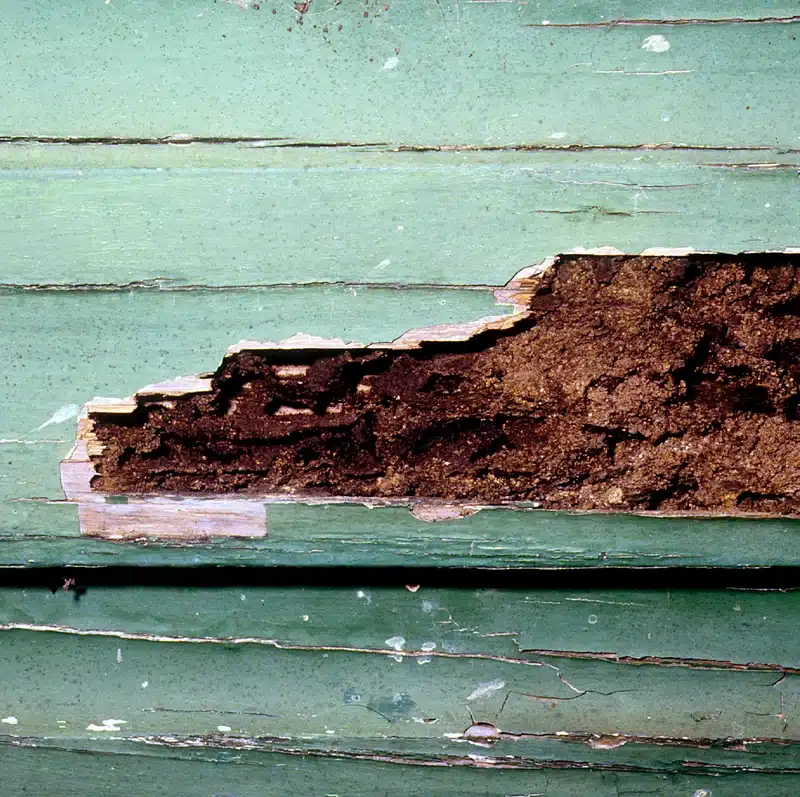
During my training, our team responded to what seemed like a minor issue. Homeowners noticed a small bulge in their window sill. What we found changed how I think about termite treatment.
- First sign: A barely visible bulge in the window sill of an addition
- What we found: Termites had eaten right up to the paint layer
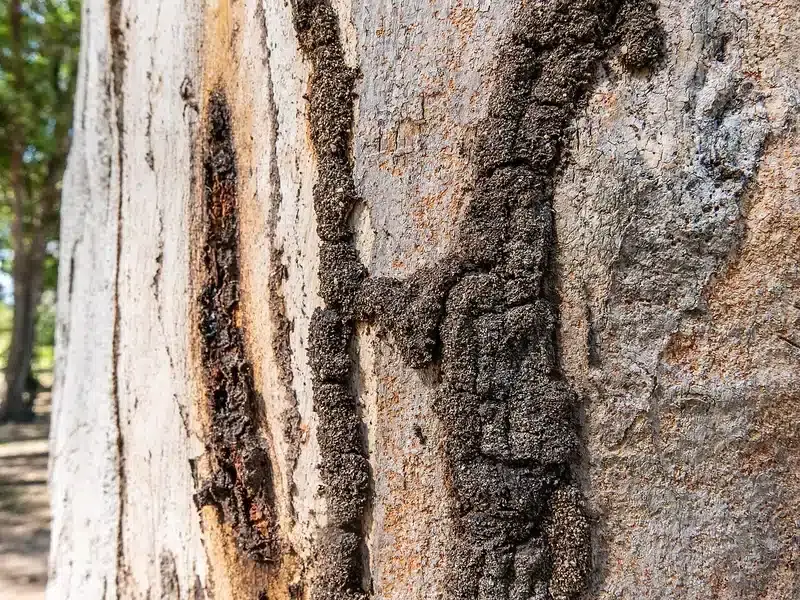
- Deeper look: Mud tunnels running up foundation walls in the crawl space
- Full picture: Years of hidden damage that wasn’t visible from outside
Nothing about that house looked like a termite problem from the outside. A yearly inspection of the crawl space would have caught those tunnels years earlier.
Types of Treatment and How Long They Last
The type of termite treatment you pick has the biggest impact on how long it lasts.
Liquid treatments create a chemical barrier around your foundation. According to the EPA’s labeling rules, these products must provide at least 5 years of protection. In practice, most last 5-10 years depending on soil and weather.
Non-repellent products work especially well because subterranean termites can’t detect the barrier. They walk through the treated zone, pick up the product, and carry it back to the colony. This approach tends to last longer than older repellent types.
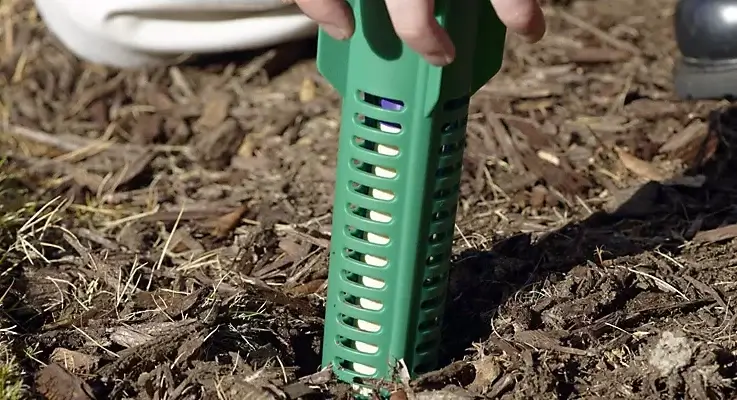
Bait stations like Sentricon work differently. There’s no fixed timeline. They protect your home as long as they’re monitored and the bait is kept in the stations. The stations stay in the ground year after year, and we check them on every service visit.
From my experience helping over 100 customers with termite issues, bait systems offer strong long-term results. But they only work if monitoring stays consistent. For bad infestations where termites aren’t finding the stations, we sometimes pair baits with targeted liquid treatments for faster results.
How Long Does a Termite Barrier Last?
A liquid termite barrier is termiticide mixed into the soil in a trench along the foundation, and sometimes drilled under slabs, stoops, and porches. It’s rated to hold for at least five years, and a good one often goes longer. The five-year floor isn’t marketing. It’s the bar a product has to clear before it can be sold.
Before the EPA registers a soil termiticide, the USDA Forest Service buries treated soil at test sites in Arizona, Florida, Mississippi, and South Carolina. The product has to keep termites from getting through the treated soil in every test plot for at least five years, at the lowest rate the label will allow. Many products keep going well past that in the same tests.
What cuts a barrier short in real homes is usually not the chemical wearing out. It’s a gap. Someone digs a new garden bed, a contractor pours a patio against the wall, or a downspout washes out a strip of soil. Termites find the untreated strip.
How Long Do Termite Bait Stations Last?
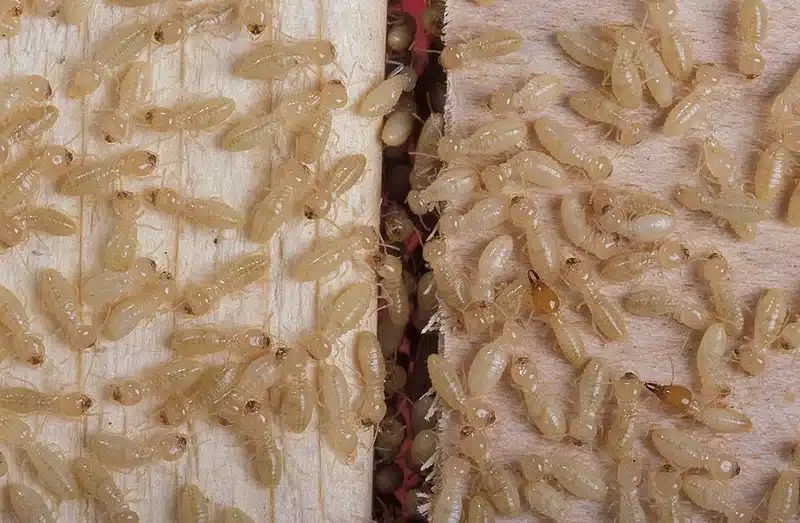
The plastic stations stay in the ground indefinitely. The question people are really asking is how long the bait lasts. Sentricon uses a bait called Recruit HD, a hard cellulose rod with an insect growth regulator in it (noviflumuron, which stops termites from molting). In a five-year field study at sites in Indiana, Mississippi, and South Carolina, researchers found the aged bait was still eaten as well as fresh bait, and they concluded it should last at least five years, possibly longer. So the bait isn’t the weak point. Missed service visits are. A station that nobody opens for three years might have been knocked out by a mower or buried under new mulch.

What Affects How Long Treatment Lasts
Soil and Climate
Virginia, Maryland, and DC soil conditions have a big effect on treatment life. High clay content can slow chemical spread, while sandy soil lets products drain away faster. Our region’s freeze-thaw cycles and roughly 40 inches of yearly rain can also weaken chemical barriers over time. Damp river-edge soil is part of why Alexandria termite control usually leans on bait stations checked every year rather than one liquid barrier and nothing else.
Soil moisture and pH matter too. Wetter soil speeds up how fast products break down. Very dry soil may keep products longer but can crack open, giving termites a way in.
Home Construction
Complex foundations, French drains, and interior slabs can all affect treatment. These features may need drilling during application, and they can leave gaps where termites get through. Any additions or changes made after treatment can open up new entry points that weren’t covered.
Digging and Landscaping
Landscaping, utility work, and grading after treatment can break the chemical barrier. Most warranties won’t cover you if you disturb treated soil without telling your pest control company first. Even planting shrubs near the foundation can weaken treatment.
Signs Your Treatment May Be Wearing Off
Watch for these signs:
- Live swarmer termites coming out indoors
- New mud tubes on your foundation
- Hollow-sounding wood that wasn’t damaged before
- Fresh wood damage beyond areas that were previously treated
- Worker termites in monitoring stations
Changes around your home can also weaken treatment. Moisture problems, grade changes, or new construction nearby may create openings. Around here the termite doing the damage is almost always the eastern subterranean termite, which travels through the soil and will find a break in treated ground. Drywood termites live inside the wood and never touch the soil, which is why soil treatments don’t apply to them.
The University of Maryland Extension notes that subterranean termite colonies can hold up to several million termites. Their advice to homeowners is to buy a contract that includes an annual inspection and re-treatment if it’s needed.
How Often Should You Treat for Termites?
You don’t treat for termites on a calendar. You inspect once a year, and you re-treat when that inspection turns something up. Here’s how that plays out by method:
- Liquid barrier: redone when an inspection finds live termites, or when the treated soil has been broken up by digging, a new addition, or a patio. If nothing has changed, many homes go 5-10 years before it’s needed.
- Sentricon bait: never “re-applied.” The stations stay in the ground and get checked, and bait is replaced when termites have been feeding.
- Pre-construction treatments: the builder’s treatment carries the house through the early years. After that, the homeowner keeps coverage going with a yearly inspection.
The yearly inspection matters more than the treatment date. Daren, one of our registered technicians, says the biggest misconception he runs into is that some houses just don’t get termites. In his words, every house will get termites at some point in its lifespan. The worst damage he’s walked into was a single-family house in Kingstowne. Termites had tubed up from under the back deck into the bay window and eaten it so badly that his screwdriver went right through the paint. The whole bay window had to be replaced. Daren figures it had been going on for at least a year, and nobody noticed until a crew pulled up the deck boards and one of the workers recognized it from his own house.
That’s what a treatment’s lifespan looks like in practice. A barrier or a set of stations can be doing its job along most of the house while a deck, a stoop, or a mulch bed gives termites a route around it. When Daren inspects, he starts on one side of the front stoop and works all the way around the house, because the stoop, the chimney, and the mulch beds are where he finds them most. More on that in our guide to termites in mulch.
Warranties and Yearly Inspections
Retreatment-only warranties are the most common and affordable. If live termites are found, the company re-treats at no extra cost. Damage repair isn’t covered.
Retreatment plus repair warranties also cover structural damage up to set limits. These usually require yearly inspections and proof that you’ve kept up your end of the deal.
Our own termite warranties are re-treatment warranties. If termites show up during the coverage period, we come back and re-treat at no extra charge. We don’t sell a damage-repair tier.
According to North Carolina’s consumer guide, warranty eligibility often requires an inspection within 30 days of the anniversary date and no unauthorized changes to the home.
Yearly inspections keep your warranty valid and catch early signs of trouble. Licensed techs check for mud tubes, moisture issues, wood-to-soil contact, and landscaping changes that could hurt your protection. That yearly visit is the backbone of our termite control in Northern Virginia, because a barrier that was complete in year one can be bridged by a new patio or a raised mulch bed by year five.
Good records protect you now and when it’s time to sell. If your buyer is using a VA loan, the inspector writing the termite letter for a VA loan has to note any past treatment, and a folder of dated service records makes that part of the report easy to answer.
How to Make Your Treatment Last Longer
Most of what shortens a treatment is something done to the soil after it went in. This list is what we ask homeowners to watch.
- Moisture Control: Fix leaks fast. Keep 6 inches between soil and siding. Keep crawl space humidity below 60%.
- Protect Treated Soil: Don’t dig within one foot of your foundation.
- Check First: Call your pest control company before adding drainage, soil, or plants near the structure.
- Remove Attractants: Move firewood away from your home. Remove dead tree stumps. Keep grading sloped away from the foundation.
- Yearly Inspections: Schedule annual checks to catch issues early and keep your warranty active.
New Construction vs Existing Homes
How long does pre-construction termite treatment last? Usually longer than a treatment on an existing home, because the applicator can build a complete barrier before the structure goes up. Soil gets treated under slabs, around foundation walls, and in masonry voids before construction blocks access.
For pre-construction termite treatment, builders hire us to do one of three things: a soil treatment, Sentricon stations, or borate sprayed on the lower framing before the walls close up. Borate soaks into the wood itself and stays there as long as the lumber stays dry. The builder prepays the treatment and the first year of the warranty. After that, the homeowner can renew it with a yearly inspection, which is what keeps a new home covered once the builder’s year is up.
Existing homes face more obstacles. Finished basements, patios, and utilities can prevent full coverage. Protection may lean toward the shorter end of the 5-10 year range. Bait stations often work well for existing homes where liquid treatment access is limited.
If you know your treatment date and type, you can estimate where you are: a liquid barrier from 2018 with a new patio since then is due for a close look, while a Sentricon system that’s been checked every year is still doing its job. If you don’t know either one, start with an inspection.
If you’re not sure what’s on your house now, call us at 703-683-2000 or email info@bettertermite.com. We’ll give you an honest assessment and a plan that fits your home.