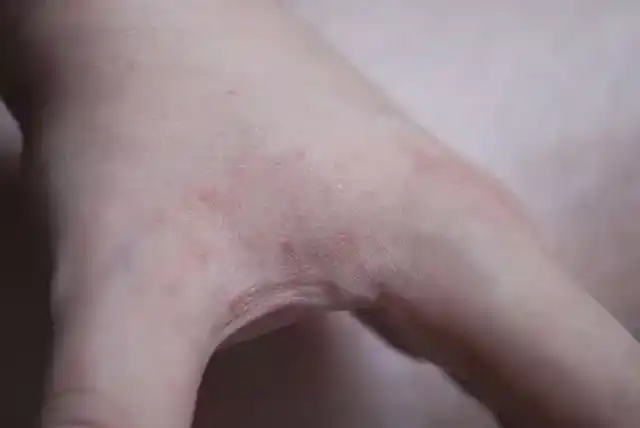

This page is about your skin: the red, itchy bumps you’re blaming on something that bites. You might suspect bed bugs or fleas, but when the bumps sit under your clothing, the cause is often carpet beetle larvae, which don’t bite at all. Below: why the rash happens, what it looks like, how long it lasts, and how to tell it from real bites. If you want to confirm the infestation itself (larvae, shed skins, fabric damage), see our guide to the signs of carpet beetles.
Carpet Beetles Don’t Actually Bite
Carpet beetles are tiny oval insects in the Dermestidae family. Common types include the varied carpet beetle, black carpet beetle, and furniture carpet beetle. Adults measure 1/16 to 1/8 inch and often fly indoors in spring.
Females lay eggs on wool, silk, and other natural fibers. According to UC research, eggs hatch in about 1-2 weeks indoors. Larvae spend months feeding on animal-based materials.
Larvae look like small brown worms with hair-like bristles. Although carpet beetles don’t bite, these bristles prick skin and cause an allergic reaction in some people.
How to Tell Carpet Beetle Rash From Other Bites
Carpet Beetle Rash vs Bed Bug Bites
Bed bug bites show up as red welts in lines or clusters on exposed skin like your face, arms, and neck. According to the Mayo Clinic, they have a darker red spot in the center.
Carpet beetle rash pops up under clothing where larvae brush against you. No blood spots on your mattress and no live bed bugs? It’s likely carpet beetles.
vs Flea and Mosquito Bites
Flea bites cluster around ankles and legs since fleas jump from pets or carpet. Mosquito bites are single, puffy bumps on exposed skin after outdoor time.
Carpet beetle rash is more scattered and shows under clothes, not on exposed areas. If the bumps don’t match flea or mosquito patterns, check for larvae.
Signs of a Carpet Beetle Problem
If the rash pattern points to carpet beetles, look for these clues to confirm.
- Irregular holes or thin patches in carpet, wool, or silk clothes
- Tiny brown specks of eggs and shed skins near baseboards or inside closets
- Small, fuzzy brown larvae along carpet edges or under furniture
- A few adult carpet beetles by windowsills or light fixtures
For the full breakdown, see our guide on signs of carpet beetles.
Rash Details
A carpet beetle rash shows as small red bumps. In some cases, tiny fluid-filled blisters form. A PMC case report explains how larval hairs trigger these reactions, which can last about a week.
A 2024 review in the dermatology journal Cutis (Johnson and Rohr) describes carpet beetles as an underrecognized cause of allergic contact dermatitis. The larvae carry rows of spear-shaped hairs called hastisetae that break off, float on air currents, and lodge in skin. Reactions range from itchy bumps to eye and airway irritation. Penn State Extension adds that only people with long-term exposure, often years, become sensitized, which is why one person in a household reacts and the rest don’t.
Rash flare-ups often peak in late winter and spring when carpet beetles are most active indoors. Doctors sometimes mistake it for impetigo or scabies. If standard treatments fail and you find no fleas, ask your doctor about carpet beetle dermatitis.
How to Get Rid of Carpet Beetles
Start with these DIY steps to remove larvae and stop the rash.
If the problem covers many rooms, contact a professional. Our registered technicians use EPA-approved products and find hidden nests in vents, wall voids, and other hard-to-reach spots — it’s a service call our Bowie pest control team knows well.
Prevention
Caulk gaps around windows and doors. Since adult beetles are drawn to pollen, reduce flowering plants near your foundation.
Check stored wool, feather pillows, and rugs every season. Look under area rugs and inside closets for larval skins. Store off-season sweaters in airtight bins. Shake out and vacuum clothes to remove loose bristle irritants.
For a free estimate, call us at 703-683-2000 or email info@bettertermite.com.