Nursery Web Spiders Identification Guide
Pisaurina mira
Nursery web spiders are large, long-legged hunting spiders found throughout eastern North America. Named for the protective silk nursery they build for their young, these spiders are harmless to humans.
Taxonomy
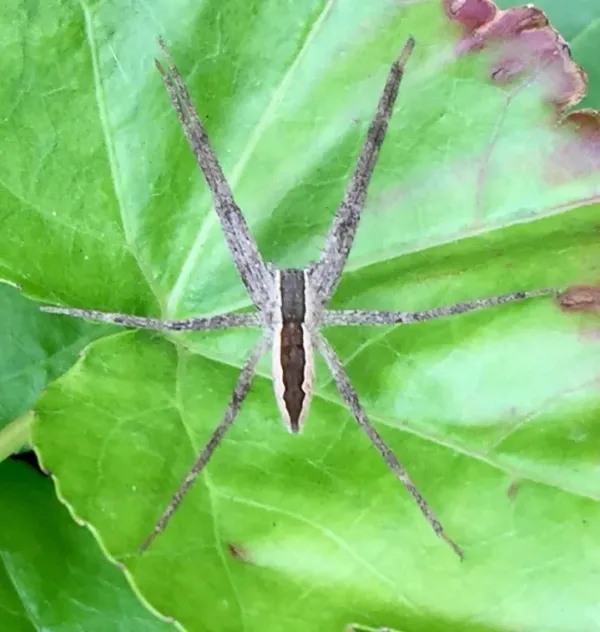
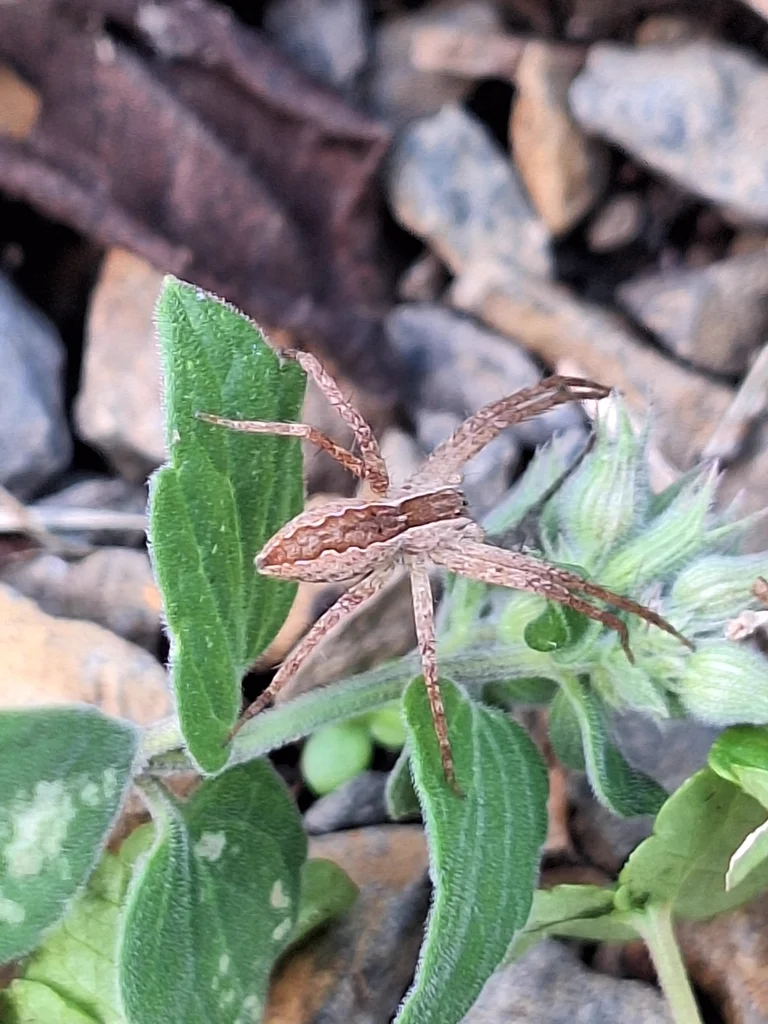
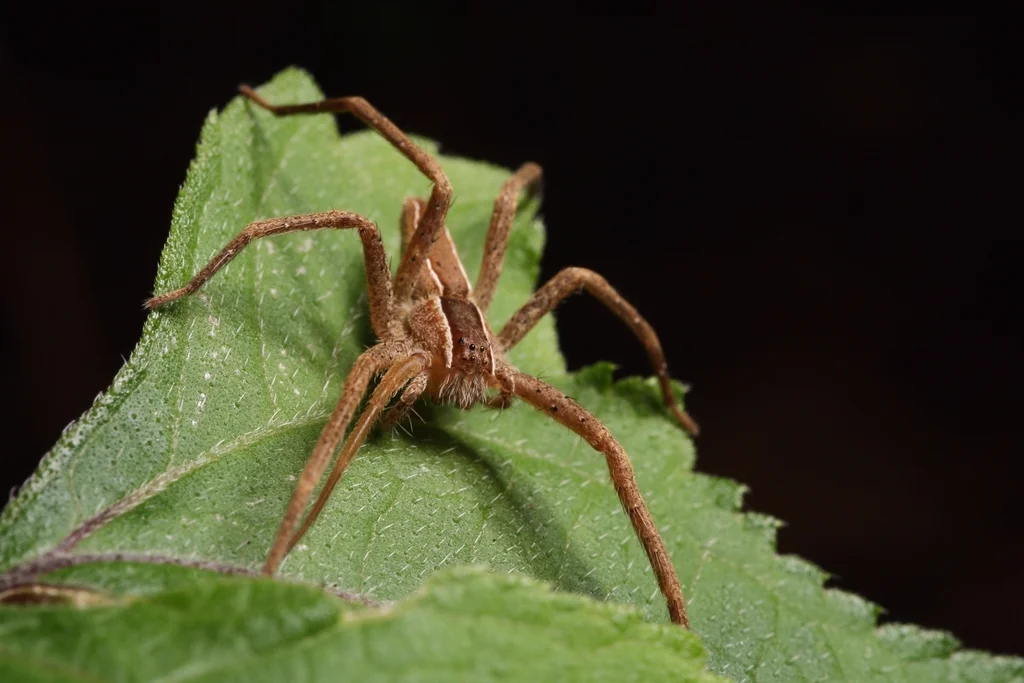
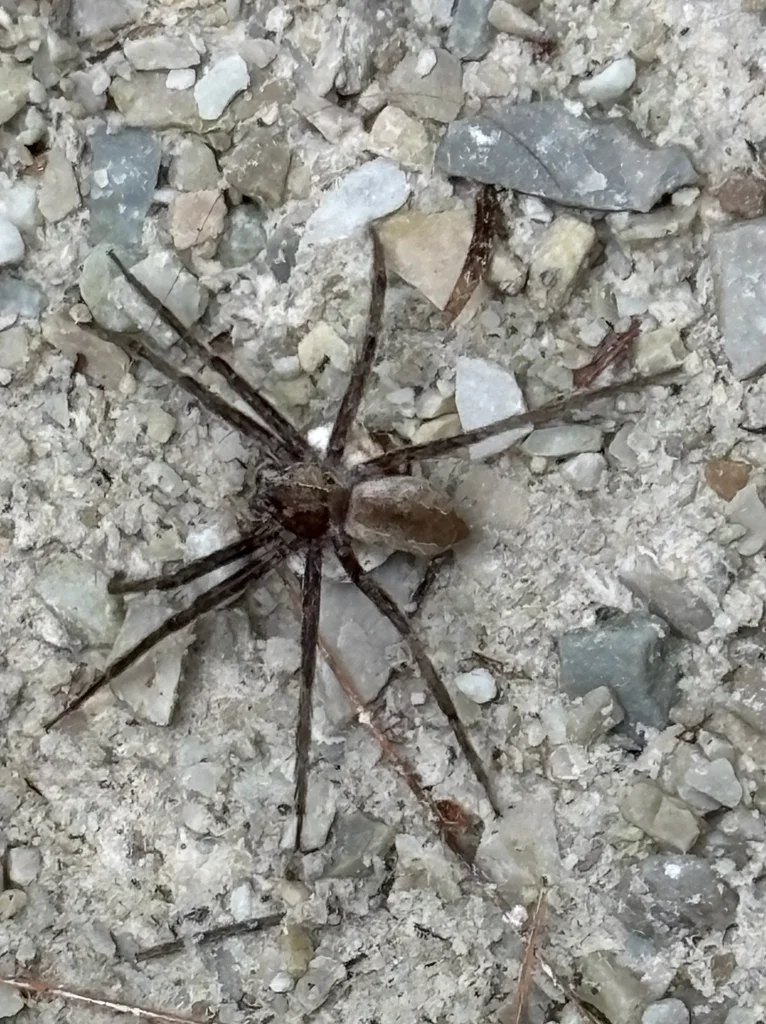
Nursery Web Spiders Coloration
Common color patterns to help identify nursery web spiders
Nursery Web Spiders
Seasonal Activity
When nursery web spiders are most active throughout the year

Where Nursery Web Spiders Are Found
Hover over states to see their names. Green regions indicate where nursery web spiders have been reported.
Nursery Web Spider Identification Guide
Physical Characteristics
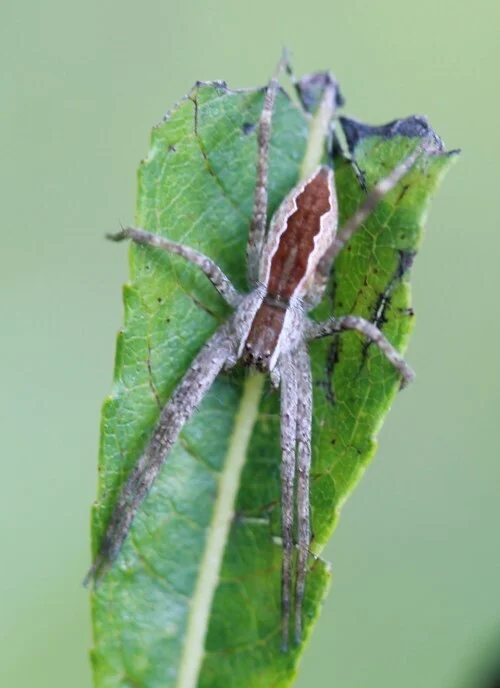
Nursery web spiders (Pisaurina mira) are medium to large spiders in the family Pisauridae. Adult females measure 12 to 15mm in body length. Males are slightly smaller at 9 to 15mm. With their long legs, these spiders can span 2 to 3 inches total.
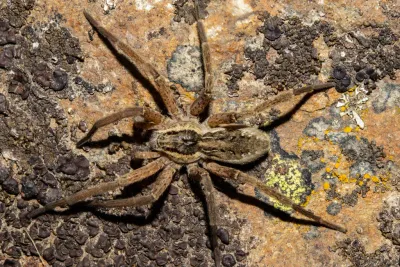
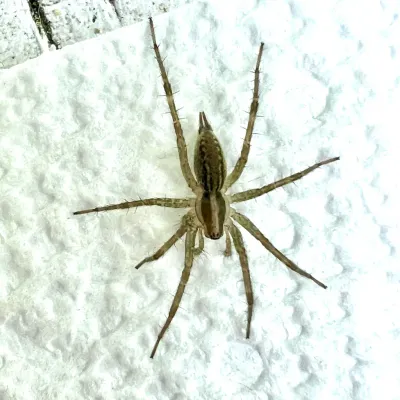
The most common color is yellowish-brown to tan. Some individuals range from light gray to darker brown depending on habitat and age. A key feature is the dark brown or black band running down the center of the back. This band is often bordered by lighter stripes. A narrow white or cream-colored border typically outlines the abdomen.
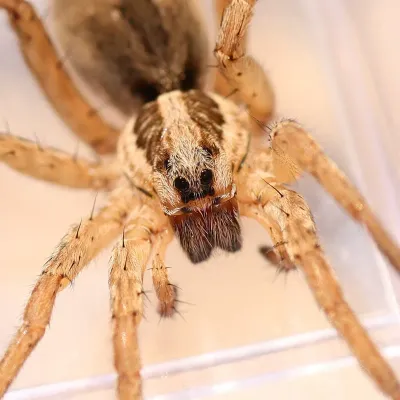
Nursery web spiders have eight eyes arranged in two rows. The front row has four small eyes in a straight line. The back row has four eyes in a curved pattern. This eye arrangement helps tell them apart from wolf spiders, which have two large forward-facing eyes.
Their body shape is streamlined compared to other large spiders. The legs are long and thin, which helps them blend in with plant stalks when they position themselves with legs outstretched. When resting, they often hold their front two pairs of legs together and point them forward. This creates a distinctive pose.
Behavioral Identification
Nursery web spiders are active hunters that do not spin capture webs. Key behavioral traits for identification include:
- Hunting style: They wait motionless on plants until prey approaches
- Resting posture: Front legs held together, often lined up along plant stems for camouflage
- Water walking: Can run across water and dive underwater when threatened
- Egg sac carrying: Females carry the round egg sac in their jaws, not attached to spinnerets
Common Species in Eastern North America
The American nursery web spider (Pisaurina mira) is the most commonly encountered species in the region. Related species in the family Pisauridae include:
- American Nursery Web Spider (Pisaurina mira): The primary species discussed here, found throughout eastern North America
- Fishing Spiders (Dolomedes spp.): Larger relatives often found near permanent water sources
- Straight-banded Nursery Web Spider (Pisaurina brevipes): A less common relative found in similar habitats
Nursery Web Spider Behavior and Biology
Habitat Preferences
Nursery web spiders thrive in areas where woods meet open fields. Around homes, they are typically found in:
Outdoor habitats:
- Tall grass and meadows
- Shrubs and low bushes
- Garden vegetation and flower beds
- Forest edges and hedgerows
- Near exterior lights where prey insects gather
Indoor encounters:
- Garages and sheds
- Basements near ground-level entry points
- Around windows and doorframes
- Near houseplants brought in from outdoors
Nursery web spiders that wander inside are typically accidental visitors. They usually enter while hunting or seeking shelter.
Diet and Feeding Habits
Nursery web spiders are sit-and-wait ambush predators rather than active pursuers. They position themselves on vegetation and remain motionless until prey comes within range. When an insect approaches, they quickly grab it using their fangs.
Their diet consists primarily of:
- Flies and other flying insects
- Moths and butterflies
- Small beetles
- Other spiders
- Grasshoppers and crickets
- Occasionally tadpoles and small aquatic insects near water
This hunting strategy of waiting for prey rather than chasing it uses less energy. Nursery web spiders can survive for long periods between meals. This makes them resilient in areas where prey is hard to find.
Reproduction and Lifecycle
Nursery web spiders have unique mating and parenting behaviors:
Courtship: Males approach females cautiously because females are larger and may view them as prey. Before mating, males often present a “nuptial gift”, which is a prey item wrapped in silk. Some males also bind the female’s legs with silk during mating to reduce the risk of being eaten.
Egg sac care: After mating (typically mid-June to mid-July), females produce a round egg sac containing 100 or more eggs. Unlike wolf spiders that attach their egg sac to spinnerets, nursery web spider females carry the sac in their jaws. They hold it beneath their body.
Nursery construction: When eggs are nearly ready to hatch, the female builds a silk tent among plants. She places the egg sac inside this tent and guards it closely.
Spiderling development: After hatching, young spiders stay in the nursery until their first molt. The mother stays nearby to guard them until they leave to start their own lives.
Seasonal Activity Patterns
Nursery web spider activity follows a predictable seasonal cycle in temperate regions:
- December to February (None/Low): Spiders overwinter as immatures in protected spots. Activity essentially ceases outdoors.
- March to April (Low): Overwintered spiders emerge as temperatures warm. They resume feeding and growth.
- May to June (Moderate to High): Activity increases as spiders mature and begin courtship. Males become more mobile while seeking mates.
- July to August (High): Peak activity period. Mating and egg-laying occur. Females construct nursery webs and guard young.
- September to October (Moderate): Activity remains steady as the season’s young disperse and feed before winter.
- November (Low): Spiders seek sheltered locations for overwintering as temperatures drop.
How We Treat for Nursery Web Spiders
When nursery web spiders become a nuisance around homes, our treatment approach focuses on exclusion and targeted control.
Our Treatment Process
Step 1: Thorough Inspection
We begin by identifying areas of spider activity and the conditions attracting them. For nursery web spiders, key inspection points include:
- Vegetation near the home’s foundation
- Areas around exterior lighting where prey insects gather
- Entry points at ground level (gaps under doors, foundation cracks)
- Moisture sources that attract both spiders and prey
Step 2: Exterior Barrier Treatment
We apply a non-repellent product around the exterior perimeter where spiders are active. Non-repellent formulations work well for nursery web spiders since they contact the product without detecting it. Treatment focuses on:
- Foundation walls and perimeter areas
- Window frames and door entries at ground level
- Around outdoor lighting fixtures
- Vegetation contact points with the structure
Step 3: Limited Interior Treatment
Interior treatment is typically limited to spot applications in specific areas:
- Corners and floor-wall junctions in basements and garages
- Around potential entry points
- Near windows where spiders may enter
Broad surface applications inside are generally unnecessary for nursery web spiders, as they do not establish indoor populations.
Step 4: Dewebbing Service
During our visits, we remove visible spiders and any webbing around eaves, porches, and entry points within reach (about 6 to 8 feet from the ground).
Customer Guidance
For best results between service visits, we recommend:
- Manage exterior lighting: Use yellow “bug lights” or reduce outdoor lighting that attracts prey insects
- Close blinds at night: Prevents interior lights from drawing insects to windows
- Trim vegetation: Maintain a 12-18 inch buffer between plants and foundation walls
- Reduce harborage: Clear leaf litter, wood piles, and debris near the home
- Address moisture: Fix leaks and improve drainage to reduce insect prey
- Vacuum indoor spiders: Remove any spiders found inside and dispose of the vacuum contents
Ongoing Protection
Our tri-annual service maintains protective barriers and addresses seasonal pest activity patterns. Regular visits ensure continuous protection as new spiders move into the area and environmental conditions change throughout the year.
We use reduced-risk products that effectively control spiders while minimizing environmental impact. Our product selection prioritizes EPA-approved formulations that we feel comfortable using in our own homes.
References and Further Reading
- Pisaurina mira - Wikipedia - Detailed overview of American nursery web spider biology
- Nursery Web Spider - Animal Diversity Web - Academic resource on identification, behavior, and ecology
- Species Pisaurina mira - BugGuide - Identification photos and distribution information
- Nursery Web Spider - UW Milwaukee Field Station - Natural history and habitat information
- Nursery Web Spiders - Missouri Department of Conservation - Regional field guide information
Other Spiders
Explore other species in the spiders family
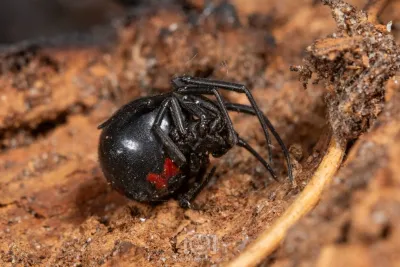
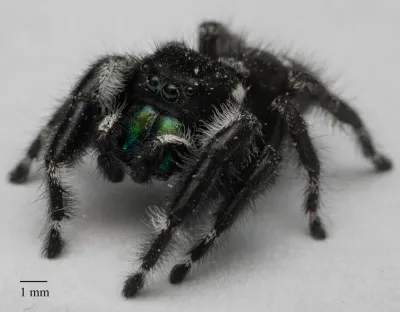
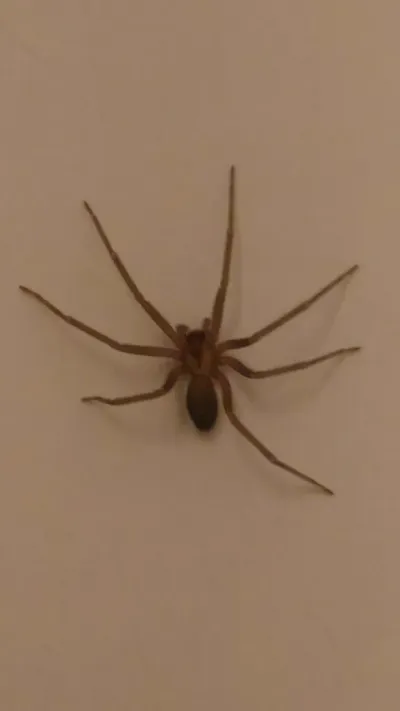
Commonly Confused With
Nursery Web Spiders are often mistaken for these similar pests
Where Nursery Web Spiders Are Found
Hover over states to see their names. Green regions indicate where nursery web spiders have been reported.
Common Questions about Nursery Web Spiders
Are nursery web spiders dangerous to humans?
+
No, nursery web spiders are not dangerous to humans. While they can bite if handled roughly or feel threatened, their venom is designed for subduing small insects and is not medically significant to people. A bite may cause minor localized pain and swelling similar to a bee sting, but serious reactions are extremely rare.
Why is it called a nursery web spider?
+
The name comes from the female's unique parenting behavior. When her eggs are nearly ready to hatch, she constructs a protective silk tent or nursery web among vegetation. She places her egg sac inside this structure and guards it vigilantly until the spiderlings emerge and complete their first molt.
How can I tell a nursery web spider from a wolf spider?
+
While both are large brown hunting spiders, they differ in several ways. Nursery web spiders have a more slender body with very long legs and often hold their front two pairs of legs together when resting. Their eye arrangement differs too: nursery web spiders have eyes in two rows forming a more rectangular pattern, while wolf spiders have distinctive large forward-facing eyes. Additionally, nursery web spiders carry their egg sacs in their jaws, whereas wolf spiders attach theirs to their spinnerets.
Do nursery web spiders build webs?
+
Nursery web spiders do not build webs to catch prey. They are active hunters that stalk and ambush insects in vegetation. The only webs they construct are the protective nursery structures for their young and occasional drag lines for safety while climbing.
Where do nursery web spiders live?
+
Nursery web spiders prefer the transitional areas between woods and open fields, thriving in tall grass, shrubs, meadows, and gardens. They are commonly found in vegetation during warmer months and may occasionally wander into homes, especially garages and basements, though they do not typically establish indoor populations.
What do nursery web spiders eat?
+
Nursery web spiders are opportunistic predators that hunt a variety of small insects including flies, moths, beetles, and other spiders. They use a sit-and-wait ambush strategy, remaining motionless on vegetation until prey comes within reach, then striking quickly with their fangs.
Can nursery web spiders run on water?
+
Yes, nursery web spiders can run across water surfaces if threatened or while hunting. Like their close relatives the fishing spiders, they can even dive underwater temporarily to escape predators. This ability comes from water-repellent hairs on their legs and their lightweight body.
When are nursery web spiders most active?
+
Nursery web spiders are most active from late spring through early fall, with peak activity during June through August when mating occurs. They are primarily daytime hunters but may also be active at dusk. In winter, they become dormant and are rarely seen.

With five years of hands-on experience in the pest control industry, George Schulz is a registered technician with the Virginia Pest Management Association and a proud third-generation professional in a family business that's been protecting homes for over 57 years. He manages and trains a team of service pros while also leading internal research efforts—recently spearheading a deep-dive review of thousands of documents on pest control materials to hand-pick the most kid and pet friendly, most effective solutions tailored specifically for homes in the DC metro area.