Fishing Spiders Identification Guide
Dolomedes spp.
Fishing spiders are large spiders that live near water in North America. They can walk on water and catch small fish, tadpoles, and insects. Though they look scary, they are harmless to humans.
Taxonomy
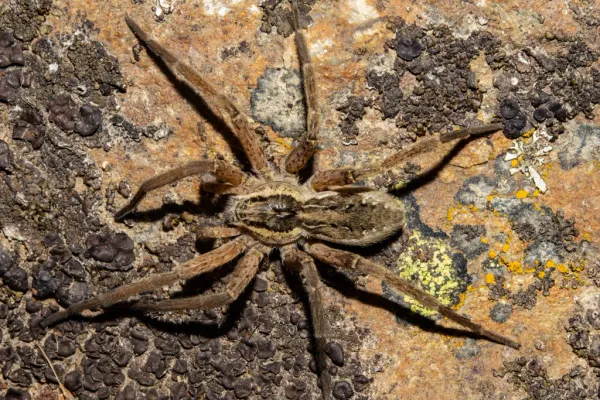
Fishing Spiders Coloration
Common color patterns to help identify fishing spiders
Fishing Spiders
Seasonal Activity
When fishing spiders are most active throughout the year

Where Fishing Spiders Are Found
Hover over states to see their names. Green regions indicate where fishing spiders have been reported.
Fishing Spider Identification Guide
Physical Characteristics
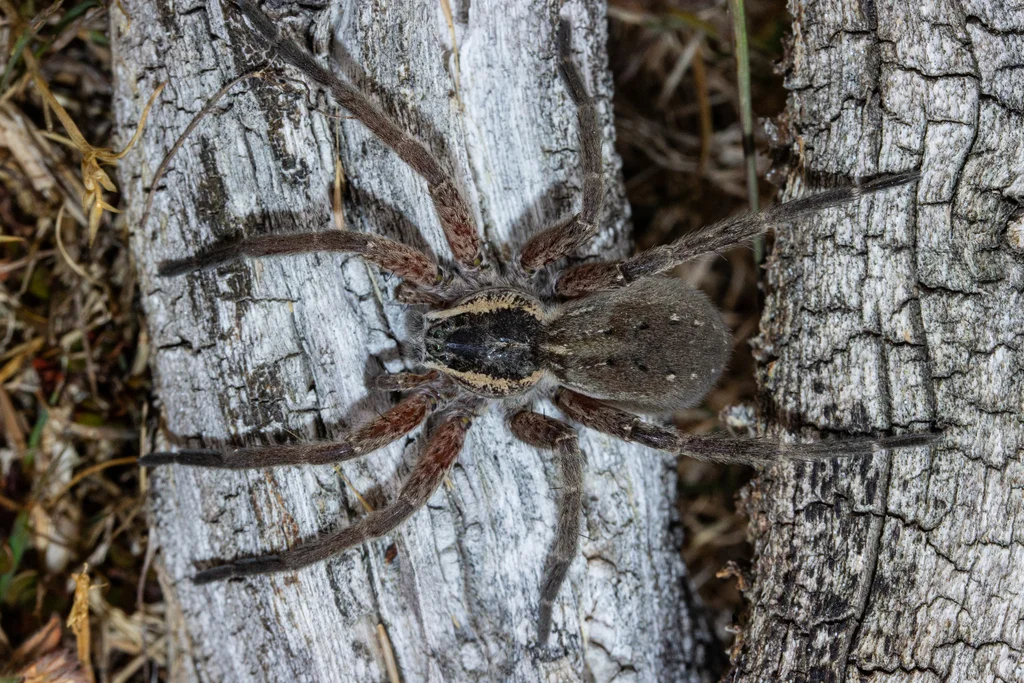
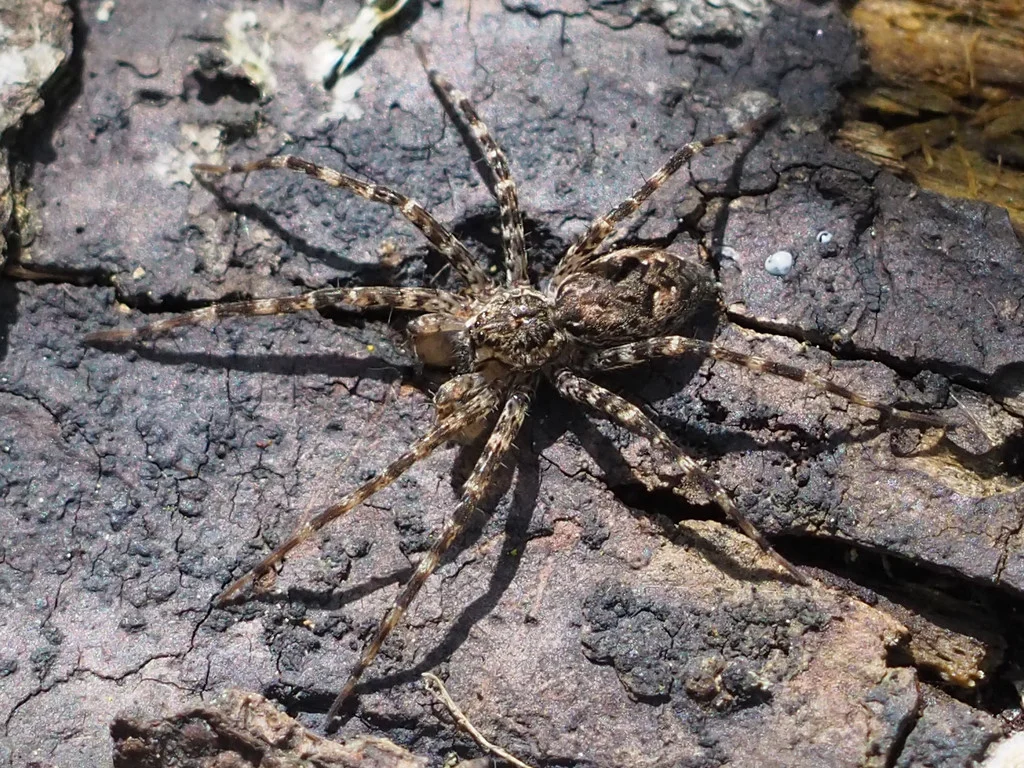
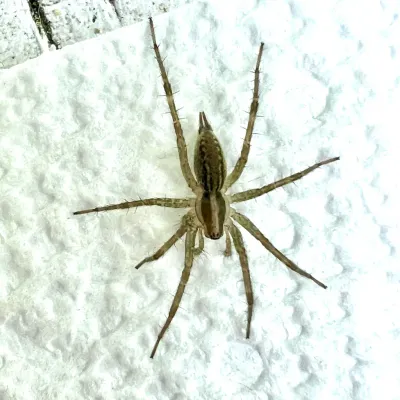
Fishing spiders (Dolomedes spp.) are among the largest spiders in North America. They are easy to spot due to their large size and bold markings.
Females are 15-26mm long. Males are smaller at 7-13mm. With legs out, big females span over 75mm (3 inches). That is bigger than your palm. This size often scares people.
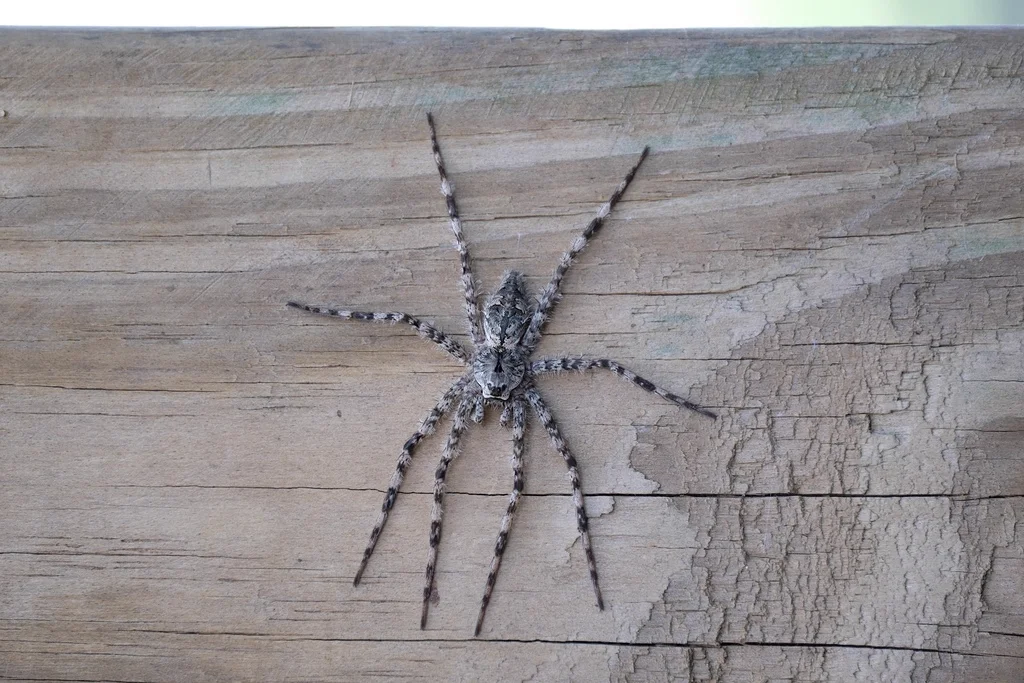
Their color is brownish-gray with dark and light patches. Many have a pale stripe on each side of the body. The legs show bands of light and dark colors.
Distinguishing Features
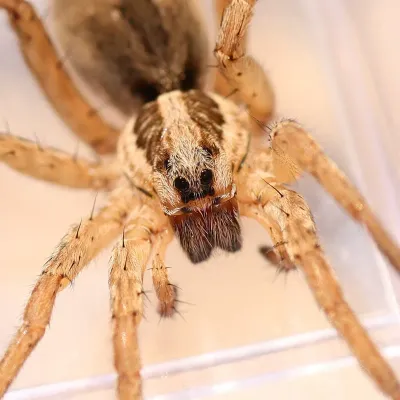
Fishing spiders look a lot like wolf spiders. Here are the key differences (see also our fishing spider vs. wolf spider comparison):
- Eyes. Fishing spiders have eight eyes in two rows. Wolf spiders have three rows.
- Body posture. Fishing spiders hold their bodies flatter against surfaces.
- Habitat. Fishing spiders are more often found near water.
- Leg position. Fishing spiders hold their front legs forward when at rest.
Common Species in North America
Nine Dolomedes species live in North America. The most common ones are:
- Dark Fishing Spider (Dolomedes tenebrosus). The most common in homes. Often found far from water in wooded areas.
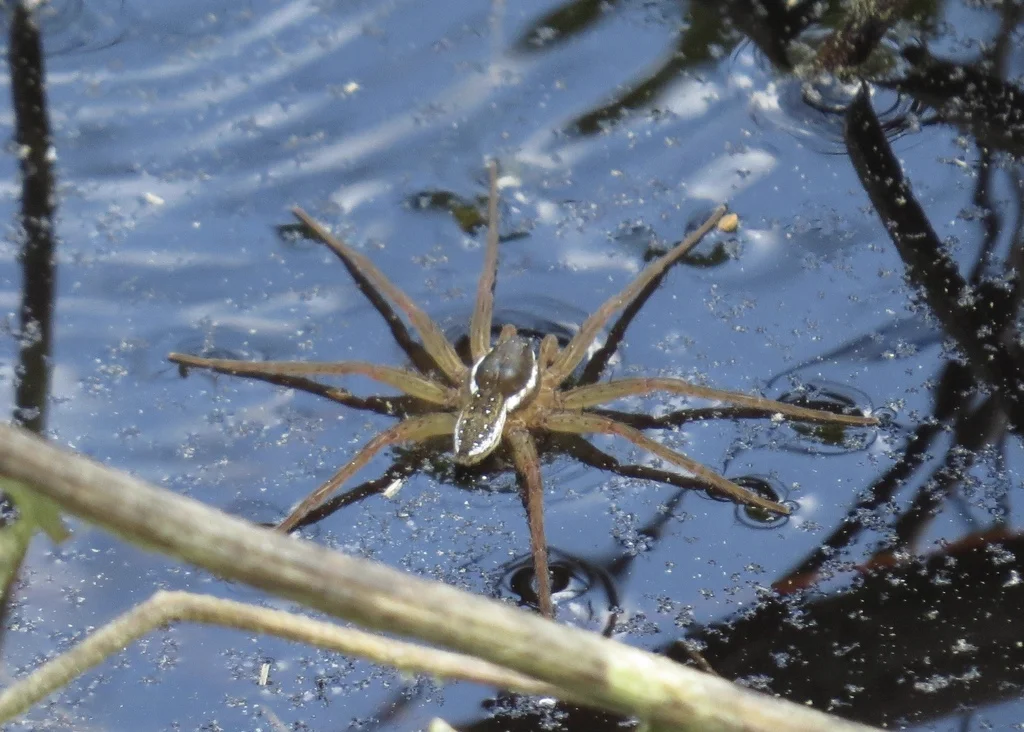
- Six-spotted Fishing Spider (Dolomedes triton). Lives near ponds and lakes. Has six dark spots on the belly.
- Striped Fishing Spider (Dolomedes scriptus). Has “W” marks on the back. Found near streams.
- White-banded Fishing Spider (Dolomedes albineus). Lives in trees in the southeast.
Fishing spiders are closely related to nursery web spiders, which share similar maternal behaviors.
Fishing Spider Behavior and Biology
Habitat Preferences
Most fishing spiders live near water (learn more). Common spots include:
- Pond and lake edges
- Stream and river banks
- Swamps and marshes
- Dock pilings and boat houses
- Pool decks and water features A related species, Crab Spiders, shares similar characteristics.
The dark fishing spider (D. tenebrosus) often lives far from water in woods. It is the one most likely to enter homes. These spiders spend winter under bark, stones, and in tree holes. They are most active from May to September. A related species, Black Widow Spiders, shares similar characteristics.
Hunting Behavior
Fishing spiders hunt on water the way other spiders use webs. They stretch their legs onto the water and feel for movement. When they sense prey, they run across the water surface to catch it.
Their hunting skills include:
- Walking on water. Fine, water-repellent hairs let them walk on water without sinking.
- Diving ability. Can stay underwater for up to 45 minutes by trapping air bubbles.
- Strong venom. Can take down prey up to four times their body weight.
- Night hunting. Hunt mainly at night to avoid birds.
Diet
Fishing spiders eat many types of prey:
- Aquatic insects that fall on the water surface
- Water striders and other insects on the surface
- Flying insects including flies, mayflies, and dragonflies
- Small fish and minnows
- Tadpoles and small frogs
- Various terrestrial insects
Reproduction and Lifecycle
Fishing spiders show strong maternal care. Here is how they raise their young:
- Females make a silk mat and lay eggs on it
- The eggs are wrapped into a round sac
- The female carries the egg sac in her jaws while looking for a good spot
- She builds a nursery web, attaches the egg sac, and guards it
- The baby spiders (which can number over 1,000) stay in the nursery under her watch
- Young spiders leave the nest in late summer through early fall
Egg sacs appear in June. The young hatch and spread out through September.
How We Treat for Fishing Spiders
Fishing spiders like to live outside and do not harm humans. Here is how we help when they get into your home.
Our Treatment Approach
Step 1: Inspection and Assessment
We find where spiders get into your home. We also check what may draw them in. Common entry points are:
- Gaps around doors and windows near wooded areas
- Cracks in the foundation or walls
- Outdoor lights that draw bugs (spider food)
- Damp spots that make the air humid
Step 2: Exterior Barrier Treatment
We spray a special product around your home where spiders may get in:
- Around windows and door frames
- Foundation perimeter
- Eaves and overhangs
- Areas where webs or spiders have been observed
Spiders walk through treated areas without knowing it. This makes sure they touch the product.
Step 3: Entry Point Sealing Recommendations
We find gaps and cracks and tell you how to seal them. This matters most for homes near woods or water.
Step 4: Habitat Modification Guidance
To keep spiders away for good, we suggest:
- Use less outdoor lighting (it draws bugs that spiders eat)
- Keep plants trimmed away from the house
- Remove wood piles, debris, and leaves near the home
- Fix moisture issues in basements and crawl spaces
What to Expect
Fishing spiders live alone. They do not take over homes in large numbers. Spiders that come inside are usually males looking for mates. Some just want shelter. Our treatments create a barrier that reduces how often you see them. Fixing your yard helps stop what draws them in. For more information, visit our main spiders page.
References
- Penn State Extension: Fishing Spider - Detailed identification and biology information
- University of Kentucky Entomology: Fishing Spiders - Common species and behavior
- Wikipedia: Dolomedes - Overview of the genus and habitat preferences
Other Spiders
Explore other species in the spiders family
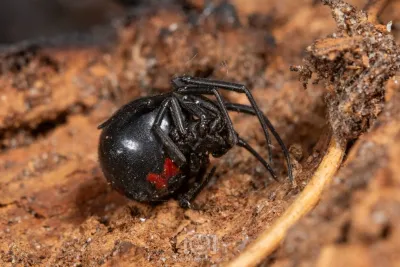
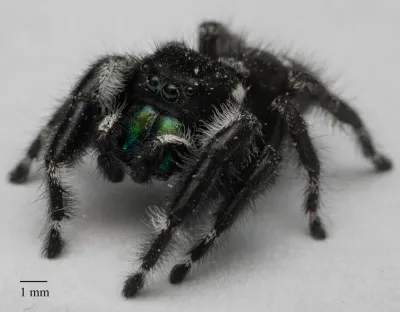
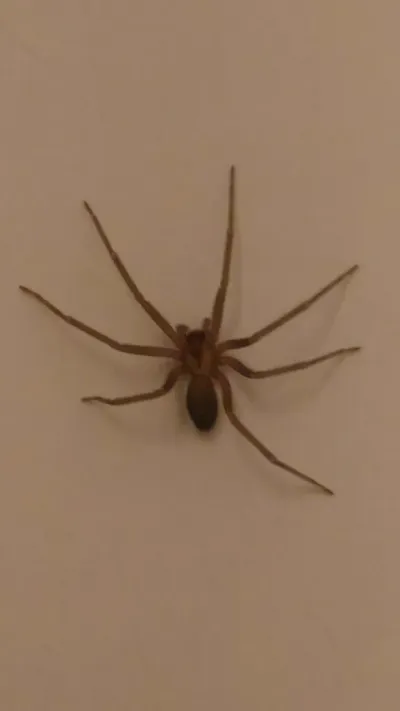
Commonly Confused With
Fishing Spiders are often mistaken for these similar pests
Where Fishing Spiders Are Found
Hover over states to see their names. Green regions indicate where fishing spiders have been reported.
Common Questions about Fishing Spiders
Are fishing spiders dangerous to humans?
+
No, fishing spiders are not dangerous to humans. They can bite if handled roughly, but their venom is not harmful to people. Bites are rare and cause only minor symptoms like a bee sting. These spiders are shy and will run from humans.
Why are they called fishing spiders?
+
Fishing spiders get their name from their ability to hunt on water. They walk on water using surface tension and catch small fish, tadpoles, and aquatic insects. They sense prey by feeling vibrations on the water.
Do fishing spiders come inside houses?
+
Most fishing spiders prefer outdoor habitats near water. The dark fishing spider (Dolomedes tenebrosus) often enters homes, mainly those near wooded areas. They come inside for shelter or to follow prey. Their large size startles homeowners, but they are harmless.
How big do fishing spiders get?
+
Fishing spiders are among the largest spiders in North America. Female bodies can reach 26mm (about 1 inch). With legs spread, they can span over 75mm (3 inches). Some are larger than an adult's palm. Males are smaller.
How can I tell a fishing spider from a wolf spider?
+
Look at the eyes. Wolf spiders have eyes in three rows. Fishing spiders have eight eyes in two rows. Fishing spiders also hold their bodies flatter and are more often found near water.
Can fishing spiders stay underwater?
+
Yes, fishing spiders can stay underwater for up to 45 minutes. They trap air in the fine hairs on their body. This lets them breathe while submerged. It helps them escape predators and catch aquatic prey.
What do fishing spiders eat?
+
Fishing spiders eat many things. They mainly eat insects that land on water, like water striders, flies, and mayflies. They can also catch small fish, tadpoles, and frogs. Their venom can take down prey up to four times their own weight.
When are fishing spiders most active?
+
Fishing spiders hunt at night when birds are sleeping. They are most active from late spring through early fall (May to September). This is when they mate and when their prey is most common.

With five years of hands-on experience in the pest control industry, George Schulz is a registered technician with the Virginia Pest Management Association and a proud third-generation professional in a family business that's been protecting homes for over 57 years. He manages and trains a team of service pros while also leading internal research efforts—recently spearheading a deep-dive review of thousands of documents on pest control materials to hand-pick the most kid and pet friendly, most effective solutions tailored specifically for homes in the DC metro area.