Firebrats Identification Guide
Thermobia domestica
Firebrats are small, wingless insects closely related to silverfish. They prefer hot, humid environments like boiler rooms, bakeries, and areas near furnaces. Their mottled gray-brown coloring and heat-loving behavior distinguish them from their silverfish cousins.
Taxonomy
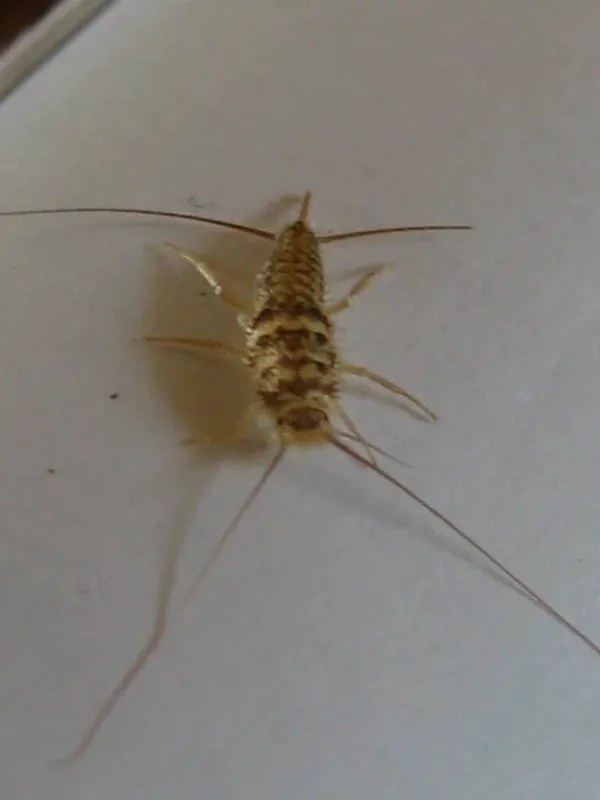
Firebrats Coloration
Common color patterns to help identify firebrats
Firebrats
Seasonal Activity
When firebrats are most active throughout the year
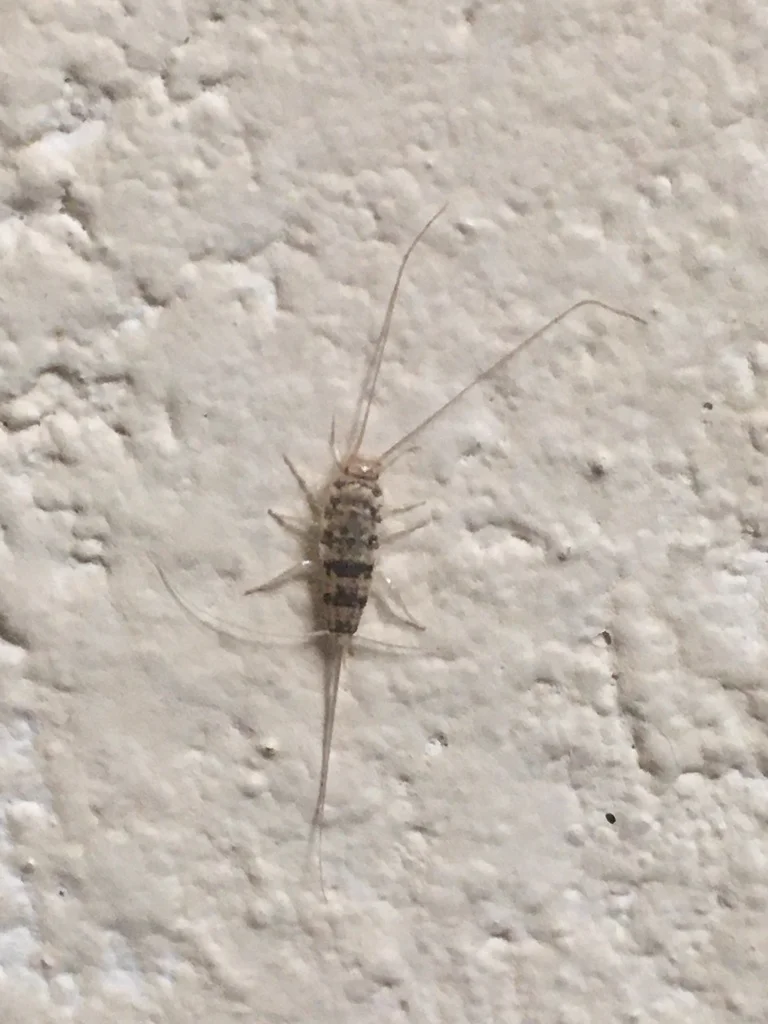
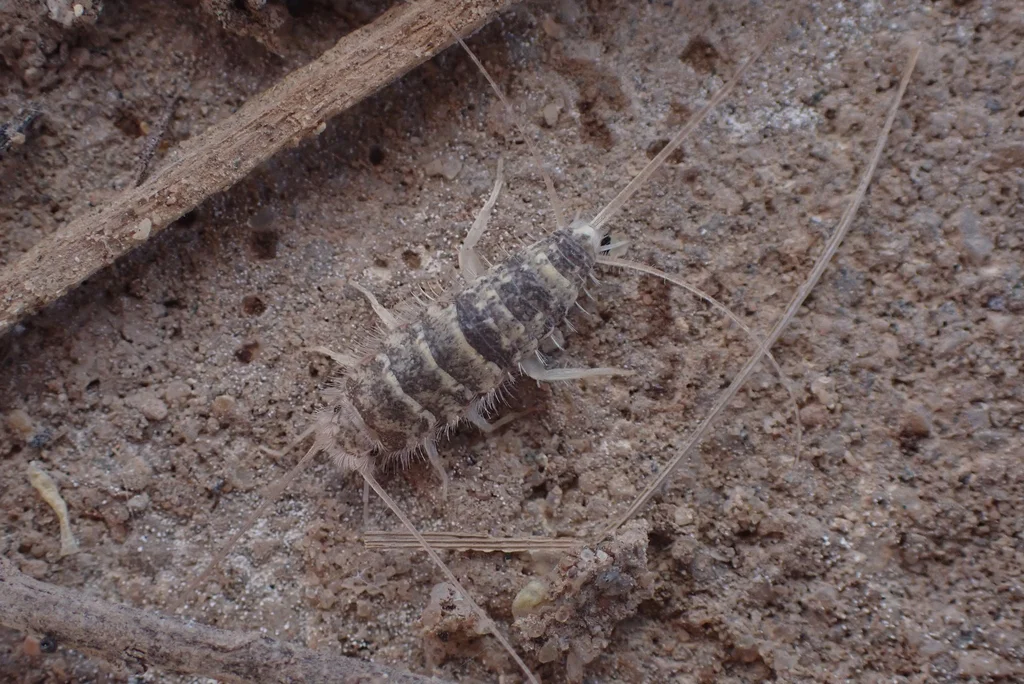
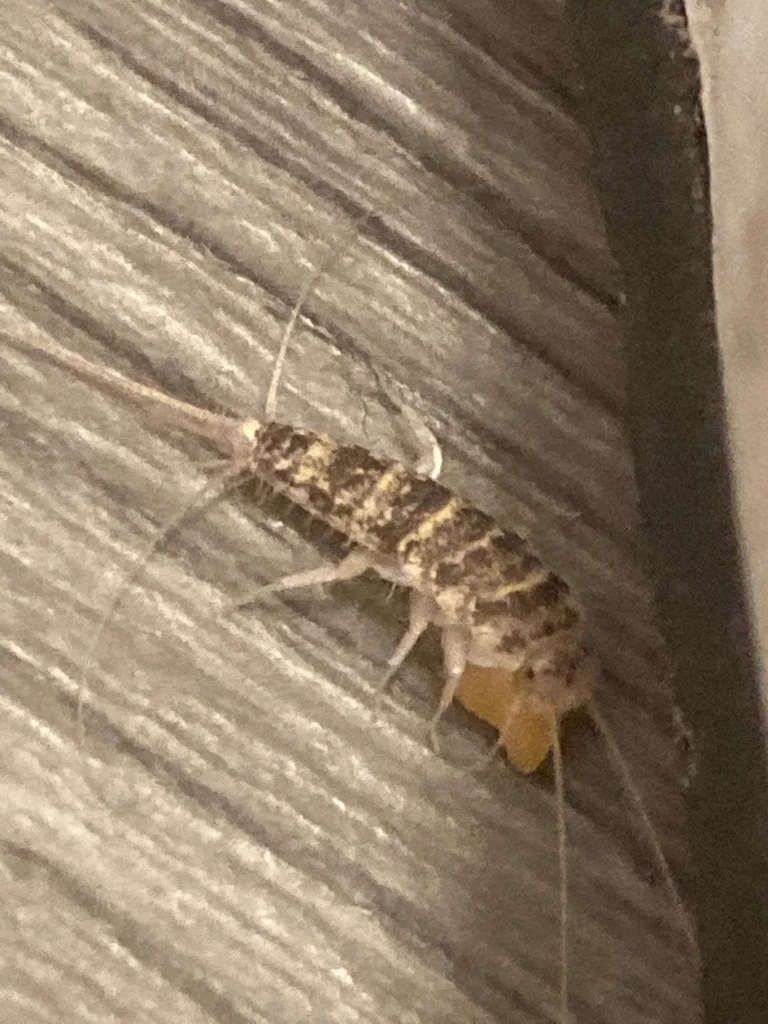

Where Firebrats Are Found
Hover over states to see their names. Green regions indicate where firebrats have been reported.
Firebrat Identification Guide
Physical Characteristics
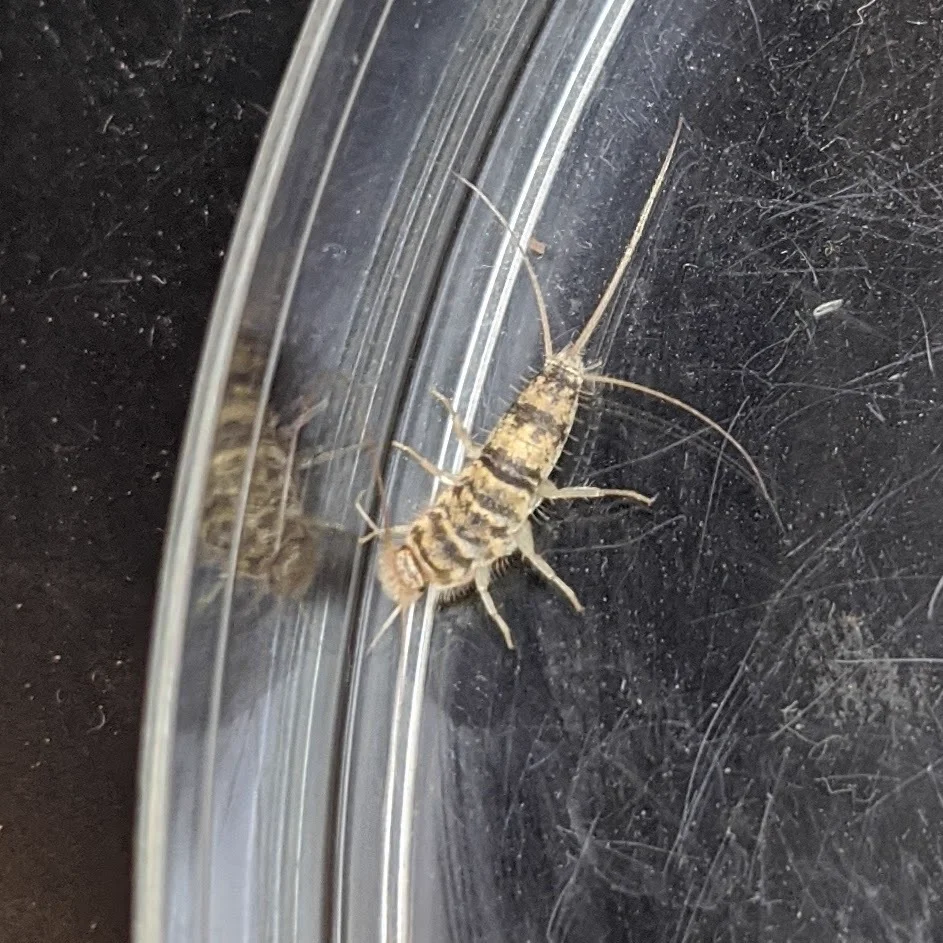
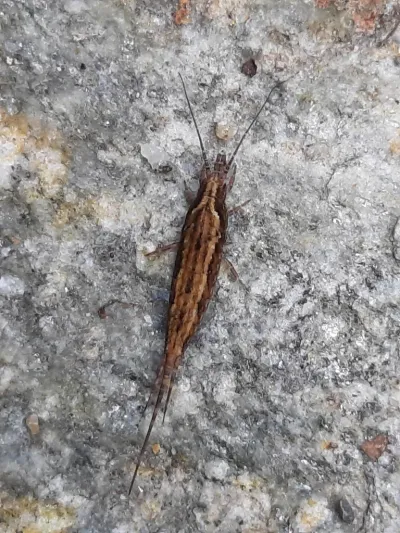
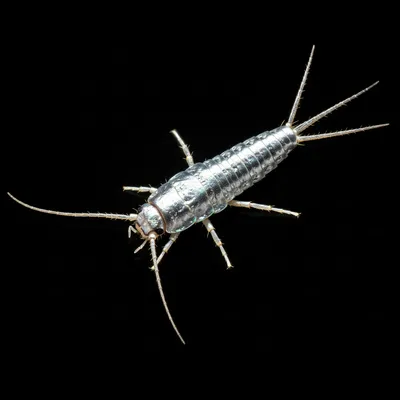
Firebrats are small insects without wings. They measure about 7 to 12 mm long, roughly half an inch. Their color is a mix of gray and brown spots, often called a “salt and pepper” look. Unlike silverfish, firebrats do not have a shiny metallic coat. They look duller and more speckled.
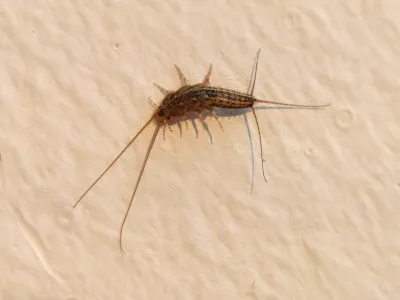
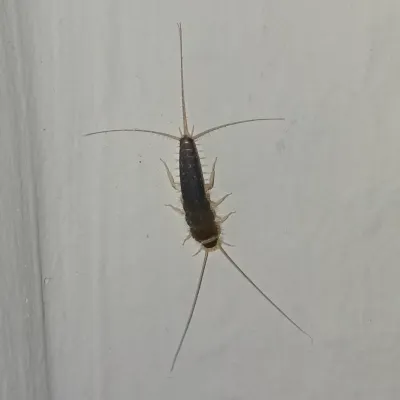
Their bodies are long and shaped like a carrot, narrow at the back end. They have three thin tail-like parts sticking out from the back and two long feelers on the head. Firebrats have six legs and move fast with a wiggling motion.
Young firebrats look like tiny adults. They shed their skin many times as they grow. Even adult firebrats keep shedding their skin for their whole lives.
Common Species
The common firebrat (Thermobia domestica) is the main type found in North American homes and buildings. It is closely related to silverfish:
- Thermobia domestica (Common Firebrat): Found across North America in heated buildings
- Lepisma saccharina (Common Silverfish): Looks similar but likes cooler spots
- Ctenolepisma longicaudata (Gray Silverfish): A related species that tolerates moderate heat
Firebrat Behavior and Biology
Firebrats are active at night. During the day, they hide in cracks, gaps, and wall spaces near heat sources. At night, they come out to look for food. They run very fast and dart away when you turn on a light. Homeowners dealing with Firebrats may also encounter Wood Wasps, which can appear in similar environments.
Where Firebrats Live
Firebrats love hot spots. They do best at 90 to 105 degrees Fahrenheit. Most insects cannot handle this heat. You will find firebrats in places like: A related species, Four-Lined Silverfish, shares similar characteristics.
- Near furnaces and boilers
- Behind ovens and stoves
- Around hot water heaters and pipes
- Inside insulation near heating ducts
- In bakeries and laundry rooms
- In factories with lots of heat A related species, Bristletails, shares similar characteristics.
Firebrats also need moisture. They prefer humidity above 75 percent. You may spot them in bathrooms or other high-humidity rooms. They travel through walls by following hot water pipes.
What Firebrats Eat
Firebrats eat many starchy and protein-rich items. Their diet includes:
- Paper, cardboard, and book bindings
- Wallpaper and paste
- Flour, cereal, and grains
- Pet food and dried meats
- Cotton and linen fabrics
- Glue and adhesives
- Dead bugs and shed skins
Their feeding leaves small holes and surface marks. You may also see yellow stains and tiny dark droppings.
How Firebrats Reproduce
Female firebrats lay 1 to 3 eggs at a time in hidden cracks. In warm spots, eggs hatch in about two weeks. Young firebrats take 2 to 4 months to become adults.
Firebrats can live 2 to 3 years. They shed their skin 30 to 60 times during their lives. One female can have hundreds of babies. This means a small problem can grow fast if left alone.
How We Treat for Firebrats
Our firebrat treatment follows the same plan we use for silverfish control. We focus on getting rid of them and keeping them away.
Inspection: Our technicians check your home for firebrat activity. We look near furnaces, water heaters, ovens, and hot water pipes. We also check moisture levels and find food sources they may be eating.
Interior Treatment: We treat cracks, gaps, and wall voids where firebrats hide. The products we use spread through the population when firebrats walk on treated areas.
Heat Source Treatment: Since firebrats gather near heat, we treat behind appliances, around furnace rooms, and along pipe runs. This targets the problem at its source.
Habitat Changes: We give you tips to lower humidity and remove food sources. This may mean better airflow, fixing leaks, and storing items in sealed bins.
Ongoing Care: Firebrats hide well and can be hard to remove in one visit. We suggest triannual service (three times per year) to stay ahead of any new activity.
Prevention Tips for Homeowners
You can take steps to lower firebrat numbers and stop new problems:
Understanding what causes silverfish issues in your home also applies to firebrats, since both pests are drawn to similar conditions. Here are some specific prevention tips:
- Lower humidity near heat sources with better airflow in boiler rooms and laundry areas
- Seal cracks and gaps around pipes, especially where hot water lines enter walls
- Store pet food, flour, and cereal in airtight containers
- Remove cardboard boxes and paper from warm storage spots
- Check boxes before bringing them inside, especially if stored in hot warehouses
- Fix leaks fast since moisture plus heat makes the perfect firebrat home
References and Further Reading
Other Silverfish
Explore other species in the silverfish family
Where Firebrats Are Found
Hover over states to see their names. Green regions indicate where firebrats have been reported.
Common Questions about Firebrats
What is the difference between firebrats and silverfish?
+
Firebrats have a mottled gray and brown 'salt and pepper' appearance, while silverfish are uniformly silver-gray with a metallic sheen. Firebrats prefer much hotter environments (90-105 degrees F) and are typically found near heat sources like furnaces, ovens, and boiler rooms. Silverfish prefer cooler, damp areas like basements and bathrooms.
Why do I have firebrats in my home?
+
Firebrats are attracted to warm, humid environments with food sources like starchy materials, paper, and fabric. Common entry points include hot water pipes, gaps around furnaces, and cracks in foundations. Homes with boiler rooms, hot water heaters, or poor ventilation around heat sources are more susceptible.
Are firebrats harmful to humans?
+
Firebrats do not bite, sting, or transmit diseases to humans. However, they are considered nuisance pests because they can damage paper goods, books, wallpaper, stored foods, and fabrics. Large infestations may contaminate food products.
How do I know if I have a firebrat infestation?
+
Signs include seeing the insects near heat sources, finding small irregular holes in paper or fabric, noticing yellow stains or tiny dark droppings, and discovering shed skins in warm areas. Firebrats are nocturnal, so you may see them scurrying when lights are turned on at night.
Can firebrats survive extreme heat?
+
Yes, firebrats are remarkably heat-tolerant. They thrive at temperatures between 90-105 degrees F and can survive temperatures up to 130 degrees F. This extreme heat tolerance is what distinguishes them from silverfish and explains why they are found in industrial bakeries, laundries, and near furnaces.
How long do firebrats live?
+
Firebrats can live 2-3 years under ideal warm conditions. They reproduce continuously throughout their lives, and a single female can produce hundreds of offspring. Their long lifespan and high reproductive rate mean infestations can grow quickly if not addressed.
Will reducing heat get rid of firebrats?
+
Reducing ambient temperatures below 90 degrees F can discourage firebrats and slow their reproduction. However, complete elimination typically requires professional treatment combined with habitat modification, as they may simply relocate to remaining warm spots.

With five years of hands-on experience in the pest control industry, George Schulz is a registered technician with the Virginia Pest Management Association and a proud third-generation professional in a family business that's been protecting homes for over 57 years. He manages and trains a team of service pros while also leading internal research efforts—recently spearheading a deep-dive review of thousands of documents on pest control materials to hand-pick the most kid and pet friendly, most effective solutions tailored specifically for homes in the DC metro area.