Jagged Ambush Bug Identification Guide
Phymata americana
Jagged ambush bugs are small, well-camouflaged predatory insects that hide on flowers to ambush pollinating insects. These members of the assassin bug family are harmless to humans but can deliver a painful bite if handled.
Taxonomy
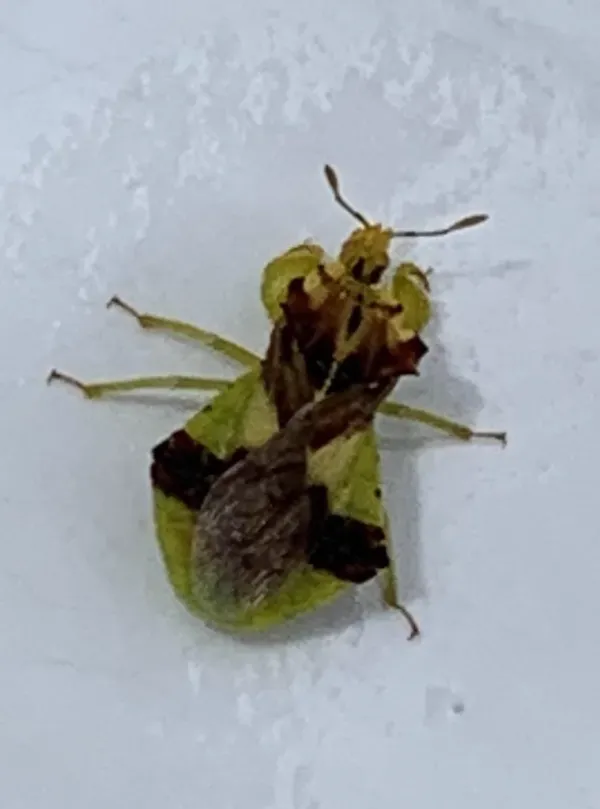
Jagged Ambush Bug Coloration
Common color patterns to help identify jagged ambush bug
Jagged Ambush Bug
Seasonal Activity
When jagged ambush bug are most active throughout the year
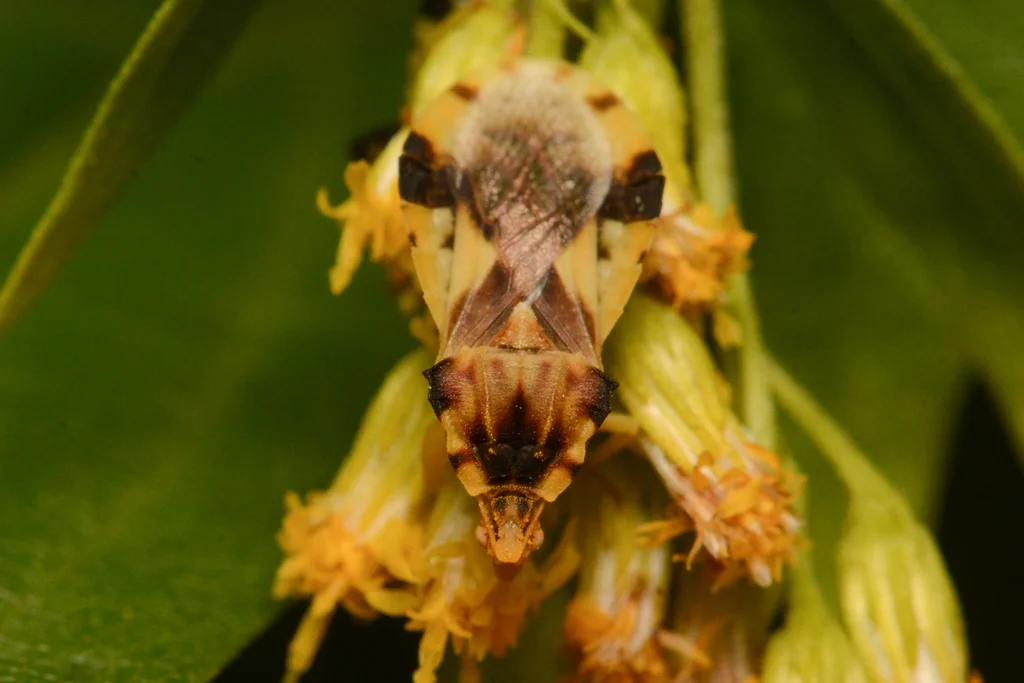
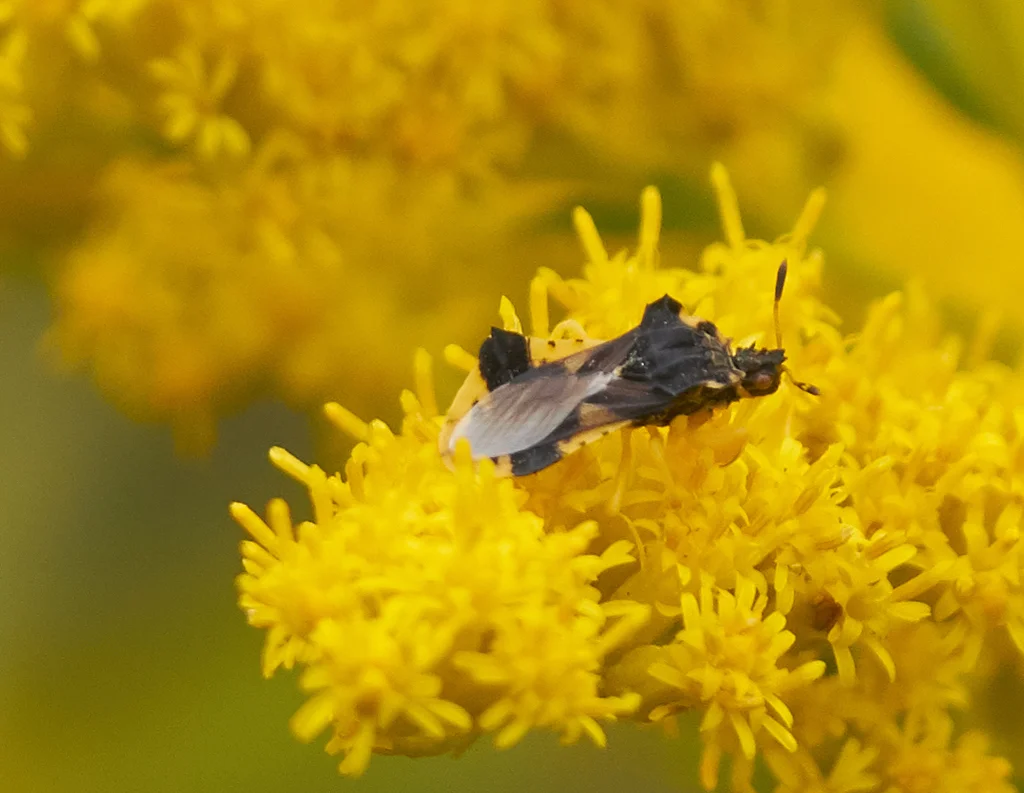
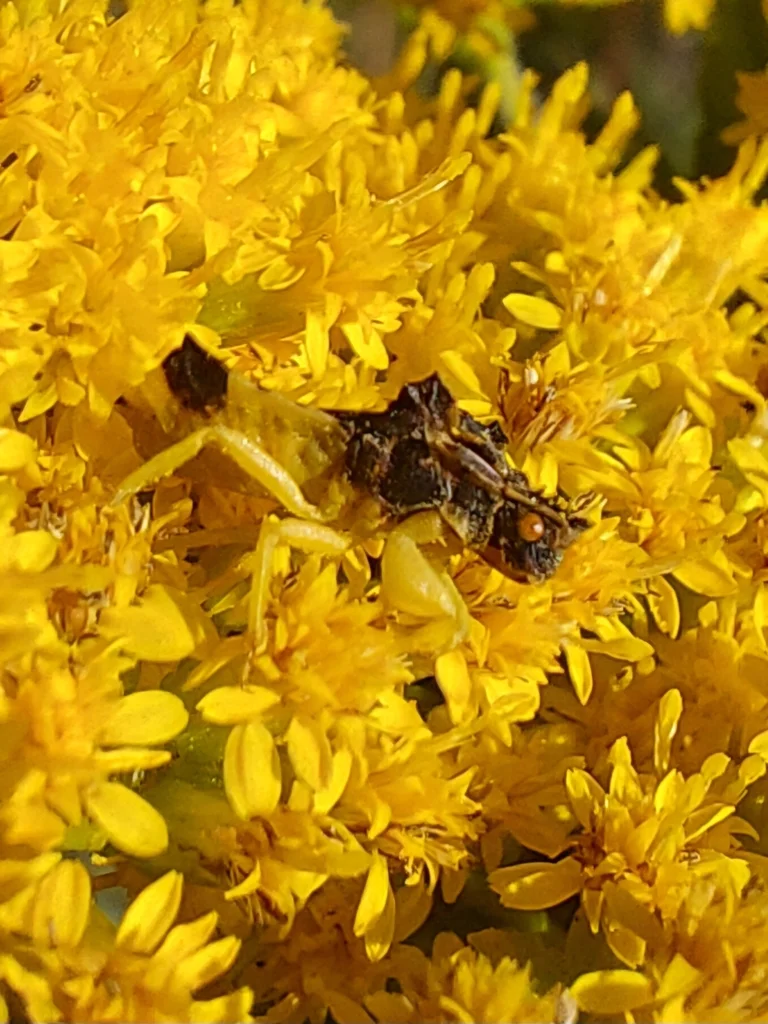

Where Jagged Ambush Bug Are Found
Hover over states to see their names. Green regions indicate where jagged ambush bug have been reported.
Jagged Ambush Bug Identification Guide
Physical Characteristics
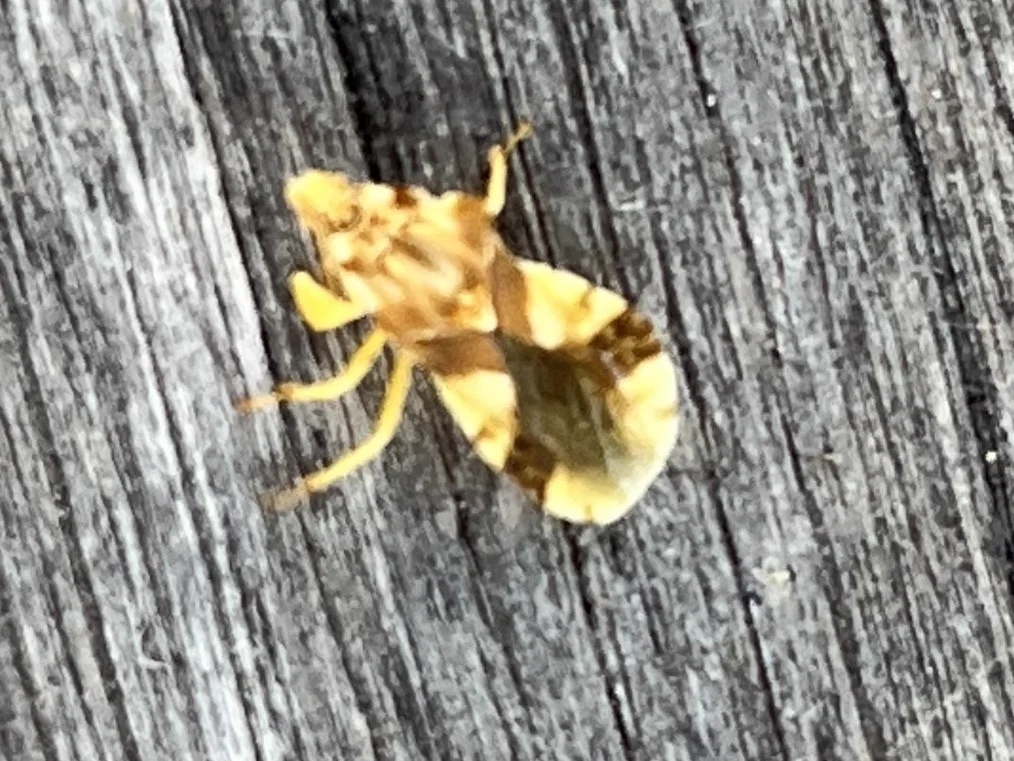
Jagged ambush bugs are small but distinctive members of the assassin bug family. They measure 8 to 12 millimeters long, about the size of a small fingernail. Their most striking feature is their angular, jagged body outline. The body has an irregular shape with projections and bumps that help them blend in with flower petals.
These bugs have a widened abdomen that extends beyond their wings. The front legs are large and powerful, designed for grasping prey. They look somewhat like tiny praying mantis legs. The coloring varies from pale yellow to greenish-yellow, often with brown or dark markings. This coloring helps them hide on yellow and white flowers.
The head is small with large eyes set wide apart. A short, curved beak tucks under the body when not feeding. Unlike their kissing bug relatives, jagged ambush bugs have compact, sturdy bodies built for ambush hunting rather than blood-feeding.
Common Species in North America
The most widespread species is Phymata americana, found throughout the eastern and central United States. Several other Phymata species occur across North America:
-
Phymata americana (American Ambush Bug): The most common species, found from the Atlantic coast to the Rocky Mountains. Yellow to greenish with dark markings.
-
Phymata pennsylvanica: Found in eastern North America with similar appearance to P. americana. Some scientists consider it the same species.
-
Phymata fasciata: Occurs in western North America. Has distinctive banding patterns on the abdomen.
-
Phymata erosa: Found in the Southwest with a more angular body shape.
All species share similar hunting behaviors and habitat preferences. They can be difficult to tell apart without close examination.
Jagged Ambush Bug Behavior and Biology
Hunting Strategy
Jagged ambush bugs are patient predators. They sit motionless on flower heads, often for hours, waiting for prey. Their camouflage makes them nearly invisible against yellow and white petals. When an insect lands within reach, the ambush bug strikes with remarkable speed.
The front legs snap shut like a trap, grabbing the victim. Even insects much larger than the ambush bug become prey. Bees, wasps, butterflies, and flies all fall victim to these small hunters. Once grabbed, prey cannot escape the powerful grip.
After catching prey, the ambush bug pierces it with its beak. It injects saliva containing venom and digestive enzymes. This liquefies the prey’s insides, which the bug then sucks out. A single feeding can take 30 minutes or more.
Habitat and Behavior
These bugs favor open areas with abundant flowers. You will find them in:
- Meadows and prairies
- Garden flower beds
- Roadside wildflower patches
- Fields with goldenrod or Queen Anne’s lace
- Sunny areas with composite flowers
They prefer flowers with flat or clustered blooms that attract many visitors. Goldenrod is a favorite hunting ground. The yellow flowers provide perfect camouflage for these yellow-tinged bugs.
Jagged ambush bugs are solitary hunters. However, several may occupy the same flower patch since it offers good hunting. They are most active during warm daylight hours when their insect prey is flying.
Life Cycle
Female jagged ambush bugs lay eggs in late summer and fall. The eggs overwinter in plant debris and soil. Nymphs hatch the following spring and develop through five growth stages.
Young nymphs look like small, wingless versions of adults. They begin hunting immediately, taking smaller prey. As they grow, they can tackle larger victims. Development takes several months. Adults appear by mid to late summer, just in time for peak flower season.
Adults mate on flower heads. Males are smaller than females and may become prey if they approach females at the wrong time. After mating, females continue hunting to develop their eggs. The first hard frost kills the adults, ending the yearly cycle.
Why Jagged Ambush Bugs Enter Properties
Unlike many pests, jagged ambush bugs do not seek out human homes. They are strictly outdoor insects that need flowers to hunt. You may notice them in your yard if you have:
- Flower gardens with blooming plants
- Wildflower patches or meadow areas
- Goldenrod growing near structures
- Any late-summer flowering plants
These bugs pose no threat to homes, structures, or stored goods. They cannot survive indoors and have no reason to enter. Any bug found inside likely came in by accident, perhaps on cut flowers or through an open door.
Jagged Ambush Bugs vs. Similar Insects
Several insects might be confused with jagged ambush bugs:
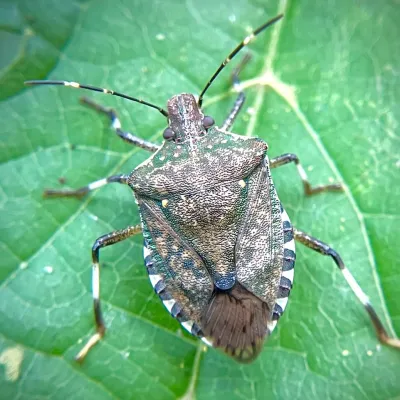
Stink Bugs: Stink bugs have a more symmetrical, shield-shaped body. They lack the enlarged front legs and angular outline of ambush bugs. Stink bugs feed on plants, not other insects.
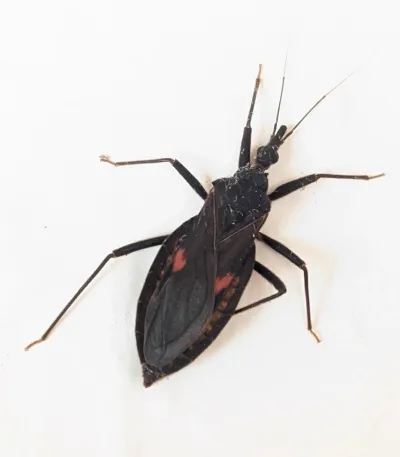
Kissing Bugs: These relatives are larger, darker, and have a cone-shaped head. Kissing bugs feed on blood and are active at night. Ambush bugs hunt insects during the day on flowers.
Assassin Bugs: Other assassin bugs tend to be larger with longer bodies. They actively hunt rather than waiting in ambush. Wheel bugs and milkweed assassin bugs are common examples.
Crab Spiders: These spiders also ambush prey on flowers but have eight legs and obvious spider body shape. They lack the insect features of ambush bugs.
Managing Jagged Ambush Bugs
Jagged ambush bugs are predatory insects that feed on other insects in gardens and yards. They catch a variety of insects including flies, bees, butterflies, and wasps. These bugs do not damage plants or structures. Most property owners do not need to take action against them.
If jagged ambush bugs are present in areas where people gather, such as outdoor dining spaces or play areas, reducing nearby flowering plants can help. These bugs rely on flowers for hunting, so removing goldenrod and similar plants from high-traffic zones will make the area less attractive to them.
For persistent concerns, a pest control professional can assess the situation and recommend options. Perimeter treatments and habitat changes may help reduce their numbers in specific areas.
When to Seek Help
Jagged ambush bugs rarely require any management. Consider contacting a pest professional only if:
- You cannot identify whether the insect is truly a jagged ambush bug
- You are concerned about confusion with kissing bugs or other biting insects
- Large numbers are causing concern in high-traffic areas
In most cases, these insects can simply be left alone. They will disappear on their own once flower season ends.
References
Other Other Pests
Explore other species in the other pests family
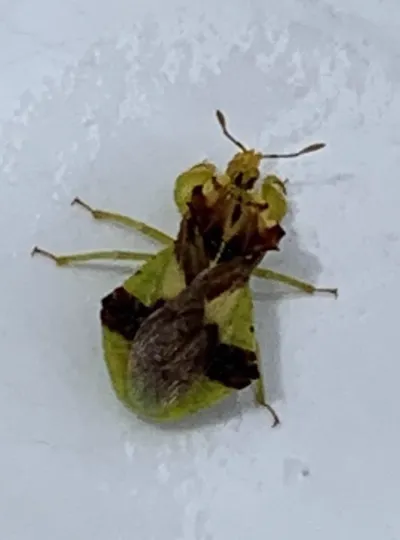
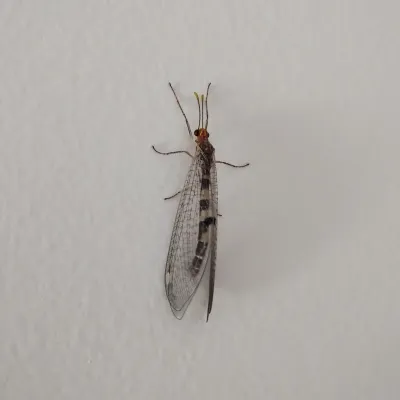
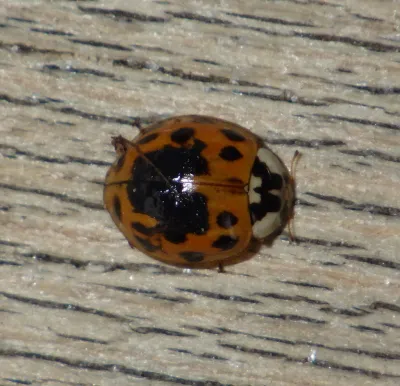
Commonly Confused With
Jagged Ambush Bug are often mistaken for these similar pests
Where Jagged Ambush Bug Are Found
Hover over states to see their names. Green regions indicate where jagged ambush bug have been reported.
Common Questions about Jagged Ambush Bug
What is a jagged ambush bug?
+
A jagged ambush bug is a small predatory insect in the assassin bug family. It gets its name from its angular, jagged body shape and its hunting method of waiting motionless on flowers to ambush prey. These bugs are commonly found on goldenrod and other yellow flowers throughout North America.
Are jagged ambush bugs dangerous to humans?
+
No, jagged ambush bugs are not dangerous to humans. While they can deliver a painful bite if handled roughly, they do not bite people unprovoked. They prefer to use their powerful forelegs and piercing mouthparts on insect prey, not humans.
Do jagged ambush bugs bite?
+
Jagged ambush bugs can bite if picked up or handled carelessly, and the bite can be painful. However, they are not aggressive toward humans and will only bite in self-defense. They spend their time waiting for insect prey, not seeking out people.
What do jagged ambush bugs eat?
+
Jagged ambush bugs are ambush predators that feed on other insects, including bees, flies, butterflies, and wasps. They wait on flowers and grab visiting insects with their powerful front legs, then use their piercing mouthparts to inject digestive enzymes and consume their prey.
Do jagged ambush bugs cause damage?
+
Jagged ambush bugs do not cause damage to plants, structures, or stored goods. They are predatory insects that feed only on other insects. They pose no threat to gardens or homes beyond their presence.
Where do jagged ambush bugs live?
+
Jagged ambush bugs live in meadows, fields, gardens, and anywhere flowers grow. They are especially common on goldenrod, Queen Anne's lace, daisies, and other composite flowers. They can be found throughout most of the United States and southern Canada.
How do jagged ambush bugs catch their prey?
+
Jagged ambush bugs use a sit-and-wait hunting strategy. They position themselves on flowers where they blend in with their surroundings. When a pollinator lands nearby, the bug grabs it with powerful, raptorial front legs. They then inject venom and digestive enzymes through their beak-like mouthparts.
What time of year are jagged ambush bugs most active?
+
Jagged ambush bugs are most active from late summer through early fall, typically August through October. This timing matches the bloom period of goldenrod and other late-season flowers where they hunt. Adults die off with the first hard frost.

With five years of hands-on experience in the pest control industry, George Schulz is a registered technician with the Virginia Pest Management Association and a proud third-generation professional in a family business that's been protecting homes for over 57 years. He manages and trains a team of service pros while also leading internal research efforts—recently spearheading a deep-dive review of thousands of documents on pest control materials to hand-pick the most kid and pet friendly, most effective solutions tailored specifically for homes in the DC metro area.