Carpenter Bees Identification Guide
Xylocopa virginica
Large, wood-boring bees that can damage decks, porches, and other unpainted wood structures around your home.
Taxonomy
Carpenter Bees Coloration
Common color patterns to help identify carpenter bees
Carpenter Bees
Seasonal Activity
When carpenter bees are most active throughout the year

Where Carpenter Bees Are Found
Hover over states to see their names. Green regions indicate where carpenter bees have been reported.
Carpenter Bee Identification Guide
Physical Characteristics
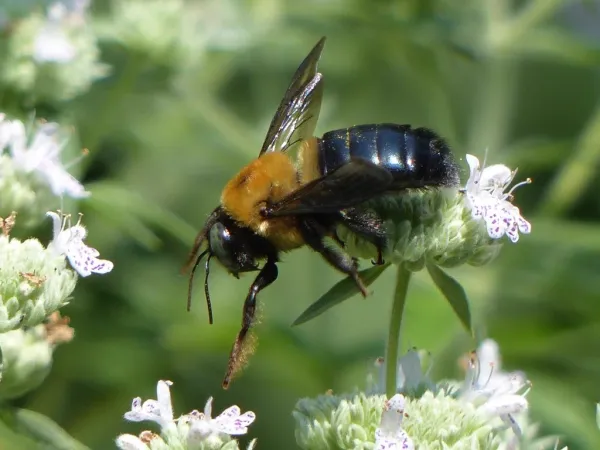
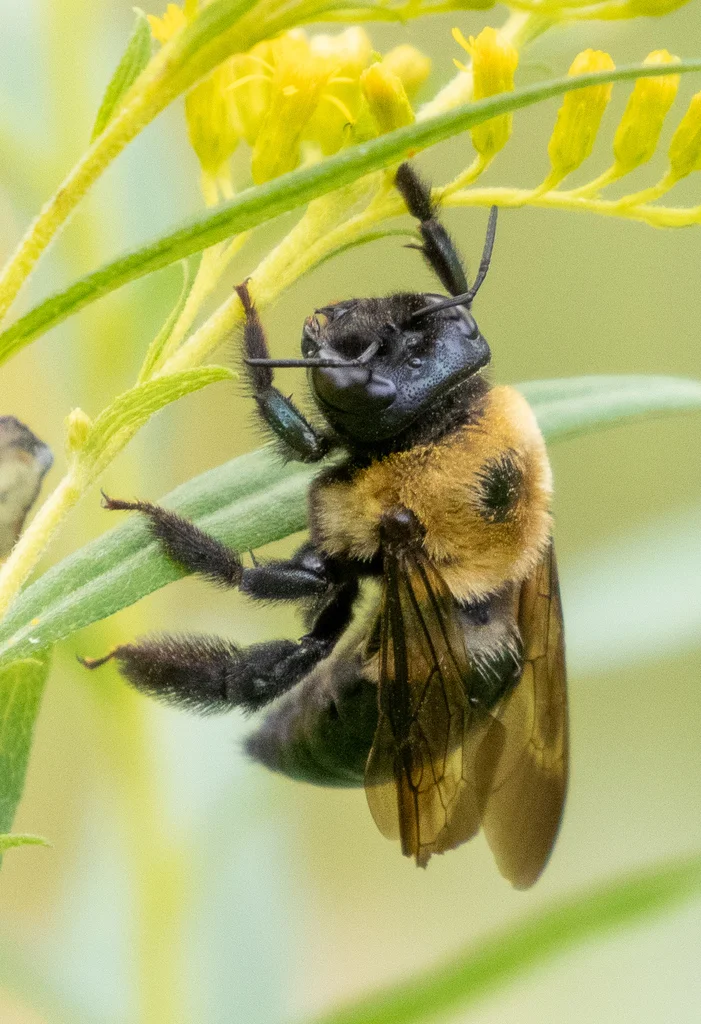
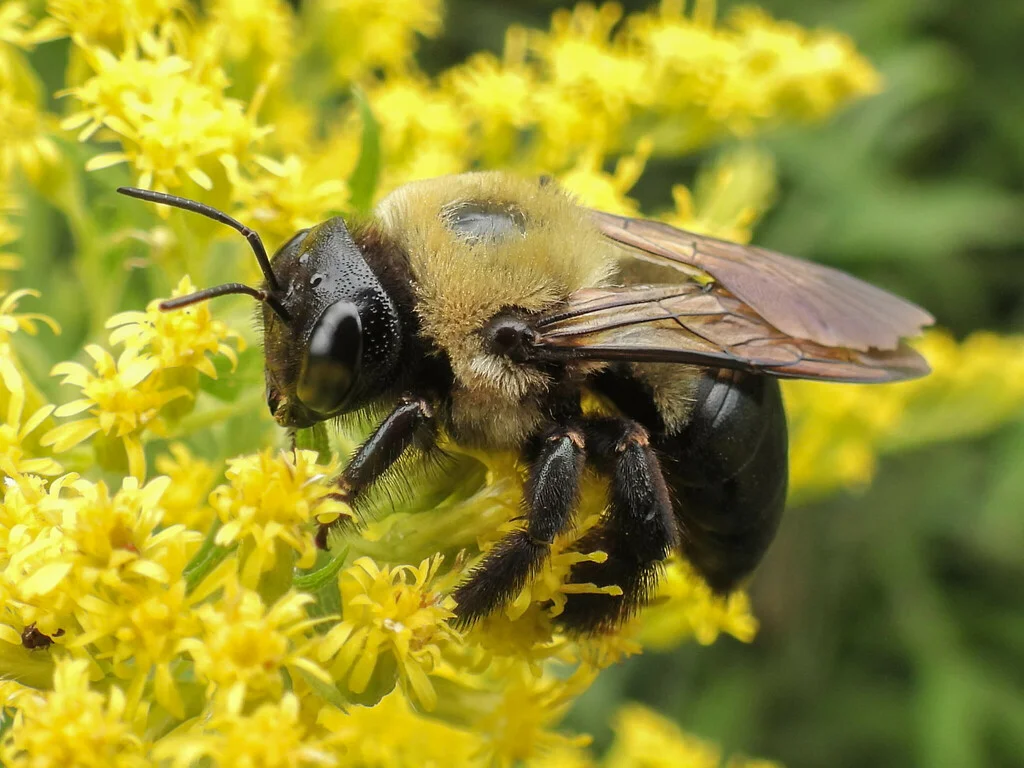
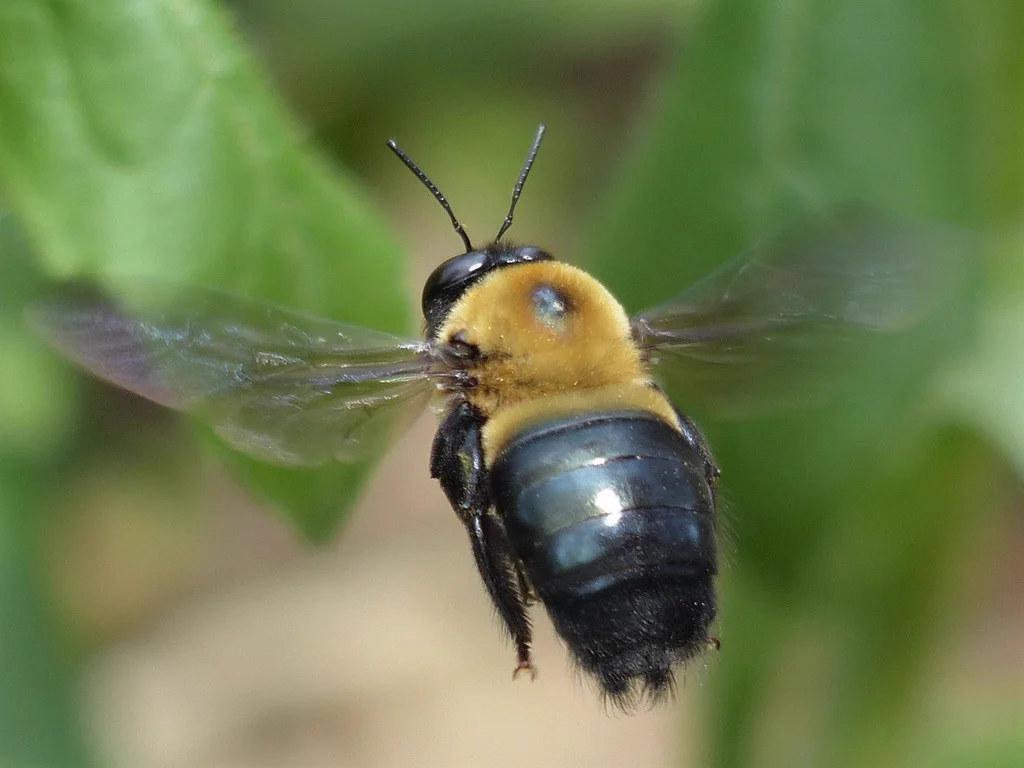
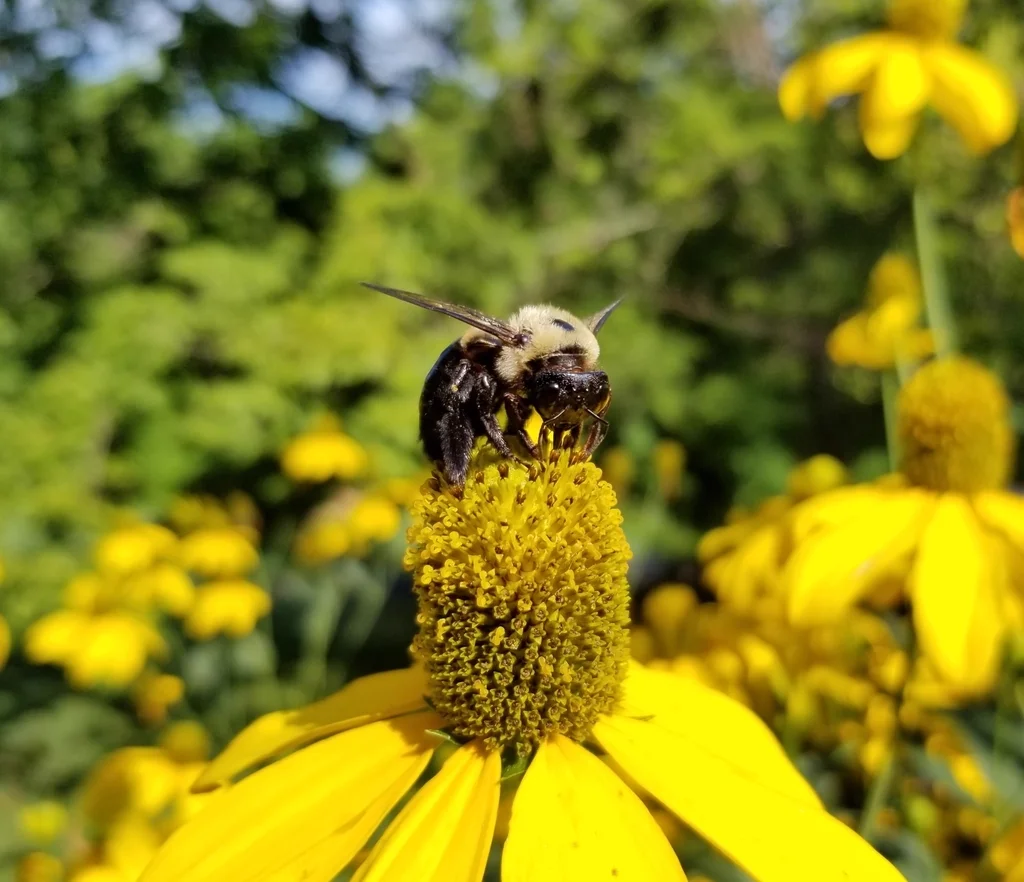
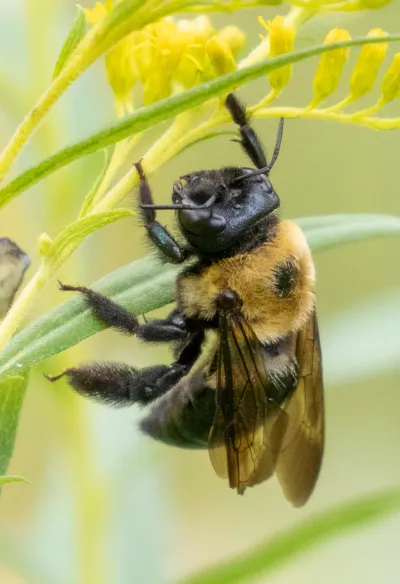
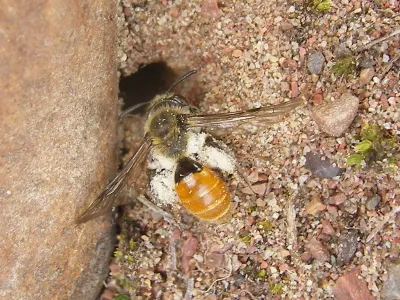
Carpenter bees are among the largest bees in North America. They measure 3/4 to 1 inch long. They look like bumble bees at first glance, but one key feature makes them easy to tell apart. Carpenter bees have a shiny, hairless black abdomen. Bumble bees have a fuzzy abdomen with yellow bands. See our guide on carpenter bee vs bumblebee for a detailed comparison.
The thorax, or midsection, is covered in dense yellow or golden hairs. This fuzzy yellow area behind the head stands out against the smooth, shiny black rear section. The wings are dark with a slight shine.
Males and females look slightly different. Males have a white or yellow patch on their face. Females have all-black faces. Only females can sting, but they rarely do unless touched or trapped.
Common Species in North America
-
Eastern Carpenter Bee (Xylocopa virginica): The most common species east of the Rocky Mountains. Found throughout Virginia, Maryland, and the DC area. Large bees with classic yellow and black coloring.
-
Southern Carpenter Bee (Xylocopa micans): Found in the southeastern United States. Similar to the eastern species but with a metallic blue-black sheen.
-
Valley Carpenter Bee (Xylocopa sonorina): Found in the western United States. Females are solid black. Males are golden-brown.
-
California Carpenter Bee (Xylocopa californica): Found along the Pacific coast. Metallic blue-black coloring.
Carpenter Bee Behavior and Biology
Carpenter bees are solitary bees. Unlike honey bees, they do not live in colonies or produce honey. Each female carpenter bee creates and maintains her own nest in wood. A related species, Masked Bees, shares similar characteristics.
In spring, adult carpenter bees come out of their winter homes inside old nest tunnels. Males appear first and claim areas near nesting sites. You may see males hovering near decks or porches. They may seem scary, but males cannot sting. A related species, Cuckoo Bees, shares similar characteristics.
After mating, females search for wood to excavate. They use their strong jaws to bore a round entrance hole about 1/2 inch wide. The hole goes straight in for about an inch, then turns 90 degrees and runs along the wood grain.
Inside the tunnel, the female creates a series of chambers. She fills each chamber with pollen and nectar, lays a single egg, and seals it with chewed wood pulp. A typical tunnel has 6 to 8 chambers and extends 4 to 6 inches. Tunnels that are reused over many years can reach 10 feet or more.
Eggs hatch into larvae that feed on the stored pollen. The larvae grow through summer and become pupae in late summer. New adult bees emerge in late summer but stay in the tunnels through fall and winter. They come out the following spring to start the cycle again.
How We Treat for Carpenter Bees
Treatment works best in early spring before females lay eggs. Late evening is also a good time since bees have returned to their tunnels.
Inspection and Assessment:
Our technicians first find all active nest holes and check the damage. We look at common target areas like deck railings, porch ceilings, fascia boards, window trim, and outdoor furniture.
Direct Treatment:
We apply an insecticide dust directly into each nest hole. The dust coats the tunnel walls and kills bees as they move through. Dust works well because it sticks to surfaces and stays active for weeks.
For heavy problems, we may also apply a liquid insecticide to wood surfaces around nest sites. This creates a barrier that stops new bees from boring into the wood.
Sealing Nest Holes:
After treatment takes effect, usually within 24 to 48 hours, we recommend sealing entrance holes to prevent reuse. Steel wool pushed into the hole followed by wood putty or caulk makes a good seal. Sealing holes also stops moisture damage.
Prevention Tips:
We help you find conditions that attract carpenter bees. The best long-term fix is to paint or stain all exposed wood. Carpenter bees prefer bare, weathered wood. Painted or treated wood is rarely attacked. For areas where painting is not practical, wood preservatives can help deter boring.
Signs of Carpenter Bee Damage
Watch for these signs that carpenter bees may be affecting your property:
-
Round entrance holes: Perfectly circular holes about 1/2 inch wide drilled into wood surfaces.
-
Sawdust piles: Coarse sawdust piling up below holes. Fresh sawdust is light colored. Old sawdust is weathered and gray.
-
Staining: Yellowish-brown stains running down from entrance holes. This is waste from bees inside the tunnels.
-
Hovering bees: Large bees hovering near wooden structures in spring, especially around eaves, decks, and porches.
-
Woodpecker damage: Woodpeckers feeding on carpenter bee larvae can cause extra damage. Long gouges in wood near round holes often mean woodpecker activity. Learn more in our guide to carpenter bee damage and how to get rid of carpenter bees.
References
Other Bees
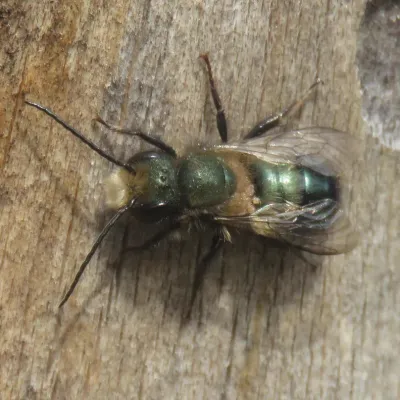
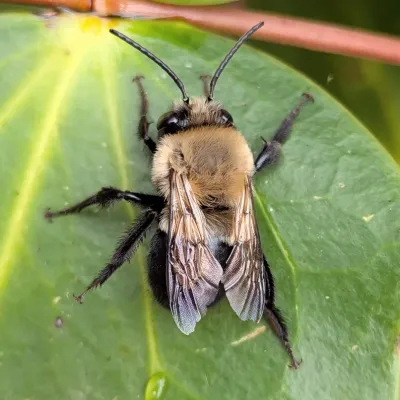
Explore other species in the bees family
Commonly Confused With
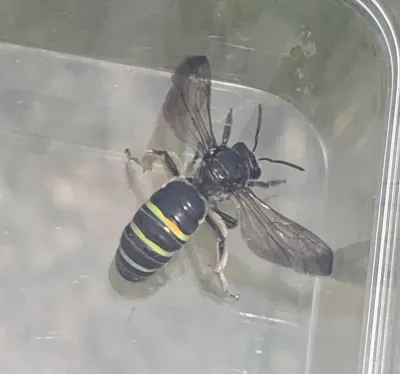
Carpenter Bees are often mistaken for these similar pests
Where Carpenter Bees Are Found
Hover over states to see their names. Green regions indicate where carpenter bees have been reported.
Common Questions about Carpenter Bees
How do I know if I have carpenter bees?
+
Look for perfectly round holes about the size of a dime (roughly 1/2 inch) drilled into wood surfaces like decks, porches, fascia boards, or unpainted trim. You may also see sawdust piles below the holes and large bees hovering near wooden structures in spring.
Are carpenter bees dangerous?
+
Carpenter bees are not aggressive. Female carpenter bees can sting but rarely do unless directly handled. Male carpenter bees cannot sting at all, even though they may hover near you and seem threatening. The main concern is structural damage to wood over time.
Do carpenter bees eat wood?
+
No, carpenter bees do not eat wood. They bore into wood only to create nesting tunnels. The sawdust you see below their holes is debris from excavation. Carpenter bees feed on nectar and pollen like other bees.
What kind of wood do carpenter bees prefer?
+
Carpenter bees prefer soft, unpainted, untreated wood. Common targets include redwood, cedar, cypress, and pine. They are especially attracted to weathered or bare wood on decks, porches, eaves, fascia boards, and outdoor furniture.
Will carpenter bees damage my house?
+
Over time, yes. A single bee causes minimal damage, but carpenter bees reuse and expand tunnels year after year. Tunnels can extend several feet into wood over multiple generations. This weakens structural beams and boards, and the holes also attract woodpeckers that cause additional damage.
How do I prevent carpenter bees?
+
Paint or stain all exposed wood surfaces. Carpenter bees avoid painted and treated wood. Fill existing holes with steel wool and wood putty after treatment. Hardwoods and composite materials are naturally resistant to carpenter bee damage.
What time of year are carpenter bees most active?
+
Carpenter bees are most active in spring, typically April through June in the Mid-Atlantic region. This is when adults emerge from overwintering, mate, and begin boring new tunnels or expanding existing ones. Activity decreases in late summer.
Do carpenter bees come back to the same spot?
+
Yes. Carpenter bees often return to the same nesting sites year after year. Female bees may reuse their mother's tunnels and expand them. Without treatment, the same wood structures can be attacked repeatedly, leading to significant cumulative damage.

With five years of hands-on experience in the pest control industry, George Schulz is a registered technician with the Virginia Pest Management Association and a proud third-generation professional in a family business that's been protecting homes for over 57 years. He manages and trains a team of service pros while also leading internal research efforts—recently spearheading a deep-dive review of thousands of documents on pest control materials to hand-pick the most kid and pet friendly, most effective solutions tailored specifically for homes in the DC metro area.