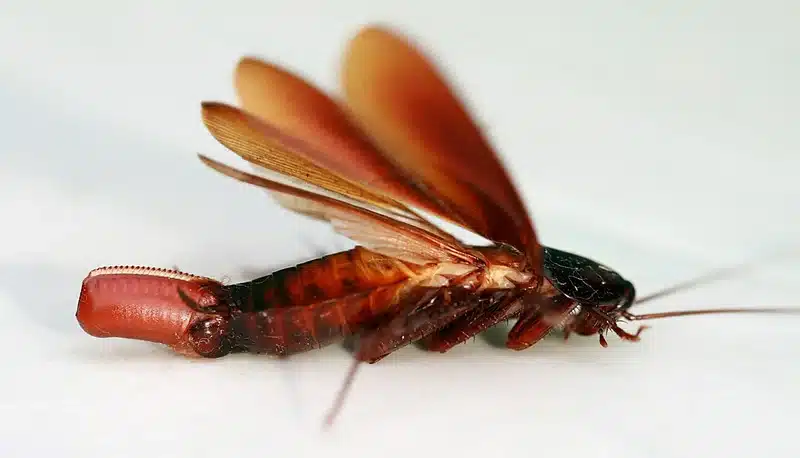

Spotting a flying cockroach in your home can be alarming. After four years as a registered technician dealing with cockroach issues throughout the DMV area, I’ve learned that most homeowners panic when they see these winged invaders. The good news is that effective treatments exist to eliminate them completely.
Most people don’t realize that “flying cockroach” is actually informal terminology. These pests are primarily runners that glide or make short powered flights when conditions are right. Understanding what you’re dealing with is the first step toward getting rid of them for good.
What Is a Flying Cockroach?
A flying cockroach isn’t a separate species - it’s simply an adult cockroach with fully developed wings. These insects belong to Order Blattodea, specifically families Blattidae and Ectobiidae. Only adult cockroaches can fly because they must complete their final molt to develop functional fore- and hind-wings. Baby roaches never have the ability to fly.
True sustained flight is actually limited to just a few tropical species. Most cockroaches we encounter locally are gliders rather than strong fliers. They use their wings to glide from elevated surfaces or make short, clumsy flights when startled.
The difference matters because it affects how we treat infestations. A gliding American cockroach behaves very differently from a strong-flying smokybrown cockroach that’s actively attracted to lights.
Identifying Key Flying Cockroach Species in the DMV
Our family business has been serving the DMV for over 50 years, and we’ve encountered several flying cockroach species. Each requires different treatment approaches, so proper identification is crucial.
American Cockroach
American roaches are the largest common species at 38-42 mm long. They’re reddish-brown with a yellowish margin on their pronotum. Both sexes have fully developed wings, but they rarely fly indoors in northern climates. When they do fly, it’s typically short gliding flights in warm, humid conditions like steam tunnels or sewers.
Smokybrown Cockroach
These uniform mahogany brown cockroaches are strong nocturnal fliers actively attracted to lights. Their wings extend beyond their abdomen, making them easy to identify. According to Oklahoma State University Extension, they require high humidity above 60% to survive. Coastal Virginia represents the northern edge of their established range.
Brown-banded Cockroach
Brown-banded cockroaches show distinct banding patterns across their wings and abdomen. Only adult males can fly - females are flightless. Males fly readily, especially when disturbed. They prefer drier indoor areas and often hide behind picture frames or in electronics.
Wood Cockroaches
These native forest dwellers are primarily outdoor pests. Adult males swarm to lights during May and June but don’t breed indoors. Pennsylvania wood cockroaches are common in our area. According to Virginia Tech Extension, females are brachypterous (short-winged), while males are strong fliers.
Other Species
Australian cockroaches occasionally appear in greenhouses, while Asian cockroaches remain rare but have been intercepted along Mid-Atlantic freight corridors. Both are capable fliers when present.
How Do Flying Cockroaches Fly?
Understanding flight mechanics helps explain why flying cockroach activity increases during certain conditions. Adult cockroaches develop functional wings only after completing their final molt. Before this, nymphs are completely flightless.
Most species use gliding rather than powered flight. They climb to elevated surfaces and glide down using air currents. True powered flight requires significant energy and warm temperatures. Research shows that flight muscles need temperatures of at least 85°F to function effectively.
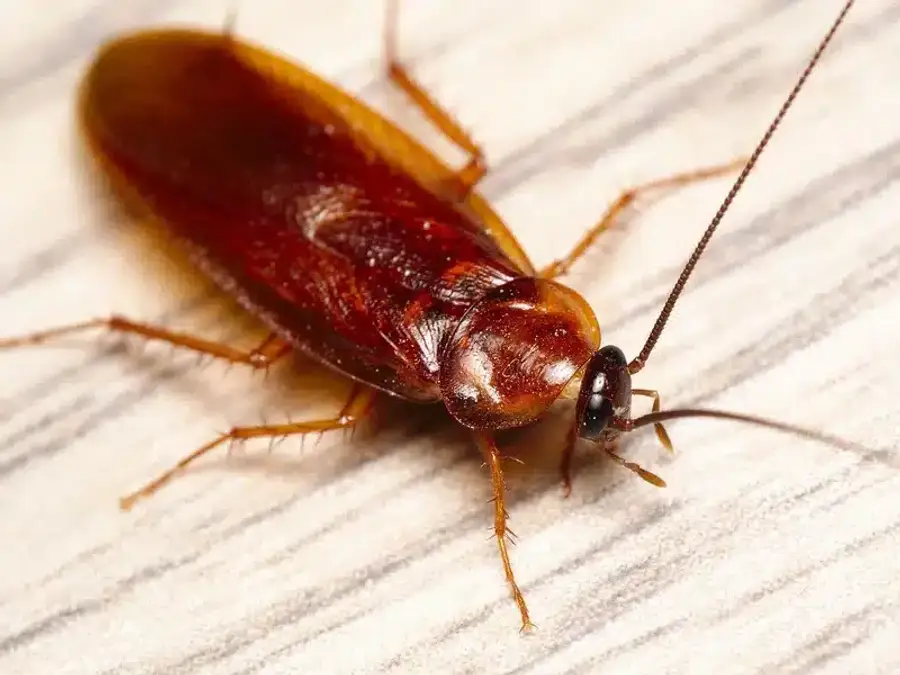
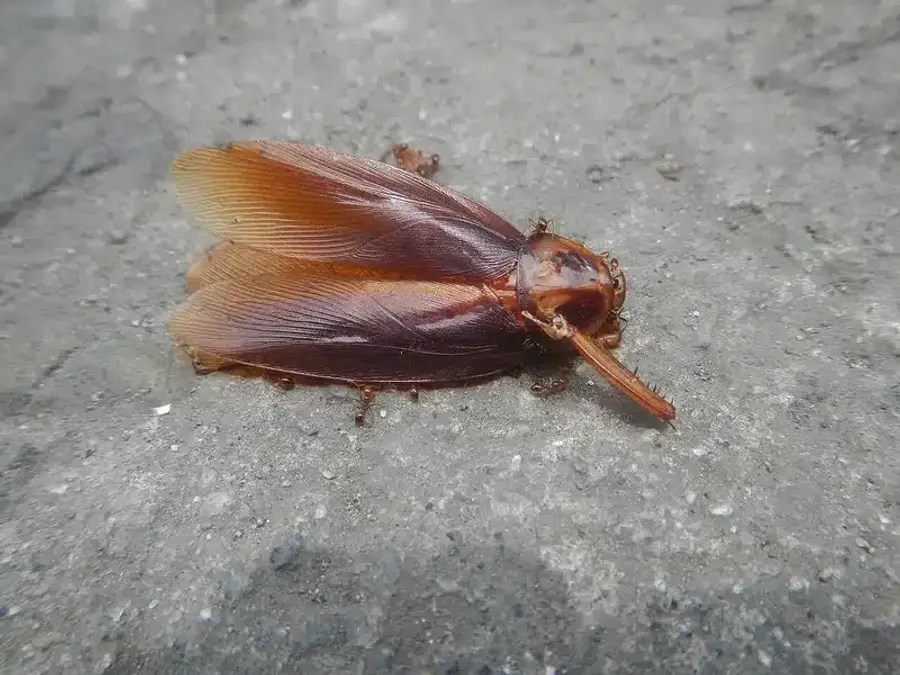
Humidity also plays a crucial role. Species like smokybrown cockroaches become more active fliers when humidity exceeds 60%. This explains why flying cockroach sightings spike during hot, humid summer nights in the DMV area.
Additionally, wind and air pressure changes can trigger flight behavior. Many homeowners notice increased activity before storms or during weather transitions.
Why Flying Roaches Are Dangerous: Health Concerns
Flying cockroach infestations create serious health concerns beyond the obvious nuisance factor. After dealing with countless infestations over four years, I’ve seen firsthand how these pests impact families.
The biggest health threat comes from allergens. Cockroaches produce proteins called Bla g 1, Bla g 2, and Per a 3 that become airborne.
According to research published in Environmental Health Perspectives, at least 63% of U.S. homes have detectable cockroach allergen levels, with 13% exceeding sensitization thresholds. Cockroach allergens are among the strongest asthma risk factors in children. Studies show hospitalization odds increase by 3.4 times when bedroom allergen levels exceed 8 U/g. These allergens become airborne during cleaning activities like vacuuming.
Early Detection and Monitoring Techniques
Catching flying cockroach infestations early makes elimination much easier. I always teach homeowners what signs to watch for during our inspections.
Look for dark, pepper-like droppings in corners and along baseboards. Shed skins from molting nymphs often accumulate in hiding spots. A musty, oily odor indicates heavy infestations.
Flying cockroach species leave different clues. Smokybrown cockroaches often leave larger droppings around outdoor light fixtures. Wood cockroach males appear suddenly near windows and doors during late spring.
Professional monitoring uses sticky-trap grids placed at floor-wall junctions every 3-5 meters for 72 hours. According to University of California guidelines, trap counts guide intervention thresholds and help identify hotspots.
Species identification requires examining wing length relative to the abdomen, pronotal markings, and banding patterns. Big roaches in Virginia often get misidentified, leading to incorrect treatment approaches.
Are Cockroaches Dangerous? Why a Multi-Method Approach Works
Effective flying cockroach control requires an integrated approach. Our family has refined these methods over three generations of pest control experience.
Sanitation and Habitat Modification
Food limitation dramatically speeds treatment success. Eliminate crumbs, store food in sealed containers, and segregate garbage properly. Use HEPA filtration when vacuuming to capture allergen-laden frass and body fragments.
Pay special attention to pet food, which attracts many cockroach species. Store it in sealed containers and clean feeding areas nightly.
Exclusion Techniques
Seal structural cracks 1mm or larger using caulk or foam. Repair door sweeps and weatherstripping around entry points. Install fine mesh screens on basement vents and crawl space openings.
Flying cockroach control requires attention to upper-level entry points. Check around utility penetrations, roof vents, and attic spaces where flying species might enter.
Lighting modifications help with species like wood cockroaches and smokybrowns that are attracted to lights. Switch to yellow or amber LEDs and reduce unnecessary outdoor lighting.
Physical and Mechanical Controls
Vacuum flush-outs reduce heavy infestations before applying baits. Hand-capture works well for stray wood cockroaches that don’t establish breeding populations indoors.
Door eviction - simply opening doors to let wood cockroaches escape - often resolves seasonal intrusions without chemical treatment.
How to Get Rid of Flying Roaches: Chemical Control Options
Modern flying cockroach treatments focus on baits and targeted applications rather than broadcast spraying. Our internal research team has eliminated nine harsh chemicals commonly used in the industry, choosing better alternatives.
Gel Baits for Dangerous Cockroaches
Gel baits containing fipronil 0.03%, indoxacarb 0.6%, or hydramethylnon 2% produce over 90% mortality within 4-7 days when fresh. Research shows fipronil shows very high kill rates at five days in laboratory tests.
Proper bait placement is critical for flying cockroach species that may not encounter floor-level placements. Apply baits in upper cabinets, behind appliances, and near ceiling-level harborages.
Rotate bait active ingredients to prevent resistance development. Never apply repellent sprays near bait stations, as this reduces feeding activity.
Alternative Options
Boric acid treatments offer low-toxicity options that remain effective against pyrethroid-resistant strains. Boric acid destroys foregut epithelium and works through ingestion and grooming behaviors.
Silica aerogel and diatomaceous earth dusts desiccate insects in wall voids where moisture levels are low. These work especially well for flying cockroach species that harbor in dry structural voids.
Growth Regulators and Residuals
Insect growth regulators (IGRs) like hydroprene and pyriproxyfen disrupt development when combined with other treatments. Apply these to voids and behind cabinets following University of Florida protocols.
Limited residual applications in cracks and crevices provide ongoing protection, especially for species that might reinfest from outdoor populations.
Managing Resistance and Product Selection
Resistance management is crucial for long-term flying cockroach control. Metabolic and target-site resistance to pyrethroids, carbamates, and organophosphates is widespread among cockroach populations.
Rotate between different mode-of-action groups rather than sticking with one product type. Avoid over-the-counter pyrethroid aerosols, which often fail against resistant populations and can make baiting less effective.
Our approach emphasizes products that work through different mechanisms. This strategy maintains effectiveness even when populations develop resistance to common active ingredients.
Professional Treatment Services
Professional flying cockroach treatment begins with expert consultation. Our licensed technicians take calls directly - no phone trees or overseas operators. You get a detailed quote and treatment plan based on your specific situation.
Our 78-point home inspection identifies both active problems and potential trouble spots. We check entry points, moisture issues, and species-specific harborages that homeowners often miss.
Initial treatments use products approved by our internal research team. We focus on targeted applications rather than broadcast treatments, reducing exposure while maximizing effectiveness.
For insights into professional treatment costs, check our comprehensive pricing guide that covers various service options.
DIY vs Professional Flying Cockroach Treatments
DIY treatments work for minor flying cockroach intrusions, especially seasonal wood cockroach issues. Simple exclusion and lighting modifications often resolve these problems.
However, established infestations require professional expertise. Gel baits need precise placement based on species behavior. Dust applications need the right tools and training of structural pest management.
Over-the-counter products often fail because they don’t address the root causes. Aerosol treatments may actually worsen problems by dispersing populations and making them bait-shy.
Professional treatment ensures proper identification, appropriate product selection, and follow-up monitoring. We provide unlimited callbacks until problems are resolved.
Better Termite & Pest Control’s Approach
As a third-generation family business serving the DMV for over 50 years, we understand local flying cockroach problems. Our approach combines decades of experience with modern research-based methods.
Our internal research team reviews every product we use. We’ve eliminated nine chemicals commonly used in the industry, choosing alternatives like Essentria, Alpine, and borate-based solutions. Each product is one we would feel comfortable using in our own homes.
We offer seasonal protection plans that target specific pests during peak activity periods. If you spot problems between visits, we provide unlimited callbacks at no extra cost. Additionally, we serve locations throughout the region, including specialized pest control in Alexandria and King George pest control services.
Our no-contract promise means you can cancel anytime with 30 days notice if you’re not satisfied. We focus on results rather than binding agreements.
Take Action Against Flying Cockroaches Today
Flying cockroach infestations won’t resolve on their own. The longer you wait, the harder elimination becomes and the greater the health risks to your family.
Our registered technicians have the experience and tools to identify species correctly and implement effective treatment plans. We understand the unique challenges that flying cockroach species present and know how to address them.