Old House Borers Identification Guide
Hylotrupes bajulus
Old house borers are wood-destroying longhorn beetles whose larvae tunnel through softwood framing in homes, causing significant structural damage over years of hidden feeding.
Taxonomy
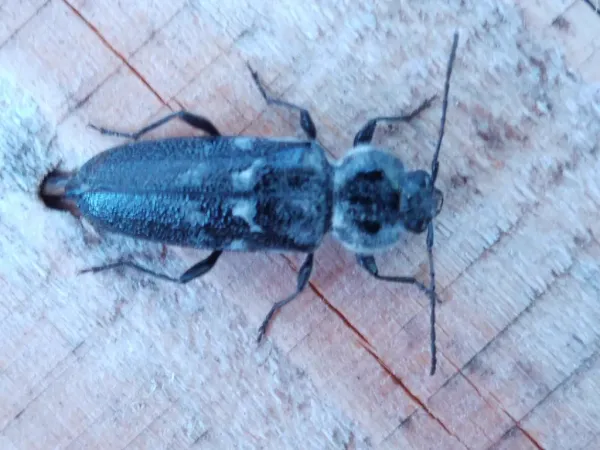
Old House Borers Coloration
Common color patterns to help identify old house borers
Old House Borers
Seasonal Activity
When old house borers are most active throughout the year

Where Old House Borers Are Found
Hover over states to see their names. Green regions indicate where old house borers have been reported.
Old House Borer Identification Guide
The old house borer is one of the most harmful wood-boring beetles in North America. This pest came from North Africa and arrived in the United States around 1875. It has spread throughout the eastern states, especially along the Atlantic coast. Despite its name, this beetle often damages newer homes. That’s because it prefers wood cut within the past 10 years.
Physical Characteristics
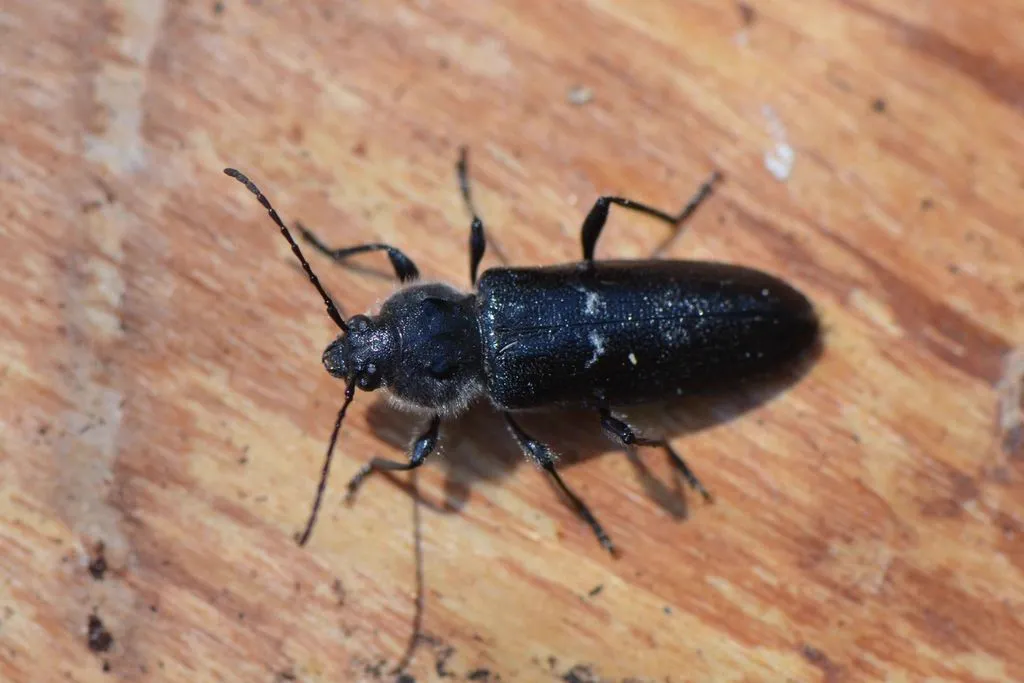
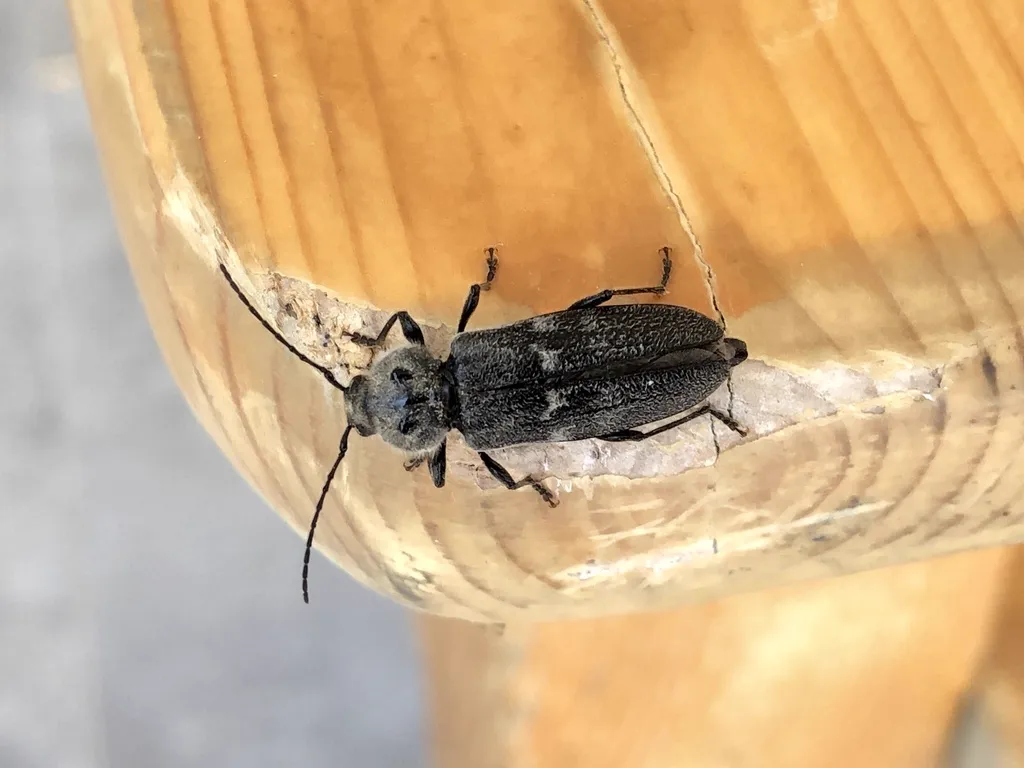
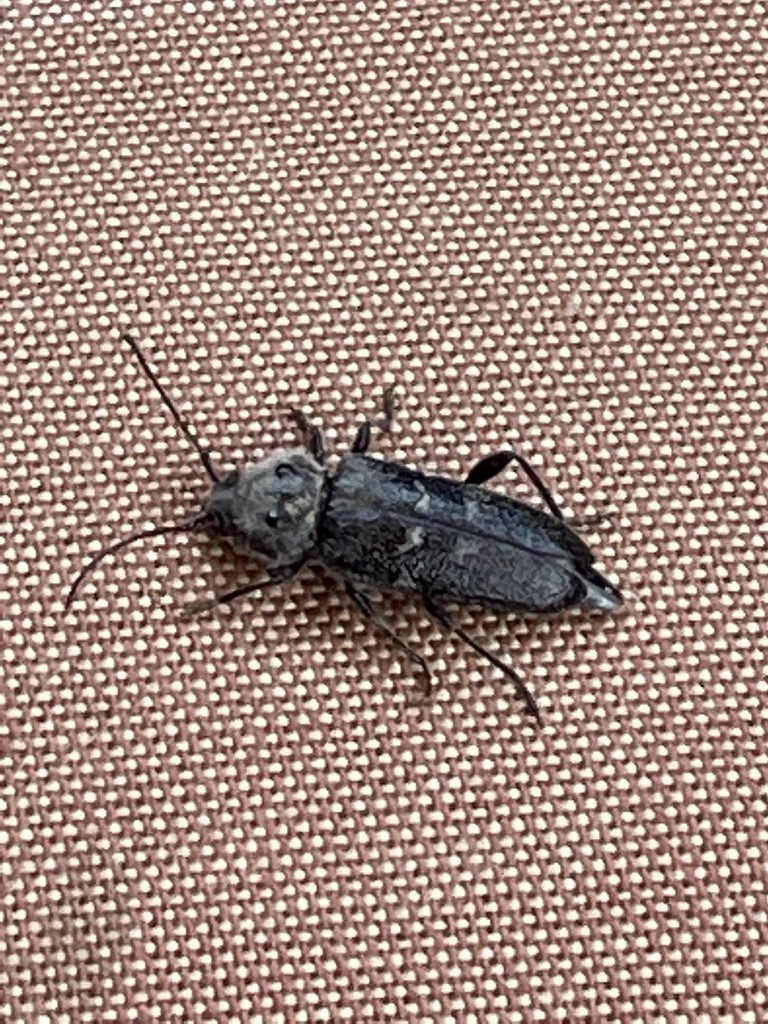
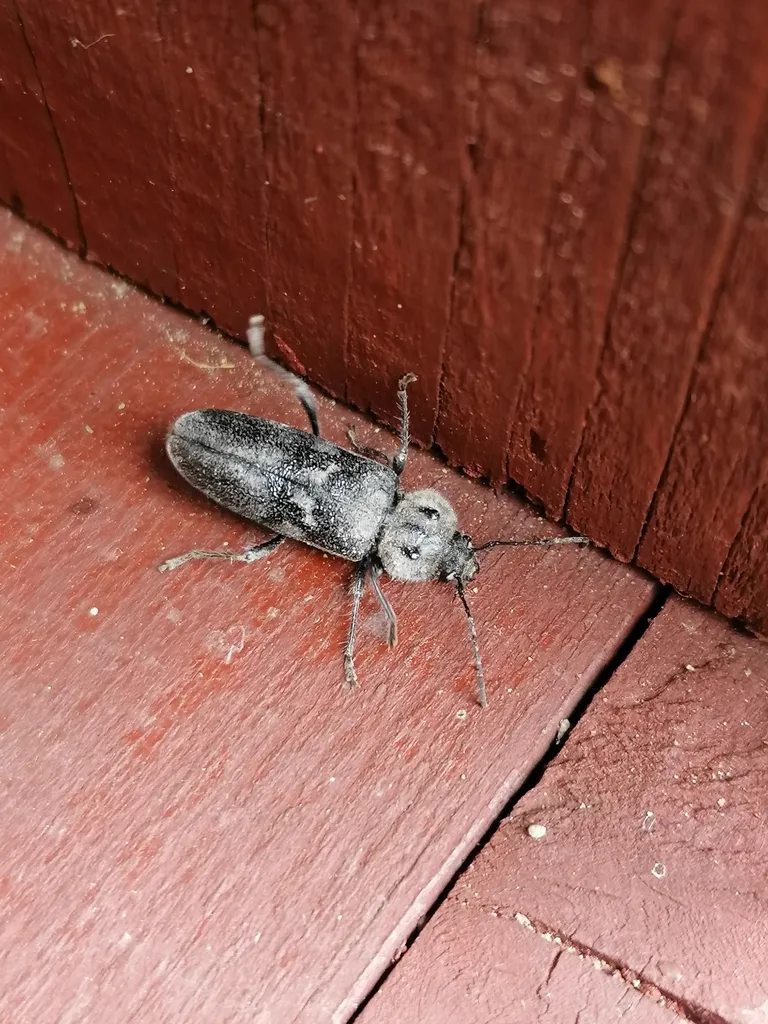
Adult old house borers are large beetles. They measure 15-25mm (about 5/8 to 1 inch) long. Their bodies are flat and stretched out, which is typical of longhorn beetles. The color ranges from grayish-black to brownish-black. You may see patches of gray or white hair on the wing covers.
Key features of adults include:
- Long antennae that reach about half the body length
- Two small, shiny black bumps behind the head
- Gray patches or bands on the wing covers
- A rounded section behind the head that is wider than the head itself
- Fine grayish hairs on parts of the body
The larvae cause all the damage. Old house borer larvae are cream-colored grubs that can grow over 1 inch long when fully grown. Our beetle larva guide covers how to identify different wood-boring grubs. Their bodies are tube-shaped and narrow toward the back end. The head has dark mouthparts that can chew through wood. Look for three small eyespots on each side of the head. If a larva has only one eyespot per side, it is a different species that causes less damage.
Similar Species
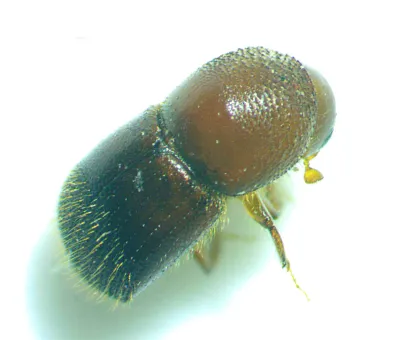
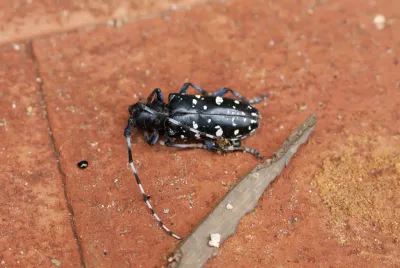
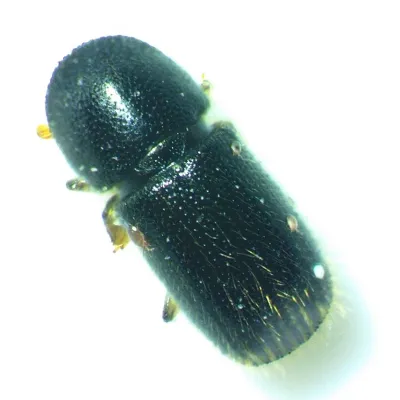
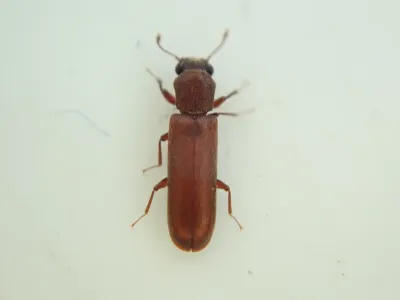
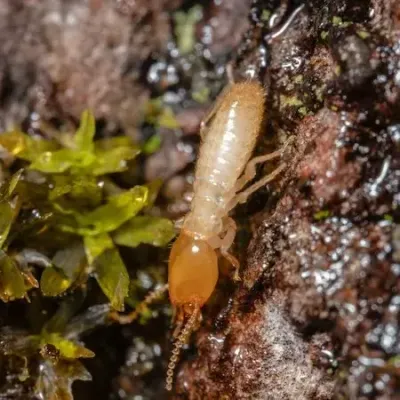
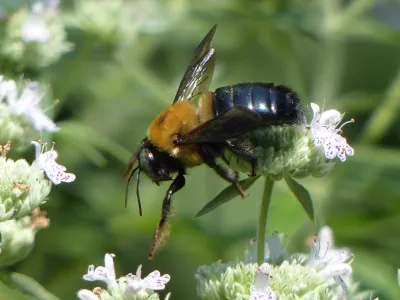
Old house borers belong to the longhorn beetle family. They can be confused with other wood-boring beetles. Their large size, gray markings, and love of softwood set them apart. Powderpost beetles are much smaller and attack hardwoods. Furniture beetles also attack softwood but are smaller with a hood over their heads. Termites leave mud tubes and create different damage patterns with no visible entry holes.
Old House Borer Behavior and Biology
Lifecycle and Development
Old house borers go through four life stages: egg, larva, pupa, and adult. Their development takes much longer than most wood borers.
Eggs are laid by females in cracks and old exit holes in wood. One female can lay around 200 eggs during her short life. The eggs are tiny, white, and shaped like spindles. They hatch in 1-3 weeks based on temperature and humidity.
Larvae cause all the structural damage. After hatching, the tiny larvae bore into wood and start feeding. This stage can last 3-15 years, based on conditions and wood quality. Larvae grow slowly because softwood has little nutrition. They create winding tunnels packed with coarse, gritty frass as they feed. In quiet rooms, you can often hear rasping or clicking sounds as larvae chew through wood.
Pupae form in oval chambers near the wood surface. This stage lasts 2-4 weeks. The pupa does not feed.
Adults chew through the wood to create oval exit holes about 1/4 to 3/8 inch across. Adults live only 2-3 weeks and do not damage wood. They mate, and females look for wood to lay eggs. Adults are drawn to light and often appear near windows. Most adults emerge from June through August.
Habitat and Wood Preferences
Old house borers only attack softwood lumber. This includes pine, spruce, fir, and other conifers used in home building. They do not infest hardwoods, living trees, firewood, or outdoor lumber touching soil. In North America, they only infest buildings and processed lumber.
The beetles prefer wood with high resin content. This is why they favor lumber cut within the past 10 years. Older wood has less nutrition, so larvae must eat more wood to grow. This leads to worse damage in aged timbers.
Conditions that favor old house borers:
- Softwood framing lumber like pine, spruce, and fir
- Wood moisture between 10-20 percent
- Poor airflow that keeps humidity high
- Sapwood rather than heartwood
- Lumber that was not kiln-dried
Homes in humid climates face higher risk. Moisture problems in crawlspaces also increase risk. Well-ventilated, climate-controlled homes usually have less damage because conditions are less ideal for larvae. A related species, Dermestid Beetles, shares similar characteristics.
How Infestations Begin A related species, June Bugs, shares similar characteristics.
Most old house borer problems start at the lumber mill or building site, not after the home is built. Beetles lay eggs in lumber during storage or while it sits at the job site. The eggs or young larvae are already in the wood when it gets installed.
Homeowners usually find infestations 4-7 years after the home is built. That’s when the first adult beetles emerge. This delay is why the pests seem to appear suddenly in fairly new homes. Once adults emerge inside, they can mate and lay eggs in other wood nearby. This starts new generations of beetles.
Signs of Old House Borer Infestation
Identifying Wood Damage
Exit holes are the clearest sign of old house borer activity. Most wood-boring beetles make round holes. Old house borer holes are oval and measure about 1/4 to 3/8 inch across. Fresh holes look clean and chewed.
Frass (boring dust) from old house borers is coarse and gritty. It packs tightly in the tunnels. Unlike the fine powder from powderpost beetles or the meal-like frass of false powderpost beetles, this frass looks bun-shaped when viewed in cross-section. Fresh frass may fall from wood when you bump it.
Audible feeding sounds help identify these pests. Larvae make rasping or clicking sounds while chewing wood. The sound is like fingernails clicking together. You can hear it best at night in quiet rooms. Sometimes you can hear it through walls and ceilings.
Blistered or rippled wood may mean tunnels run just below the surface. Heavily infested wood sounds hollow when tapped. In bad cases, the surface may give way under pressure.
Where to Look
Old house borers attack structural softwood throughout the home:
- Roof rafters and ridge boards
- Floor joists and subfloor framing
- Wall studs and plates
- Basement and crawlspace joists
- Exposed beams and posts
Crawlspaces with poor airflow and high humidity are common trouble spots. Infestations often start in these areas that get checked less often. Over time, they spread to other parts of the home.
Treatment Methods for Old House Borers
Getting rid of old house borers requires a professional to check the damage and pick the right treatment. The beetles’ long life cycle and hidden location inside wood make control hard.
Assessment and Inspection
Good treatment starts with a full inspection by a trained professional. They will:
- Identify the pest from exit holes, frass, and any beetles found
- Check if the problem is active by looking for fresh frass or sounds
- Measure how much damage exists using probing and visual checks
- Check the strength of affected wood
- Find all areas with softwood lumber at risk
Larvae stay hidden inside wood for years. Finding the full scope of a problem takes experience and careful checking of all framing you can reach.
Fumigation
Fumigation is often the most effective method for treating widespread old house borer problems. The process involves:
- Sealing the home with gas-tight tarps
- Releasing a fumigant gas that soaks into all wood
- Keeping the right gas level for a set time period
- Airing out the home before anyone goes back in
Fumigation kills all life stages, including eggs and larvae deep in wood. But it does not protect against future problems. Fumigation costs a lot and you must leave your home. Still, it may be the best option when beetles have spread through structural lumber.
Borate Treatments
Surface borate treatments can protect wood from new infestations. They also kill larvae that tunnel close to treated surfaces. Products like Bora-Care soak into bare wood and provide lasting protection.
Limits of borate treatments:
- Cannot soak through painted or sealed wood
- May not reach larvae deep in thick timbers
- Work best as a preventive step on new builds
- Must be applied to all exposed wood surfaces
Borate treatments work well for small problems in wood you can reach. But they usually cannot solve established structural infestations on their own.
Localized Treatments
When beetles are in just one or a few pieces of wood, these options may help:
Wood replacement is often the best fix for badly damaged structural pieces. Removing and replacing infested wood gets rid of the problem and restores strength. Use properly kiln-dried lumber for replacements.
Injection treatments involve drilling into tunnels and injecting insecticide where larvae are feeding. This needs correct identification of tunnel spots. It may not reach all larvae in the maze of tunnels.
Heat treatment can kill all life stages by raising wood to 130-140 degrees Fahrenheit. This works well for furniture or items you can remove. It is hard to use on structural framing in place.
Prevention Strategies
Stopping old house borers before they start is easier than getting rid of them:
- Use kiln-dried lumber for building projects. Kiln-drying kills eggs and larvae.
- Check lumber before use for exit holes or signs of beetles
- Keep good airflow in crawlspaces to lower humidity
- Seal wood with paint or varnish to stop egg-laying
- Fix moisture problems that create good conditions for larvae
- Check framing in basements and crawlspaces now and then for signs of activity
For new homes in areas with old house borer problems, treating framing lumber with borates gives lasting protection. For a broader overview of these pests, see our blog post on wood-boring beetles.
References and Further Reading
- Penn State Extension - Old House Borer
- University of Maryland Extension - Old House Borer
- University of Kentucky Entomology - Old House Borer
- University of Missouri Extension - Wood-Boring Beetles
- NC State Extension - Powderpost Beetles and Wood-Inhabiting Fungi
- Museum Pests - Old House Borer Fact Sheet
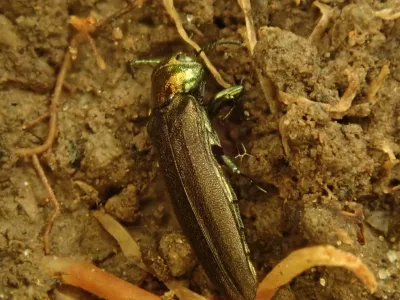
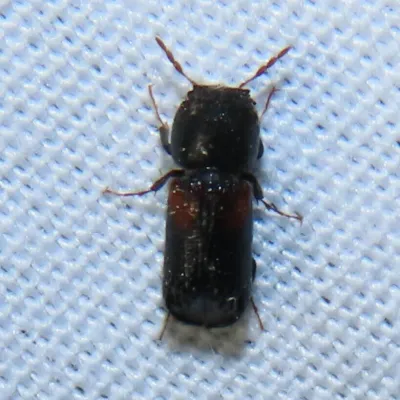
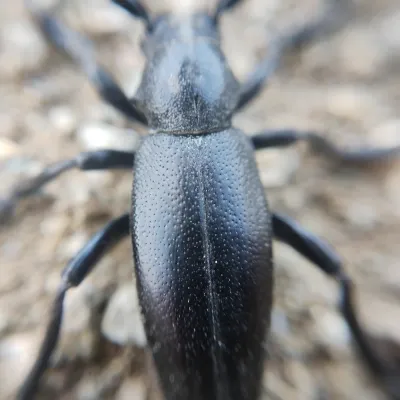
Other Wood Boring Beetles
Explore other species in the wood boring beetles family
Commonly Confused With
Old House Borers are often mistaken for these similar pests
Where Old House Borers Are Found
Hover over states to see their names. Green regions indicate where old house borers have been reported.
Common Questions about Old House Borers
What is an old house borer?
+
The old house borer is a longhorn beetle that bores through softwood lumber like pine, spruce, and fir. Despite its name, it most commonly infests newer homes built within the last 10 years. The larvae tunnel through structural wood for years before emerging as adults, causing hidden damage to floor joists, rafters, and wall studs.
How do I know if I have old house borers?
+
Look for oval exit holes about 1/4 to 3/8 inch wide in wood surfaces. You may hear rasping or clicking sounds from larvae feeding inside wood, especially at night. Coarse, tightly packed frass near exit holes or falling from wood is another sign. Since larvae feed inside wood for years, damage is often bad before it becomes visible.
Why are they called old house borers if they infest new homes?
+
The name is misleading. Old house borers actually prefer wood that was recently harvested because it has higher resin content that larvae need to grow. Most infestations occur in homes 4 to 7 years after construction when the first adult beetles emerge from wood that was infested at the lumber mill or construction site.
Are old house borers dangerous?
+
Old house borers do not bite humans or spread diseases. However, they cause serious structural damage over time. Larvae can feed inside wood for 3 to 15 years, weakening floor joists, rafters, studs, and other framing members. Left untreated, infestations can weaken the structure and require expensive repairs.
How do old house borers get into homes?
+
Old house borers enter homes through infested lumber used during construction. Eggs or larvae may already be in wood before it reaches the building site. The beetles rarely fly into homes or infest standing trees. Once inside, adults that emerge can lay eggs in other wood in the same structure.
How long does it take for old house borers to cause damage?
+
Old house borer larvae have one of the longest growth periods of any beetle that bores through wood. They take 3 to 15 years to mature based on conditions. Warm, humid spaces speed growth while cool, dry conditions slow it. Damage builds up over time, and multiple generations can overlap in the same piece of wood.
What does old house borer damage look like?
+
Adult exit holes are oval and about 1/4 to 3/8 inch wide. If you cut into infested wood, you will see winding tunnels packed with coarse, gritty frass that looks bun shaped. Tunnels are oval when viewed in cross section. Heavily damaged wood may sound hollow when tapped.
Can old house borers spread from one house to another?
+
Old house borers can spread when infested lumber is reused or when adult beetles fly to nearby structures. However, adults do not typically fly long distances. The greater risk is when adults emerging inside a structure lay eggs in nearby wood, starting new generations.

With five years of hands-on experience in the pest control industry, George Schulz is a registered technician with the Virginia Pest Management Association and a proud third-generation professional in a family business that's been protecting homes for over 57 years. He manages and trains a team of service pros while also leading internal research efforts—recently spearheading a deep-dive review of thousands of documents on pest control materials to hand-pick the most kid and pet friendly, most effective solutions tailored specifically for homes in the DC metro area.