False Powderpost Beetles Identification Guide
Family Bostrichidae
False powderpost beetles are wood-boring insects that attack hardwoods, especially tropical woods and bamboo. Both adults and larvae damage wood, creating round exit holes and meal-like frass.
Taxonomy
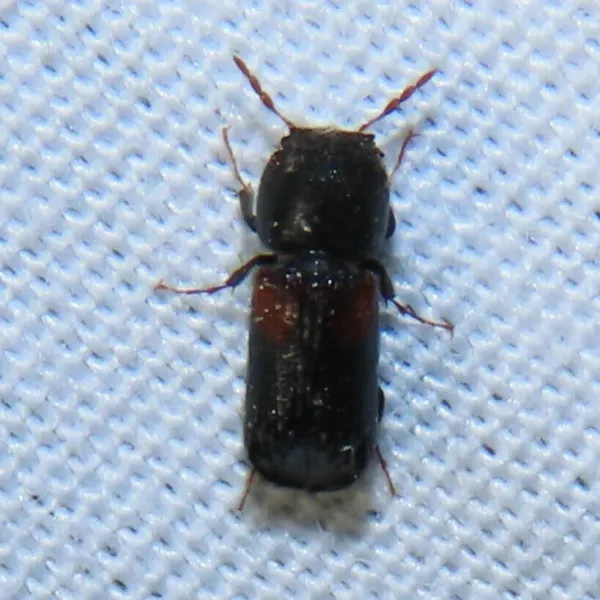
False Powderpost Beetles Coloration
Common color patterns to help identify false powderpost beetles
False Powderpost Beetles
Seasonal Activity
When false powderpost beetles are most active throughout the year

Where False Powderpost Beetles Are Found
Hover over states to see their names. Green regions indicate where false powderpost beetles have been reported.
False Powderpost Beetle Identification Guide
Physical Characteristics
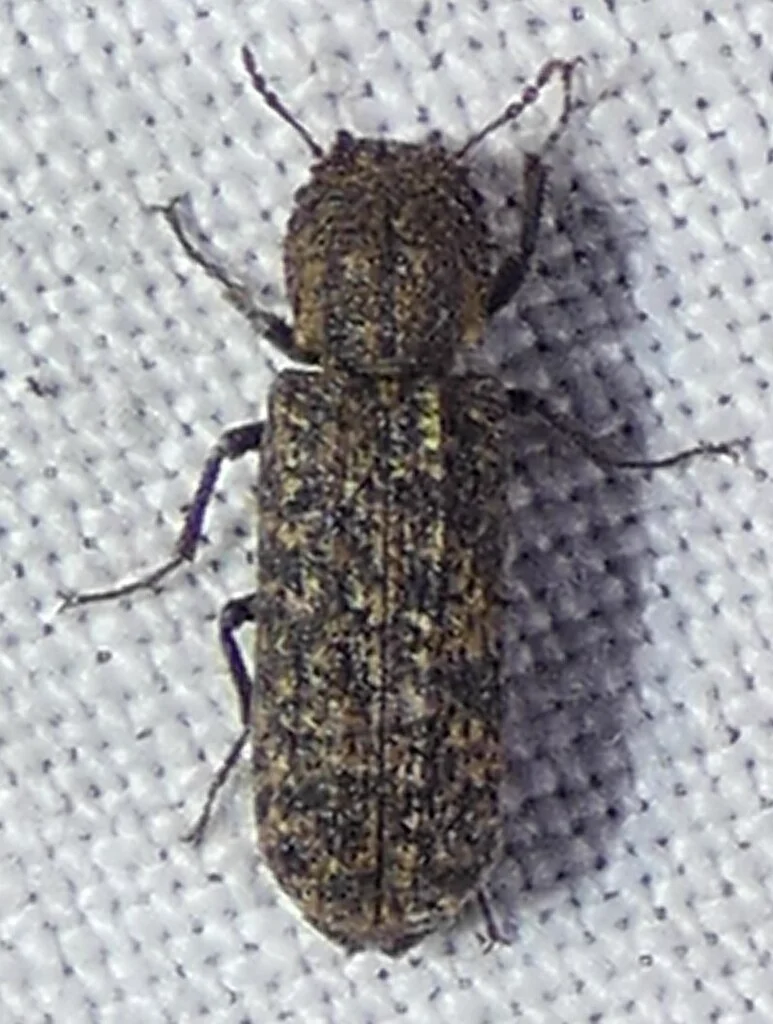
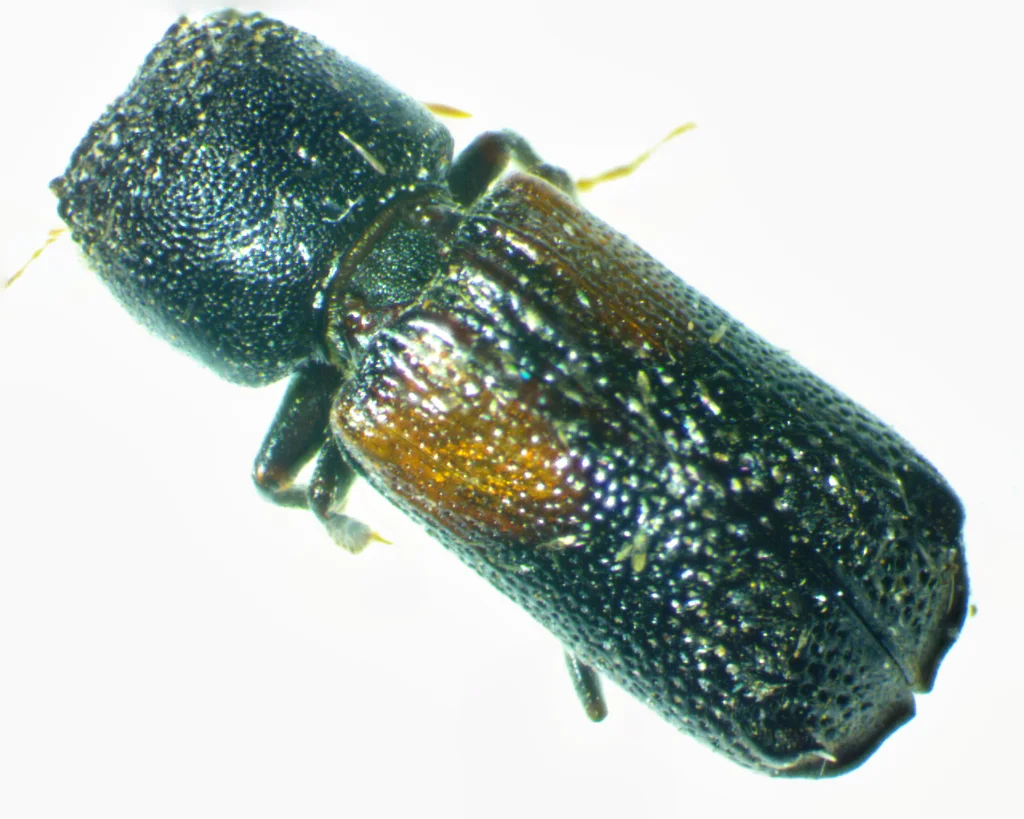
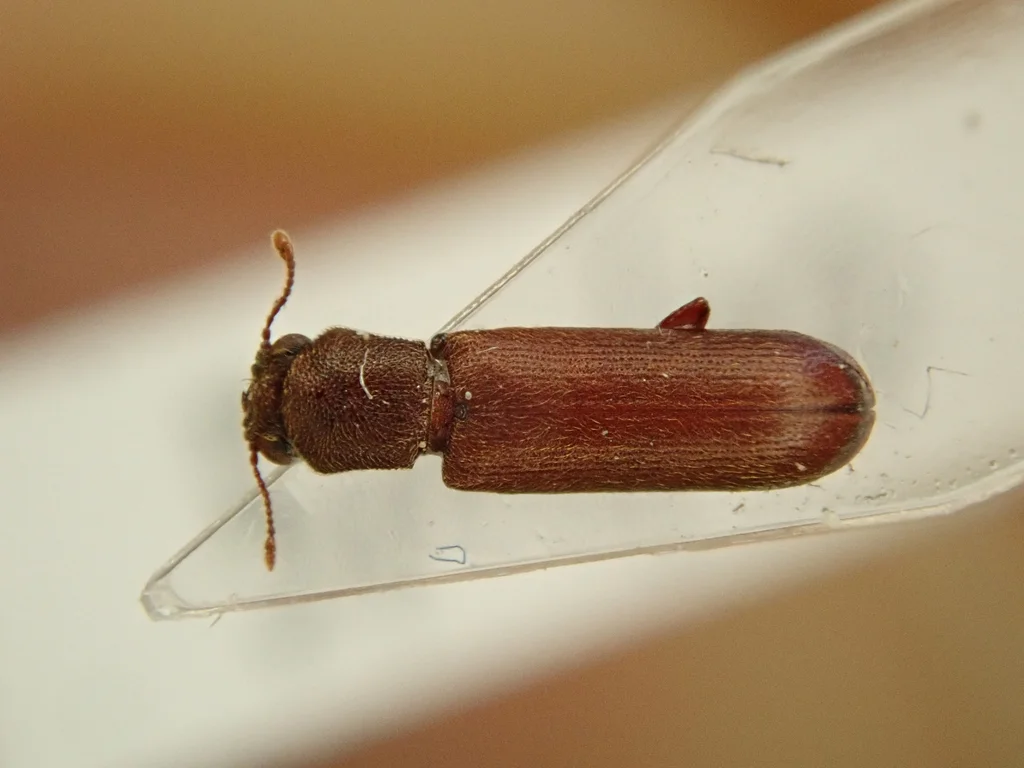
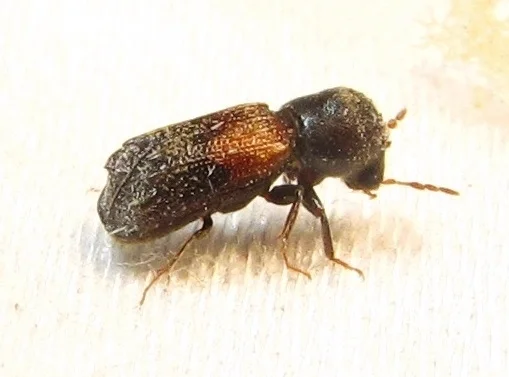
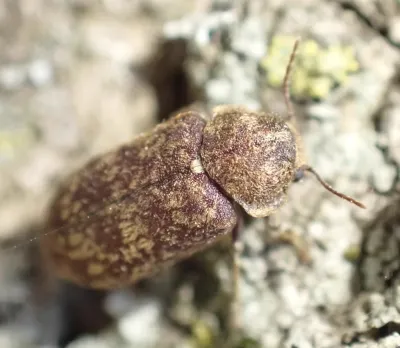
False powderpost beetles are small wood-boring insects about 1/8 to 1/4 inch long. They have long, tube-shaped bodies that range from reddish-brown to black. Their most notable feature is a hooded look. The head bends downward and hides under the front body section, so you cannot see it from above.
The front body section has a rough, bumpy texture with tiny rasp-like bumps behind the head. Some species also have a pair of small spines sticking out from the rear. Their antennae are short with three or four enlarged segments at the tips that look like saw teeth.
Larvae are white, C-shaped grubs that lack the body spines found on true powderpost beetle larvae. They have small brown heads and develop entirely inside wood, emerging only as adults. See our guide on beetle larva identification to learn more about recognizing wood-boring grubs.
Common Species in North America
Several species of Bostrichidae affect homes and wood products in North America:
Red-Shouldered Bostrichid (Xylobiops basilaris) is native to North America and commonly attacks oak, hickory, and other hardwoods. Adults are dark brown to black with reddish-brown shoulders.
Bamboo Borer (Dinoderus minutus) is a tropical species frequently found in imported bamboo products including furniture, flooring, and decorative items. It is one of the most common bostrichids encountered indoors.
Larger Grain Borer (Prostephanus truncatus) primarily attacks stored grain but can also bore into wood. It has a truncated rear end that distinguishes it from other species.
Leadcable Borer (Scobicia declivis) attacks both hardwoods and softwoods and has been known to bore through lead sheathing on cables, earning its common name.
False Powderpost Beetle Behavior and Biology
Lifecycle and Development
False powderpost beetles finish their life cycle in about one year. This makes them faster to develop than many other wood-boring beetles. The cycle can take up to two years if conditions are poor.
Egg-laying differs from other powderpost beetles. Females bore directly into wood to lay their eggs in tunnels they create. This means adults cause damage even before larvae hatch. Females lay eggs in small groups inside their entrance tunnels.
Larvae hatch and continue tunneling through the wood as they feed on starch and other nutrients. The larval stage lasts several months as the grubs grow through multiple molts. They pack their tunnels tightly with frass as they develop.
Pupation occurs in chambers near the wood surface. After a brief pupal stage, adults chew their way out through characteristic round exit holes. Emergence typically happens in early spring, though heated buildings may see year-round activity.
Adults are capable fliers and are attracted to lights. They may be found near windows as they attempt to leave buildings or seek new wood sources. Adult beetles live several weeks to a few months. A related species, Dermestid Beetles, shares similar characteristics.
Habitat and Wood Preferences A related species, June Bugs, shares similar characteristics.
False powderpost beetles show strong preferences for certain wood types and conditions: A related species, Spider Beetles, shares similar characteristics.
Tropical hardwoods are especially vulnerable to attack. Species like mahogany, teak, and other imported hardwoods often arrive already infested. False powderpost beetles can attack both the sapwood and heartwood of tropical species.
Bamboo products are highly susceptible due to their high starch content. Bamboo furniture, flooring, utensils, and decorative items are common infestation sources. The beetles thrive on the nutrients stored in bamboo culms.
Domestic hardwoods including oak, ash, and hickory can be attacked, though usually only the sapwood is affected. False powderpost beetles prefer wood with moisture content between 6 and 30 percent.
Softwood framing is rarely attacked by false powderpost beetles. They pose significantly less threat to structural lumber than anobiid beetles (deathwatch beetles) which commonly infest pine and fir. For softwood damage, old house borers and other longhorn beetles are the primary concern.
Signs of Infestation
Detecting false powderpost beetle activity requires careful observation:
Exit holes are round and measure 1/8 to 3/16 inch in diameter, noticeably larger than those made by true powderpost beetles. Fresh holes have clean, sharp edges while old holes appear weathered and darkened.
Frass characteristics help tell false powderpost beetles apart from other species. Their frass looks like coarse meal rather than fine flour and tends to stick together. It stays packed tight within tunnels rather than spilling out of holes. Empty entrance holes without packed frass show where females bored in to lay eggs.
Adult beetles may be spotted near windows or light sources, especially during spring. If you are finding little black beetles in your house, they could be false powderpost beetles emerging from infested wood products. They are attracted to lights at night and may congregate on window sills as they attempt to exit structures.
Wood damage is usually limited to specific items rather than spreading throughout a structure. Check imported furniture, bamboo products, and recently installed hardwood floors for signs of infestation.
Treatment Methods for False Powderpost Beetles
Controlling false powderpost beetles focuses on eliminating current infestations and preventing introduction of new beetles through infested wood products.
Inspection and Assessment
Thorough inspection is the first step in any treatment plan. Examine all wood items, paying special attention to:
- Imported furniture and decorative pieces
- Bamboo flooring, furniture, and accessories
- Hardwood flooring and trim installed within the past 5-10 years
- Wood products from tropical origins
Write down exit hole locations, note any fresh frass, and look for active adult beetles. This helps figure out if treatment is needed and which method works best.
Surface Treatments
For small infestations in wood you can reach, borate-based products can work well. These treatments soak into unfinished wood and give lasting protection against beetle larvae. The active ingredients kill larvae as they feed and stop future infestations.
Surface treatments work best on:
- Unfinished or bare wood surfaces
- Items that can be stripped of existing finishes
- Wood in dry, well-ventilated areas
Borates with glycol carriers penetrate more deeply and work on partially finished wood. Multiple applications may be needed for thorough coverage.
Heat Treatment
Heat treatment works well to kill all life stages of false powderpost beetles in infested furniture and other items. Wood must be heated to 130-140 degrees Fahrenheit all the way through for several hours.
This method works well for:
- Valuable antiques that cannot be chemically treated
- Bamboo furniture and accessories
- Items where chemical residue is undesirable
Professional heat treatment ensures proper temperature control to kill beetles without damaging the wood through excessive heat or moisture loss.
Fumigation
Bad or widespread infestations may need fumigation. This means sealing off the infested area and filling it with a gas that kills all beetle life stages inside the wood. Only licensed pest control experts can do fumigation.
Fumigation kills everything but does not provide ongoing protection. Wood can still be infested again if new beetles get in.
Prevention Strategies
Since false powderpost beetles rarely re-infest after the first generation, prevention focuses on avoiding introduction:
- Inspect wood products before purchase, especially imported items, bamboo products, and tropical hardwoods. Look for exit holes, frass, or adult beetles.
- Quarantine new items in a garage or isolated area for several months before bringing them fully into your home. This allows any emerging beetles to be detected.
- Choose kiln-dried lumber for construction projects. Proper kiln drying kills existing larvae and reduces wood moisture to unattractive levels.
- Apply protective finishes to bare wood surfaces. Paint, varnish, and polyurethane prevent female beetles from boring into wood to lay eggs.
- Monitor previously infested items for new exit holes over 1-2 years. Mark existing holes to distinguish new emergence.
- Remove and dispose of heavily infested items to eliminate beetle sources from your property.
References and Further Reading
Other Wood Boring Beetles
Explore other species in the wood boring beetles family
Commonly Confused With
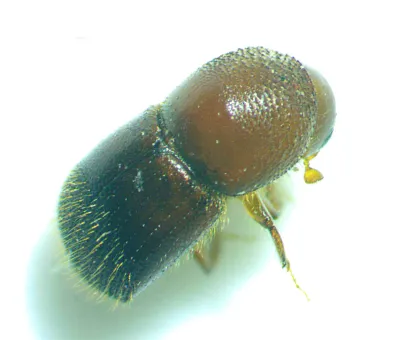
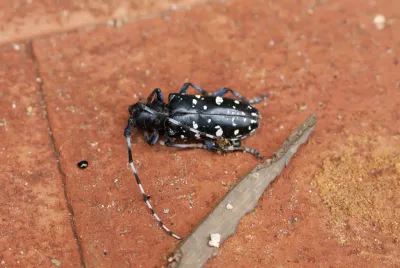
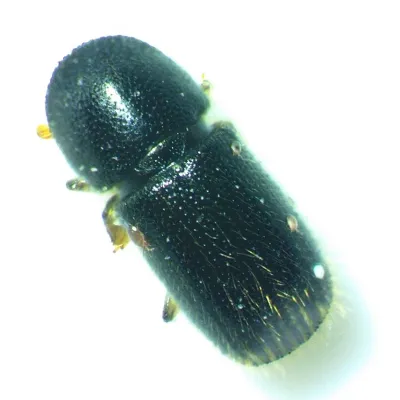
False Powderpost Beetles are often mistaken for these similar pests
Where False Powderpost Beetles Are Found
Hover over states to see their names. Green regions indicate where false powderpost beetles have been reported.
Common Questions about False Powderpost Beetles
What are false powderpost beetles?
+
False powderpost beetles belong to the family Bostrichidae and are wood-boring insects that attack both hardwoods and softwoods. Unlike true powderpost beetles (Lyctidae), both the adults and larvae cause damage by boring into wood. They are sometimes called auger beetles or horned powderpost beetles due to the rough projections on their thorax.
How can I tell false powderpost beetles apart from true powderpost beetles?
+
False powderpost beetles have a distinctive hooded appearance because their head is bent downward and hidden under the thorax when viewed from above. They are generally larger (1/8 to 1/4 inch) and have rough, rasp-like bumps behind their head. Their exit holes are larger (1/8 to 3/16 inch) and their frass is meal-like and tends to stick together, unlike the fine flour-like powder produced by true powderpost beetles.
What kind of wood do false powderpost beetles attack?
+
False powderpost beetles primarily attack hardwoods, especially tropical hardwoods and bamboo products. They can infest both the sapwood and heartwood of tropical woods, while they attack only sapwood in domestic hardwoods. They prefer wood with moisture content between 6 and 30 percent and are often found in imported furniture, bamboo flooring, and decorative wood items.
How do false powderpost beetles get into homes?
+
False powderpost beetles most commonly enter homes inside already-infested wood products such as imported furniture, bamboo items, hardwood flooring, or decorative crafts. The infestation often occurs before the wood is even imported. Adult beetles can also fly and may enter homes seeking new wood to infest.
Do false powderpost beetles re-infest wood?
+
False powderpost beetles seldom re-infest wood after the first generation emerges. This is because they prefer freshly processed wood with high starch and moisture content. Once the wood ages and starch levels decline, it becomes less attractive to new generations of beetles.
How long does the false powderpost beetle life cycle take?
+
The typical life cycle from egg to adult takes about one year, though it can extend to two years depending on conditions. Adults emerge in early spring by boring round exit holes in the wood surface. Unlike true powderpost beetles that can have multi-year cycles, false powderpost beetles develop relatively quickly.
Are false powderpost beetles dangerous to my home?
+
False powderpost beetles can cause significant structural damage if left untreated, though they typically do not re-infest after the initial generation. The greatest risk is to imported hardwood furniture, bamboo products, and newer hardwood installations. They pose less risk to softwood structural framing than other wood-boring beetles.
What are the signs of a false powderpost beetle infestation?
+
Look for round exit holes about 1/8 to 3/16 inch in diameter on wood surfaces. You may notice small piles of sawdust-like frass that tends to stick together and pack tightly in galleries. Fresh holes have clean edges and may have powder nearby. The beetles are most active in warmer months and adults may be seen near windows or lights.

With five years of hands-on experience in the pest control industry, George Schulz is a registered technician with the Virginia Pest Management Association and a proud third-generation professional in a family business that's been protecting homes for over 57 years. He manages and trains a team of service pros while also leading internal research efforts—recently spearheading a deep-dive review of thousands of documents on pest control materials to hand-pick the most kid and pet friendly, most effective solutions tailored specifically for homes in the DC metro area.