Emerald Ash Borer Identification Guide
Agrilus planipennis
The emerald ash borer is an invasive wood-boring beetle from Asia responsible for the death of tens of millions of ash trees across North America since its discovery in 2002.
Taxonomy
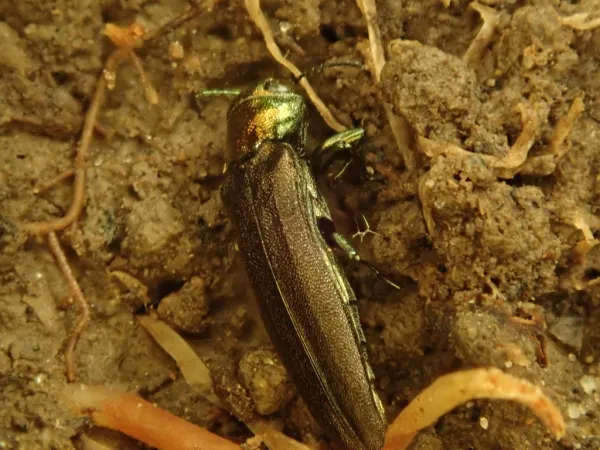
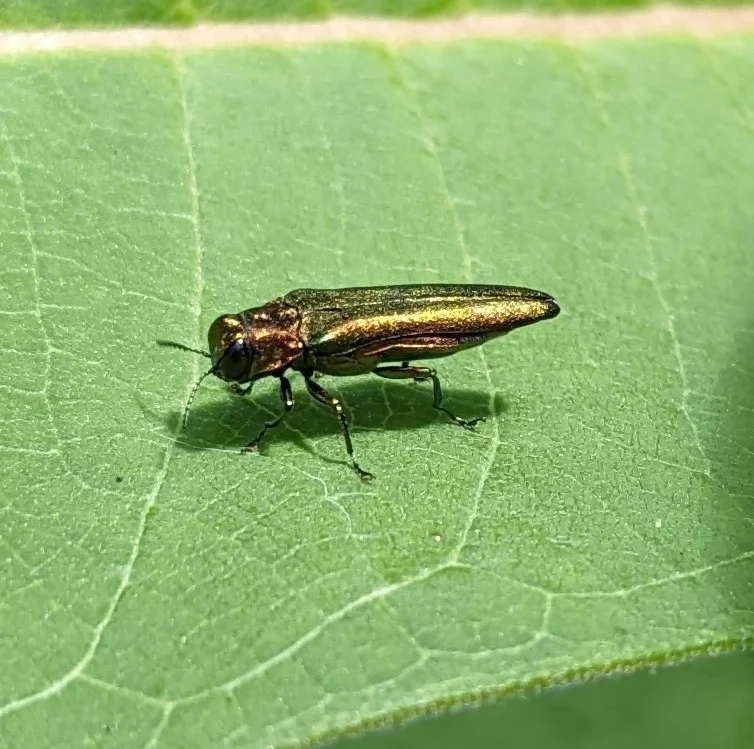
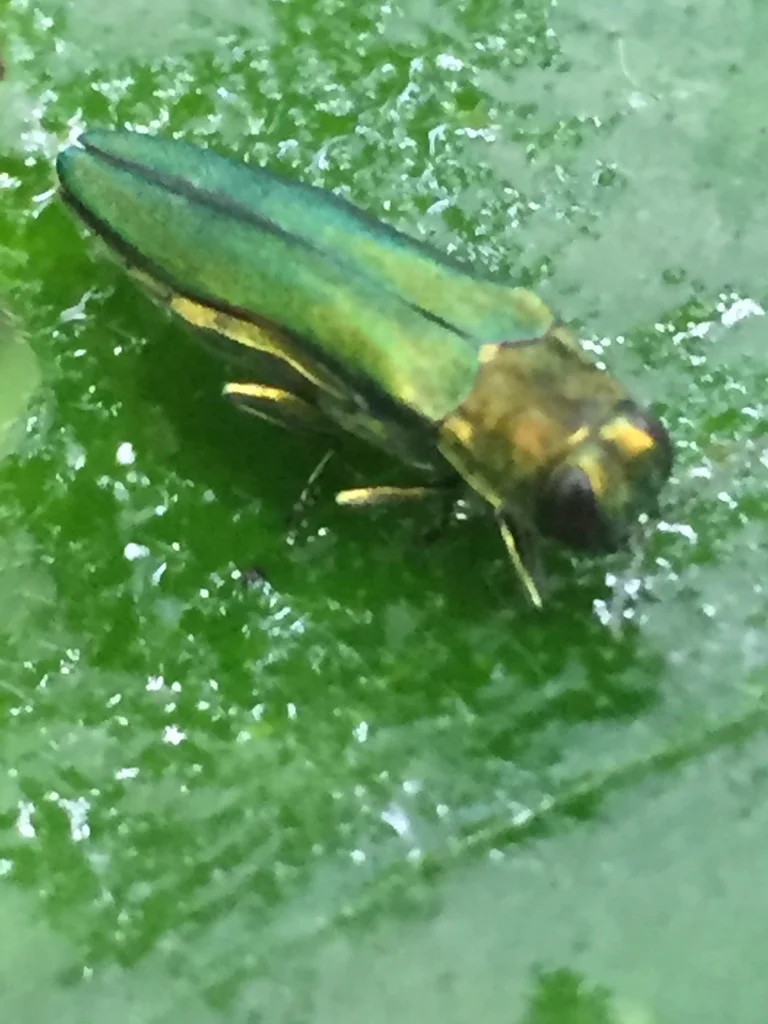
Emerald Ash Borer Coloration
Common color patterns to help identify emerald ash borer
Emerald Ash Borer
Seasonal Activity
When emerald ash borer are most active throughout the year

Where Emerald Ash Borer Are Found
Hover over states to see their names. Green regions indicate where emerald ash borer have been reported.
Emerald Ash Borer Identification Guide
The emerald ash borer (EAB) is one of the most harmful forest insects to reach North America. First found near Detroit, Michigan in the late 1990s, this beetle has killed hundreds of millions of ash trees. It has spread across much of the eastern and central United States.
Most wood-boring beetles prefer weak or dying trees. The emerald ash borer is different. It attacks healthy ash trees and kills them quickly. Knowing how to spot this pest can help property owners decide whether to protect or remove ash trees on their land.
Physical Characteristics
Adult emerald ash borers live up to their name with bright metallic green coloring. The wing covers show a brilliant emerald green that can look golden or copper in certain light. These beetles are slender, measuring 8 to 14mm (about 1/3 to 1/2 inch) long and 3mm wide.
Key identification features include:
- Bright metallic green body with a narrow, long shape
- Coppery-red or purple belly visible when wings spread
- Flat back that tapers toward the rear
- Large, kidney-shaped eyes
- Short antennae with a serrated edge
The larvae look very different from adults. They are creamy white, flat grubs with bell-shaped body sections. Our guide on beetle larva identification covers how to recognize different wood-boring larvae. Full-grown larvae reach 26 to 32mm long. Their flat body shape lets them feed in the thin layer just under the bark.
Life Cycle and Biology
Emerald ash borers complete their life cycle in one or two years. This depends on weather and tree health. Adults emerge from late May through August. Peak emergence happens in June and July.
Adult Stage: After emerging, adults feed on ash leaves for one to two weeks before mating. Females lay 40 to 200 eggs in bark cracks over their three to six week lifespan. Adults can fly at least half a mile, but most stay near their home tree.
Egg Stage: The tiny eggs (about 1mm) are laid between bark layers and in bark cracks. Eggs hatch in one to two weeks.
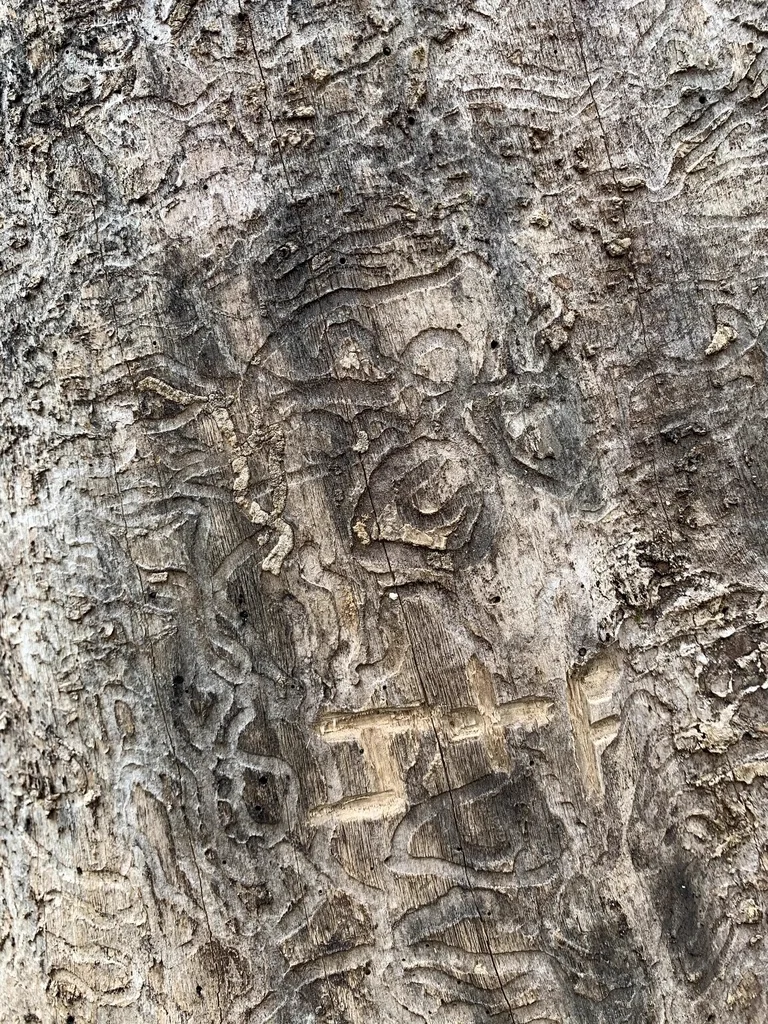
Larval Stage: After hatching, larvae bore into the tree and feed on the inner bark and outer wood. This stage causes all the damage. Larvae create winding, S-shaped tunnels that get wider as they grow. This feeding stops the tree from moving water and nutrients.
Pupal Stage: Larvae spend winter in small chambers in the outer wood or bark. They become pupae in spring. This stage lasts one to two weeks. Then adults chew out through D-shaped exit holes.
Signs of Emerald Ash Borer Infestation
Finding an EAB infestation early gives you more treatment options. However, this beetle is hard to spot in early stages. By the time you see clear signs, the tree may already be heavily infested. A related species, Dermestid Beetles, shares similar characteristics.
Early Warning Signs A related species, June Bugs, shares similar characteristics.
Canopy thinning: Dead branches usually appear at the top of the tree first and spread downward. Look for bare limbs at the crown, often visible before other signs.
Water sprouts: Stressed ash trees may grow dense clusters of new shoots from the trunk or large branches. These sprouts show the tree is struggling.
Bark splits: Vertical cracks in the bark may show larval tunnels beneath. As the tree grows, it pushes against damaged tissue and the bark splits open.
Woodpecker damage: Woodpeckers eat EAB larvae. If you see heavy woodpecker damage with bark flaking off in patches, this often points to an EAB problem underneath.
Definitive Signs
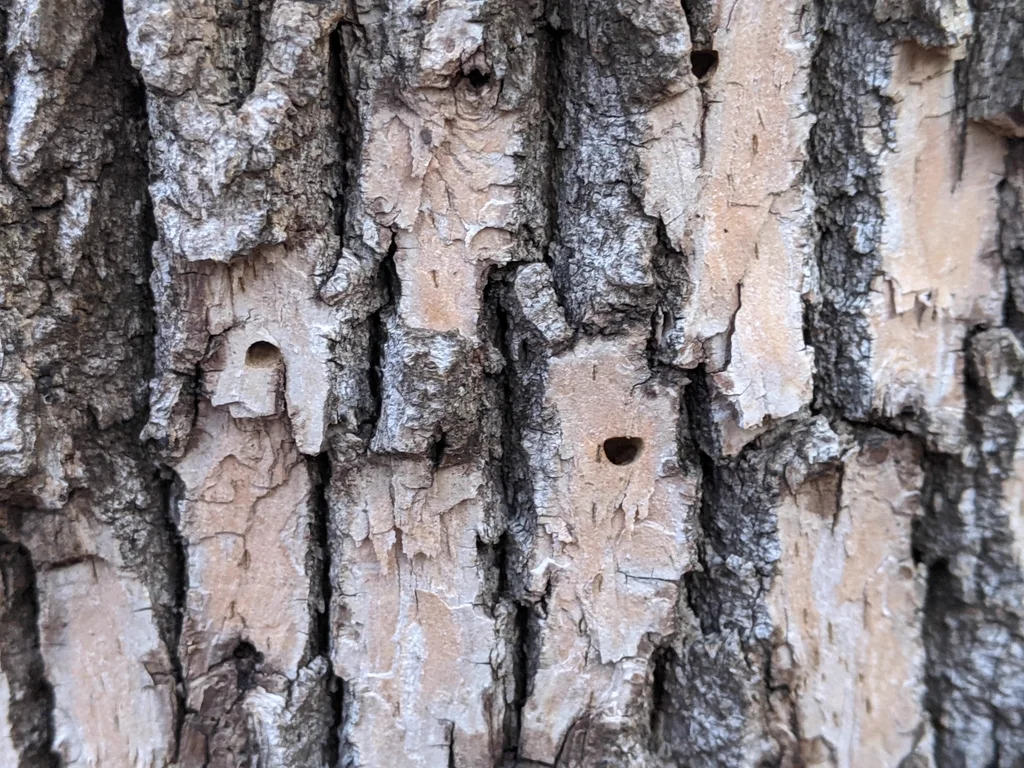
D-shaped exit holes: Adult beetles chew out of the tree and leave D-shaped holes about 1/8 inch (3 to 4mm) wide. These holes are unique to emerald ash borers and confirm an infestation.
S-shaped tunnels: Peeling bark from an infested tree shows winding feeding tunnels packed with fine sawdust. Full-size tunnels run 10 to 20 inches long.
Finding the insects: Spotting the beetles or larvae confirms the problem. Adults may appear on ash leaves in summer. Larvae hide under the bark all year.
Treatment and Management Options
The emerald ash borer creates a big problem because it only attacks ash trees. These trees are common in yards and forests across North America. Property owners with ash trees have several ways to respond.
Professional Tree Treatment
Certified arborists can treat ash trees with insecticides to protect them from EAB. How well treatment works depends on timing and tree health.
Trunk injection works best. Products with emamectin benzoate are injected into the tree’s circulatory system. One treatment can protect the tree for up to two years. Research shows over 95 percent success when trees have lost less than 30 percent of their canopy.
Soil treatments using insecticides like imidacloprid can protect smaller trees under 15 inches in diameter. The tree takes up the chemical through its roots. This method works less well on large trees and may need yearly treatment.
Bark sprays with dinotefuran offer another choice. However, they need more frequent use and may not work as well as trunk injection.
Treatment Considerations
Before paying for treatment, consider these factors:
- Tree condition: Trees missing more than half their canopy are poor choices for treatment
- Tree value: Treatment costs add up over time. Think about the tree’s looks, shade, and effect on property value
- Long-term cost: Protected trees need new treatments every one to three years
- Expert opinion: A certified arborist can tell you if treatment makes sense
Tree Removal
When trees are too damaged to save or treatment costs too much, removal is often the best choice. Dead and dying ash trees become hazards as the wood turns brittle. Taking down a living or recently dead tree costs less and poses fewer risks than waiting until it becomes dangerous.
Biological Control
The USDA and state agencies have released several species of small wasps from Asia that attack emerald ash borers. These tiny wasps do not sting people. They target EAB eggs and larvae. Biological control alone cannot save individual trees. However, it helps lower EAB numbers and may let some ash trees survive in forests.
Prevention and Limiting Spread
Homeowners can help slow the spread of emerald ash borer with simple steps.
Do not move firewood: Moving firewood is the main way EAB spreads long distances. Firewood can also harbor other pests like bark beetles and longhorn beetles. Buy firewood near where you plan to burn it. Many states have rules against moving ash wood.
Know the rules: Check with your state agriculture department for current rules about moving ash wood and firewood.
Watch your ash trees: Learn to spot ash trees and check them for EAB signs. Finding problems early gives you more options. Reporting new cases also helps officials track the spread.
Plant different tree types: When adding new trees, pick a mix of species. This also helps reduce vulnerability to other tree pests like ambrosia beetles. Yards with just one type of tree face higher risk from pests that target that species.
References and Further Reading
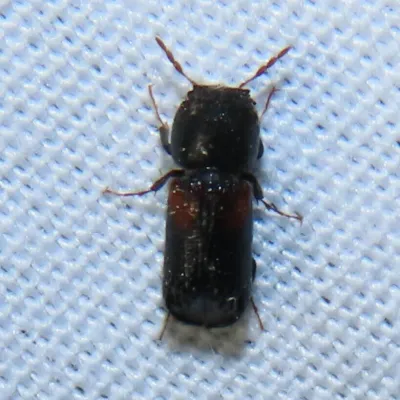
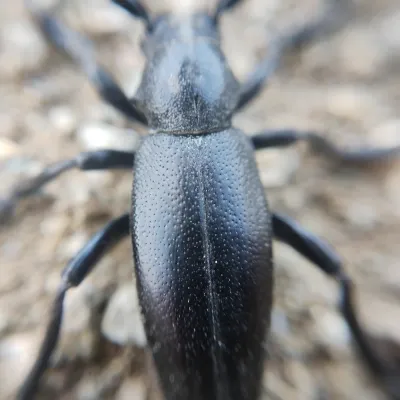
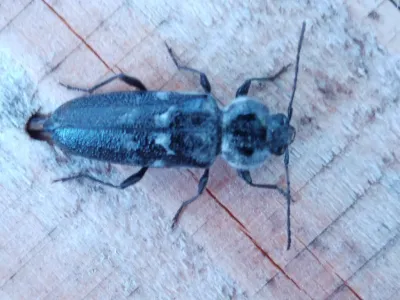
Other Wood Boring Beetles
Explore other species in the wood boring beetles family
Commonly Confused With
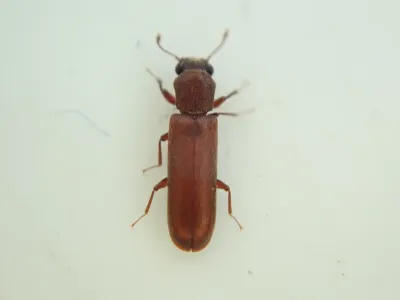
Emerald Ash Borer are often mistaken for these similar pests
Where Emerald Ash Borer Are Found
Hover over states to see their names. Green regions indicate where emerald ash borer have been reported.
Common Questions about Emerald Ash Borer
What is the emerald ash borer?
+
The emerald ash borer (EAB) is an invasive beetle native to Asia that attacks and kills ash trees. First discovered in Michigan in 2002, it has since spread to 37 states and several Canadian provinces. The larvae feed under the bark, cutting off the tree's ability to transport water and nutrients, eventually killing the tree within 2-5 years.
How can I tell if my ash tree has emerald ash borers?
+
Look for D-shaped exit holes (about 1/8 inch wide) in the bark, S-shaped tunneling patterns under loose bark, canopy dieback starting at the top of the tree, increased woodpecker activity, and vertical bark splits. By the time visible damage appears, the infestation is often well established.
What do emerald ash borers look like?
+
Adult emerald ash borers are small, metallic green beetles about 1/2 inch long and 1/8 inch wide, roughly the size of a cooked grain of rice. They have a coppery-red or purple abdomen visible beneath their wing covers. Larvae are cream-colored, flat, and segmented with distinctive bell-shaped body segments.
Which trees do emerald ash borers attack?
+
Emerald ash borers exclusively attack ash trees (Fraxinus species). In North America, this includes white ash, green ash, black ash, and blue ash. All native North American ash species are susceptible. The beetles do not attack other tree species like mountain ash, which is not a true ash.
Can emerald ash borer infestations be treated?
+
Yes, ash trees can be protected with preventive insecticide treatments administered by certified arborists. The most effective treatment is trunk injection of emamectin benzoate, which provides protection for up to two years. Treatment is most successful when started before the tree has lost more than 30 percent of its canopy.
How do emerald ash borers spread?
+
EAB spreads naturally by flying short distances (typically less than 1/2 mile), but long-distance spread is mainly caused by humans moving infested firewood, nursery stock, and ash wood products. This is why quarantines and firewood movement restrictions have been implemented in many areas.
Are emerald ash borers a threat to homeowners?
+
EAB does not infest buildings or harm people directly. However, dead and dying ash trees on your property can become dangerous as branches weaken and fall. Dead ash trees turn brittle quickly and cost more to remove than living trees.
What is being done to control emerald ash borers?
+
Management efforts include biological control using parasitoid wasps from Asia that target EAB, insecticide treatments for valuable trees, and removal of infested trees. The USDA has released several species of parasitoid wasps that attack EAB eggs and larvae, helping to slow the spread.

With five years of hands-on experience in the pest control industry, George Schulz is a registered technician with the Virginia Pest Management Association and a proud third-generation professional in a family business that's been protecting homes for over 57 years. He manages and trains a team of service pros while also leading internal research efforts—recently spearheading a deep-dive review of thousands of documents on pest control materials to hand-pick the most kid and pet friendly, most effective solutions tailored specifically for homes in the DC metro area.