Guinea Wasps Identification Guide
Polistes exclamans
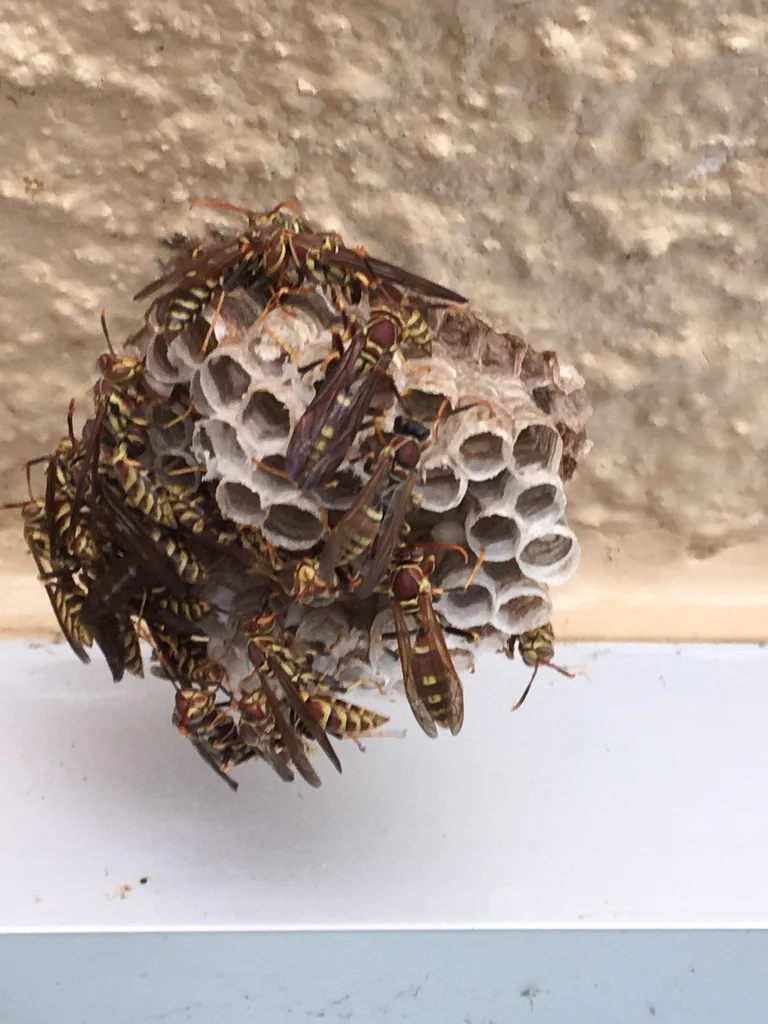
Guinea wasps are common paper wasps found throughout the southern and eastern United States. They build small, open-comb nests near human structures and can sting when their nest is disturbed.
Taxonomy
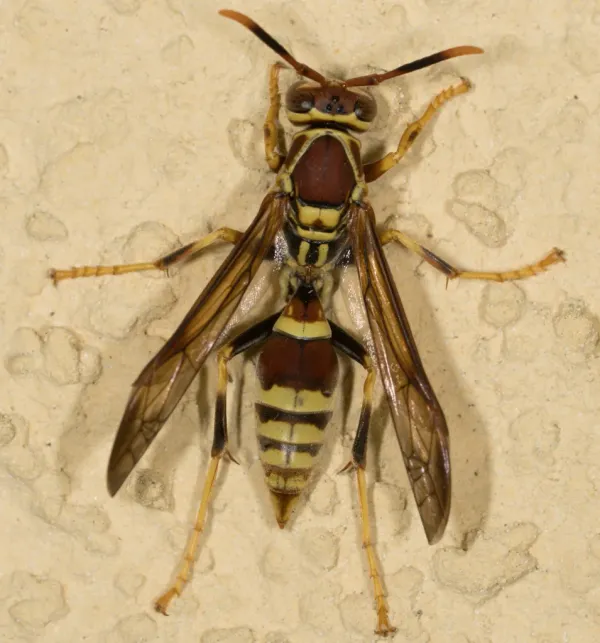
Guinea Wasps Coloration
Common color patterns to help identify guinea wasps
Guinea Wasps
Seasonal Activity
When guinea wasps are most active throughout the year

Where Guinea Wasps Are Found
Hover over states to see their names. Green regions indicate where guinea wasps have been reported.
Guinea Wasps Identification Guide
Physical Characteristics
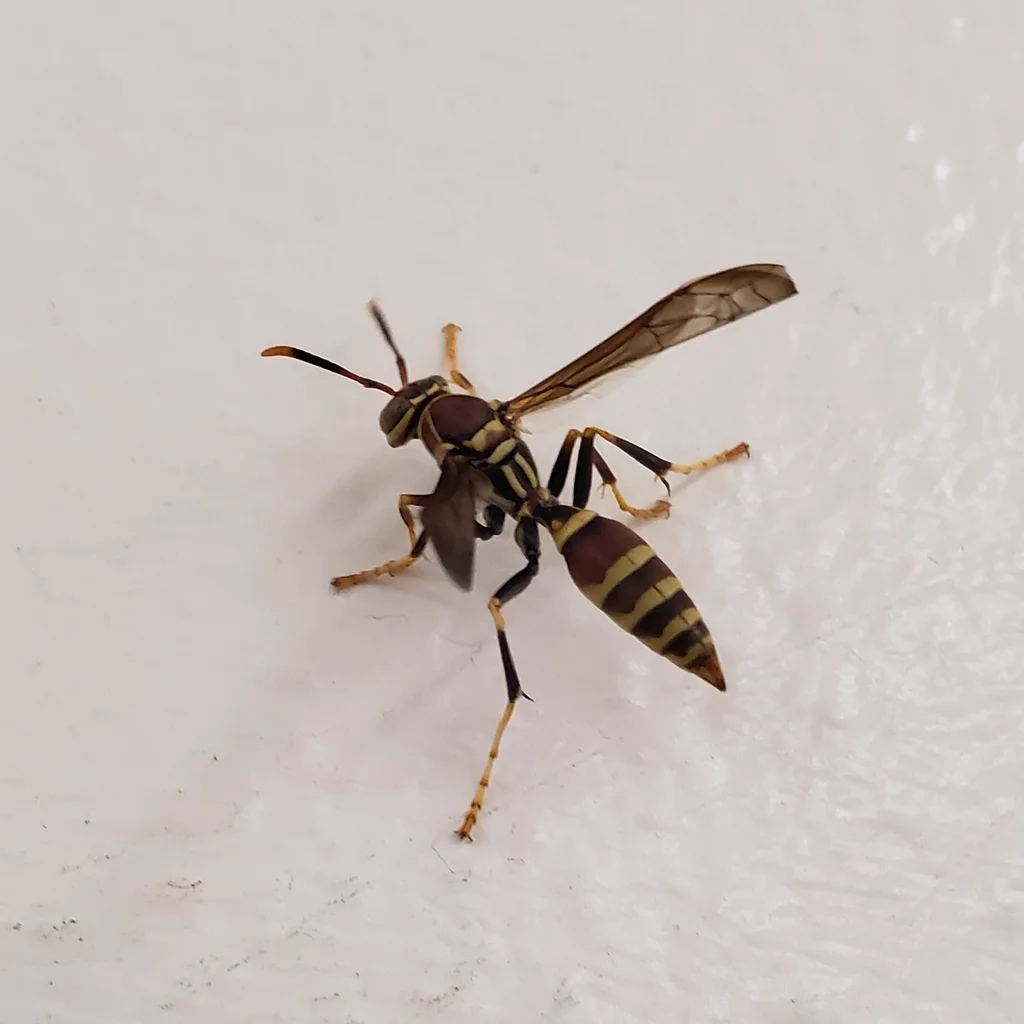
Guinea wasps are medium-sized paper wasps measuring 3/4 to 1 inch in length. Females have fore wings ranging from 13 to 16.5 mm, while males have slightly smaller wings at 12 to 15 mm. Their slender bodies feature the narrow waist typical of paper wasps, and their long legs dangle noticeably during flight.
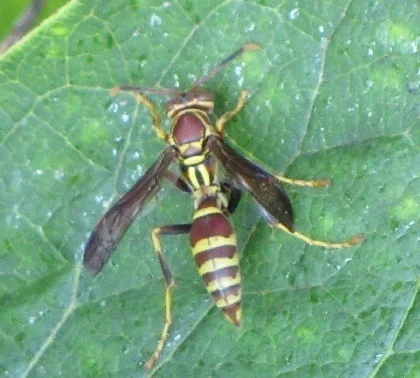
The coloring of guinea wasps varies but usually includes shades of brown, tan, and yellow. The typical southeastern form has yellow markings on the head, thorax, and abdomen. The propodeum (rear section of thorax) usually displays four yellow stripes, and the mesonotum has yellow lines. Their wings are smoky in color with a purplish tint and fold lengthwise when at rest. A more variable form found in some regions appears more red-brown overall.
One helpful identification feature is their antennae. Guinea wasp antennae are banded with red, black, and yellow colors. Most other paper wasps have antennae of a single color. Males are easy to identify by their bulging eyes, squared-off clypeus (face plate), and slender antennae.
Common Species
Polistes exclamans is the only species commonly called the guinea wasp. However, it is often confused with other paper wasps in the genus Polistes:
-
Northern Paper Wasp (Polistes fuscatus): Darker overall with more variable coloring and less yellow marking.
-
European Paper Wasp (Polistes dominula): Has brighter yellow and black coloring with orange antennae tips.
-
Red Paper Wasp (Polistes carolina): Uniformly rust-red colored without the yellow banding seen in guinea wasps.
Guinea Wasps Behavior and Biology
Guinea wasps are social insects that live in small colonies. Most nests have a single queen who lays all the eggs. However, the high mortality rate among queens and workers has led to some interesting behaviors in this species. A related species, Cow Killers, shares similar characteristics.
Nesting Habits
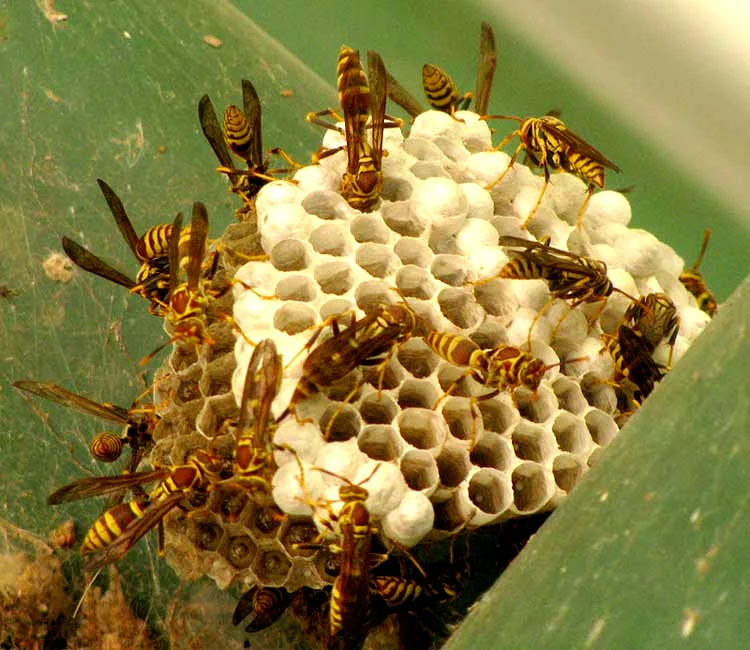
Guinea wasps build paper nests from chewed wood fibers mixed with saliva. Their nests have a single layer of open cells, typically reaching an upper limit of around 500 cells. Unlike many other wasp nests, guinea wasp nests lack an outer paper envelope covering the comb.
These wasps show a strong preference for man-made structures. Research has found that guinea wasps more readily use artificial nesting sites than other paper wasp species. They choose well-lit, open locations such as:
- Under roof eaves and overhangs
- Porch ceilings and covered walkways
- Inside garages, sheds, and barns
- Window frames and door frames
- Light fixtures and utility boxes
Due to solitary nest founding by queens, guinea wasps have expanded their range significantly in recent decades. They now occupy much of the eastern half of the United States and continue spreading northward, likely due to warming temperatures.
Diet and Feeding
Adult guinea wasps feed primarily on nectar. They visit flowers frequently and help with pollination. The species also hunts caterpillars and other soft-bodied insects to feed the developing larvae.
Colony members practice trophallaxis, which is mouth-to-mouth exchange of regurgitated liquids like nectar. This behavior helps distribute food among adults and larvae throughout the nest. Workers also provide allomaternal care, meaning they help provision larvae and repair the nest even though they are not the biological mothers.
Colony Cycle and Social Structure
The colony cycle begins in spring when overwintered queens emerge and start new nests. Each queen builds a small starter nest and raises the first batch of workers herself. Once workers mature, they take over nest construction, foraging, and brood care.
An interesting aspect of guinea wasp society is that age determines rank. The older a wasp is, the higher its position in the colony hierarchy. Worker mortality is high, with most workers living only 14 to 16 days. This high turnover, combined with queen mortality from predators and parasites, often leads to the formation of satellite nests nearby.
Colonies reach peak size in late summer, following a similar cycle to yellowjackets and other social wasps. At this time, new queens and males are produced for mating. Mated queens find protected spots to overwinter, while the rest of the colony dies off with the first hard frosts.
Predators and Threats
Guinea wasps face significant predation pressure. Their small, open nests make them vulnerable to attack. Birds, particularly passerine species like mockingbirds and grackles, frequently target both adult wasps and the developing brood. A four-year study in Texas found that bird predation causes more nest failures than all other factors combined.
Parasites also take a heavy toll. The moth Chalcoela iphitalis lays eggs in guinea wasp nests, and its larvae feed on wasp pupae. The parasitic wasp Elasmus polistis also attacks guinea wasp colonies.
How We Treat for Guinea Wasps
When treating guinea wasp infestations, our technicians follow a structured approach:
-
Nest Location: We first identify all active nests on the property. Guinea wasps often build multiple nests in different locations, so thorough inspection is essential.
-
Direct Treatment: A residual insecticide is applied directly to the nest. For nests under eaves or on structures, we use pressurized sprayers that allow treatment from a proper distance for safety.
-
Nest Removal: After treatment eliminates the colony, we can remove the nest structure if desired. This prevents other wasps from attempting to reuse the site.
-
Prevention Guidance: We advise customers on reducing attractants around their property. Sealing gaps and cracks in structures helps eliminate potential nesting sites.
-
Callback Coverage: Customers on ongoing service plans receive free callbacks if wasps return between regular visits.
References
Other Wasps
Explore other species in the wasps family
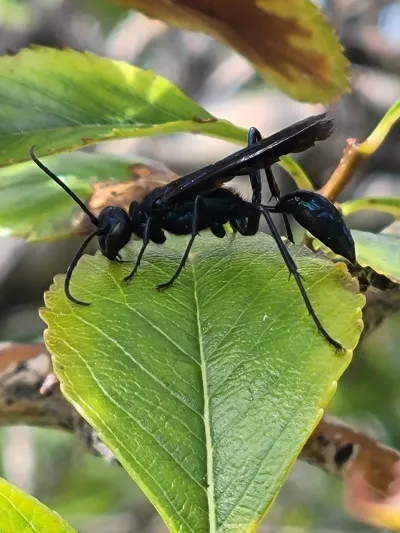
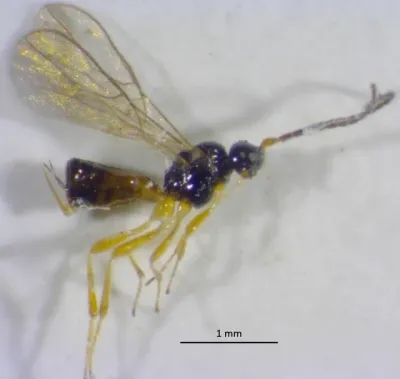
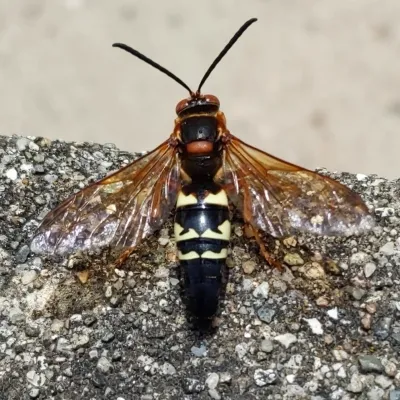
Commonly Confused With
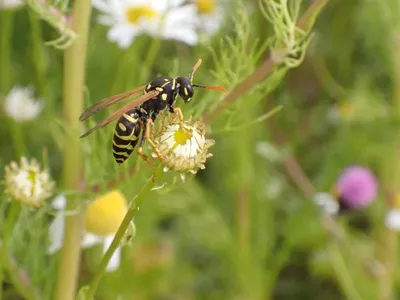
Guinea Wasps are often mistaken for these similar pests
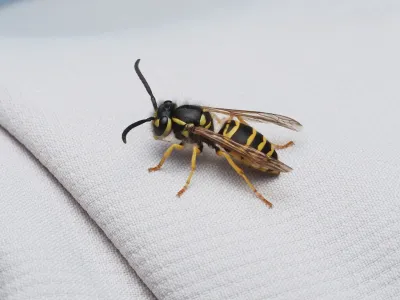
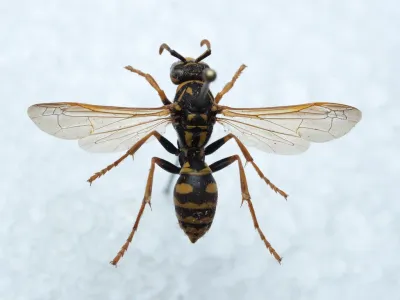
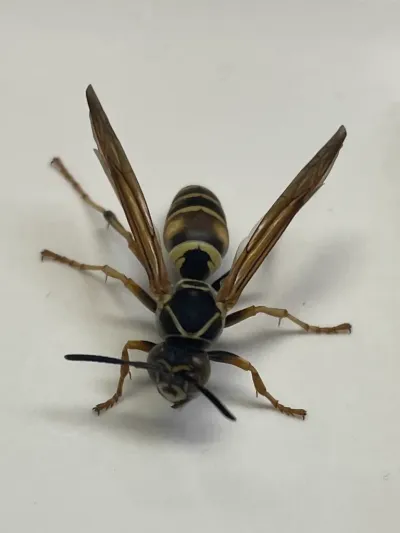
Where Guinea Wasps Are Found
Hover over states to see their names. Green regions indicate where guinea wasps have been reported.
Common Questions about Guinea Wasps
Are guinea wasps aggressive?
+
Guinea wasps are not typically aggressive unless their nest is disturbed. They will defend their colony if threatened, and their stings can be painful. People with allergies to wasp stings should exercise caution around any nest.
What do guinea wasps look like?
+
Guinea wasps are slender wasps about 3/4 to 1 inch long. They have brown to tan bodies with yellow markings on the head, thorax, and abdomen. Their wings are smoky-colored with a purplish tint and fold lengthwise when at rest.
Where do guinea wasps build their nests?
+
Guinea wasps prefer well-lit, open sites near man-made structures. Common locations include under eaves, on porch ceilings, inside sheds and barns, and around window frames. Their nests are open-comb structures without an outer paper envelope.
How do I tell guinea wasps apart from yellowjackets?
+
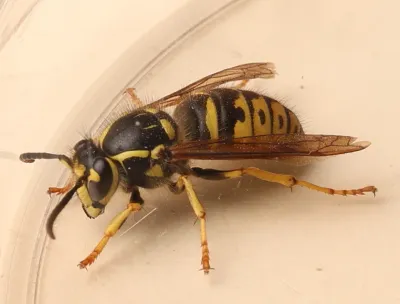
Guinea wasps are more slender with longer legs and a narrower waist than yellowjackets. They also have more brown and tan coloring compared to the bold black and yellow pattern of yellowjackets. Guinea wasp nests are open and exposed, while yellowjacket nests are enclosed.
What do guinea wasps eat?
+
Adult guinea wasps feed on nectar from flowers. They hunt caterpillars and other soft-bodied insects to feed their larvae. The larvae receive chewed-up insect prey, while adults share regurgitated nectar through mouth-to-mouth feeding.
How long do guinea wasps live?
+
Worker guinea wasps typically live 14 to 16 days, though some have been observed living up to 102 days. Queens live longer and can survive through winter to start new colonies the following spring.
Should I remove a guinea wasp nest myself?
+
We recommend professional treatment for guinea wasp nests, especially those in high-traffic areas. Disturbing a nest can result in multiple stings. Our technicians have the proper equipment and products to eliminate colonies effectively.

With five years of hands-on experience in the pest control industry, George Schulz is a registered technician with the Virginia Pest Management Association and a proud third-generation professional in a family business that's been protecting homes for over 57 years. He manages and trains a team of service pros while also leading internal research efforts—recently spearheading a deep-dive review of thousands of documents on pest control materials to hand-pick the most kid and pet friendly, most effective solutions tailored specifically for homes in the DC metro area.