Asian Longhorned Ticks Identification Guide
Haemaphysalis longicornis
Asian longhorned ticks are invasive parasites from East Asia that can reproduce without mating and rapidly build large populations. They pose health risks to humans, pets, and livestock throughout the eastern United States.
Taxonomy
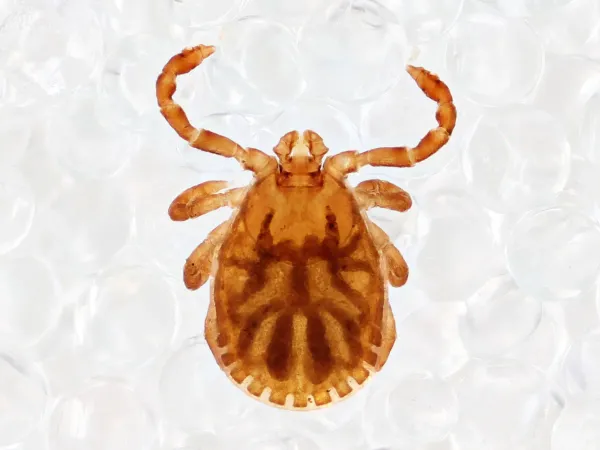
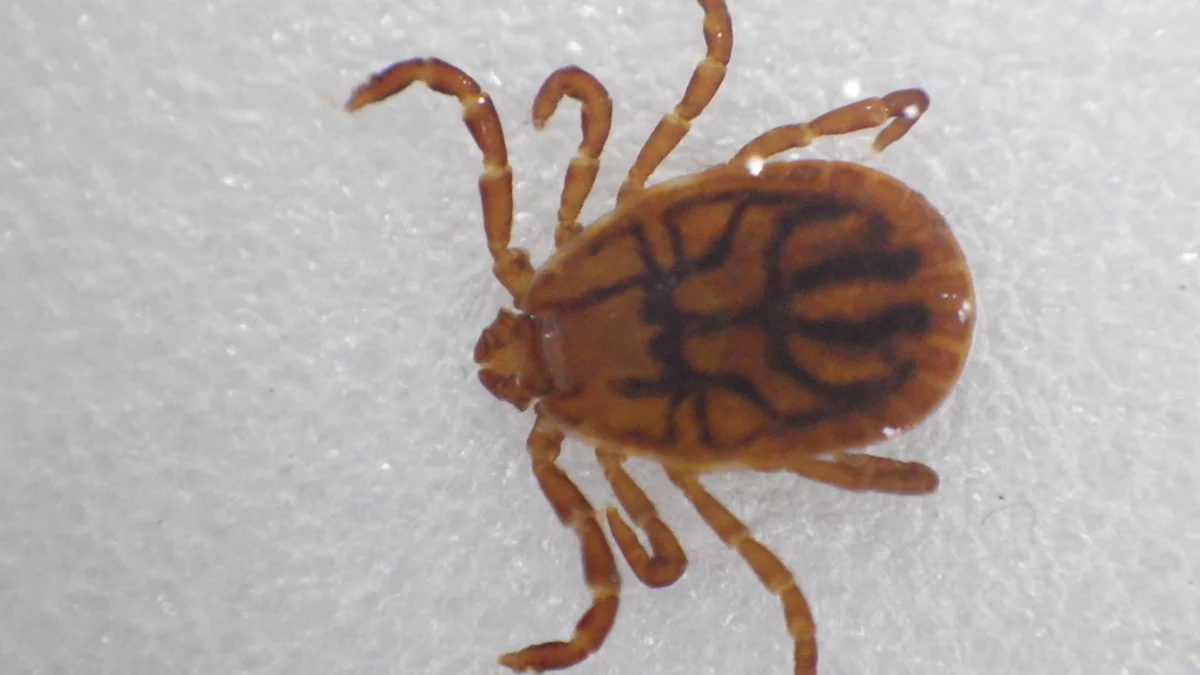
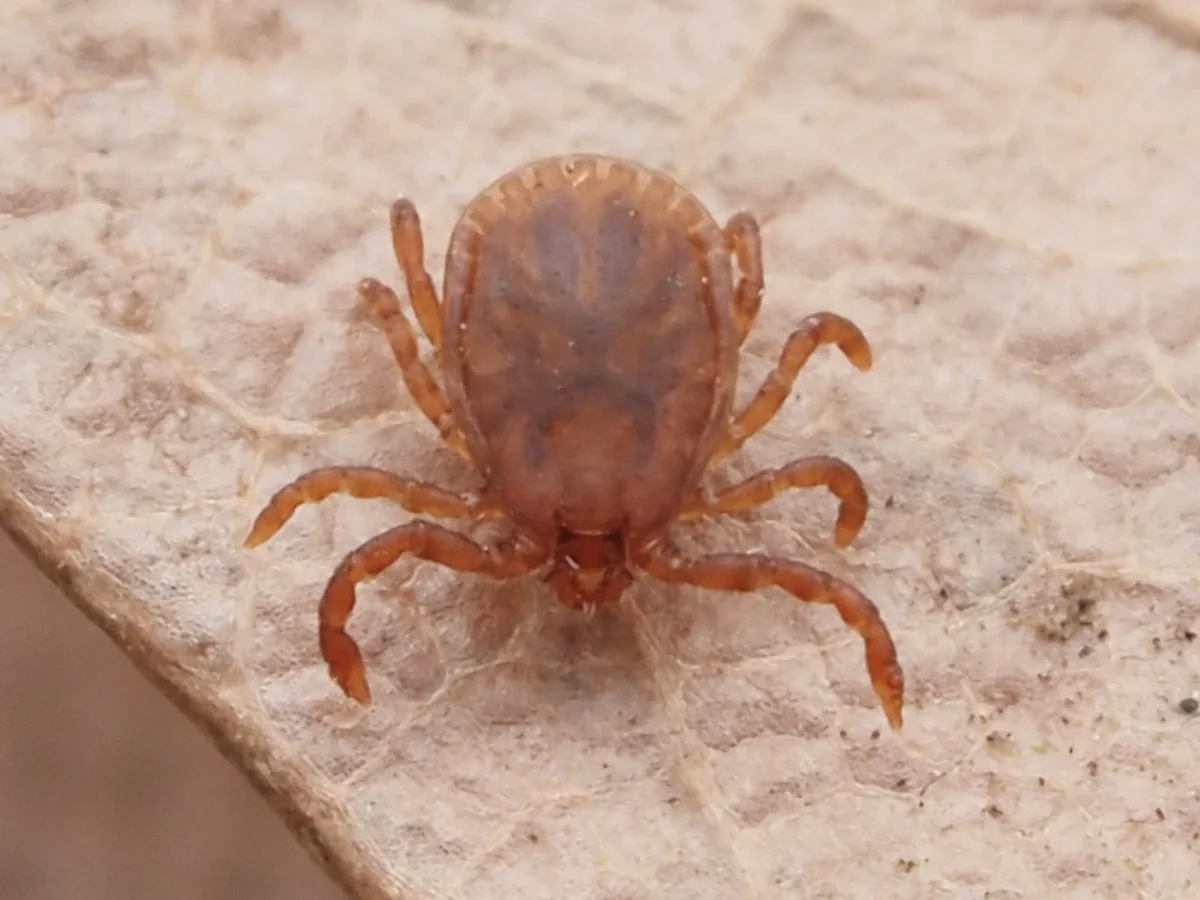
Asian Longhorned Ticks Coloration
Common color patterns to help identify asian longhorned ticks
Asian Longhorned Ticks
Seasonal Activity
When asian longhorned ticks are most active throughout the year



Where Asian Longhorned Ticks Are Found
Hover over states to see their names. Green regions indicate where asian longhorned ticks have been reported.
Asian Longhorned Tick Identification Guide
Physical Characteristics
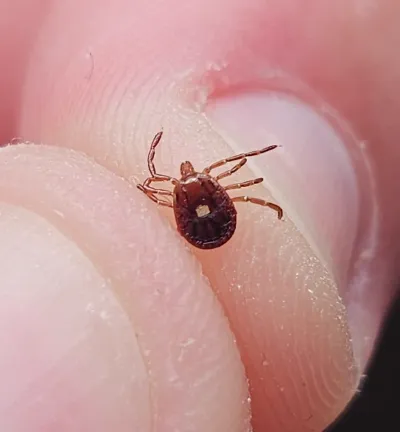
Asian longhorned ticks are small, oval parasites about 2 to 3 millimeters long before feeding. They are brown to reddish-brown with no markings on their backs. After a blood meal, their bodies swell and can reach 10 millimeters or more.
Adult ticks and nymphs have eight legs. Larvae have six legs. Unlike some other tick species, Asian longhorned ticks do not have eye spots on the sides of their body near the second pair of legs. This helps tell them apart from brown dog ticks, which look very similar.
Asian longhorned ticks have short mouthparts compared to other ticks. Their body is widest at the back and narrows toward the head, giving them a pear-like shape from above.
How to Tell Asian Longhorned Ticks Apart from Other Ticks
Asian longhorned ticks can be easily confused with several native tick species in North America. Here are the key differences.
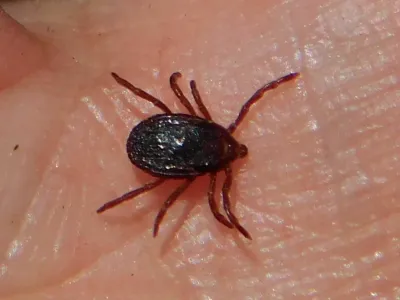
Brown dog tick. The brown dog tick looks very similar but has visible eye spots on the sides of its body near the second pair of legs. Asian longhorned ticks lack these eye spots entirely.
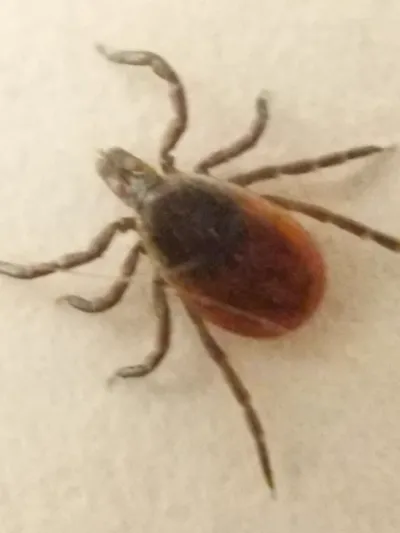
Deer tick (black-legged tick). Deer ticks have a distinctive two-tone appearance with a reddish-orange body and dark black legs. Asian longhorned ticks are more uniformly brown.
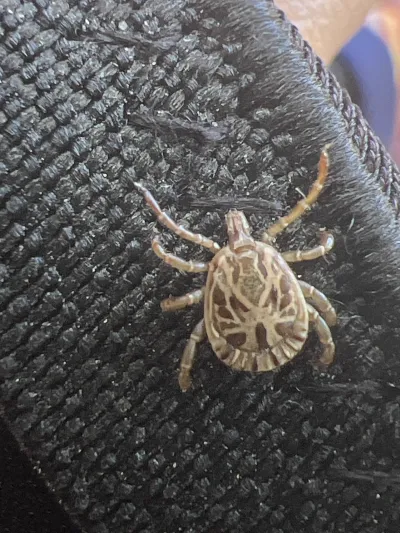
Lone star tick. Female lone star ticks have a single white spot on their backs. Males have white streaks along the edges. Asian longhorned ticks have no such markings.
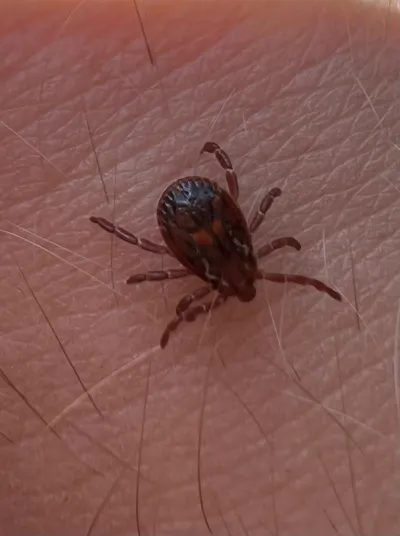
American dog tick. These ticks are larger than Asian longhorned ticks and have white or silver markings on their backs.
For exact identification, a trained expert may need to look at the tick under a magnifier. Damaged ticks can be hard to identify. Our tick identification chart can help you compare common tick species.
Asian Longhorned Tick Behavior and Biology
Life Cycle
Asian longhorned ticks go through four life stages: egg, larva, nymph, and adult. Each stage after the egg needs a blood meal to grow to the next stage. The full life cycle takes one to two years depending on weather conditions.
Female ticks lay eggs in late spring and early summer. A single female can produce up to 2,000 eggs over two to three weeks. The eggs hatch into larvae in late summer. Larvae climb onto low vegetation and wait for a host to pass by.
After feeding, larvae drop off the host and spend winter on the ground. They turn into nymphs the next spring. Nymphs find another host to feed on in early summer. After this meal, they become adults and find a final host in mid-summer. Adult females feed, drop to the ground, and lay eggs to start the cycle again.
Reproduction Without Males
One of the most notable features of Asian longhorned ticks is their ability to reproduce without mating. Female ticks can lay fertile eggs on their own. Each egg is a clone of the mother.
Because of this, male Asian longhorned ticks are very rare in North America. A single female tick brought to a new area can start an entire population by herself. This allows populations to grow fast and makes them hard to control.
Host Range and Feeding Behavior
Asian longhorned ticks feed on many different animals. They have been found on cattle, horses, sheep, goats, deer, dogs, cats, pigs, bears, foxes, raccoons, rabbits, and humans.
Unlike some tick species, Asian longhorned ticks have not been found on rodents like white-footed mice, shrews, or chipmunks. These small mammals often carry Lyme disease bacteria, so the tick’s avoidance of them may limit disease spread.
Ticks find hosts through a behavior called questing. They climb onto grass and low plants, usually no more than three feet high. They hold out their front legs to grab passing animals or people. They sense hosts through body heat, breath, and movement.
Seasonal Activity
Asian longhorned ticks are most active during warmer months. Adult ticks show peak activity in late July. Nymphs are most active from mid-June through mid-July. Larvae become active in late August and remain active into early fall.
Activity drops during cold winter months, though ticks can survive freezing weather. Eggs laid in late spring hatch when temperatures warm up the next year.
Health Risks and Disease Concerns
Diseases in Their Native Range
In East Asia, Asian longhorned ticks carry more than 30 germs that can make people and animals sick. They spread severe fever with thrombocytopenia syndrome virus (SFTSV), a serious disease found in China, Japan, and Korea. Symptoms include fever, vomiting, diarrhea, low blood pressure, and life-threatening problems.
These ticks also spread diseases in cattle that cause major losses for farmers in affected areas.
Disease Risk in North America
CDC researchers have been studying what diseases Asian longhorned ticks can spread in North America. Current evidence shows these ticks are unlikely to spread Lyme disease in the United States.
However, lab studies show that Asian longhorned ticks can carry and spread Rocky Mountain spotted fever bacteria. The first confirmed human bite in the U.S. happened in 2018 in Westchester County, New York. The person did not get sick.
While scientists are still studying what diseases this tick can spread here, their ability to build large populations makes them a concern for health officials.
Impact on Livestock
Asian longhorned ticks are a major threat to farms. Their fast reproduction means a single animal can end up covered with thousands of ticks. Heavy tick loads cause blood loss, weight loss, less milk production, and sometimes death.
In Australia and New Zealand, where these ticks have lived for decades, they cause major losses for cattle farmers by spreading blood parasites.
Medical Disclaimer: This information is for educational purposes only and is not medical advice. If you suspect a tick bite or experience symptoms of a tick-borne illness, consult a healthcare provider promptly.
How We Treat for Asian Longhorned Ticks
Asian longhorned tick populations peak during summer months. Our treatment approach targets ticks at their most active times and in the areas where they are most likely to be found.
Granular applications in March and November. We apply granular treatments to wooded edges, brush areas, and landscaped zones. These treatments help reduce tick populations before and after the peak summer season.
Topical sprays from April to October. We spray the transition zones on your property where maintained lawn meets more natural or wooded terrain. This area, called the ecotone, is where ticks are most likely to quest for hosts.
Property assessment. Our technicians evaluate your property to identify areas with high tick potential. We look for shaded, humid areas with leaf litter and overgrown vegetation where ticks thrive.
Ongoing monitoring. Because Asian longhorned ticks are a newer invasive species, we stay informed about their spread and adjust treatment strategies as new research becomes available.
Prevention Tips for Homeowners
Reducing tick habitat on your property is an important part of tick management:
- Keep grass mowed short, especially near wooded areas and fences
- Remove leaf litter, brush piles, and tall weeds where ticks shelter
- Create a 3-foot barrier of wood chips or gravel between wooded areas and your lawn
- Stack firewood away from the house in a dry area
- Trim trees and shrubs to allow more sunlight, which reduces humidity that ticks prefer
- Check pets regularly for ticks, especially after they spend time in tall grass or wooded areas
When spending time outdoors in tick-prone areas:
- Wear long pants tucked into socks and long-sleeved shirts
- Choose light-colored clothing to spot ticks more easily
- Apply EPA-registered repellents containing DEET, picaridin, or oil of lemon eucalyptus
- Walk in the center of trails to avoid brushing against vegetation
- Check yourself, children, and pets thoroughly after being outdoors
- Shower within two hours of coming indoors to wash off unattached ticks
- Place clothes in a dryer on high heat for 10 minutes to kill any ticks
References and Further Reading
- Northeast Regional Vector-Borne Disease Center - Asian Longhorned Tick
- CDC - Asian Longhorned Tick Distribution
- Penn State Extension - Asian Longhorned Tick
- Cornell CALS - Asian Longhorned Tick
- Ohio State University - Asian Longhorned Ticks in Ohio
- North Central Pest Management Center - Asian Longhorned Tick
Other Ticks
Explore other species in the ticks family
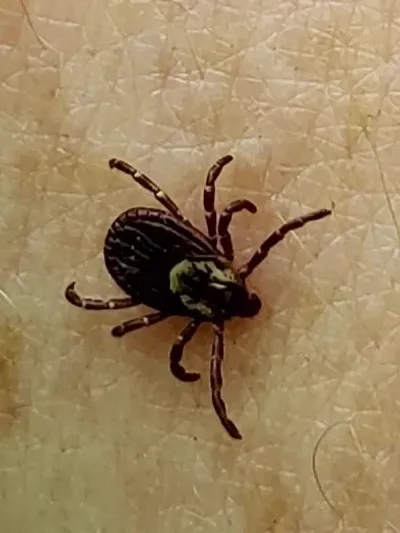
Commonly Confused With
Asian Longhorned Ticks are often mistaken for these similar pests
Where Asian Longhorned Ticks Are Found
Hover over states to see their names. Green regions indicate where asian longhorned ticks have been reported.
Common Questions about Asian Longhorned Ticks
What does an Asian longhorned tick look like?
+
Asian longhorned ticks are small, brown ticks about 2-3 millimeters long without any distinctive markings or patterns on their backs. They look similar to brown dog ticks but lack the eye spots on the sides of their body near the second pair of legs.
Where are Asian longhorned ticks found in the United States?
+
Asian longhorned ticks have been confirmed in over 19 states, mostly along the East Coast. They are established in states from Connecticut to Georgia, and as far west as Arkansas and Missouri. The tick continues to expand its range.
Can Asian longhorned ticks spread Lyme disease?
+
Research from the CDC indicates that Asian longhorned ticks are unlikely to contribute to Lyme disease transmission in the United States. However, they can carry and transmit other pathogens, including those that cause Rocky Mountain spotted fever in laboratory settings.
Why are Asian longhorned ticks so hard to control?
+
Asian longhorned ticks can reproduce through parthenogenesis, meaning females lay fertile eggs without mating. A single female can produce up to 2,000 eggs, allowing populations to grow rapidly from just one tick.
What diseases can Asian longhorned ticks transmit?
+
In their native range, Asian longhorned ticks are associated with over 30 pathogens including severe fever with thrombocytopenia syndrome virus (SFTSV). In the U.S., researchers are still studying what pathogens they can transmit, but lab tests show they can acquire and spread Rocky Mountain spotted fever bacteria.
When are Asian longhorned ticks most active?
+
Adult Asian longhorned ticks are most active in late July. Nymphs are active from mid-June to mid-July, and larvae show peak activity in late August. Activity generally spans from late spring through early fall.
How do I protect myself from Asian longhorned ticks?
+
Wear long pants and sleeves when walking through tall grass or wooded areas. Use EPA-registered repellents containing DEET, picaridin, or oil of lemon eucalyptus. Check yourself, children, and pets after being outdoors, and dry clothes on high heat for 10 minutes to kill any hidden ticks.

With five years of hands-on experience in the pest control industry, George Schulz is a registered technician with the Virginia Pest Management Association and a proud third-generation professional in a family business that's been protecting homes for over 57 years. He manages and trains a team of service pros while also leading internal research efforts—recently spearheading a deep-dive review of thousands of documents on pest control materials to hand-pick the most kid and pet friendly, most effective solutions tailored specifically for homes in the DC metro area.