Rough Stink Bug Identification Guide
Brochymena spp.
Rough stink bugs are native North American insects with bark-like camouflage that overwinter in homes and are often brought indoors on firewood.
Taxonomy
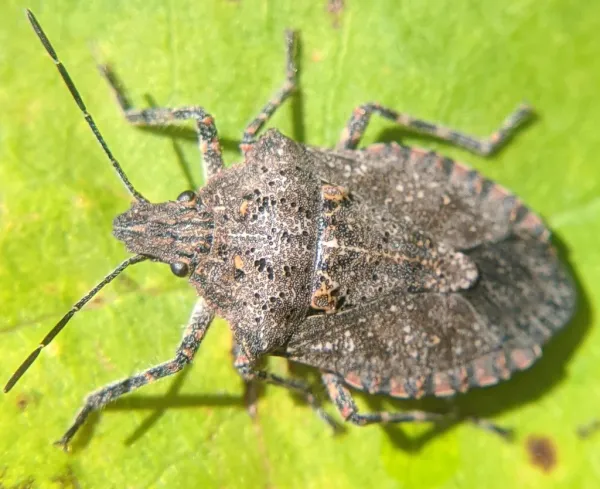
Rough Stink Bug Coloration
Common color patterns to help identify rough stink bug
Rough Stink Bug
Seasonal Activity
When rough stink bug are most active throughout the year
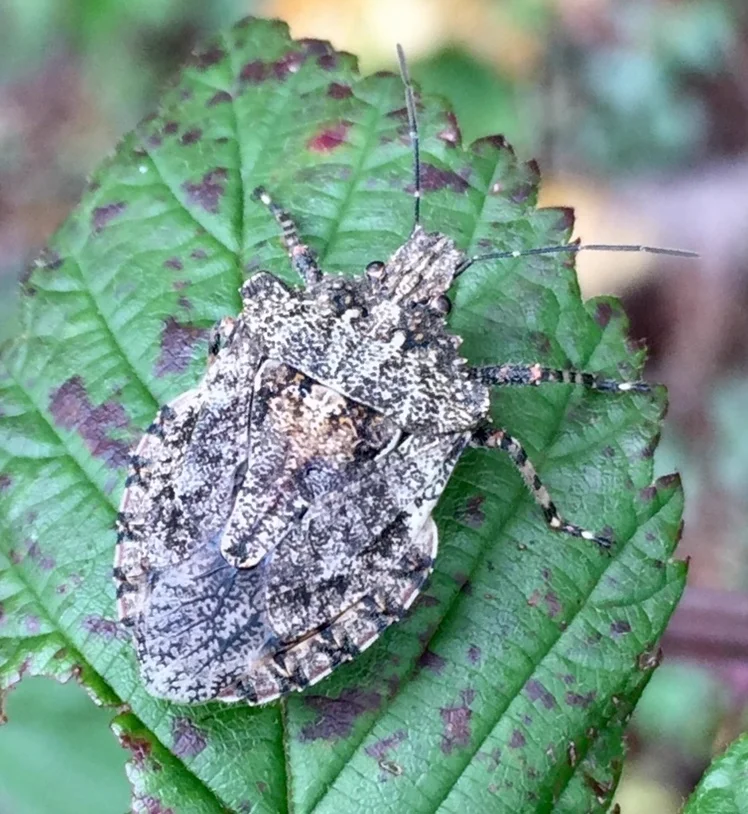
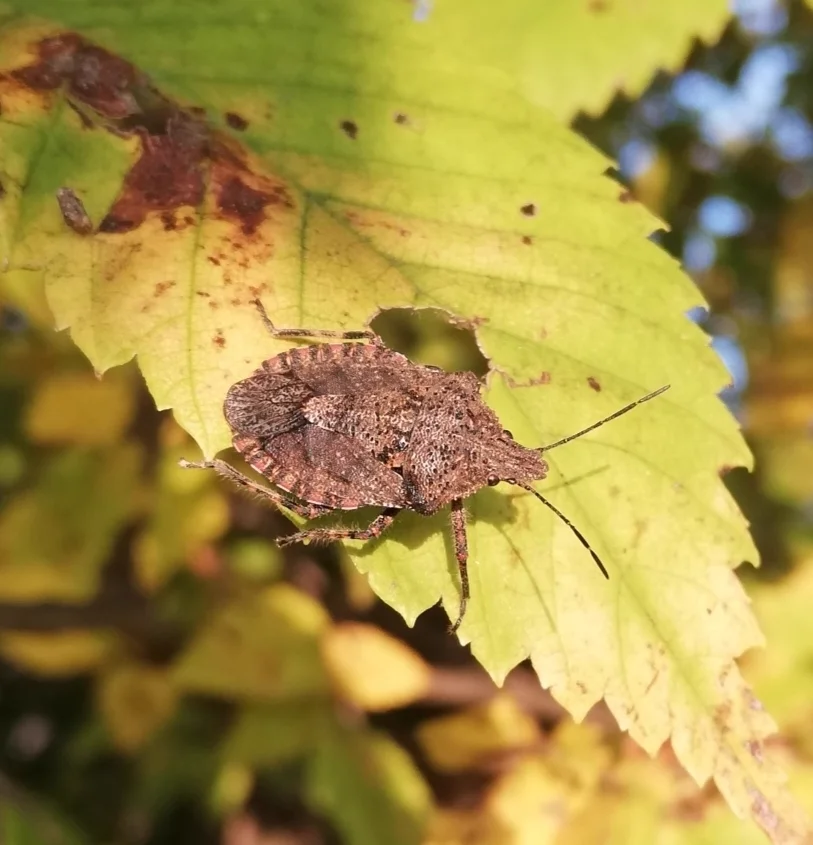
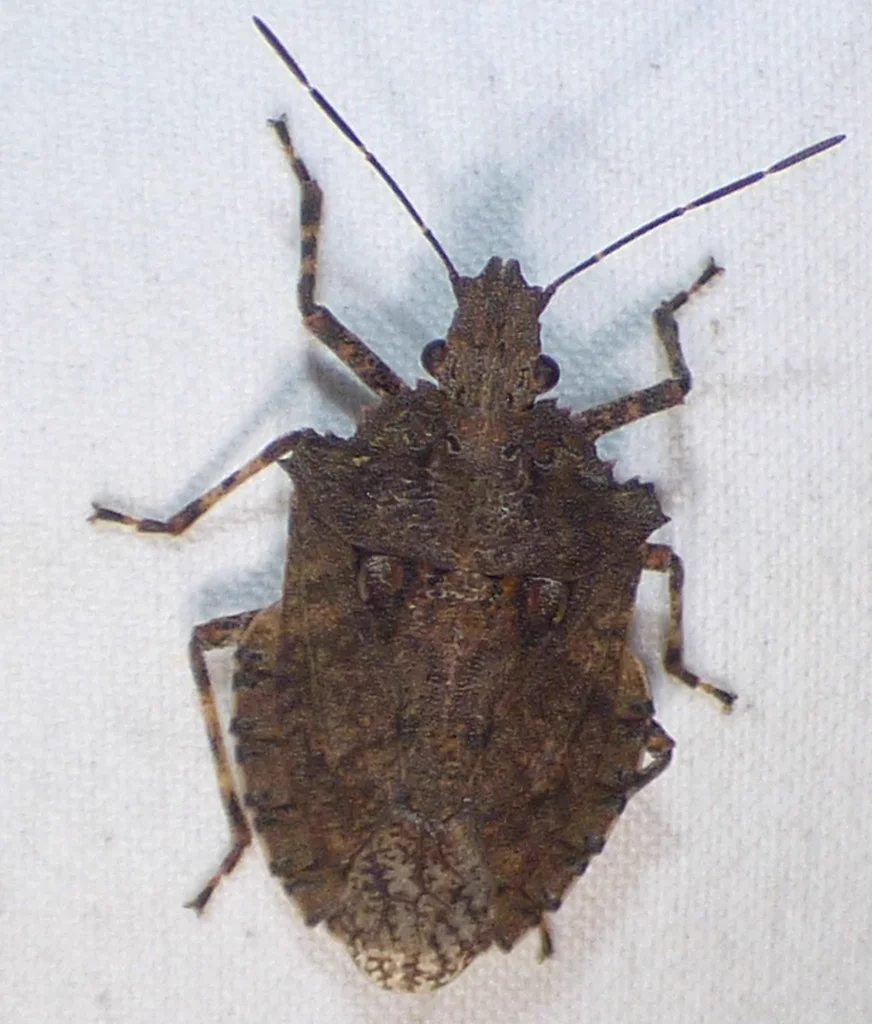

Where Rough Stink Bug Are Found
Hover over states to see their names. Green regions indicate where rough stink bug have been reported.
Rough Stink Bug Identification Guide
Physical Characteristics
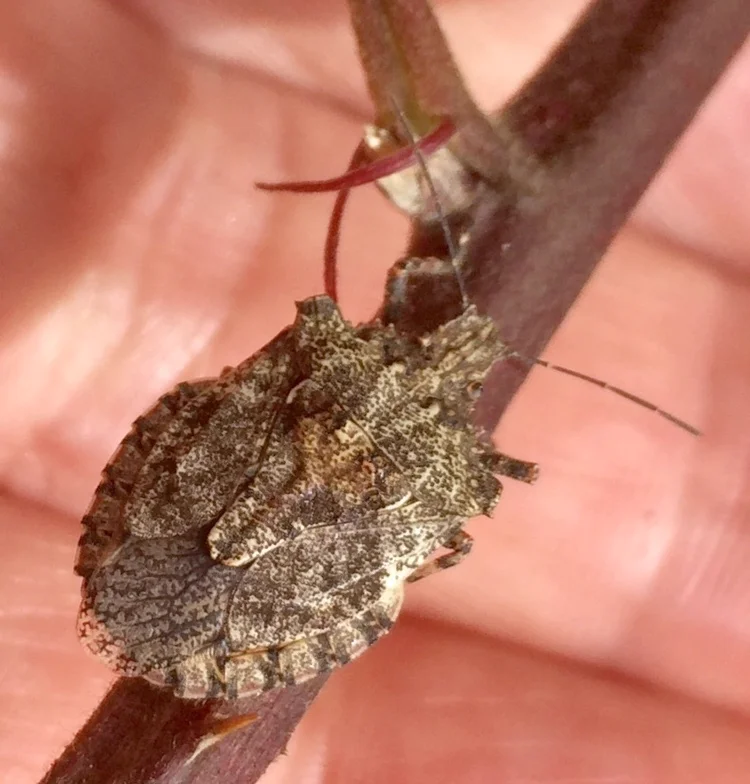
Rough stink bugs (Brochymena spp.) are broad, flattened insects. They measure 13-22 mm in length, making them slightly larger than the brown marmorated stink bug. Their name comes from the rough, bumpy look of their bodies. This texture closely matches tree bark or lichen. Their camouflage works so well that they can be hard to spot when resting on trees.
The body color is mottled gray and brown with speckling that varies between bugs. Key features include a long head with a squared-off shape. The antennae sit noticeably in front of the eyes. The thorax has toothed edges along the sides that look like small cog wheels. Their hind legs have two white bands, which helps tell them apart from similar species.
Like all stink bugs, rough stink bugs have a shield-shaped body. They have wings and can fly, but they are weak fliers and only travel short distances.
Common Species in North America
The genus Brochymena contains 17 species found across North America. They live from the United States and Canada down into Panama. The two most common species are:
-
Brochymena quadripustulata (Four-humped Stink Bug): Named for four small bumps on its back. This species lives east of the Rocky Mountains. It is the rough stink bug most often found in homes.
-
Brochymena affinis: Looks similar to B. quadripustulata. It lives in slightly different areas and has small differences in thorax markings.
Both species act alike and live in the same places. This makes telling them apart hard without a close look.
Rough Stink Bug Behavior and Biology
Habitat and Lifestyle
Rough stink bugs are tree-dwelling insects. They spend most of their lives on trees and shrubs. Their coloring helps them blend in with bark. This makes them hard to see for both predators and people. You can find them in woodlands, orchards, gardens, and any area with mature trees. A related species, Shield Bugs, shares similar characteristics.
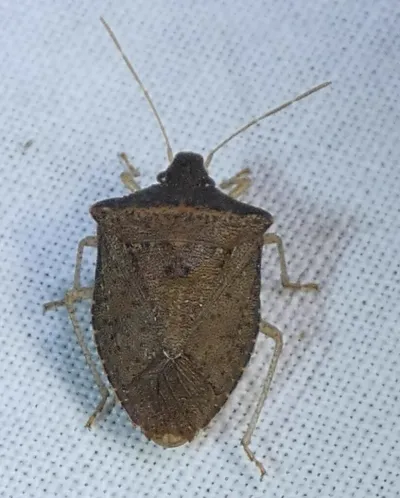
These bugs prefer deciduous trees. They have been found on ash, walnut, willow, boxelder, oak, and many others. They rest on tree trunks and branches during the day and become more active at dusk. A related species, One-Spotted Stink Bug, shares similar characteristics.
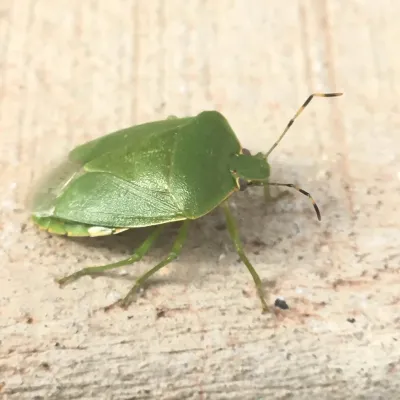
Diet and Feeding A related species, Brown Stink Bug, shares similar characteristics.
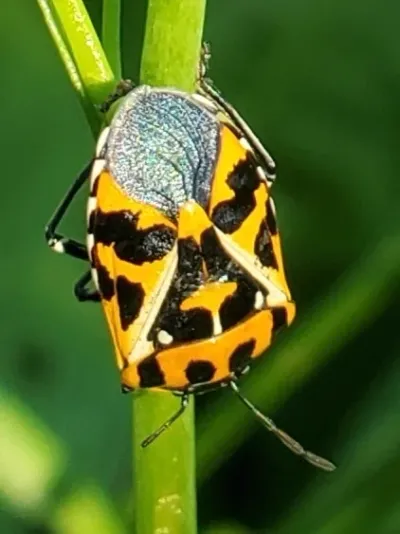
Rough stink bugs have needle-like mouthparts that they use to feed on plant fluids. They mainly eat sap from tree bark and seeds. Unlike some stink bugs that damage crops, rough stink bugs are not major plant pests. They prefer woody plants over farm crops. A related species, Harlequin Bug, shares similar characteristics.
Rough stink bugs are also opportunistic predators. They will feed on caterpillars, beetle larvae, and other soft-bodied insects when the chance arises.
Life Cycle and Reproduction
Adult rough stink bugs spend the winter in sheltered spots. These include leaf litter, mulch, loose tree bark, log piles, and stacks of firewood. The firewood connection often brings them into homes by accident when people carry wood inside during winter.
Adults come out in late spring to mate. Females lay clusters of 10-20 eggs on twigs and branches. The adults usually die by the end of June. Nymphs grow during the summer months. There is only one generation per year, unlike some stink bugs that have multiple broods.
Nymphs go through five growth stages before becoming adults in late summer or early fall. The new adults then look for places to spend the winter, completing the yearly cycle.
Overwintering and Home Entry
The most common way rough stink bugs get inside homes is by hitching a ride on firewood. When you bring in wood that was stacked outside, any stink bugs hiding in the bark or between logs come too. Once inside the warm house, they wake up and wander into living spaces.
Rough stink bugs may also enter homes in fall, drawn to the warmth of buildings. However, they do not gather in large numbers like brown marmorated stink bugs or boxelder bugs. You usually find them alone or in small groups.
How We Treat for Rough Stink Bugs
Rough stink bugs are mostly a nuisance pest. Like other bugs that seek shelter for winter, the best approach focuses on keeping them out rather than treating after they get in.
Preventative Exterior Treatments
Before temperatures drop in fall (usually in October), we apply dust treatments to exterior voids where stink bugs commonly hide and enter homes. Target areas include weep holes in brick, gaps behind siding, and spaces around windows and doors. This creates a barrier that keeps insects out. We also treat the exterior perimeter with a repellent to stop stink bugs from gathering on walls and foundations.
Exclusion Recommendations
Sealing your home is the best long-term solution. We recommend:
- Sealing cracks and crevices around windows, doors, and foundations with silicone caulk
- Replacing worn weatherstripping and installing door sweeps
- Covering attic vents and exhaust fan openings with fine mesh screening
- Repairing damaged window and door screens
Firewood Management
Since rough stink bugs frequently shelter in firewood, proper wood storage is essential:
- Store firewood away from the house, at least 20 feet if possible
- Keep wood elevated off the ground on a rack
- Only bring in small amounts of wood that will be burned within a day or two
- Inspect logs for insects before bringing them inside
Interior Control
If rough stink bugs are already inside, vacuuming is the best way to remove them. Use a shop vac or a vacuum with a disposable bag to contain the odor. Do not crush the bugs. This releases their bad smell and may stain surfaces.
For homes with ongoing problems, interior treatments around window seals, door frames, and baseboards can help keep these insects away. However, keeping them out in the first place always works better than treating after they get in.
References
- Genus Brochymena - Rough Stink Bugs - BugGuide.Net
- Common Stink Bugs of the Mid-Atlantic - University of Maryland Extension
- Rough Stink Bug - Field Station, University of Wisconsin-Milwaukee
- Four-humped Stink Bug - Bug of the Week
- Rough Stink Bug - Insect Identification
- Look-Alike Insects - StopBMSB.org
Other Stink Bugs
Explore other species in the stink bugs family
Commonly Confused With
Rough Stink Bug are often mistaken for these similar pests
Where Rough Stink Bug Are Found
Hover over states to see their names. Green regions indicate where rough stink bug have been reported.
Common Questions about Rough Stink Bug
What is a rough stink bug?
+
Rough stink bugs belong to the genus Brochymena, a group of native North American stink bugs named for their rough, textured appearance. They are also called tree stink bugs or arboreal stink bugs because they spend most of their lives on trees and shrubs.
How can I tell a rough stink bug from a brown marmorated stink bug?
+
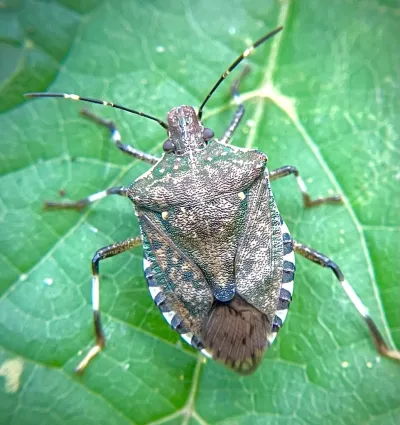
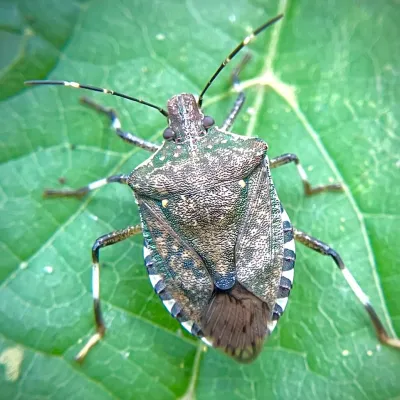
Rough stink bugs have a more textured, bark-like appearance with mottled gray and brown coloring. They also have distinctive toothed margins on their thorax that look like small cogs. Brown marmorated stink bugs have smoother bodies with marbled brown coloring and alternating light and dark bands on their antennae.
Are rough stink bugs harmful?
+
Rough stink bugs do not bite, sting, or cause structural damage to homes. They are primarily plant feeders, though they occasionally prey on soft-bodied insects like caterpillars. Their main nuisance is the odor they release when disturbed.
Why do rough stink bugs come into my house?
+
Rough stink bugs enter homes in fall seeking shelter for winter. They are commonly brought indoors accidentally on firewood stacked outside. Once inside, they may emerge on warm winter days and wander into living spaces.
Do rough stink bugs bite?
+
No, rough stink bugs do not bite humans or pets. They have piercing-sucking mouthparts designed for feeding on plant sap, not for biting. Like other stink bugs, their defense mechanism is releasing an unpleasant odor.
What do rough stink bugs eat?
+
Rough stink bugs primarily feed on the sap, leaves, and developing seeds of trees and shrubs, including ash, walnut, willow, and boxelder. They also occasionally prey on caterpillars, beetle larvae, and other soft-bodied insects.
How do I get rid of rough stink bugs in my house?
+
Vacuum them up using a shop vac or regular vacuum dedicated to this purpose. Avoid crushing them as this releases their defensive odor. Dispose of collected bugs in soapy water. Seal entry points around windows, doors, and utility pipes to prevent future invasions.
When are rough stink bugs most active?
+
Rough stink bugs are most active from late spring through fall. Adults emerge from overwintering in late spring to mate and lay eggs. They become especially noticeable in fall when they seek shelter indoors for winter.

With five years of hands-on experience in the pest control industry, George Schulz is a registered technician with the Virginia Pest Management Association and a proud third-generation professional in a family business that's been protecting homes for over 57 years. He manages and trains a team of service pros while also leading internal research efforts—recently spearheading a deep-dive review of thousands of documents on pest control materials to hand-pick the most kid and pet friendly, most effective solutions tailored specifically for homes in the DC metro area.