Brown Marmorated Stink Bug Identification Guide
Halyomorpha halys
The brown marmorated stink bug is an invasive pest from Asia that invades homes in large numbers during fall and releases a pungent odor when disturbed or crushed.
Taxonomy
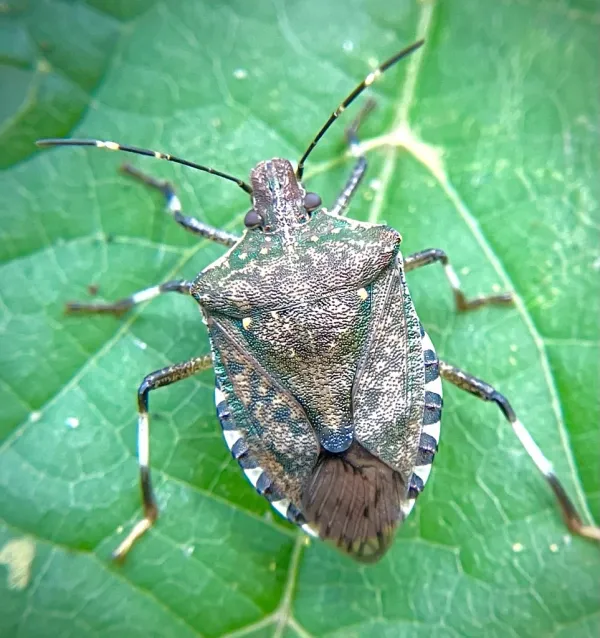
Brown Marmorated Stink Bug Coloration
Common color patterns to help identify brown marmorated stink bug
Brown Marmorated Stink Bug
Seasonal Activity
When brown marmorated stink bug are most active throughout the year
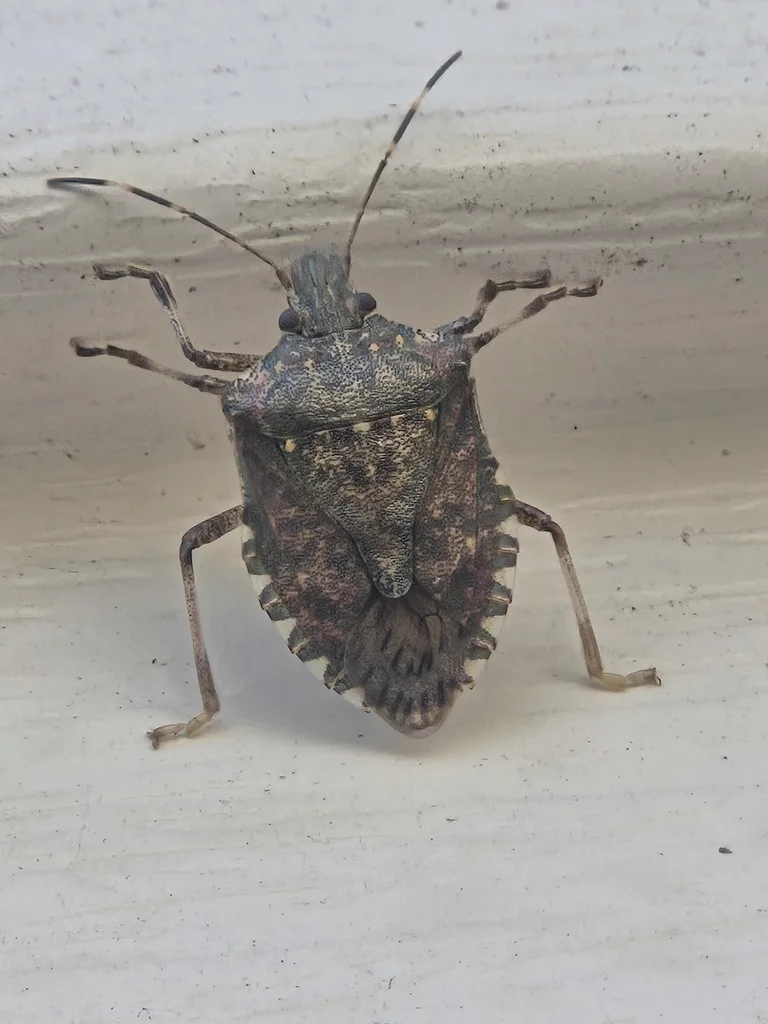
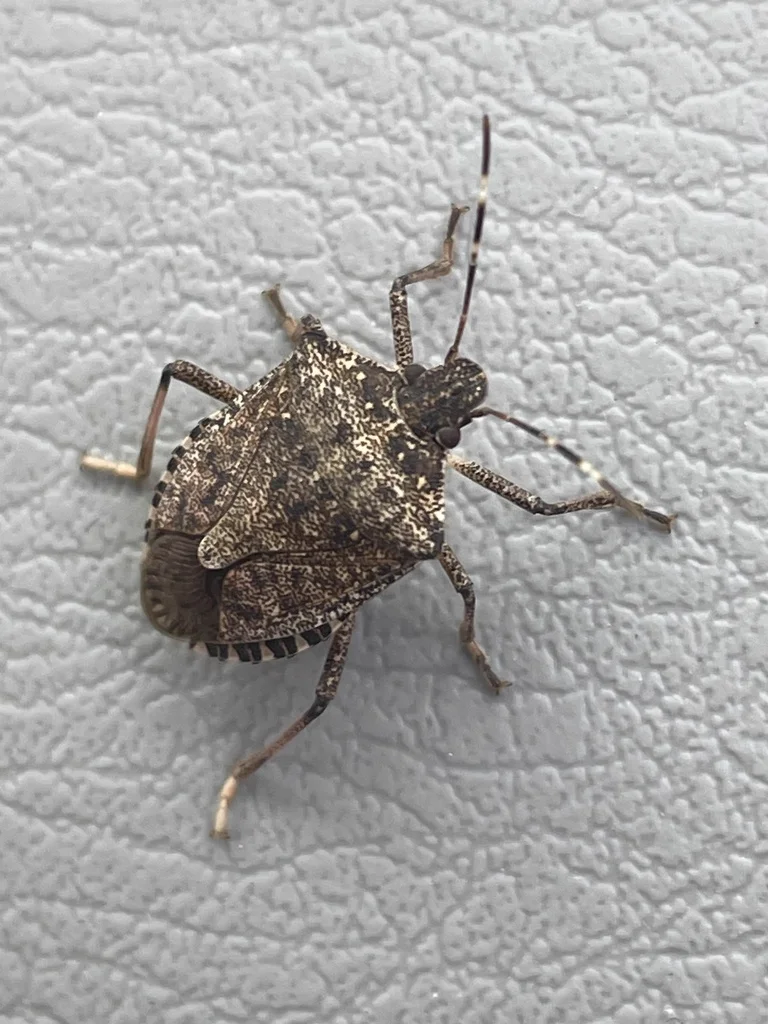
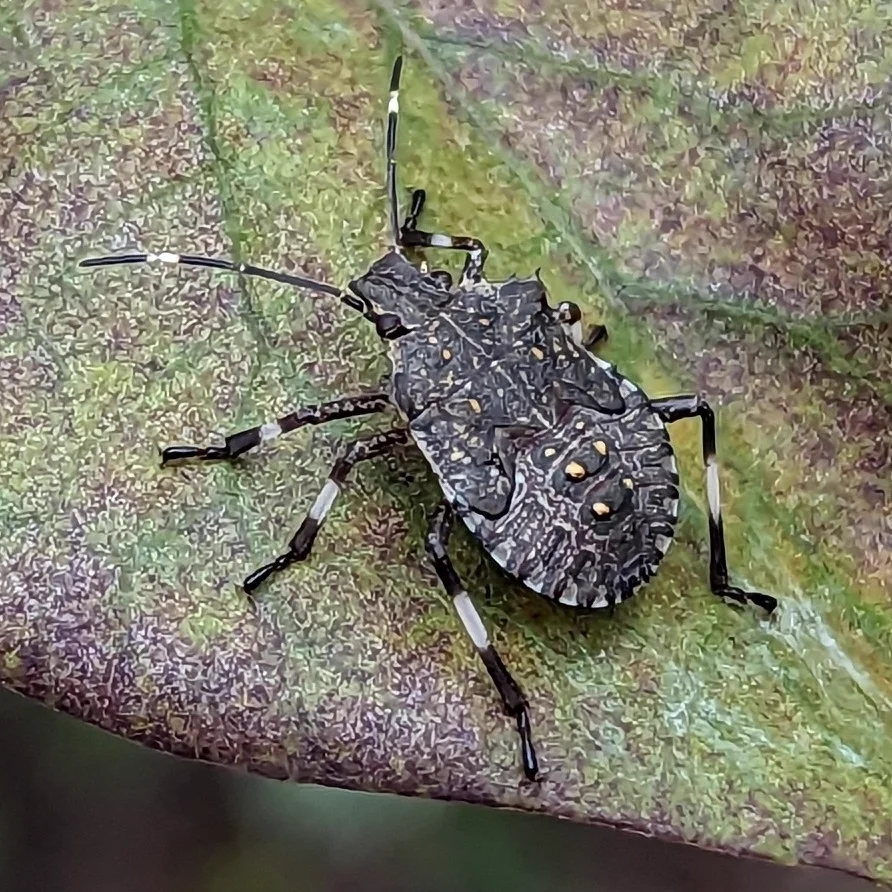

Where Brown Marmorated Stink Bug Are Found
Hover over states to see their names. Green regions indicate where brown marmorated stink bug have been reported.
Brown Marmorated Stink Bug Identification Guide
Physical Characteristics
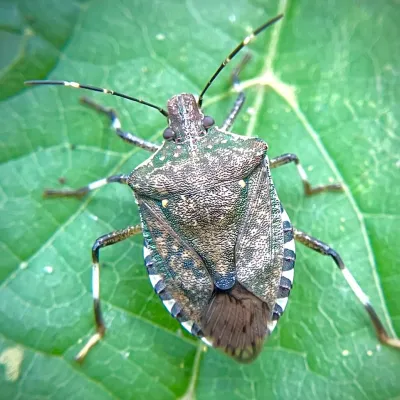
The brown marmorated stink bug (Halyomorpha halys) is a shield-shaped insect measuring approximately 12-17 mm in length, roughly the size of a dime. The term “marmorated” refers to its distinctive mottled or marbled appearance. Adults display a variegated brown coloration with darker and lighter patches across their backs, giving them excellent camouflage against tree bark and soil.
Key identifying features include alternating light and dark bands on the last two segments of the antennae, which distinguishes them from native stink bug species. The thin outer edge of the abdomen also shows alternating dark and light banding. Their legs are brown with faint white mottling. The underside of the body is creamy white to pale brown.
Nymphs and Eggs
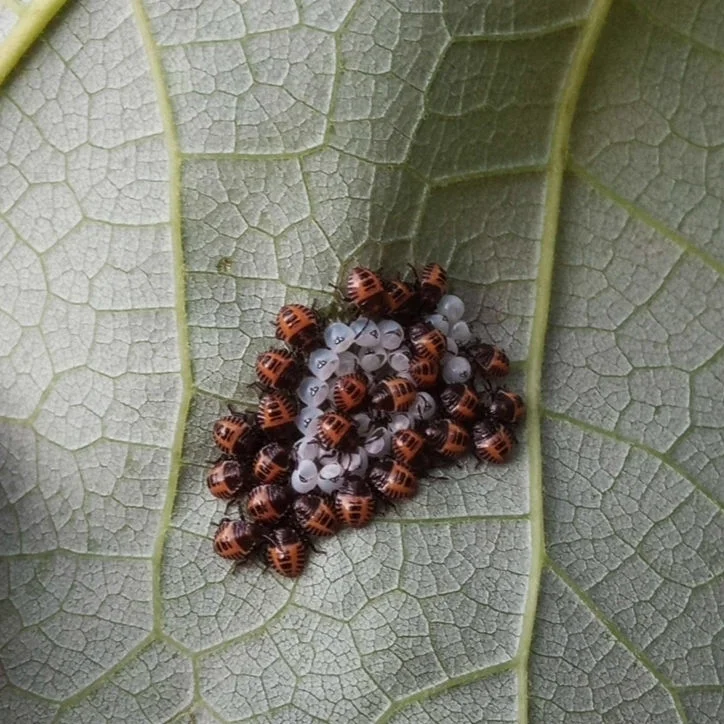
Female stink bugs lay clusters of 20-30 light green or yellow elliptical eggs on the undersides of leaves. The eggs are approximately 1 mm in diameter and may show red eyespots as embryos develop.
Nymphs progress through five growth stages called instars before reaching adulthood. First-instar nymphs are tiny (about 2.4 mm), with black heads and thoraxes and distinctive orange-red abdomens. They are sometimes mistaken for ticks at this stage. As nymphs develop, the red coloring fades to tan and eventually to the characteristic brown of adults. Wing pads become visible by the fifth instar, though only adults have fully functional wings.
Brown Marmorated Stink Bug Behavior and Biology
Lifecycle and Reproduction
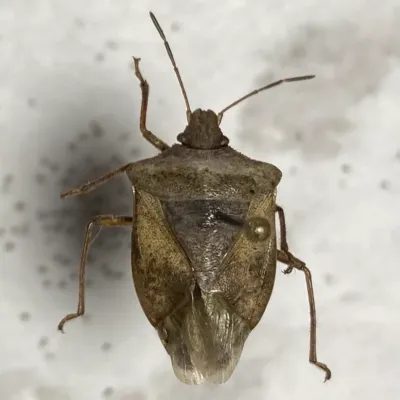
Brown marmorated stink bugs undergo incomplete metamorphosis, meaning they do not have a pupal stage. Development from egg to adult takes 40-60 days depending on temperature. Adults typically produce one to two generations per year in cooler climates like the Mid-Atlantic region, though warmer areas may see up to five generations annually. Female stink bugs can lay up to 400 eggs during their lifetime. A related species, Rough Stink Bug, shares similar characteristics.
Adults emerge from overwintering sites in spring and begin mating within about two weeks. Egg-laying occurs from May through August on host plants. A related species, Shield Bugs, shares similar characteristics.
Feeding Habits A related species, One-Spotted Stink Bug, shares similar characteristics.
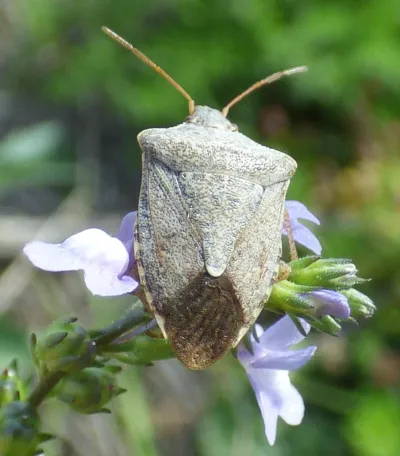
As true bugs in the order Hemiptera, brown marmorated stink bugs have piercing-sucking mouthparts. They feed by inserting their needle-like proboscis into plant tissue to extract fluids. This feeding causes characteristic dimpling, scarring, and necrotic areas on fruits and vegetables. Over 175 host plants have been documented in the United States, including apples, peaches, tomatoes, peppers, corn, soybeans, and many ornamental plants. A related species, Brown Stink Bug, shares similar characteristics.
These insects are highly mobile and readily switch between host plants as different crops ripen throughout the growing season.
Overwintering Behavior
The most notable behavior of brown marmorated stink bugs is their tendency to aggregate in large numbers when seeking winter shelter. Beginning in late summer and early fall, adults congregate on the sunny sides of buildings, drawn by warmth and aggregation pheromones released by other stink bugs. They enter structures through any available opening, including gaps around windows, doors, utility pipes, and siding.
Once inside, they enter a dormant state called diapause, remaining inactive in wall voids, attics, and other protected spaces until spring. They do not reproduce indoors and are not actively feeding during this period. On warm winter days, they may become active and wander into living spaces, causing frustration for homeowners.
How We Treat for Brown Marmorated Stink Bugs
Brown marmorated stink bugs are primarily a nuisance pest, and the best approach focuses on prevention rather than reaction. Effective management requires a combination of exclusion techniques and preventative treatments applied at the right time.
Preventative Exterior Treatments
Before the weather turns cold, typically in October, our technicians apply dust treatments to exterior voids where stink bugs commonly enter and shelter. Target areas include weep holes in brick facades, gaps behind siding, and spaces around windows and doors. This creates a barrier that deters insects from entering the structure. We also treat the exterior perimeter with a repellent material to discourage stink bugs from congregating on walls and foundations.
Exclusion and Sealing
Mechanical exclusion is the most effective long-term solution. We recommend sealing cracks and crevices with silicone or silicone-latex caulk, replacing worn weatherstripping, and installing door sweeps. Fine-mesh screens should cover attic vents, exhaust fans, and chimney openings. Addressing these entry points prevents not only stink bugs but other overwintering pests like boxelder bugs as well.
Interior Treatments
If stink bugs have already entered the home, interior treatments focus on repellent applications around window seals, door frames, and baseboards. In extreme cases, dusting within wall voids may be necessary. However, once large numbers are established inside, they can be difficult to eliminate entirely, which is why fall prevention is so important.
What Homeowners Can Do
For stink bugs already inside, vacuuming is the most practical removal method. Using a shop vac or dedicating a vacuum bag to this purpose helps contain the odor. Avoid crushing stink bugs, as this releases their defensive smell and may stain surfaces. Dispose of collected bugs in soapy water outside the home.
References
- Brown Marmorated Stink Bug - US EPA
- Life Stages of the Brown Marmorated Stink Bug - StopBMSB.org
- Brown Marmorated Stink Bug - Penn State Extension
- Tips for Dealing With Brown Marmorated Stink Bugs - University of Maryland Extension
- Managing Brown Marmorated Stink Bugs in Homes - Michigan State University
- Brown Marmorated Stink Bug - University of Florida Entomology
Other Stink Bugs
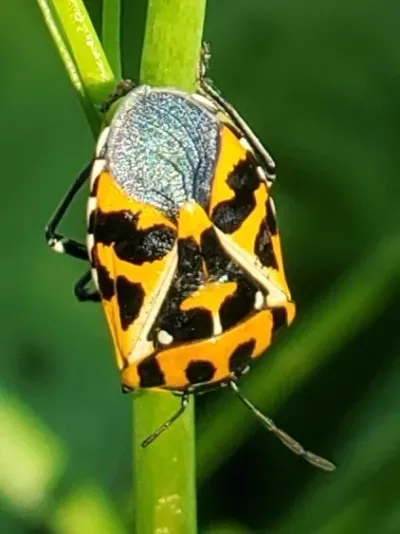
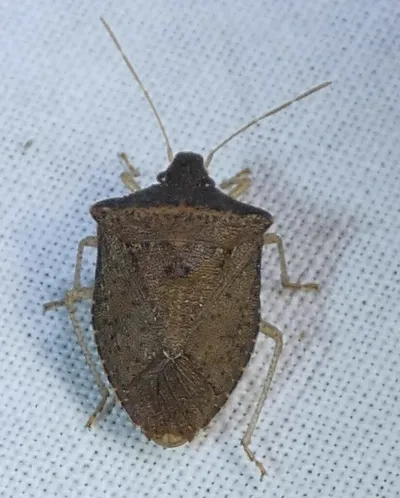
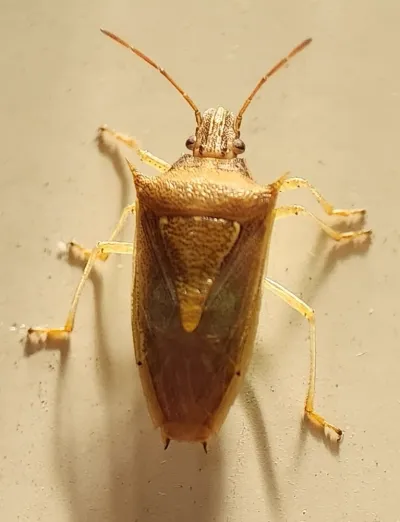
Explore other species in the stink bugs family
Commonly Confused With
Brown Marmorated Stink Bug are often mistaken for these similar pests
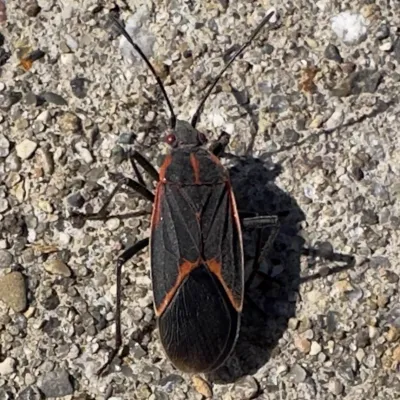
Where Brown Marmorated Stink Bug Are Found
Hover over states to see their names. Green regions indicate where brown marmorated stink bug have been reported.
Common Questions about Brown Marmorated Stink Bug
Where did brown marmorated stink bugs come from?
+
Brown marmorated stink bugs are native to East Asia, including China, Japan, and Korea. They were accidentally introduced to the United States in the mid-1990s, likely arriving in shipping containers. The first specimens were collected in Allentown, Pennsylvania in 1998.
Why do brown marmorated stink bugs invade homes in the fall?
+
As temperatures drop in autumn, brown marmorated stink bugs seek warm shelter to survive the winter. They are attracted to the sunny sides of buildings and enter through cracks, gaps around windows, and other openings to overwinter in wall voids, attics, and other protected spaces.
Do brown marmorated stink bugs bite or sting?
+
No, brown marmorated stink bugs do not bite or sting humans or pets. They are strictly plant-feeding insects. However, some people may experience mild skin irritation if they handle the bugs and then touch their eyes or skin.
What is the smell that stink bugs release?
+
When threatened or crushed, brown marmorated stink bugs [release a pungent chemical](/why-are-stink-bugs-called-stink-bugs/) from scent glands on their thorax. The odor is often described as similar to cilantro or coriander and serves as a defense mechanism against predators.
Will stink bugs damage my home?
+
Brown marmorated stink bugs do not cause structural damage to homes. They do not reproduce indoors, eat fabrics, or damage wood. However, large numbers can stain surfaces with their excrement and the odor they release can be unpleasant.
How can I prevent stink bugs from entering my home?
+
Seal cracks and crevices around windows, doors, siding, and utility pipes. Replace worn weatherstripping and install door sweeps. Repair damaged window screens and cover attic vents with fine mesh. Professional preventative treatments applied in early fall can also help.
What should I do if stink bugs are already inside?
+
Vacuum them up using a shop vac or regular vacuum. Avoid crushing them to prevent releasing their odor. You can place a stocking over the vacuum hose to capture them, then dispose of them in soapy water. Professional interior treatments can help with severe infestations.
Are brown marmorated stink bugs harmful to gardens?
+
Yes, they can cause significant damage to fruits, vegetables, and ornamental plants. They feed by piercing plant tissue and sucking out juices, causing dimpling, scarring, and discoloration on fruits like apples, peaches, and tomatoes.

With five years of hands-on experience in the pest control industry, George Schulz is a registered technician with the Virginia Pest Management Association and a proud third-generation professional in a family business that's been protecting homes for over 57 years. He manages and trains a team of service pros while also leading internal research efforts—recently spearheading a deep-dive review of thousands of documents on pest control materials to hand-pick the most kid and pet friendly, most effective solutions tailored specifically for homes in the DC metro area.