Zebra Jumping Spider Identification Guide
Salticus scenicus
The zebra jumping spider is a small, striped spider found throughout North America. Named for its black and white banding, this harmless spider is often spotted on sunny walls, fences, and window frames where it hunts small insects.
Taxonomy
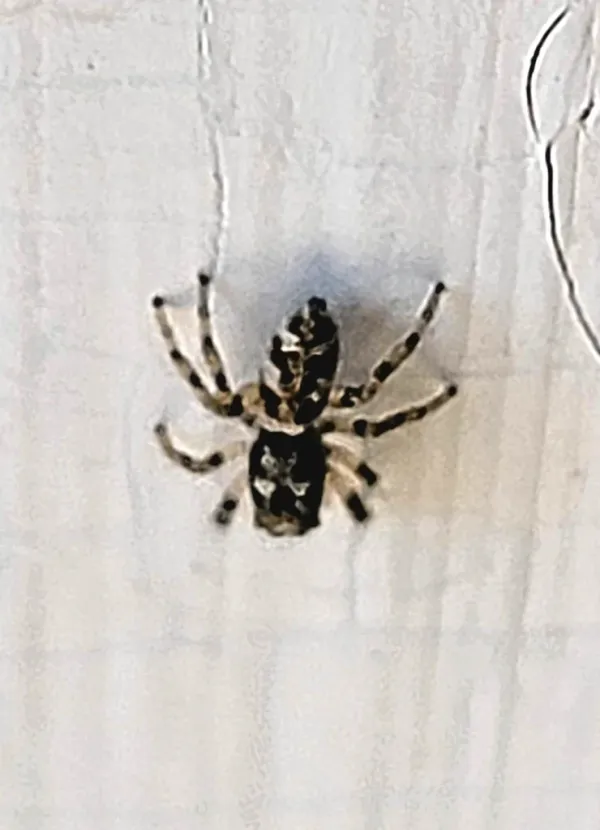
Zebra Jumping Spider Coloration
Common color patterns to help identify zebra jumping spider
Zebra Jumping Spider
Seasonal Activity
When zebra jumping spider are most active throughout the year
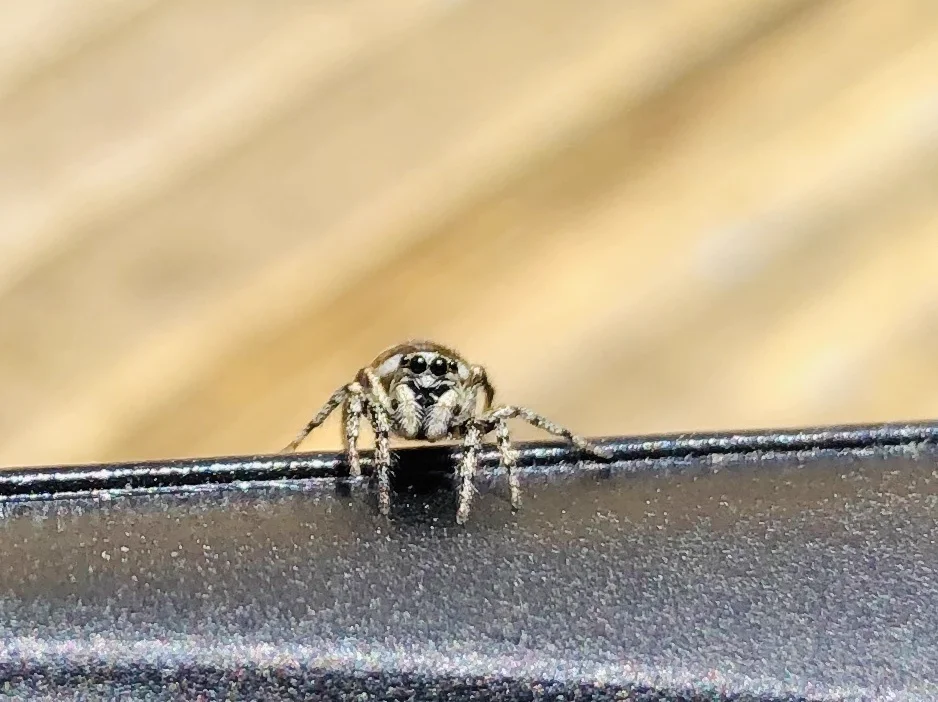
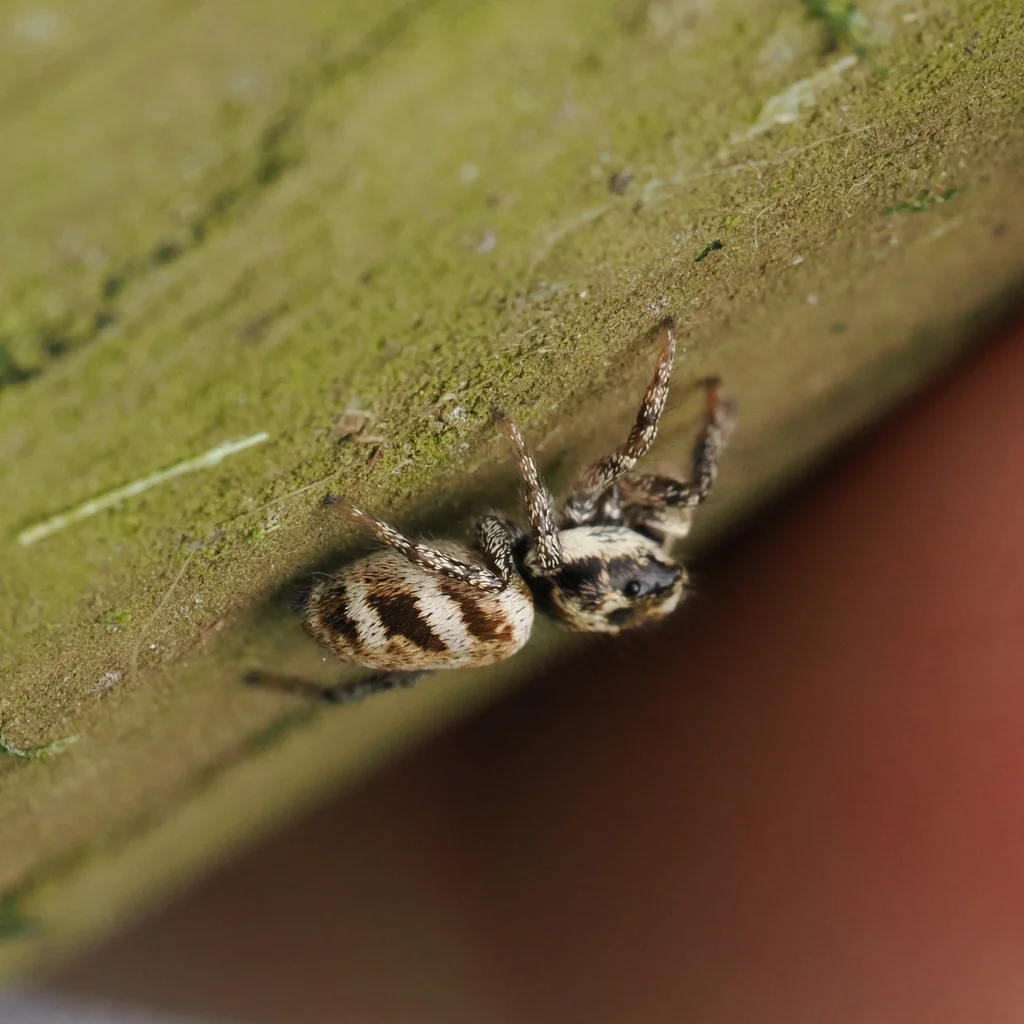
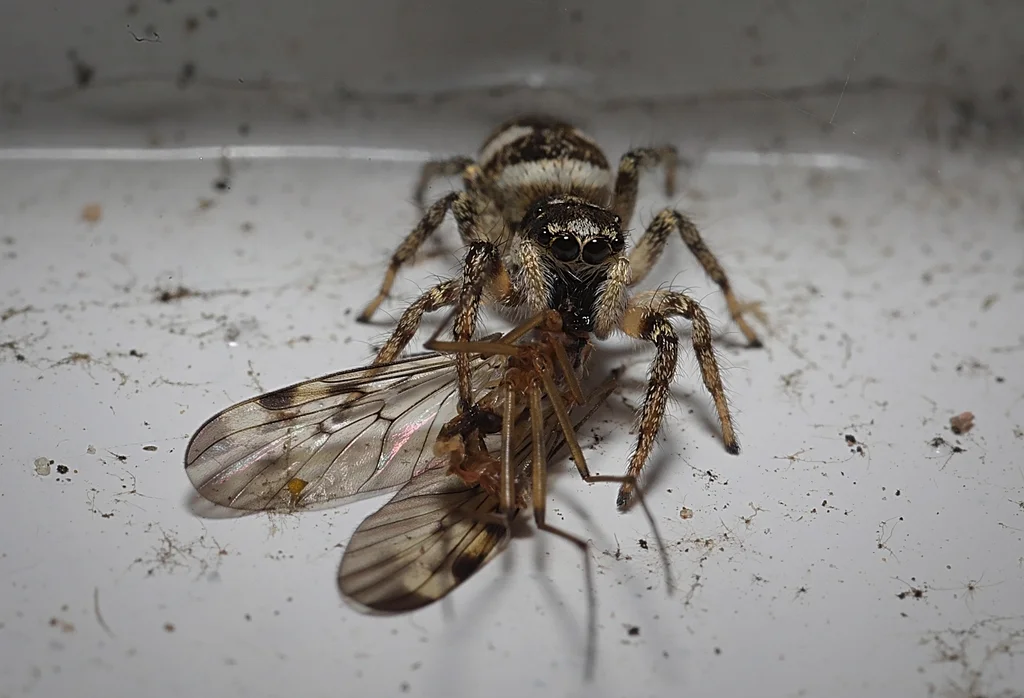

Where Zebra Jumping Spider Are Found
Hover over states to see their names. Green regions indicate where zebra jumping spider have been reported.
Zebra Jumping Spider Identification Guide
Physical Characteristics
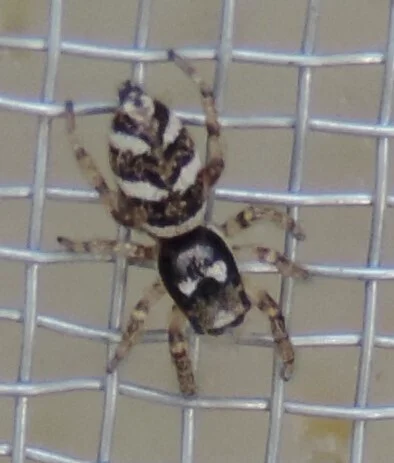
The zebra jumping spider (Salticus scenicus) is a small spider that is easy to spot. Adults are only 5 to 7 millimeters long. Females are a bit bigger than males, but both look the same otherwise.
Their main feature is the black and white striped pattern. The belly has bands of black and white across it. The legs have stripes too, though not as even as the body. The front body part is mostly dark with lighter marks around the edges and between the eyes.
Like all jumping spiders, they have eight eyes in three rows. The two big front eyes help them judge distance when hunting. These large eyes, plus two smaller ones beside them, give them a face-like look. Their bodies are compact and covered in short hairs that make them look fuzzy.
You can tell males from females by their jaws. Male jaws stick out more and are often darker than the body.
How to Tell Zebra Spiders from Similar Species
A few other jumping spiders look like the zebra spider:
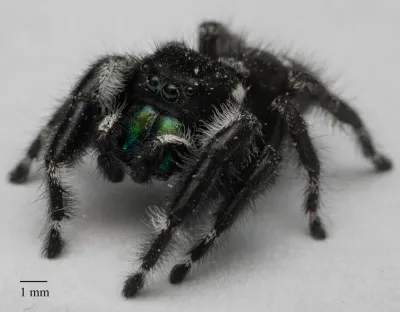
- Bold Jumping Spider: Much bigger (8-19mm) with a black body and white spots instead of stripes. Has shiny green or blue jaws.
- Other jumping spiders: Most do not have clear black and white stripes. Many are brown or gray.
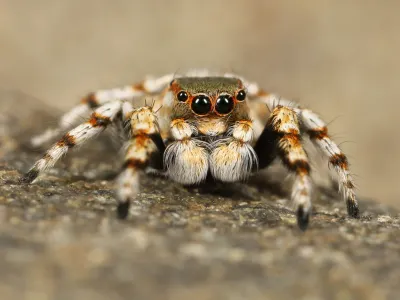
- Dimorphic Jumping Spider: Same size but has different marks, usually brown with white spots.
The zebra-like stripes on both body and legs make Salticus scenicus easy to tell apart from other spiders.
Zebra Jumping Spider Behavior and Biology
Hunting Strategy
Zebra jumping spiders hunt during the day. They do not build webs to catch prey. Instead, they use their sharp eyesight to spot, stalk, and pounce on small insects.
When hunting, the spider slowly creeps toward its target. It keeps its big front eyes locked on the prey. When close enough, it jumps fast and grabs its meal. These spiders can jump 10 to 20 times their body length. Before each jump, they attach a silk thread as a backup line in case they miss or need to escape.
These spiders like to hunt on walls, fences, and tree bark. They often show up on the sunny sides of buildings where flies gather. Window frames are a top hunting spot because flies go there for light and warmth.
Diet and Prey
Zebra jumping spiders eat many small bugs:
- House flies and other flies
- Mosquitoes and gnats
- Small moths
- Fruit flies
- Springtails
- Sometimes other small spiders
They catch lots of flies, which is why you often see them near windows and doors.
Reproduction and Life Cycle
When a male finds a female, he does a dance to get her attention. He waves his front legs and moves his body. If she accepts him, they mate.
After mating, the female makes a silk nest in a hidden spot like a crack or gap. She lays 15 to 25 eggs in a silk sac and guards them until they hatch. The baby spiders molt several times before they become adults. This takes a few months.
In cooler areas, zebra spiders live about one year. They spend winter hiding in cracks as young spiders. Adults are most common from late spring to early fall.
Habitat and Where They Live
Zebra jumping spiders live all over North America. They came from Europe originally. They do well around homes and buildings. You can find them in these places:
- Outside walls of homes
- Fences and deck rails
- Window frames and sills
- Tree bark and rocks
- Gardens and yards
They like sunny, warm spots and are most active on bright days. When it gets cold or dark, they hide in cracks and sheltered areas.
How We Treat for Zebra Jumping Spiders
If zebra jumping spiders are getting into your home and you want them gone, we can help reduce their numbers. Our approach targets both the spiders and the conditions that attract them.
Our Approach
-
Inspection: We find entry points and spots where spiders gather. We check for things that draw them in, like bright lights that attract the bugs they eat.
-
Exclusion: We seal gaps around windows, doors, and pipes to keep spiders out. Adding screens and door sweeps also helps block entry.
-
Habitat Changes: Using less outdoor lighting or yellow bulbs cuts down on flying insects near your home. Fewer bugs means fewer spiders hunting near doors and windows.
-
Exterior Treatment: We apply products around windows, doors, and other entry points outside your home. This creates a barrier that keeps spiders from settling near openings.
-
Interior Spot Treatment: If needed, we treat corners, window frames, and other problem spots inside. We focus on areas where spiders have been seen.
Tips for Homeowners
- Move outdoor lights away from doors and windows
- Use yellow “bug lights” outside to attract fewer insects
- Seal cracks around windows, doors, and pipes
- Fix or add window screens and door sweeps
- Clear plants and debris near the foundation
- Vacuum up spiders and silk when you see them
- Close blinds at night to reduce light that draws insects
When to Call a Professional
Contact us if you notice any of these signs:
- More spiders showing up inside than usual
- Spiders appearing often in living areas
- You need help sealing entry points
- Spider problems along with other pest issues like flies
Our tri-annual service includes spider control as part of full pest management. By reducing the insects that spiders hunt, we help keep spider numbers low around your home.
References
- Penn State Extension: Zebra Jumper - Pennsylvania State University
- UC Pest Notes: Spiders - University of California Agriculture and Natural Resources
- University of Wisconsin Field Station: Zebra Jumping Spider - UW-Milwaukee Field Station
- Animal Diversity Web: Salticus scenicus - University of Michigan Museum of Zoology
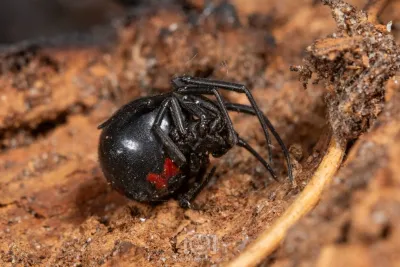
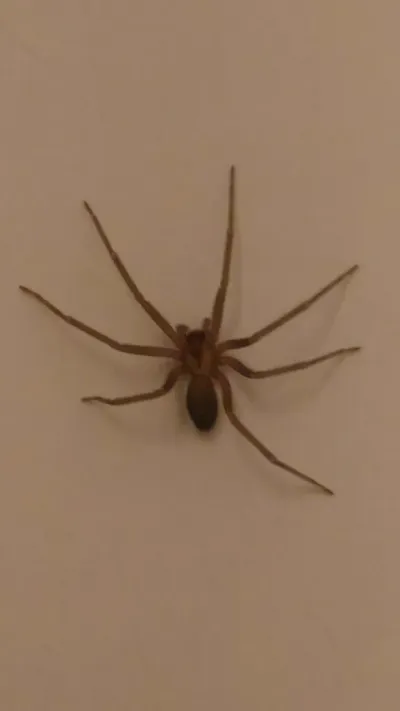
Other Spiders
Explore other species in the spiders family
Commonly Confused With
Zebra Jumping Spider are often mistaken for these similar pests
Where Zebra Jumping Spider Are Found
Hover over states to see their names. Green regions indicate where zebra jumping spider have been reported.
Common Questions about Zebra Jumping Spider
Are zebra jumping spiders dangerous to humans?
+
No, zebra jumping spiders are not dangerous. They are too small to bite through human skin effectively. Even if one did manage to bite, the venom is harmless to people. These spiders are shy and would rather jump away than confront a person.
Why are they called zebra spiders?
+
They get their name from the black and white striped pattern on their body and legs. The alternating bands look similar to a zebra's stripes. This pattern helps camouflage them on light-colored surfaces like walls and fences.
How do I identify a zebra jumping spider?
+
Look for a small spider (5-7mm) with black and white stripes on its body and legs. They have a compact, fuzzy appearance and two very large front-facing eyes. Males have larger jaws than females.
Do zebra jumping spiders make webs?
+
No, zebra jumping spiders do not spin webs to catch prey. They are active hunters that stalk and pounce on insects. They do make silk threads as backup lines when jumping and to build small nests for resting and protecting their eggs.
What do zebra jumping spiders eat?
+
They eat small insects like flies, mosquitoes, gnats, and moths. They are especially fond of flies and will hunt them on windows and walls. This makes them helpful pest controllers around homes.
Why do I see zebra spiders on my windows?
+
Zebra spiders love sunny, vertical surfaces where they can hunt flies. Windows provide warmth from sunlight and attract flies, making them ideal hunting grounds. The spiders follow their prey to these locations.
How did zebra jumping spiders get in my house?
+
They enter through tiny gaps around windows, doors, and utility pipes. They may also come in on plants, outdoor furniture, or through open doors. Their small size lets them squeeze through very tight spaces.
How can I get rid of zebra jumping spiders in my home?
+
You can catch them in a cup and release them outside. For ongoing spider issues, a pest control company can apply treatments around entry points and reduce the insects that attract spiders to your home in the first place.

With five years of hands-on experience in the pest control industry, George Schulz is a registered technician with the Virginia Pest Management Association and a proud third-generation professional in a family business that's been protecting homes for over 57 years. He manages and trains a team of service pros while also leading internal research efforts—recently spearheading a deep-dive review of thousands of documents on pest control materials to hand-pick the most kid and pet friendly, most effective solutions tailored specifically for homes in the DC metro area.