Tan Jumping Spider Identification Guide
Platycryptus undatus
The tan jumping spider is a common North American spider found on tree bark and building walls. It has a flattened, mottled tan body with wavy markings on its abdomen. These harmless spiders are skilled hunters often seen indoors.
Taxonomy
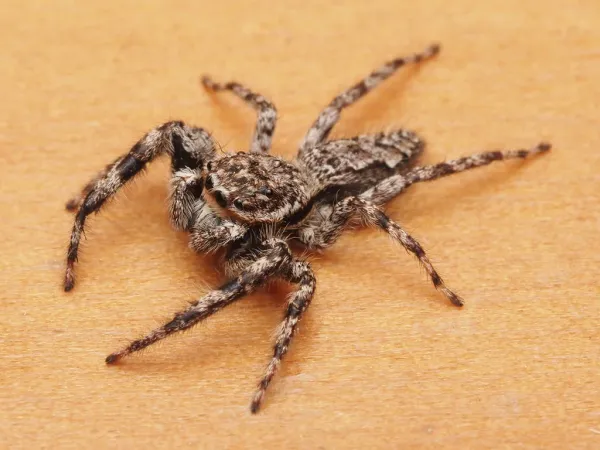
Tan Jumping Spider Coloration
Common color patterns to help identify tan jumping spider
Tan Jumping Spider
Seasonal Activity
When tan jumping spider are most active throughout the year

Where Tan Jumping Spider Are Found
Hover over states to see their names. Green regions indicate where tan jumping spider have been reported.
Tan Jumping Spider Identification Guide
Physical Characteristics
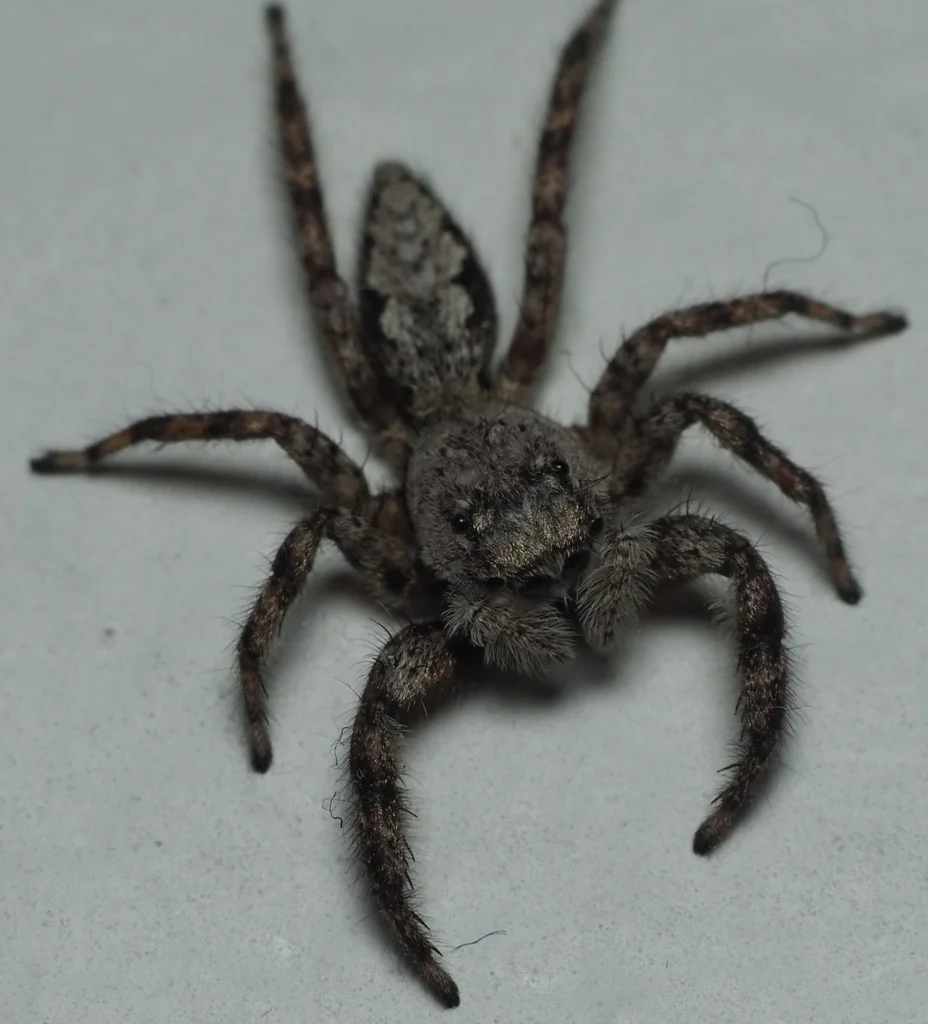
The tan jumping spider (Platycryptus undatus) is one of the most common jumping spiders in eastern North America. Adults measure 8 to 13mm in body length. Females are slightly larger than males, ranging from 10 to 13mm, while males are 8.5 to 9.5mm.
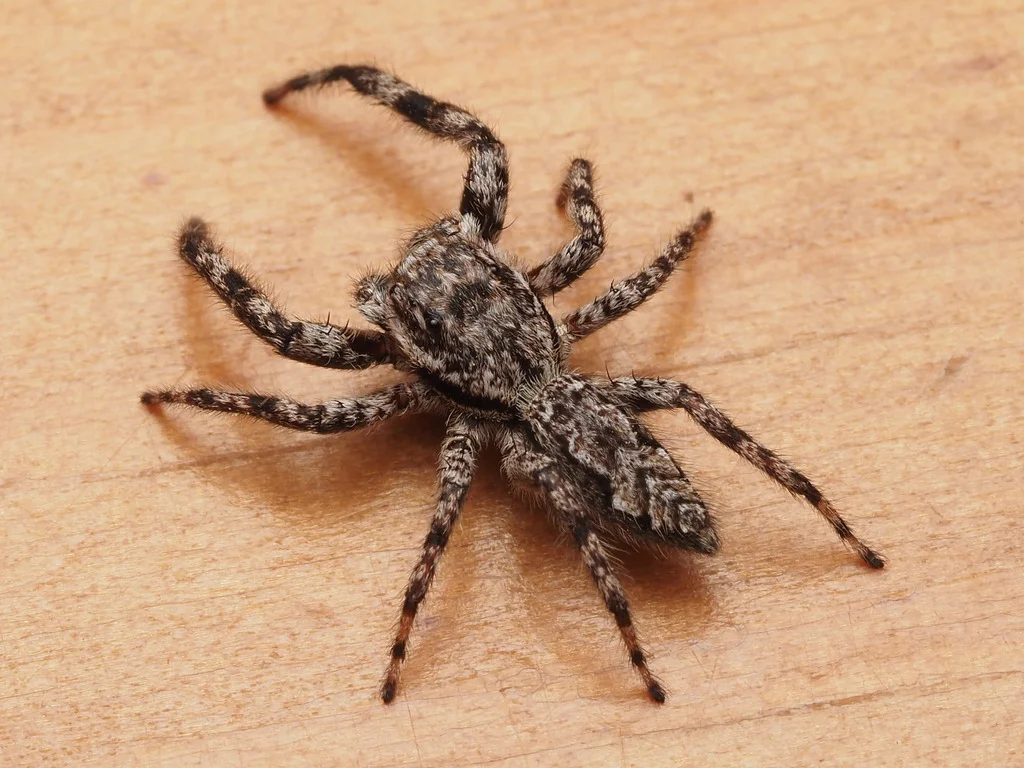
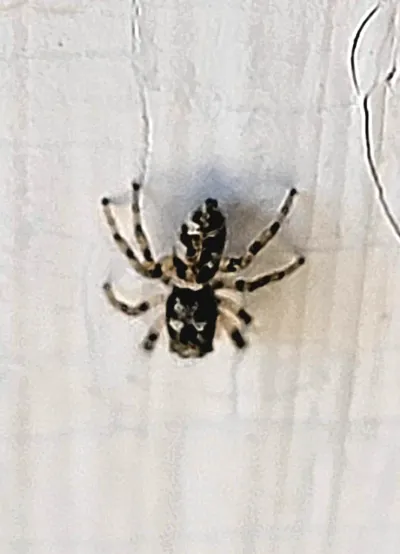
These spiders have flat bodies that help them squeeze into tight spaces. Their coloring is a mix of grays, tans, and browns with flecks of black and white. Some have reddish patches. The color pattern varies between spiders. Some look zebra-striped while others appear more gray.
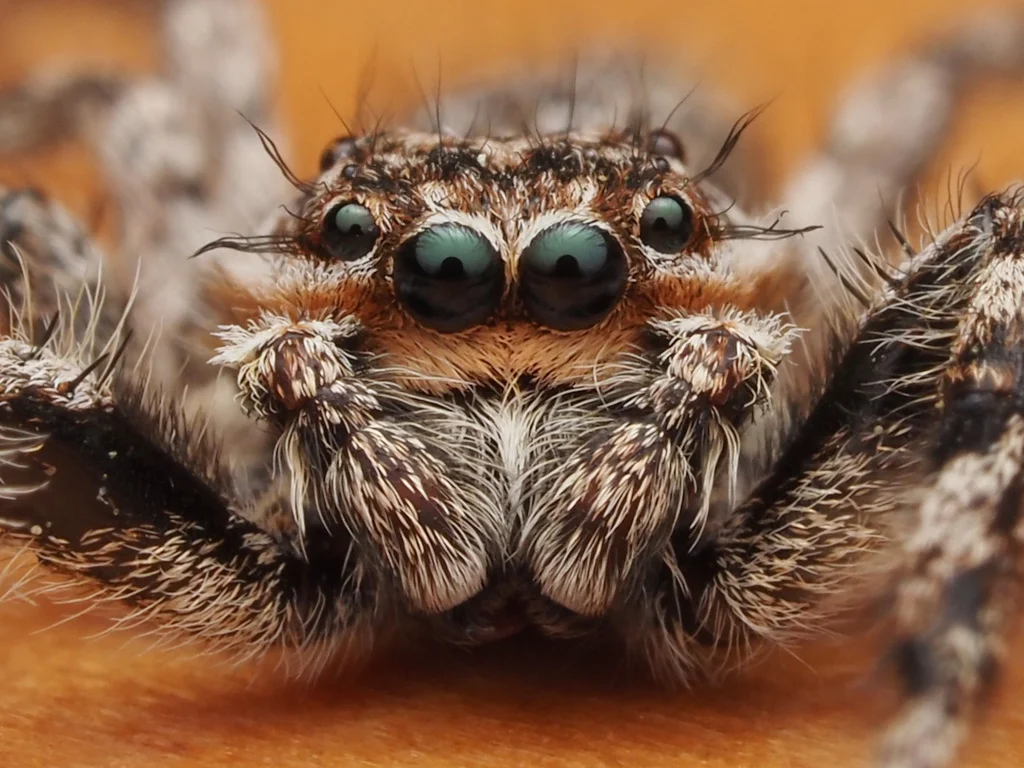
The most telling feature is the wavy pattern on the upper abdomen. This pattern is where the name “undatus” comes from, meaning “wavy” in Latin. Another key feature is the band of hairs below the large front eyes. Females have a white “mustache” band. Adult males have a bright orange one.
Like all jumping spiders, tan jumpers have eight eyes arranged in three rows. The two large front eyes give them excellent depth perception for hunting. Their vision is among the best of any spider.
Distinguishing Tan Jumping Spiders from Similar Species
Tan jumping spiders can be confused with other jumping spider species:
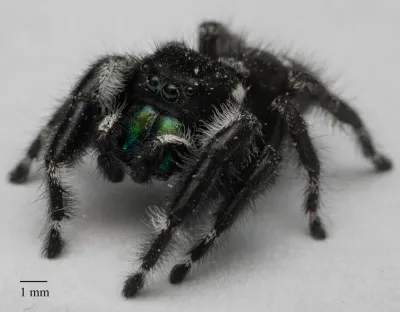
- Bold Jumping Spider: Larger with a black body and white spots. Has shiny green or blue jaws.
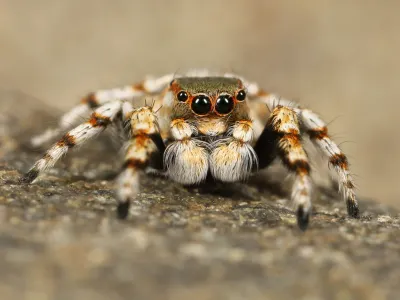
- Zebra Jumping Spider: Smaller with clear black and white stripes. Has a more bold pattern than the tan jumper.
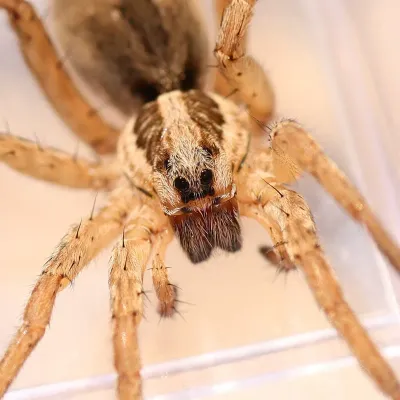
- Wolf Spiders: Larger and heavier. Hunt on the ground rather than walls. Cannot jump as well.
Note that two nearly identical species live in the western United States: Platycryptus californicus and Platycryptus arizonensis. These western species look almost the same as the tan jumping spider.
Tan Jumping Spider Behavior and Biology
Hunting Strategy
Tan jumping spiders are active daytime hunters. They prefer hunting on vertical surfaces like tree trunks, fences, and walls. Their keen eyesight lets them spot prey from several body lengths away.
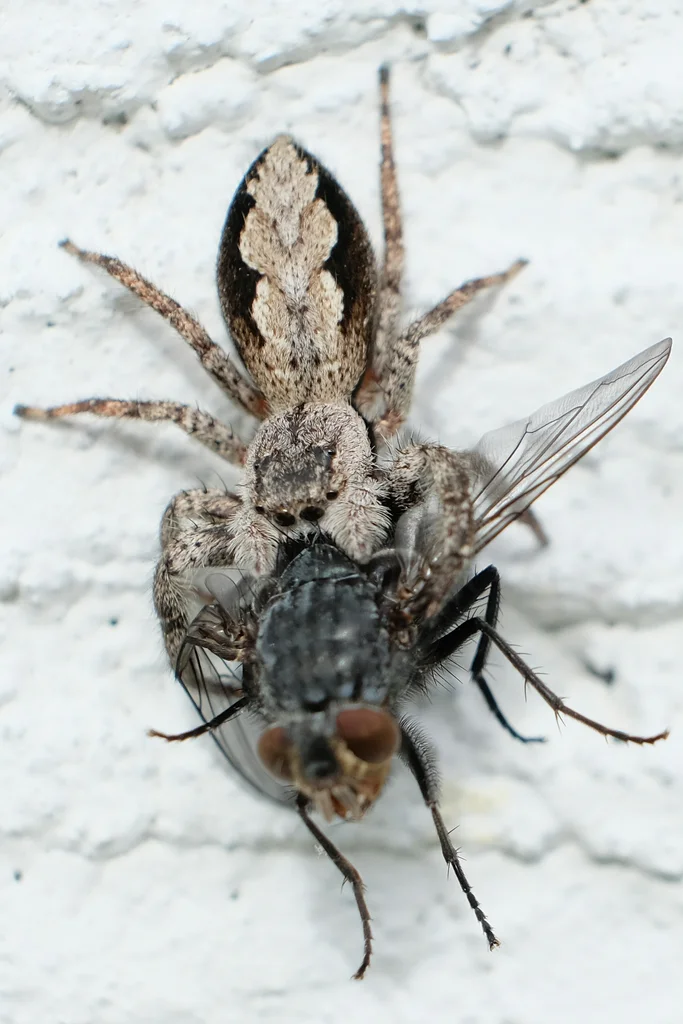
When a tan jumper spots a fly or other prey, it moves slowly closer. It keeps its large eyes fixed on the target. Once close enough, it pounces fast. These spiders can jump many times their body length. They always trail a silk line when jumping. This acts as a backup rope if they miss or need to escape.
Unlike web spiders, tan jumpers sit and wait for prey or actively stalk it. Their good eyesight and quick reflexes make them skilled hunters.
Diet and Prey Preferences
Tan jumping spiders eat a wide variety of small invertebrates:
These spiders are actually the first jumping spider species recorded eating an earthworm. They help control many common household pests.
Reproduction and Life Cycle
Males perform visual displays to attract females. The male waves his legs and shows off his orange face markings. Females watch and choose which males to mate with.
After mating, females build silken retreats to lay their eggs. Eggs hatch during summer. The young spiders grow through several molts before reaching adulthood.
Adults and young spiders spend winter in silk shelters. Each spider builds its own shelter, but many may group together. Studies have found up to fifty spiders under the loose bark of a single tree.
Habitat and Distribution
Tan jumping spiders live throughout eastern North America, from southeastern Canada south to Texas and east to the Atlantic coast. Their range extends into adjacent areas of northern Mexico.
They thrive in many habitats:
- Tree trunks and loose bark
- Wooden fences and deck railings
- Exterior walls of homes and buildings
- Interior walls, window sills, and ceilings
- Rocks and leaf litter
- Foliage in gardens
Their flat bodies let them hide well in cracks and gaps. This body shape also lets them enter homes through small openings. Tan jumping spiders are the most common jumping spider found inside homes in eastern North America.
How We Treat for Tan Jumping Spiders
Tan jumping spiders pose no threat to people or property. However, if you prefer fewer spiders inside, we can help reduce their numbers.
Our Approach
-
Inspection: We find entry points and areas where spiders are active. We look for things that attract them, like outdoor lights that draw in bugs, moisture problems, or wood rot.
-
Exterior Treatment: We apply a non-repellent spray to areas where spiders are active, including around windows, doorways, and corners. This creates a protective barrier.
-
Interior Treatment: Inside treatment is limited to spot treatments in corners and around entry points. Spraying large areas inside does not work well for hunting spiders.
-
Web and Retreat Removal: We knock down any visible webs and silk retreats that can be reached from ground level.
-
Exclusion Recommendations: Sealing cracks and gaps around windows, doors, and utility pipes prevents spiders from entering.
Tips for Homeowners
- Use less interior lighting at night or close blinds to avoid attracting prey insects
- Switch outdoor lights to yellow bulbs that attract fewer bugs
- Seal gaps around windows, doors, vents, and pipes
- Fix or add window screens and door sweeps
- Control moisture problems that attract other pests
- Repair wood rot that provides hiding spots
- Vacuum up spiders and their silk retreats when you see them
- Check firewood, boxes, and plants before bringing them inside
Ongoing Management
Our triannual service (three visits per year) maintains the exterior barrier treatment and monitors spider activity. Regular visits help keep spider populations down over time. This service also controls the pest insects that spiders feed on, which reduces spider numbers.
When to Seek Professional Help
Most tan jumping spider sightings do not require professional treatment. These spiders are harmless and typically appear in small numbers. Consider calling us if:
- Spider activity increases significantly or becomes bothersome
- You frequently see spiders entering your home
- You want help identifying and sealing entry points
- Spiders appear alongside other pest problems
Our triannual service includes spider control as part of comprehensive pest management.
References
- Missouri Department of Conservation: Tan Jumping Spider - Missouri Field Guide
- University of Kentucky Entomology: Jumping Spiders - Spider Identification
- Wikipedia: Platycryptus undatus - Species Overview
- UC Pest Notes: Spiders - University of California Agriculture and Natural Resources
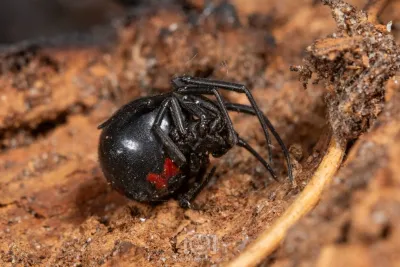
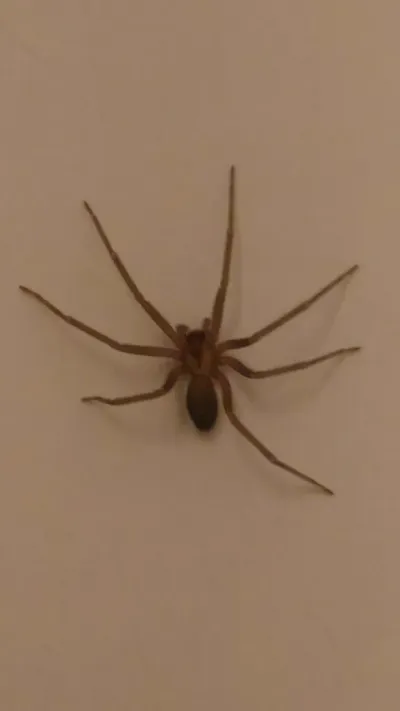
Other Spiders
Explore other species in the spiders family
Commonly Confused With
Tan Jumping Spider are often mistaken for these similar pests
Where Tan Jumping Spider Are Found
Hover over states to see their names. Green regions indicate where tan jumping spider have been reported.
Common Questions about Tan Jumping Spider
Are tan jumping spiders dangerous or venomous?
+
No. Tan jumping spiders are not dangerous to people. Like all spiders, they have venom to subdue prey, but their bite is harmless to humans. Bites are rare and only happen if the spider is trapped or squeezed. Any reaction is mild and temporary.
Why do I keep finding tan jumping spiders inside my house?
+
Tan jumping spiders are the most common jumping spider found indoors. They enter through small gaps around windows, doors, and utility pipes. Lights that attract insects may draw them in since they hunt prey on walls. Their flat bodies let them squeeze through tight spaces.
How can I identify a tan jumping spider?
+
Look for a flattened spider with mottled tan, gray, and brown coloring. The abdomen has wavy or chevron-like markings. Females have a white band of hairs below their large front eyes, while males have an orange band. Adults are 8-13mm long.
What do tan jumping spiders eat?
+
They hunt flies, mosquitoes, moths, ants, mites, and other small insects. They are active daytime hunters that stalk and pounce on prey rather than building webs. They have excellent vision for spotting and tracking prey.
Do tan jumping spiders make webs?
+
They do not spin webs to catch food. However, they make small silk retreats to rest in at night and during winter. Females build silk egg sacs to protect their eggs. They also trail a silk line when jumping as a backup.
Should I kill tan jumping spiders in my home?
+
Tan jumping spiders are harmless and help control pest insects like flies and mosquitoes. Many homeowners simply relocate them outdoors. If spider activity bothers you, contact a pest control company for treatment options.
Where do tan jumping spiders live?
+
They prefer vertical surfaces like tree trunks, wooden fences, and building walls. Their flattened bodies let them hide under loose bark and in cracks. While common in forested areas, they are most often encountered on buildings and inside homes.
Do tan jumping spiders bite people?
+
Bites are very rare. Tan jumping spiders are curious rather than aggressive toward humans. They would rather jump away than bite. If one does bite when squeezed or trapped, the reaction is similar to a mosquito bite.

With five years of hands-on experience in the pest control industry, George Schulz is a registered technician with the Virginia Pest Management Association and a proud third-generation professional in a family business that's been protecting homes for over 57 years. He manages and trains a team of service pros while also leading internal research efforts—recently spearheading a deep-dive review of thousands of documents on pest control materials to hand-pick the most kid and pet friendly, most effective solutions tailored specifically for homes in the DC metro area.