Jumping Spiders Identification Guide
Salticidae (Family)
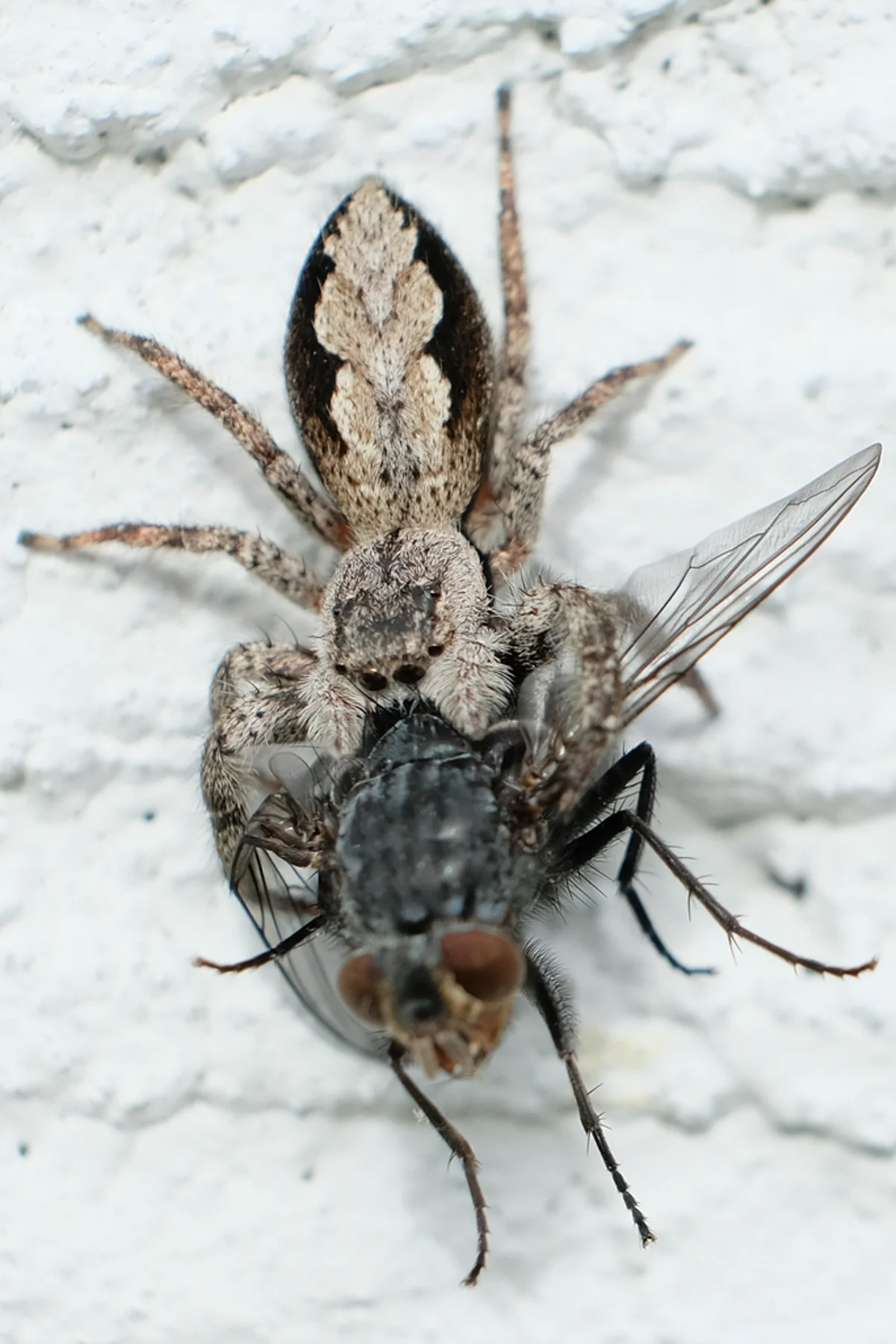
Jumping spiders are compact, agile hunters known for their exceptional vision and ability to leap many times their body length. With their large, forward-facing eyes and curious behavior, they are among the most recognizable spiders found in and around North American homes.
Taxonomy
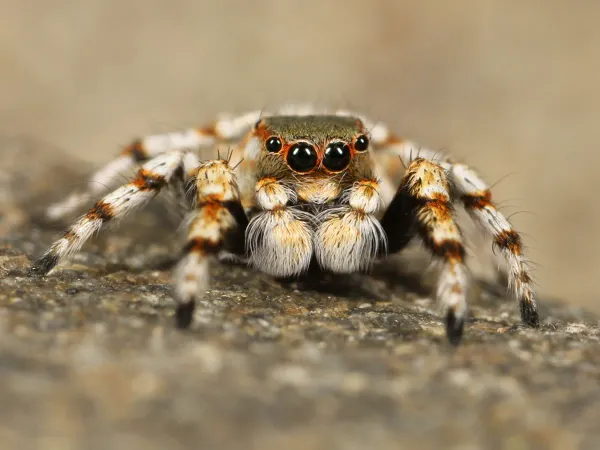
Jumping Spiders Coloration
Common color patterns to help identify jumping spiders
Jumping Spiders
Seasonal Activity
When jumping spiders are most active throughout the year
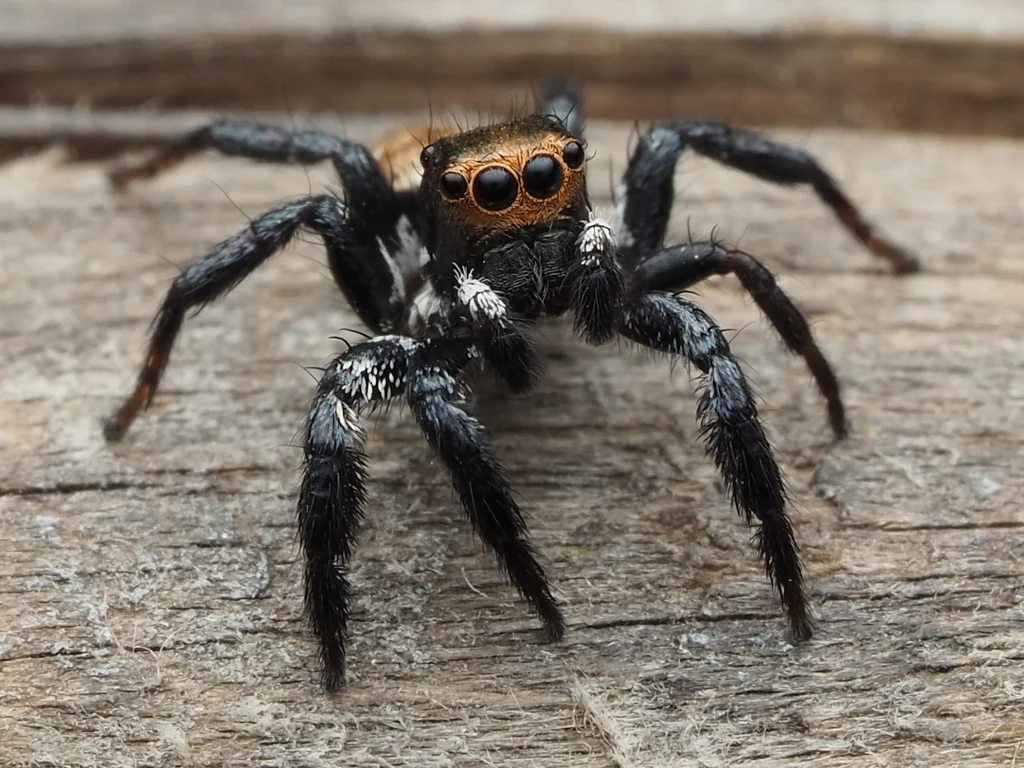
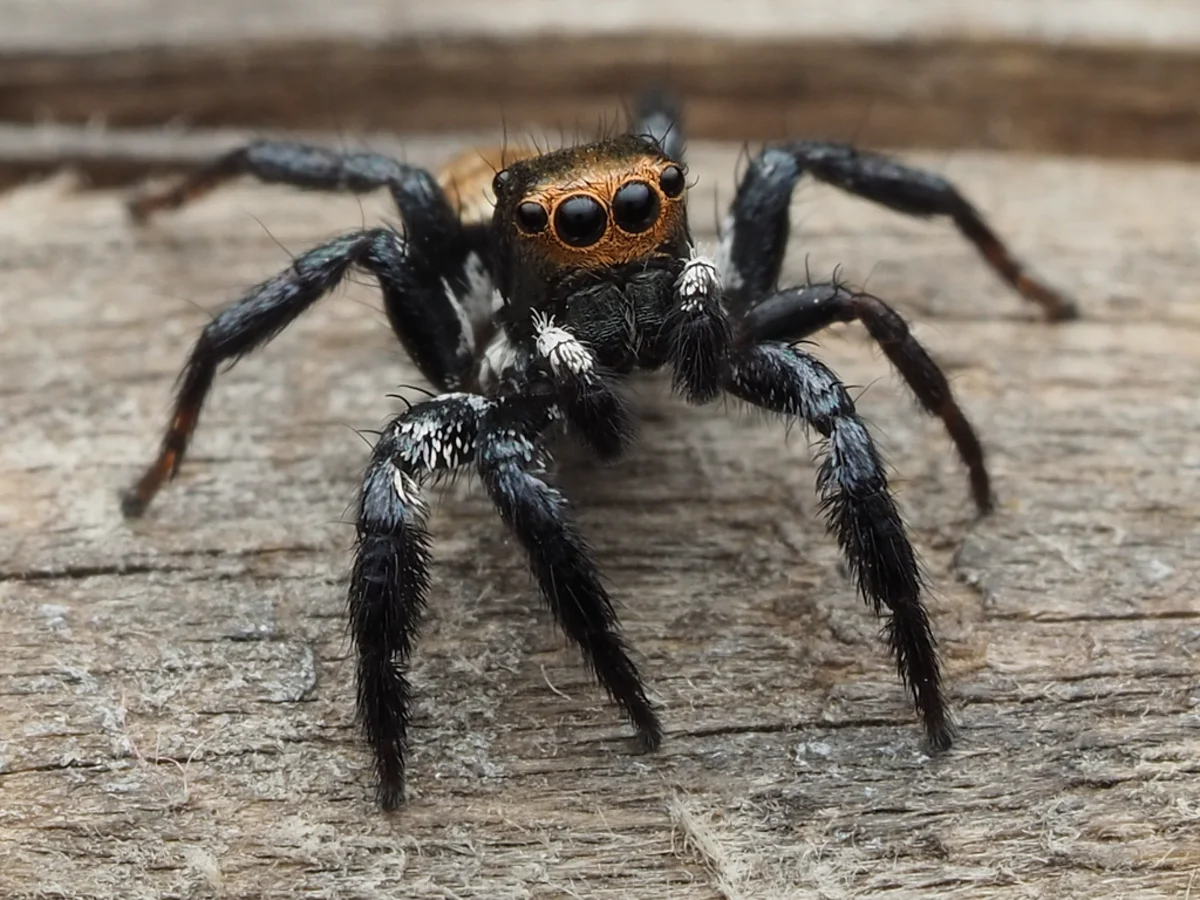
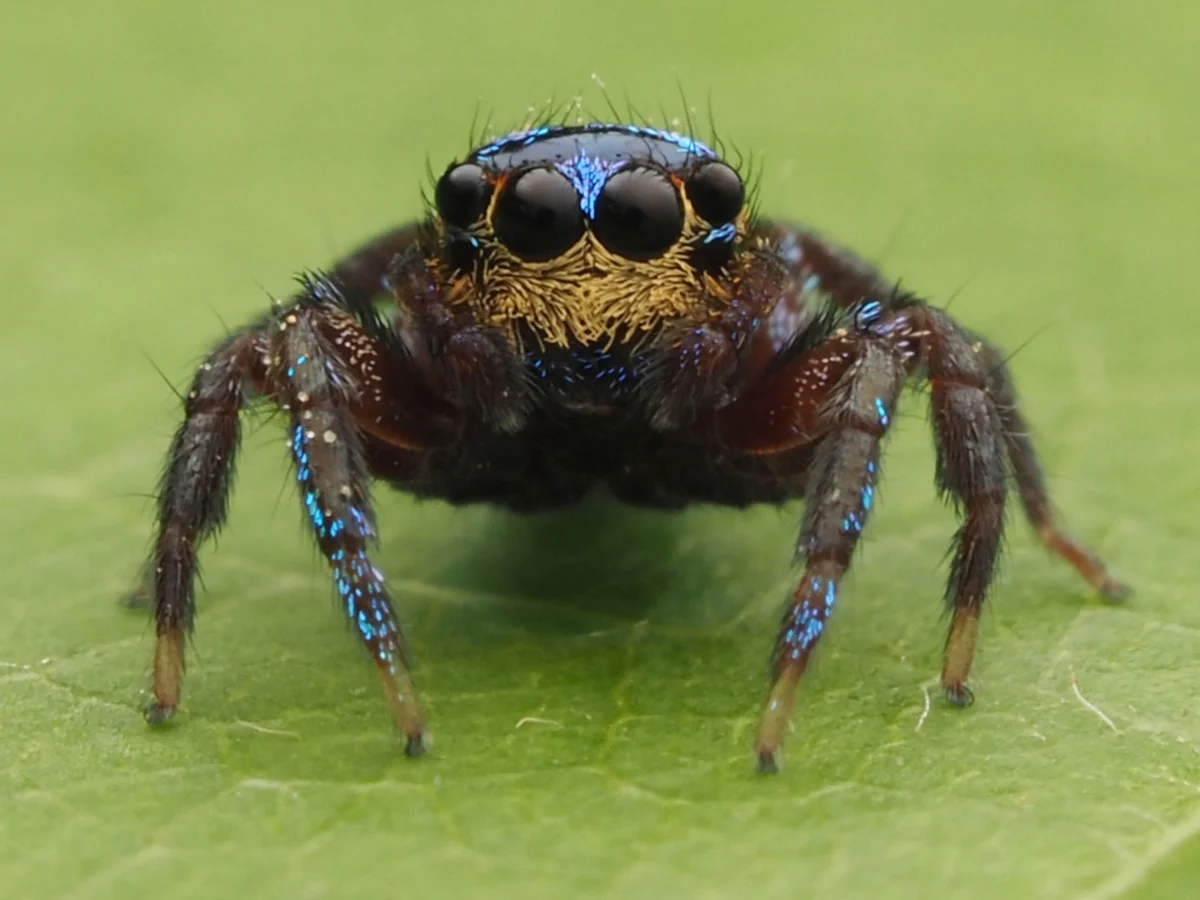

Where Jumping Spiders Are Found
Hover over states to see their names. Green regions indicate where jumping spiders have been reported.
Jumping Spider Identification Guide
Physical Characteristics
Jumping spiders (family Salticidae) are immediately recognizable by their compact, stocky bodies and distinctively large eyes. Their most striking feature is the arrangement of their eight eyes, with two very large, forward-facing anterior median eyes that give them a “face-like” appearance. These prominent eyes provide exceptional visual acuity, allowing them to detect movement and judge distances with remarkable precision.
Adult jumping spiders range from 3-25mm (0.12-1.0 inch) in body length depending on species, with most common North American species measuring 6-15mm. Their bodies are typically covered in short, dense hair and often display vivid patterns. Many species exhibit iridescent scales or markings, particularly around the chelicerae (mouthparts), which can appear bright green, blue, or purple.
Common Species in North America
Several jumping spider species are frequently encountered in and around homes:
- Bold Jumping Spider (Phidippus audax) - Black with white spots and iridescent green or blue chelicerae; one of the largest and most common species at 8-19mm
- Zebra Jumping Spider (Salticus scenicus) - Black and white striped pattern; commonly found on sun-warmed walls and fences at 5-7mm
- Tan Jumping Spider (Platycryptus undatus) - Mottled gray-brown coloration; often found on tree bark and wooden structures
- Regal Jumping Spider (Phidippus regius) - Large species (up to 22mm) with variable coloration; common in southeastern states
Jumping Spider Behavior and Biology
Hunting and Vision
Unlike web-building spiders, jumping spiders are diurnal (daytime) hunters that actively stalk and pounce on their prey. Their exceptional vision, among the best of any arthropod, allows them to spot potential prey from several body lengths away. When a jumping spider detects movement, it will turn to face the target, slowly approach, and then launch a rapid pounce to capture its meal.
The jumping mechanism relies on hydraulic pressure rather than muscular leg extension. By rapidly increasing hemolymph (blood) pressure in their legs, jumping spiders can leap distances of 10-50 times their body length. They always trail a silk dragline when jumping, serving as a safety tether if they miss their target.
Diet
Jumping spiders feed on a variety of small arthropods including:
Jumping spiders also prey on crickets and small grasshoppers. This diverse diet makes them valuable allies in controlling household and garden pests.
Reproduction and Life Cycle
Male jumping spiders perform elaborate courtship displays involving leg waving, body vibrations, and visual signals to attract females. Different species have evolved unique “dances” that help prevent cross-species mating. After mating, females construct silk retreats where they deposit eggs in a protective sac.
Spiderlings emerge after several weeks and undergo multiple molts before reaching adulthood. Most species complete their life cycle in one year, with adults emerging in spring and summer, mating, and dying before winter. In temperate regions, many species overwinter as immature stages in protected locations.
Habitat Preferences
Jumping spiders are found in diverse habitats wherever prey is abundant:
- Sun-warmed exterior walls and fences
- Window frames and door surrounds
- Gardens and landscaping
- Tree bark and wooden structures
- Inside homes near windows and light sources
They prefer locations with good lighting that supports their vision-dependent hunting strategy.
How We Treat for Jumping Spiders
Because jumping spiders are beneficial predators that pose no threat to humans and cause no property damage, we generally recommend tolerance rather than treatment. However, if spider activity becomes bothersome or you prefer not to share your space with these eight-legged visitors, our approach focuses on exclusion and habitat modification rather than pesticides.
Our Approach
-
Inspection - We identify entry points and areas of spider activity both inside and outside your home, noting factors that may be attracting them such as exterior lighting or abundant prey insects.
-
Exclusion - Sealing cracks around windows, doors, and utility penetrations prevents spiders from entering. Installing or repairing screens and door sweeps creates physical barriers.
-
Habitat Modification - Reducing exterior lighting or switching to yellow “bug lights” decreases the insects that attract spiders. Removing vegetation touching the structure and clearing debris reduces harborage areas.
-
Mechanical Removal - For immediate relief, we remove visible spiders and their retreats. Homeowners can continue this by vacuuming spiders and web structures as they appear.
-
Targeted Treatment - When requested, we apply non-repellent treatments to exterior spider activity areas including windows, doorways, and corners. Interior treatment is limited to spot applications in high-activity zones.
Prevention Tips
- Reduce exterior lighting or use yellow bulbs that attract fewer insects
- Seal gaps around windows, doors, and where utilities enter
- Remove vegetation and debris near the foundation
- Vacuum spiders and silk retreats when found indoors
- Inspect items like firewood and boxes before bringing them inside
When to Seek Professional Help
Most jumping spider encounters do not require professional intervention. Consider contacting us if:
- Spider activity increases significantly
- You notice numerous spiders entering your home
- You prefer comprehensive exclusion services
- Spiders are present alongside other pest issues
Our tri-annual pest control service (three visits per year) includes spider management as part of a comprehensive approach that also addresses the insects jumping spiders feed on, naturally reducing their numbers over time.
References
- UC IPM Pest Notes: Spiders - University of California Integrated Pest Management
- Penn State Extension: Zebra Jumper - Pennsylvania State University
- Utah State University Extension: Jumping Spiders - IPM Structural Pest Identification Guide
Other Spiders
Explore other species in the spiders family
Commonly Confused With
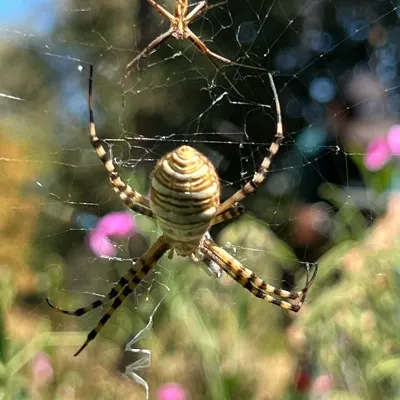
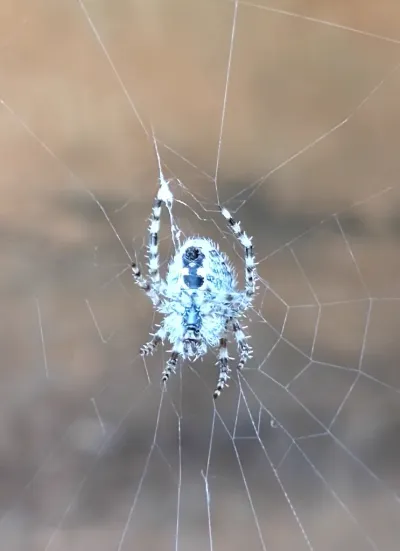
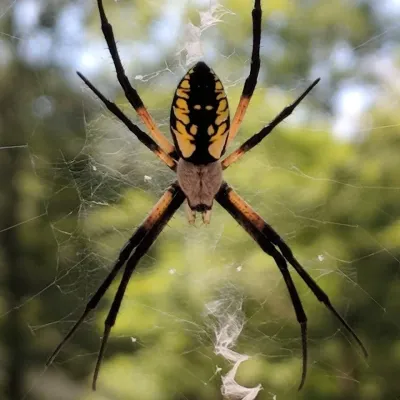
Jumping Spiders are often mistaken for these similar pests
Where Jumping Spiders Are Found
Hover over states to see their names. Green regions indicate where jumping spiders have been reported.
Common Questions about Jumping Spiders
Are jumping spiders dangerous to humans?
+
No, jumping spiders are not dangerous. While they can bite if handled roughly, their venom is not medically significant to humans. Bites are rare and typically cause only minor, localized irritation similar to a mosquito bite.
Why do jumping spiders seem to watch me?
+
Jumping spiders have excellent vision and are naturally curious. Their large forward-facing eyes give them binocular vision for judging distances when hunting. When they turn to face you, they are simply investigating movement in their environment.
Should I kill jumping spiders in my home?
+
Jumping spiders are beneficial predators that help control flies, mosquitoes, and other pest insects. Many pest control experts recommend leaving them alone or relocating them outdoors rather than killing them.
How do jumping spiders get inside my house?
+
Jumping spiders enter through small gaps around windows, doors, and utility openings. They may also be carried in on plants, boxes, or firewood. Their small size allows them to squeeze through surprisingly tight spaces.
Do jumping spiders make webs?
+
Jumping spiders do not build webs to catch prey. However, they create small silk retreats for resting, molting, and protecting their eggs. They also trail a silk dragline as a safety tether when jumping.
What do jumping spiders eat?
+
Jumping spiders are active hunters that prey on flies, mosquitoes, gnats, small moths, and other spiders. They stalk and pounce on their prey rather than trapping it in webs.
How long do jumping spiders live?
+
Most jumping spiders live 1-2 years. Their lifespan varies by species and environmental conditions, with some larger species potentially living up to 3 years.
Can jumping spiders jump on people?
+
While jumping spiders are capable jumpers, they do not intentionally jump on people. They jump to capture prey or escape threats. If one lands on you, it likely misjudged a jump or was startled.

With five years of hands-on experience in the pest control industry, George Schulz is a registered technician with the Virginia Pest Management Association and a proud third-generation professional in a family business that's been protecting homes for over 57 years. He manages and trains a team of service pros while also leading internal research efforts—recently spearheading a deep-dive review of thousands of documents on pest control materials to hand-pick the most kid and pet friendly, most effective solutions tailored specifically for homes in the DC metro area.