Grass Spiders Identification Guide
Agelenopsis spp.
Grass spiders are common funnel-web building spiders found throughout North America. Known for their distinctive sheet webs with funnel-shaped retreats, these fast-moving predators are frequently seen in lawns, gardens, and around home foundations. Despite their intimidating appearance, grass spiders are harmless to humans.
Taxonomy
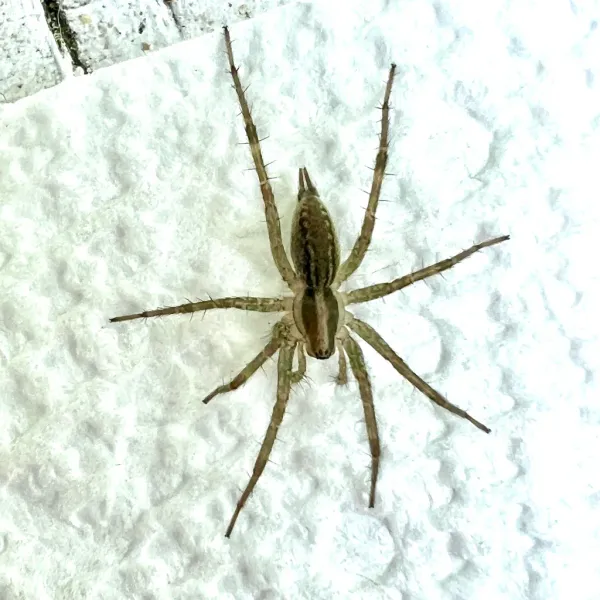
Grass Spiders Coloration
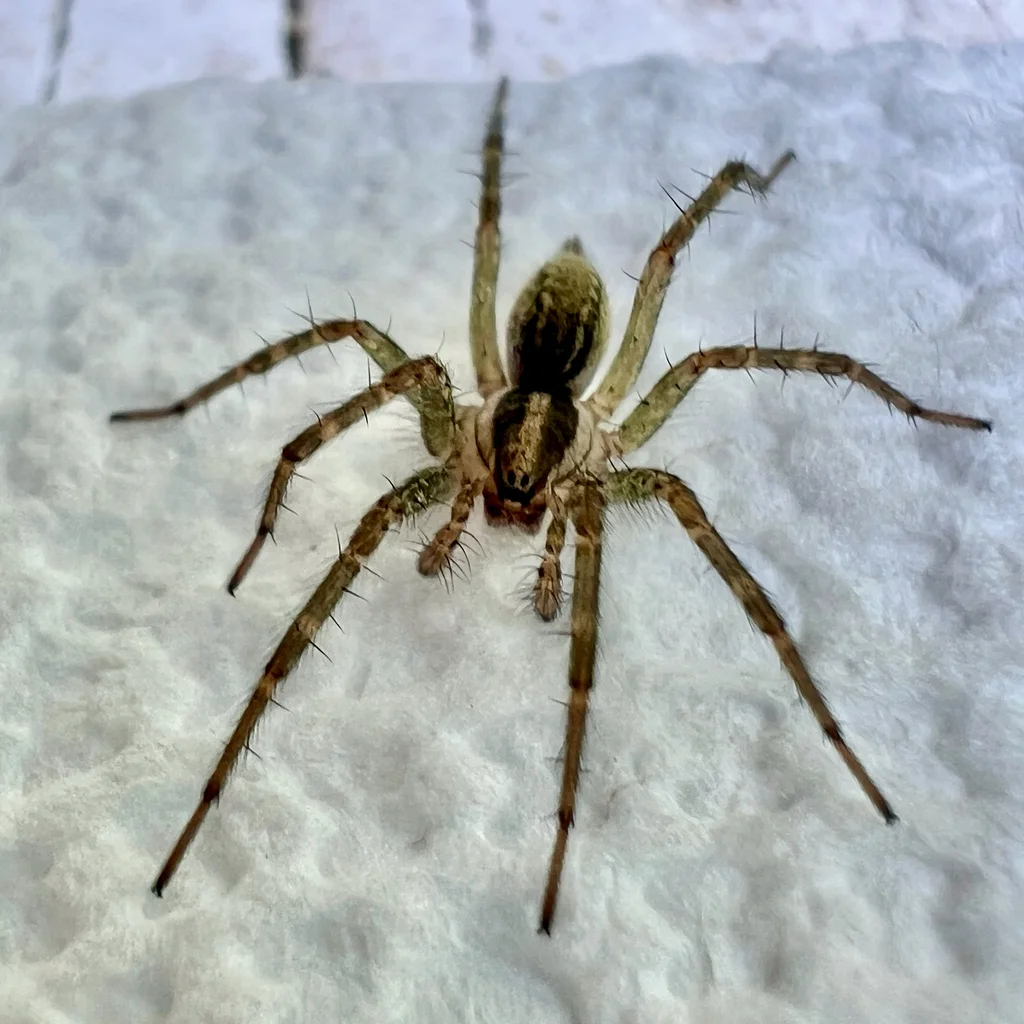
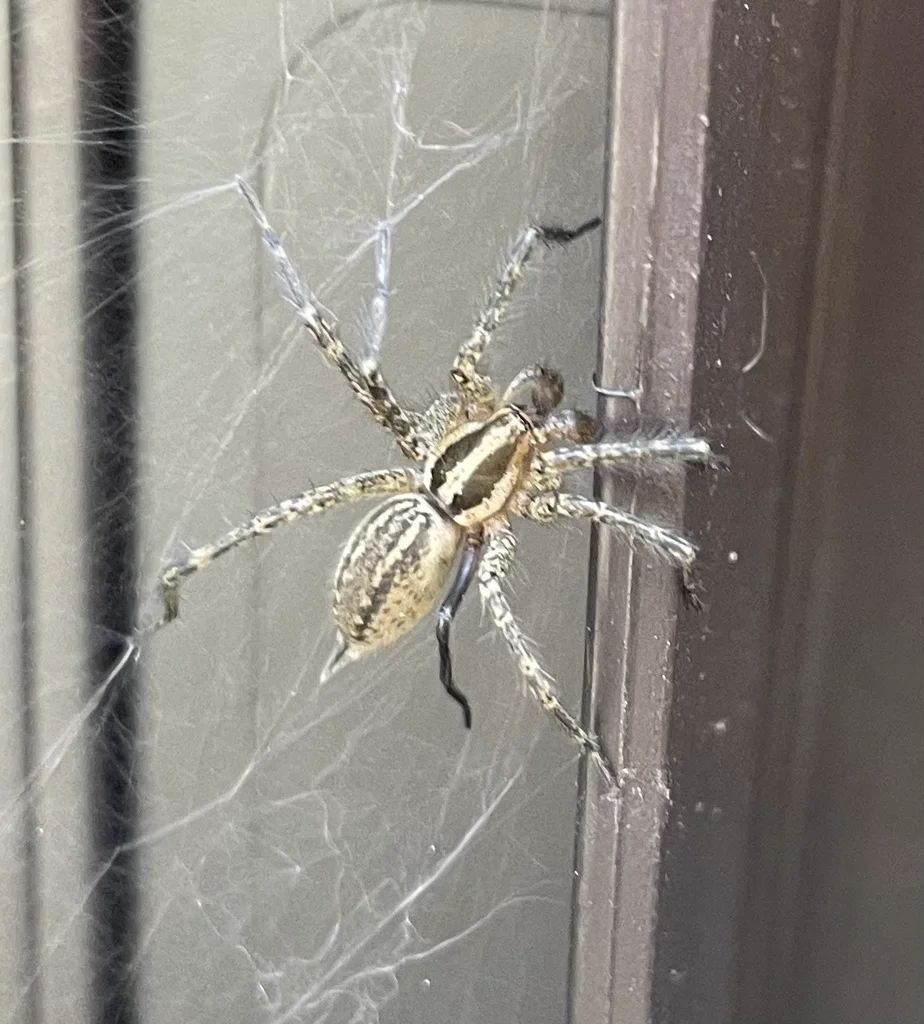
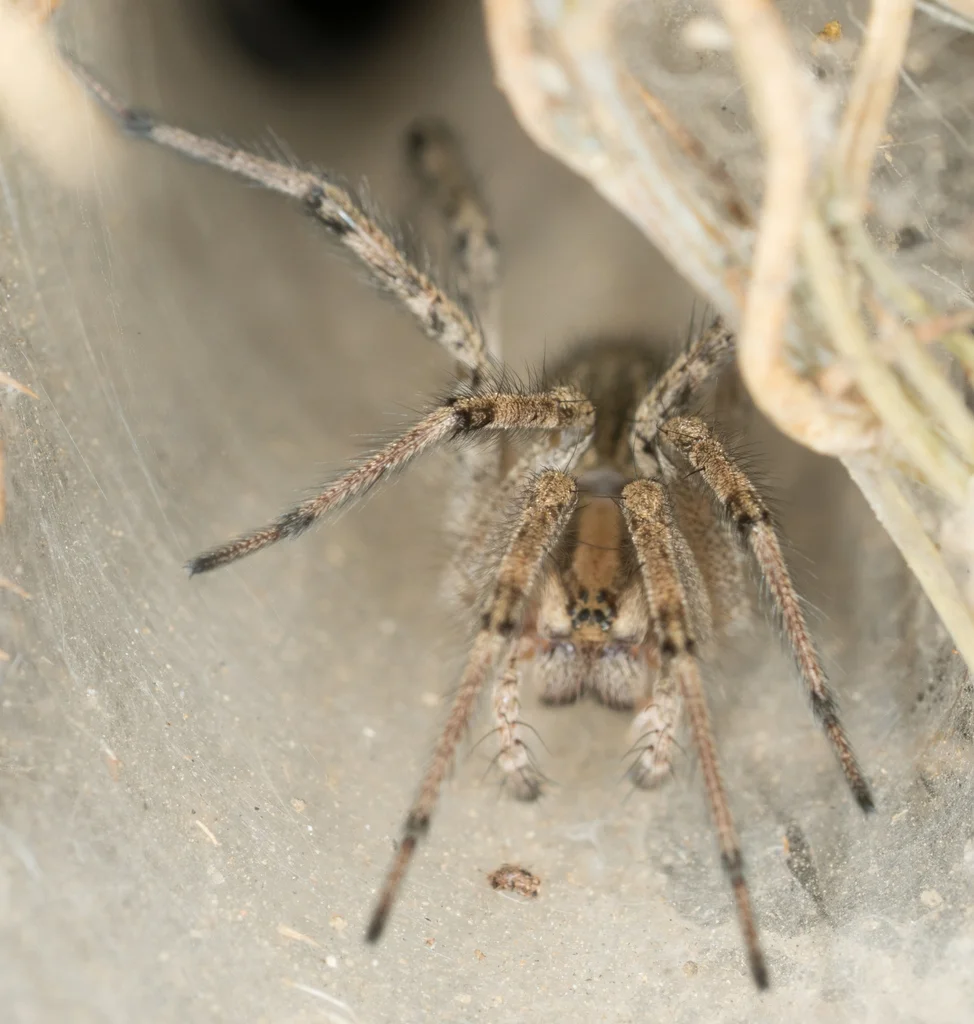
Common color patterns to help identify grass spiders
Grass Spiders
Seasonal Activity
When grass spiders are most active throughout the year

Where Grass Spiders Are Found
Hover over states to see their names. Green regions indicate where grass spiders have been reported.
Grass Spider Identification Guide
Physical Characteristics
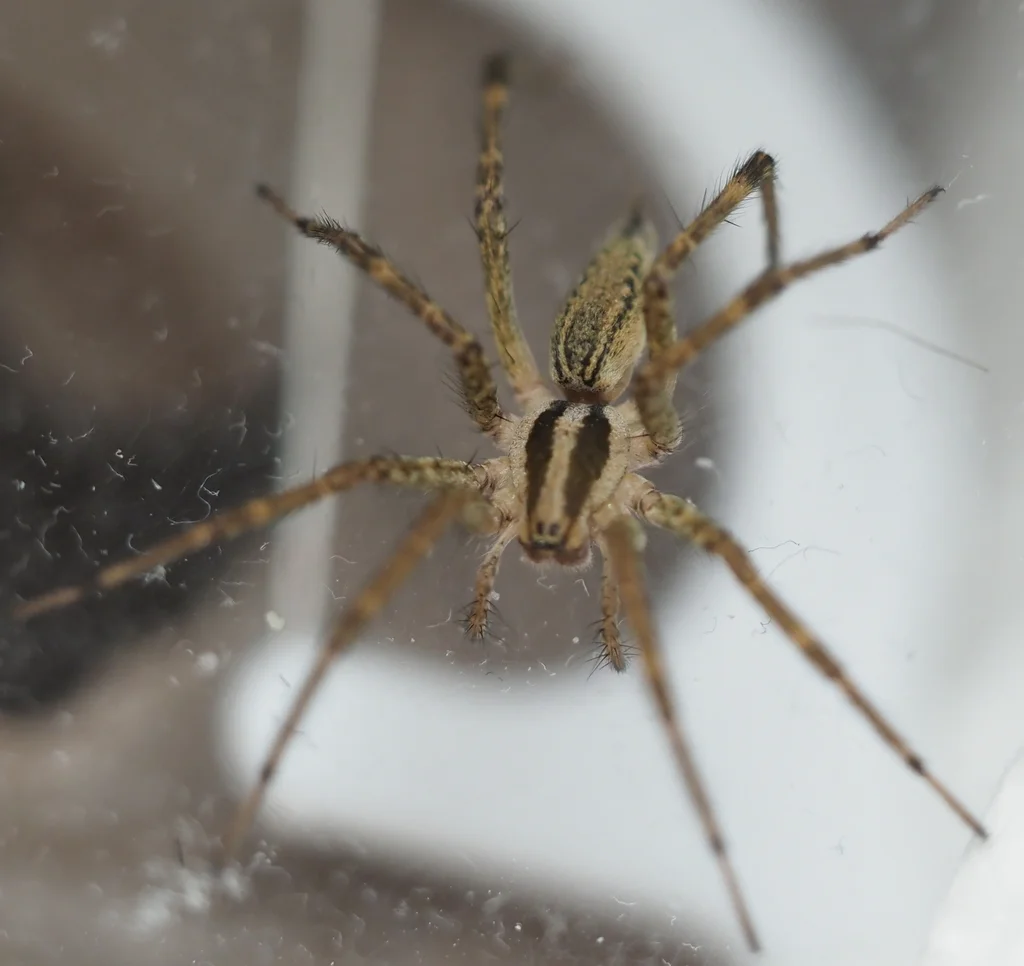
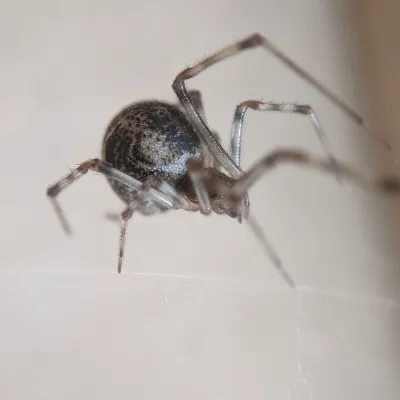
Grass spiders (genus Agelenopsis) are medium-sized spiders commonly found throughout North America. Adults measure 10-20mm (approximately 0.4-0.8 inches) in body length, with females being slightly larger than males. Including their long legs, grass spiders can span 1 to 2 inches across.
The most reliable identification features include:
- Two dark longitudinal stripes running along each side of the cephalothorax (head region), creating a lighter central band
- Prominent spinnerets that extend noticeably from the rear of the abdomen, often as long as the spider’s body
- Eight eyes arranged in three rows: two on top, four in the middle row, and two on the bottom row (spaced wider than the top pair)
- Banded legs with darker rings at the joints
- Chevron or herringbone pattern on the abdomen, lighter than similar markings on wolf spiders
Coloration varies from yellowish-brown to dark brown, with the overall pattern providing effective camouflage in grass and leaf litter. Their bodies are covered in fine hairs that help detect vibrations in their webs.
Web Identification
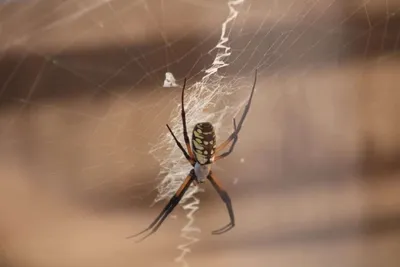
The most distinctive feature of grass spiders is their funnel-shaped web, which is often easier to spot than the spider itself. Key characteristics include:
- Horizontal sheet web - A flat, non-sticky sheet of silk spread across grass, shrubs, or ground-level structures
- Funnel retreat - A tubular opening at one edge where the spider waits for prey
- Size variations - Sheets can range from a few inches to up to 3 feet wide in larger specimens
- Location - Commonly found in grass, hedges, ground cover, around foundations, and in corners of outdoor structures
Unlike orb weavers’ circular webs, grass spider webs lack sticky capture threads. Instead, the sheet is covered with trip lines that entangle prey, alerting the spider through vibrations.
Common Species in North America
The genus Agelenopsis contains approximately 14 species in North America. Some commonly encountered species include:
- Pennsylvania Grass Spider (Agelenopsis pennsylvanica) - Widespread in eastern North America, common around homes
- Western Grass Spider (Agelenopsis aperta) - Found throughout western states, studied extensively for venom research
- Potteri Grass Spider (Agelenopsis potteri) - Common in eastern and central regions
- Naevia Grass Spider (Agelenopsis naevia) - Found across much of the United States
Species identification typically requires microscopic examination of reproductive structures, but all Agelenopsis species share similar behaviors and pose no threat to humans.
Grass Spider Behavior and Biology
Habitat Preferences
Grass spiders are highly adaptable and occupy diverse habitats across North America, from coastal areas to mountain meadows. Around homes, they commonly inhabit:
Outdoor habitats:
- Lawns and grassy areas
- Hedges and ornamental shrubs
- Ground cover and flower beds
- Around foundation walls
- Woodpiles and rock piles
- Under deck boards and porch steps
Less common indoor locations:
- Basement window wells
- Garage corners at ground level
- Crawl space entrances
- Outdoor building interiors (sheds, barns)
Grass spiders prefer locations where they can anchor their sheet webs between stable structures and where insect traffic is high. They are primarily outdoor spiders and do not establish breeding populations indoors.
Diet and Feeding Habits
Grass spiders are sit-and-wait predators that rely on their webs to detect and capture prey. Unlike sticky orb webs, the grass spider’s sheet web functions differently:
- Detection - The spider waits at the funnel entrance, front legs touching the sheet to sense vibrations
- Capture - When prey lands on the sheet, the spider rushes out at remarkable speed
- Subduing - A quick venomous bite paralyzes the prey within seconds
- Feeding - The spider drags the prey into the funnel retreat to feed safely
Their diet includes grasshoppers, crickets, moths, flies, beetles, ants, and other small arthropods. The speed of grass spiders is notable. Because their webs are not sticky, they must rely on rapid strikes to capture prey before it escapes.
Reproduction and Lifecycle
Grass spiders follow an annual lifecycle common to many temperate spiders:
- Spring emergence - Spiderlings hatch from overwintered egg sacs and disperse
- Summer growth - Young spiders build progressively larger webs and molt multiple times as they grow
- Late summer maturity - Adults reach reproductive maturity, typically August through September
- Fall mating - Males abandon their webs to search for females, leading to increased sightings
- Egg laying - Females create lens-shaped egg sacs containing hundreds of eggs, hidden in dense vegetation
- Winter - Adults die after the first hard frost; eggs overwinter in protected locations
Males live only long enough to mate, while females may survive slightly longer to complete egg production. The species overwinters as eggs rather than as adults.
Seasonal Activity Patterns
Grass spider activity follows distinct seasonal patterns:
- January-February (None): Dormant egg stage; no adult activity
- March-April (Low): Spiderlings begin emerging as temperatures warm
- May-June (Moderate): Young spiders establish webs and grow rapidly
- July-August (High): Peak web-building activity; webs become more noticeable
- September-October (Highest): Adult populations peak; males wander seeking mates; webs most visible with morning dew
- November (Declining): Activity decreases sharply; first frost kills most adults
- December (None): Only egg sacs remain; adults have died
The dramatic increase in visible webs during fall often leads homeowners to believe there is a sudden spider “invasion,” when in reality the population has simply reached its annual peak.
How We Treat for Grass Spiders
Grass spiders present specific control challenges because they are outdoor spiders that only occasionally enter structures. Our treatment approach focuses on reducing populations around the home exterior and preventing indoor migration.
Our Treatment Process
Step 1: Comprehensive Inspection
We begin by identifying areas of high grass spider activity and the conditions attracting them. Key inspection points include:
- Foundation perimeter and ground-level entry points
- Landscaping adjacent to the structure
- Exterior lighting that attracts prey insects
- Window wells and basement entries
- Garage and shed interiors
- Areas with dense vegetation near the home
Step 2: Exterior Barrier Treatment
We apply a non-repellent spray to exterior areas where grass spiders are active. Because grass spiders hunt by rushing out to capture prey, non-repellent products are essential since spiders will contact treated surfaces without detecting them. Treatment areas include:
- Foundation walls and perimeter
- Window and door frames at ground level
- Areas where webs are commonly found
- Transition zones between lawn and structure
Step 3: Web Removal (De-Webbing)
We remove accessible grass spider webs around the home’s exterior, including:
- Webs on foundation walls and around entries
- Webs in window frames and door corners
- Funnel webs in shrubs near the structure
Web removal discourages rebuilding in the same locations and forces spiders to expend energy relocating, reducing their survival.
Step 4: Interior Spot Treatment
For homes experiencing indoor grass spider activity, we apply targeted treatments to:
- Basement corners and floor-wall junctions
- Garage interiors at ground level
- Around utility penetrations and entry points
- Window well areas
Step 5: Ongoing Maintenance
Our seasonal protection plan includes tri-annual visits (three times per year) to:
- Reapply exterior barrier treatments before peak activity periods
- Perform de-webbing around the structure
- Monitor activity levels and adjust treatment as needed
- Control prey insect populations that attract spiders
Customer Guidance
For optimal grass spider control, we recommend:
- Reduce exterior lighting or switch to yellow “bug lights” that attract fewer insects
- Trim vegetation back from foundation walls to eliminate web attachment points
- Remove ground debris such as leaf litter, woodpiles, and rocks near the foundation
- Seal entry points including gaps under doors, around windows, and utility penetrations
- Address moisture issues that attract both spiders and their prey
- Vacuum indoor spiders rather than attempting to catch them by hand
Why Regular Service Matters
Grass spider control requires ongoing attention because:
- New spiders continuously disperse into favorable habitats from surrounding areas
- Peak activity in fall brings the highest spider pressure when most homeowners seek control
- Reducing prey insect populations is essential to making the area less attractive
- Egg sacs may hatch and establish new populations each spring
Our tri-annual service maintains a protective barrier and addresses the full range of insects that attract grass spiders to your property.
EPA-Approved, Effective Products
We have removed 9 of the harshest chemicals commonly used in the industry. Instead, we use reduced-risk products like Essentria, Alpine, and Borate-based solutions that effectively control spiders while considering environmental impact. These are EPA-approved products we feel comfortable using in our own homes.
References and Additional Resources
- Penn State Extension: Grass Spiders - Comprehensive guide to grass spider identification and biology
- BugGuide: Agelenopsis - Taxonomic information and species identification
- Missouri Department of Conservation: Grass Spiders - Field guide with behavior and habitat information
- Spider ID: Agelenidae - Species-level identification resources
- A-Z Animals: Grass Spider - General information on grass spider ecology and distribution
Other Spiders
Explore other species in the spiders family
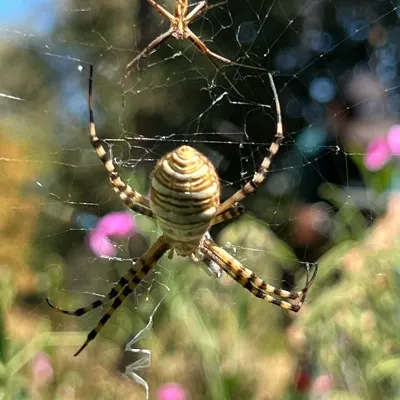
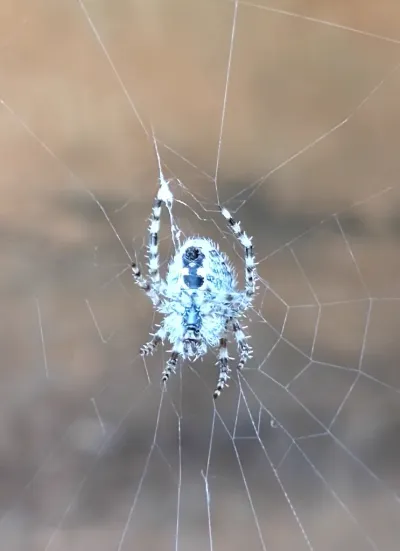
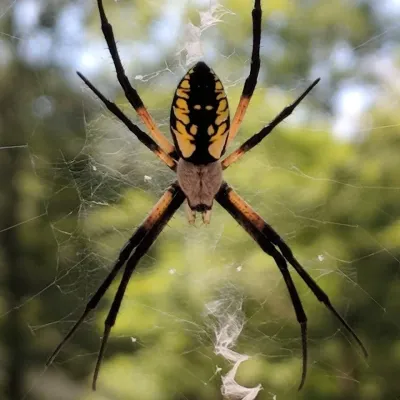
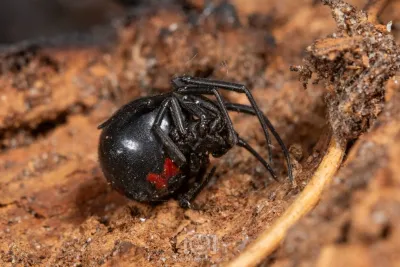
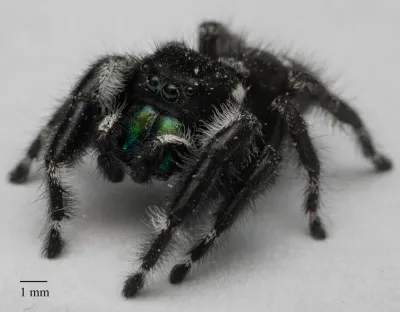
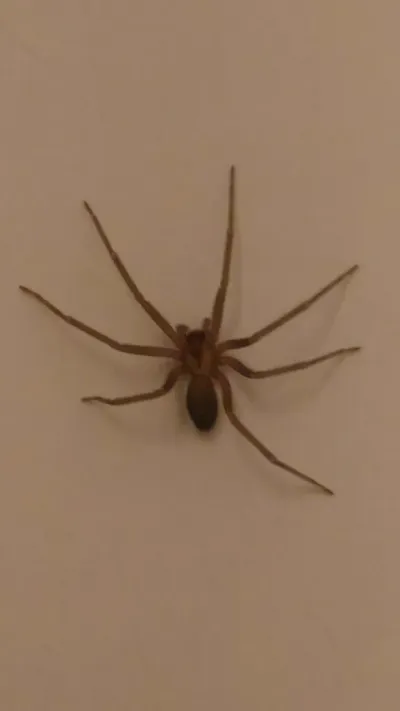
Commonly Confused With
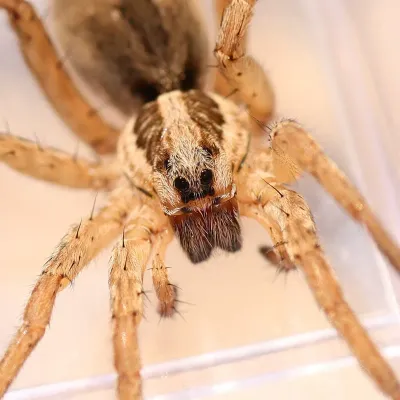
Grass Spiders are often mistaken for these similar pests
Where Grass Spiders Are Found
Hover over states to see their names. Green regions indicate where grass spiders have been reported.
Common Questions about Grass Spiders
Are grass spiders dangerous to humans?
+
No, grass spiders are not dangerous to humans. While they possess venom to subdue their insect prey, their fangs are small and rarely capable of penetrating human skin. Even if a bite occurs, the venom causes only minor, localized swelling similar to a bee sting. Grass spiders are shy and will retreat into their funnel when disturbed rather than bite.
How can I tell a grass spider from a wolf spider?
+
Grass spiders and [wolf spiders](/pests/spiders/wolf-spiders/) look similar but have key differences. See our [grass spider vs. brown recluse](/grass-spider-vs-brown-recluse/) comparison for another common mix-up. Grass spiders have two dark longitudinal stripes on the cephalothorax that are thinner and lighter than wolf spider markings. The most distinctive feature is grass spiders' prominent spinnerets (silk-producing organs) that extend visibly from the rear of the abdomen. Additionally, grass spiders build funnel webs, while wolf spiders are active hunters that do not use webs to catch prey.
Why do I see so many grass spider webs in my lawn?
+
Grass spider webs become highly visible in late summer and fall when adult populations peak and morning dew highlights the silk sheets. Each web belongs to an individual spider. Lawns provide ideal habitat with abundant insect prey, moisture, and vegetation for web anchoring. The webs are most noticeable in September and October before the first frost.
Do grass spiders come inside homes?
+
Grass spiders occasionally wander indoors, especially in fall when males are searching for mates or when seeking shelter from cold weather. However, they prefer outdoor habitats and do not thrive indoors. Indoor sightings typically involve wandering individuals rather than established populations.
How long do grass spiders live?
+
Grass spiders typically live about one year. They emerge from egg sacs in spring, grow through several molts during summer, reach maturity in late summer to early fall, mate, and then die with the first hard frost. Females may survive slightly longer to complete egg-laying before winter.
What do grass spiders eat?
+
Grass spiders are opportunistic predators that feed on insects and other small arthropods that wander onto their sheet webs. Common prey includes grasshoppers, crickets, flies, beetles, moths, and ants. They are beneficial predators that help control pest insect populations in lawns and gardens.
Should I remove grass spider webs from my yard?
+
Grass spider webs do not need to be removed from lawns and gardens where they are beneficial pest controllers. However, webs in high-traffic areas, near doorways, or on structures can be swept away. The spiders will typically rebuild or relocate. Regular web removal around the home's exterior can discourage spiders from establishing near entry points.
Are grass spiders the same as funnel-web spiders?
+
Grass spiders belong to the [funnel weaver](/pests/spiders/funnel-weaver-spiders/) family (Agelenidae) and are sometimes called funnel-web spiders due to their web structure. However, they should not be confused with the highly venomous Australian funnel-web spiders (family Atracidae), which are completely different and do not occur in North America. North American grass spiders are harmless.

With five years of hands-on experience in the pest control industry, George Schulz is a registered technician with the Virginia Pest Management Association and a proud third-generation professional in a family business that's been protecting homes for over 57 years. He manages and trains a team of service pros while also leading internal research efforts—recently spearheading a deep-dive review of thousands of documents on pest control materials to hand-pick the most kid and pet friendly, most effective solutions tailored specifically for homes in the DC metro area.