Bold Jumping Spider Identification Guide
Phidippus audax
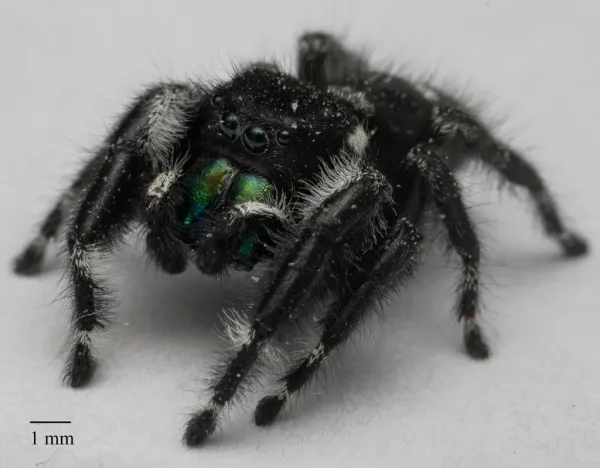
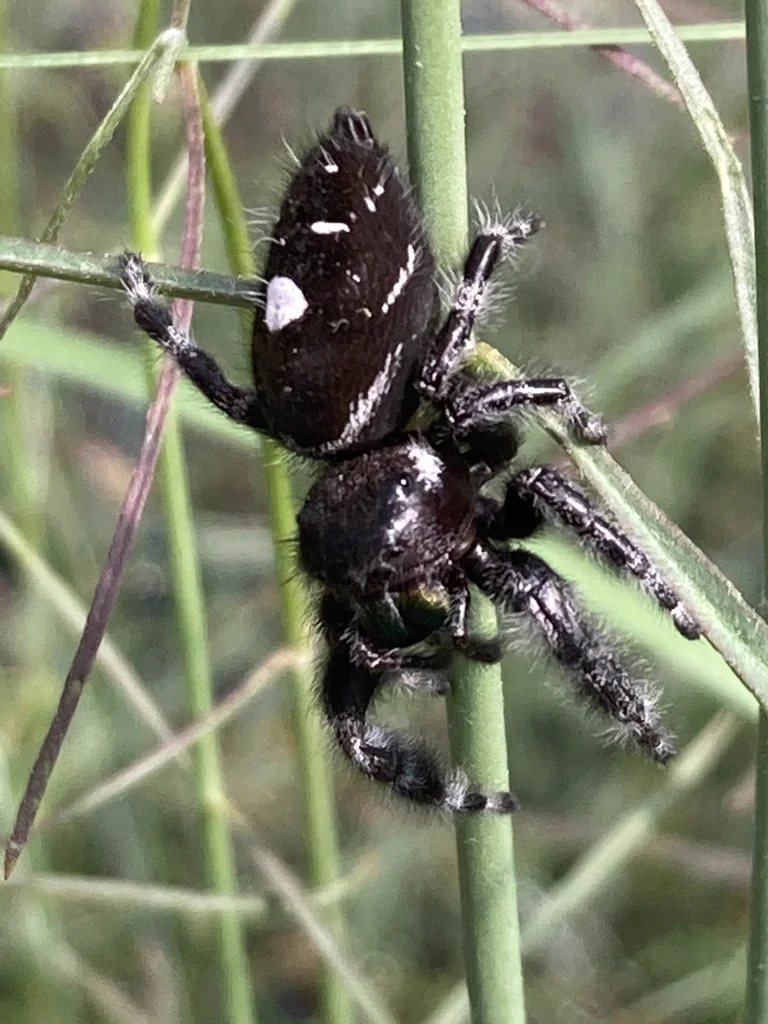
The bold jumping spider is a common spider in North America. It has a black body with white spots and shiny green or blue jaws. These harmless spiders are often found on walls, fences, and sometimes inside homes.
Taxonomy
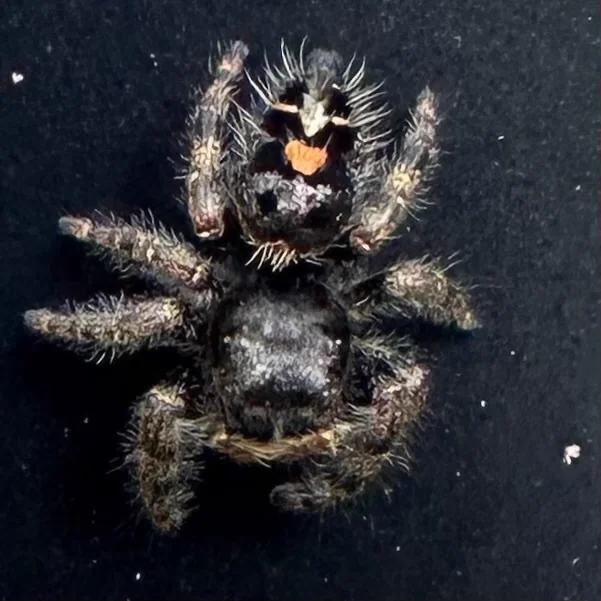
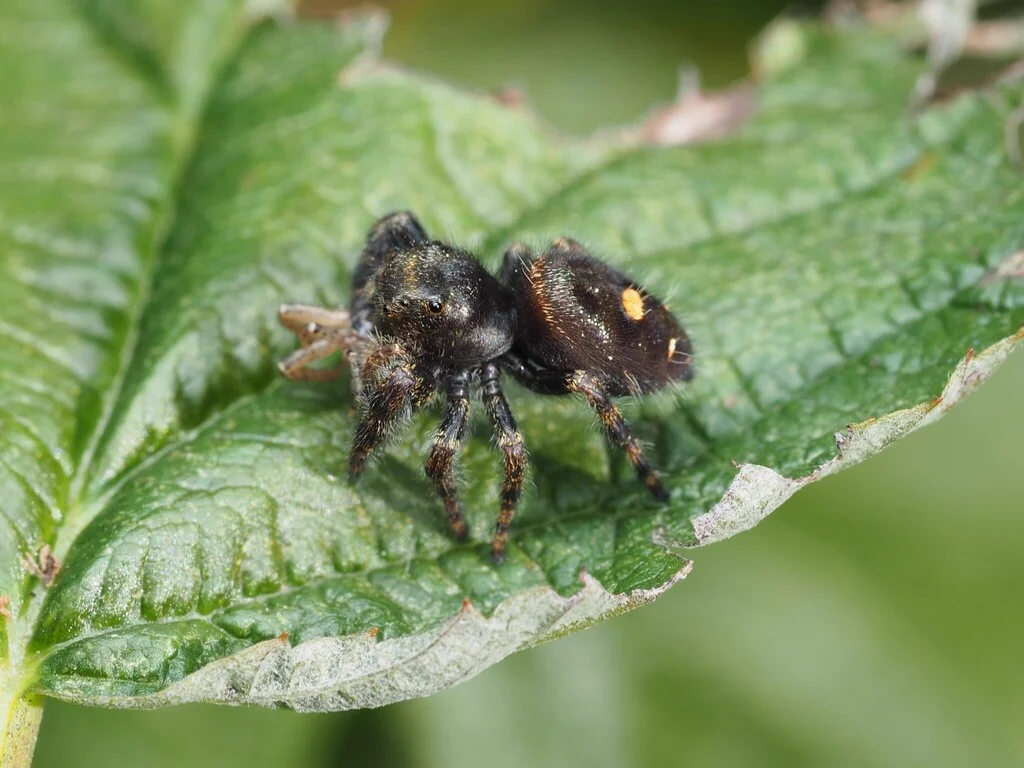
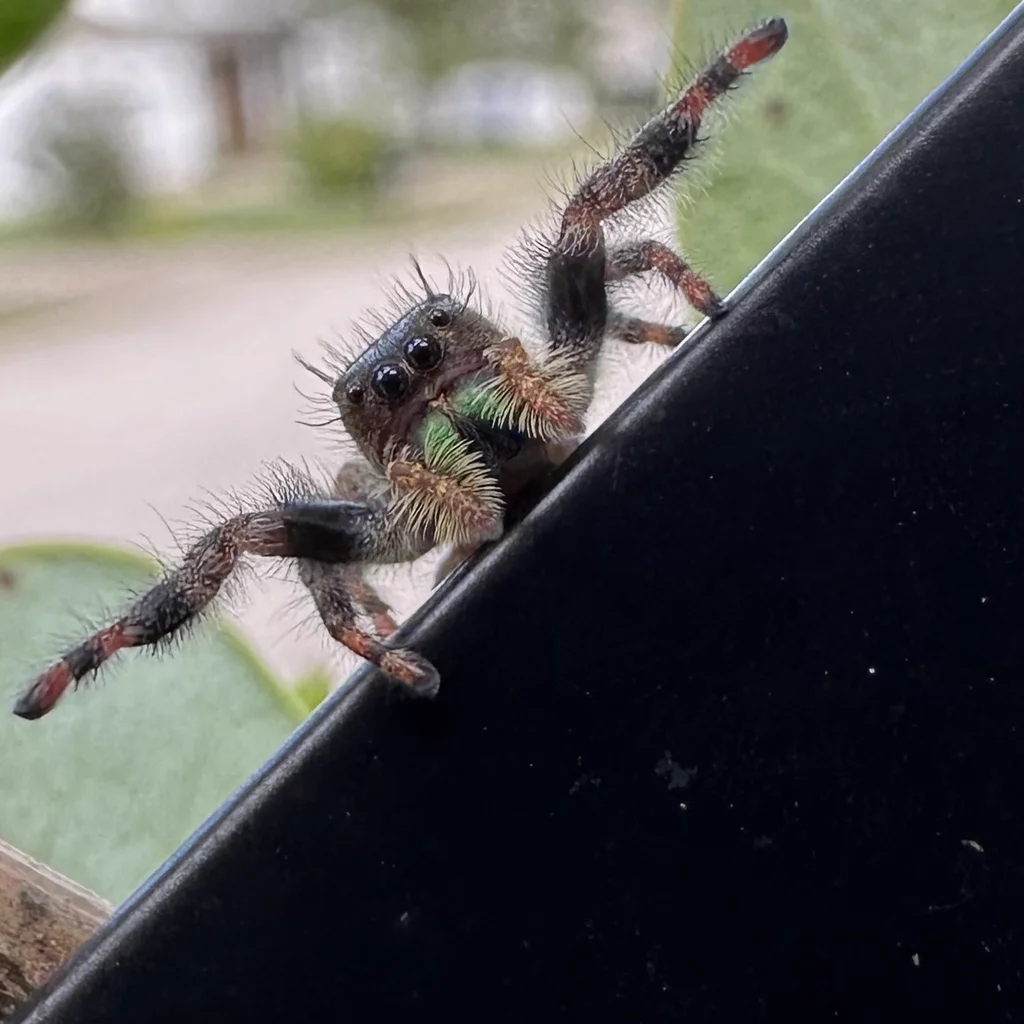
Bold Jumping Spider Coloration
Common color patterns to help identify bold jumping spider
Bold Jumping Spider
Seasonal Activity
When bold jumping spider are most active throughout the year

Where Bold Jumping Spider Are Found
Hover over states to see their names. Green regions indicate where bold jumping spider have been reported.
Bold Jumping Spider Identification Guide
Physical Characteristics
The bold jumping spider (Phidippus audax) is one of the largest jumping spiders in North America. Adults are 8 to 19mm long. Females are bigger than males. Their bodies are compact and covered in short, soft hair that makes them look fuzzy.
Bold jumping spiders are easy to spot by their coloring. The body is mostly black with white or cream spots on the abdomen. The central marking often forms a triangle or chevron shape. Young spiders may have orange or red markings that fade to white as they grow.
Their most striking feature is their shiny jaws. These shimmer green, blue, or teal in the light. This metallic color makes them easy to tell apart from other spiders. Like all jumping spiders, they have eight eyes in three rows. The two big front eyes help them see depth well.
Distinguishing Bold Jumping Spiders from Similar Species
Bold jumping spiders can be confused with other Phidippus species:
- Regal Jumping Spider: Bigger with more varied colors. Often has lots of white or orange marks. More common in the South.
- Johnson’s Jumping Spider: Has a bright red belly instead of black with white spots.
- Zebra Jumping Spider: Smaller with clear black and white stripes instead of white spots.
- Tan Jumping Spider: Mottled gray-brown with wavy markings instead of white spots.
Bold Jumping Spider Behavior and Biology
Hunting Strategy
Bold jumping spiders hunt during the day. Their large front eyes give them great vision. They can spot movement from far away. When one sees prey, it creeps closer while watching the target. Then it jumps fast to catch its meal.
These spiders can jump 10 to 50 times their body length. They push blood into their legs fast to make them extend quickly. They always trail a silk line when jumping. This works like a backup rope if they miss or need to escape.
Diet and Prey Preferences
Bold jumping spiders eat many kinds of small bugs:
They help control pests around homes and gardens, including crickets and small grasshoppers. One bold jumping spider can eat dozens of pest bugs in its lifetime.
Reproduction and Life Cycle
Males do dances to attract females. They wave their legs, vibrate their bodies, and move in zigzags. The male shows off his shiny jaws and white spots. Females watch before choosing a mate.
After mating, females build silk nests in hidden spots. They lay 30 to 170 eggs in a silk sac. The female guards the eggs and rarely leaves. Babies hatch after 2 to 3 weeks. They shed their skin many times before growing up. These spiders have one batch of young per year. Adults are most active from late spring to fall.
Habitat and Distribution
Bold jumping spiders live all over North America, from Canada to Mexico. They do well in many places:
- Exterior walls of homes and buildings
- Wooden fences and deck railings
- Gardens and landscaping
- Tree bark and fallen logs
- Fields, meadows, and forest edges
They like sunny, warm spots where they can hunt by day. When it gets cold, they hide in cracks, under bark, or inside buildings for winter.
How We Treat for Bold Jumping Spiders
Bold jumping spiders are common in and around homes. They hunt pest bugs, don’t harm people, and cause no damage. If you want fewer spiders inside, we focus on sealing entry points and changing their habitat.
Our Approach
-
Inspection: We find entry points and spots where spiders hang out. We look for what draws them in, like lights, bugs, or hiding places.
-
Exclusion: We seal cracks around windows, doors, and pipes. Screens and door sweeps help keep spiders out.
-
Habitat Change: Using less outdoor lighting or yellow bulbs cuts down on bugs that draw spiders. Trimming plants and clearing debris near the house removes hiding spots.
-
Removal: We remove spiders and silk nests we can see. You can also catch spiders and put them outside.
-
Treatment: If asked, we apply products around windows, doors, and corners outside. Inside, we treat only where spiders are most active.
Tips for Homeowners
- Use less outdoor lighting at night or switch to yellow bulbs
- Seal gaps around windows, doors, and pipes
- Fix or add window screens and door sweeps
- Clear plants and junk near the house
- Check firewood, boxes, and plants before bringing them in
- Vacuum up spiders and silk nests when you see them
When to Seek Professional Help
Most sightings don’t need a pest control visit. These spiders are harmless and show up in small numbers. Call us if:
- Spider activity gets much worse or bugs you
- You see lots of spiders coming inside often
- You want help sealing your home
- Spiders show up with other pest problems
Our triannual service (three visits per year) includes spider control. We also treat the bugs that spiders eat, which cuts down spider numbers over time.
References
- Penn State Extension: Bold Jumper Spider - Pennsylvania State University
- UC Pest Notes: Spiders - University of California Agriculture and Natural Resources
- Utah State University Extension: Jumping Spiders - Structural Pest Identification Guide
- Missouri Department of Conservation: Bold Jumper - Missouri Field Guide
Other Spiders
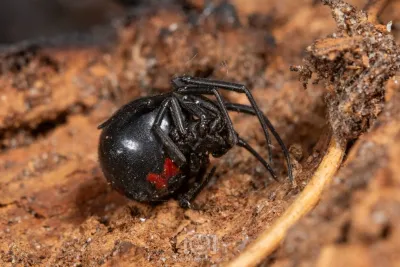
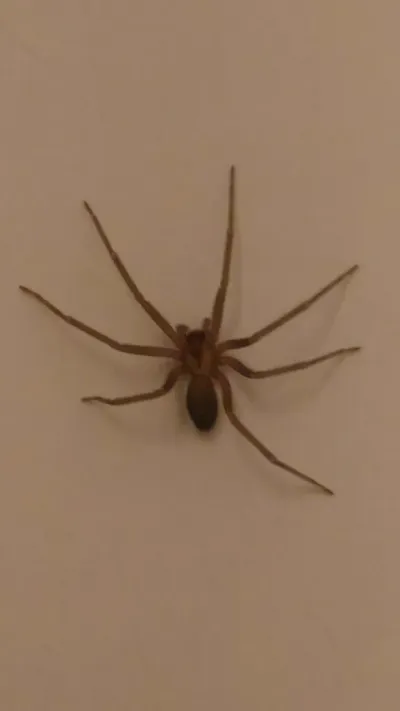
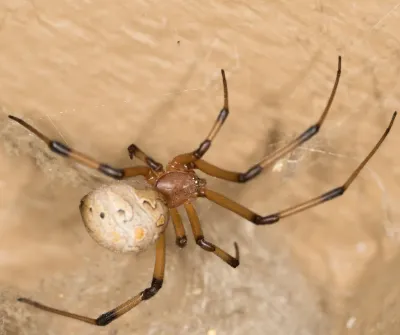
Explore other species in the spiders family
Commonly Confused With
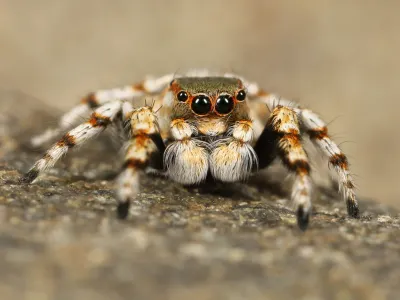
Bold Jumping Spider are often mistaken for these similar pests
Where Bold Jumping Spider Are Found
Hover over states to see their names. Green regions indicate where bold jumping spider have been reported.
Common Questions about Bold Jumping Spider
Are bold jumping spiders poisonous or dangerous?
+
No. Bold jumping spiders are not dangerous to people. They have venom to catch bugs, but their bite is harmless. Bites are rare and only happen if the spider gets trapped against your skin. Any reaction is mild, like a mosquito bite.
Why do bold jumping spiders have such big eyes?
+
Bold jumping spiders have eight eyes. The two large front eyes give them great vision. This helps them judge distances when they hunt. Their eyesight is some of the best of any bug.
How do I identify a bold jumping spider?
+
Look for a black spider with white spots on its belly, often in a triangle shape. Their jaws are shiny green or blue. Adults are 8-19mm long, which is big for a jumping spider.
Should I kill bold jumping spiders in my house?
+
Bold jumping spiders prey on flies, mosquitoes, and other pest insects. They pose no threat to humans or property. Homeowners can relocate them outdoors or contact a pest control company for treatment if spider activity is bothersome.
Do bold jumping spiders bite?
+
They can bite if squeezed or scared, but bites are rare. They are not mean spiders. They would rather jump away than bite.
What do bold jumping spiders eat?
+
They hunt flies, mosquitoes, moths, beetles, and other small bugs. They stalk and pounce on prey instead of using webs. Their great eyesight makes them good hunters.
How did bold jumping spiders get in my house?
+
They come in through small gaps around windows, doors, and pipes. They may ride in on plants, firewood, or boxes. Their small size lets them fit through tight spaces.
Do bold jumping spiders make webs?
+
No, they don't use webs to catch food. But they do make small silk nests to rest and lay eggs in. Females build silk sacs to hold their eggs until the babies hatch.

With five years of hands-on experience in the pest control industry, George Schulz is a registered technician with the Virginia Pest Management Association and a proud third-generation professional in a family business that's been protecting homes for over 57 years. He manages and trains a team of service pros while also leading internal research efforts—recently spearheading a deep-dive review of thousands of documents on pest control materials to hand-pick the most kid and pet friendly, most effective solutions tailored specifically for homes in the DC metro area.