Mexican Bean Beetles Identification Guide
Epilachna varivestis
Mexican bean beetles are copper-orange lady beetles with 16 black spots that feed on bean plants. Unlike most lady beetles, they are plant eaters that skeletonize the leaves of snap beans, lima beans, and soybeans.
Taxonomy
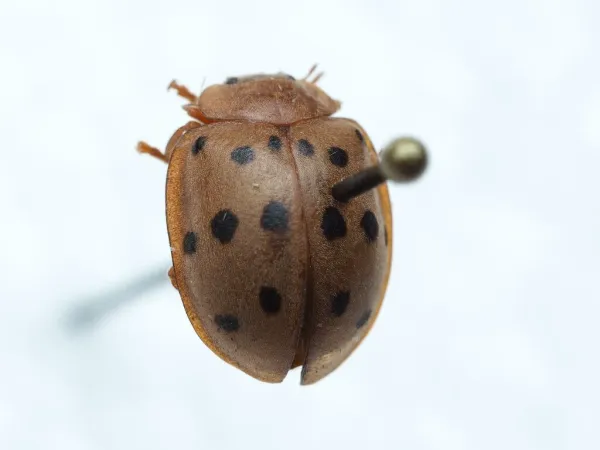
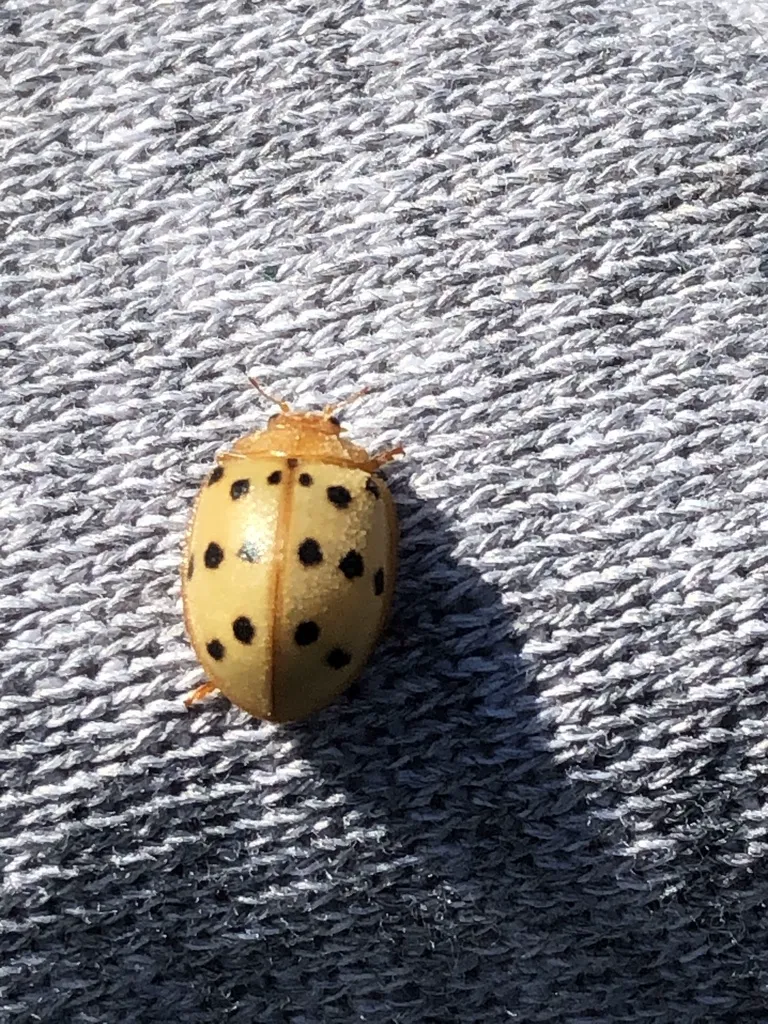
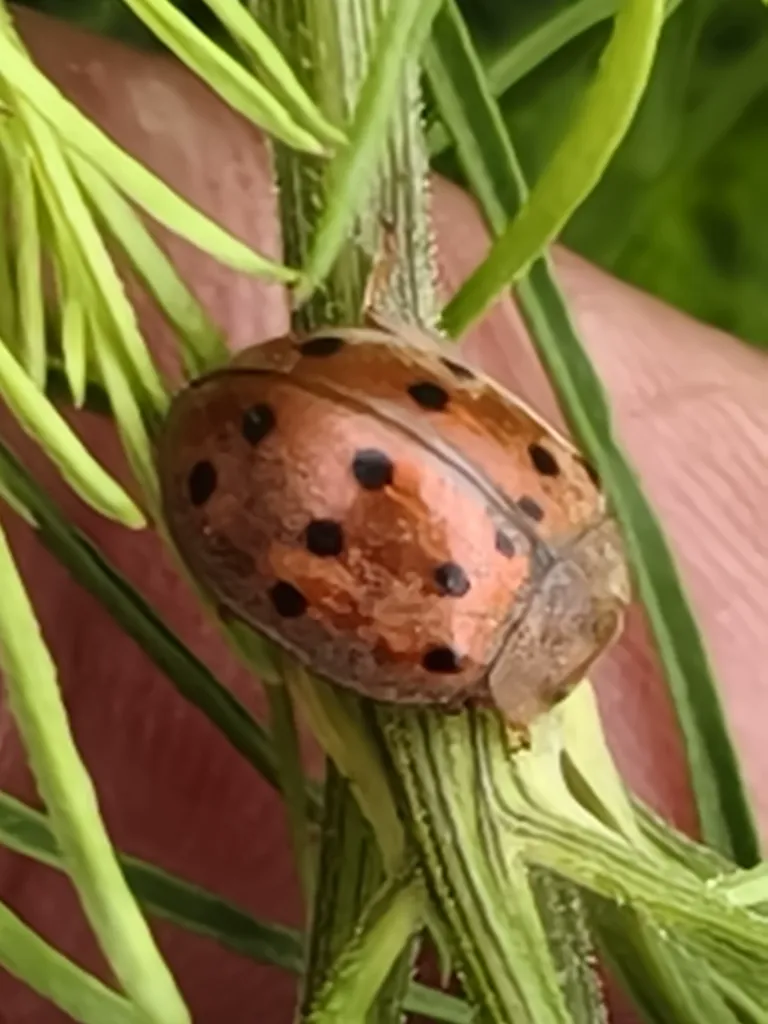
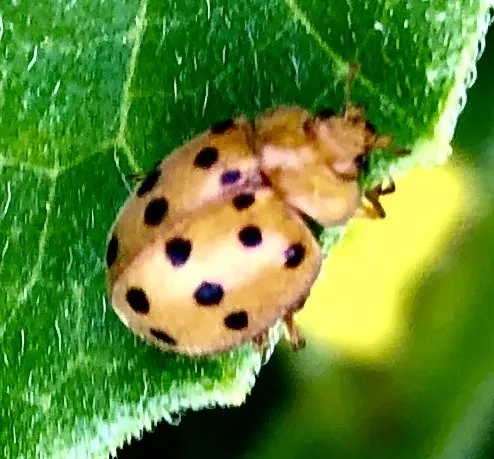
Mexican Bean Beetles Coloration
Common color patterns to help identify mexican bean beetles
Mexican Bean Beetles
Seasonal Activity
When mexican bean beetles are most active throughout the year

Where Mexican Bean Beetles Are Found
Hover over states to see their names. Green regions indicate where mexican bean beetles have been reported.
Mexican Bean Beetle Identification Guide
Physical Characteristics
Mexican bean beetles (Epilachna varivestis) are members of the lady beetle family Coccinellidae, but unlike their beneficial relatives, they feed on plants rather than other insects. They are one of the few plant-eating species in the entire lady beetle family, making them an important agricultural and garden pest across much of North America.
Adults are 6-9mm long with a strongly dome-shaped, oval body that closely resembles a typical ladybug. Their coloring ranges from copper to yellowish-orange, and each wing cover bears eight black spots arranged in three rows, for a total of 16 spots. The pronotum (the shield-like plate behind the head) is typically unmarked or has only faint markings, which helps distinguish them from many spotted lady beetles that have bold pronotal patterns.
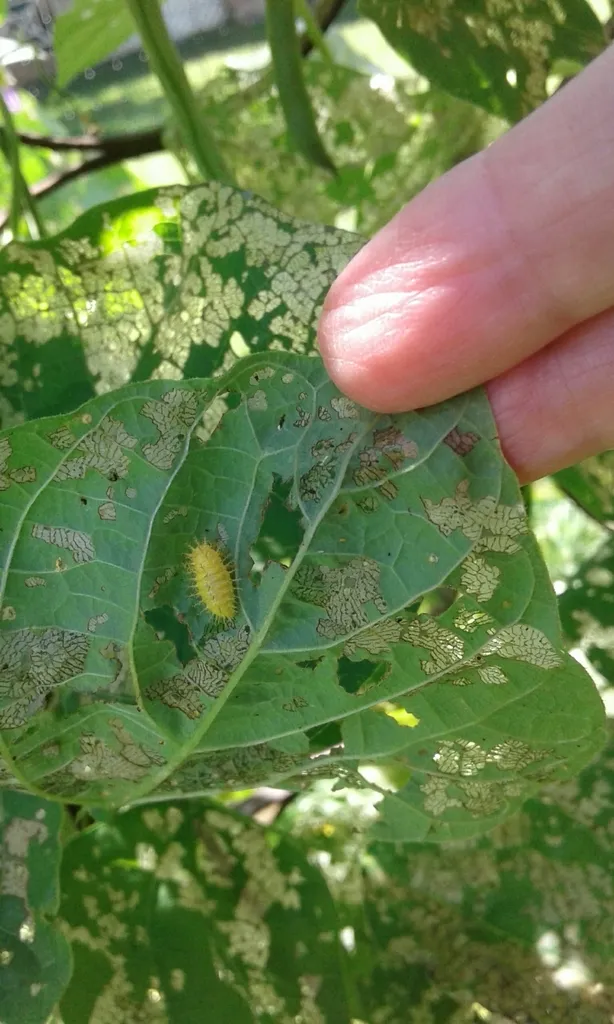
Larvae are the life stage that causes the most feeding damage. They are oval, soft-bodied, and bright yellow to orange. Six rows of branching, dark-tipped spines run along their backs, giving them a fuzzy or bristly appearance. Fully grown larvae reach about 9mm in length. You will almost always find them feeding on the undersides of bean leaves.
Pupae are also found attached to the undersides of leaves. They are yellow to orange, rounded, and retain some of the larval spines on the skin.
Eggs are bright yellow, oval, and laid in clusters of 40-75 on the undersides of leaves. They are arranged standing upright in neat rows.
Similar Species
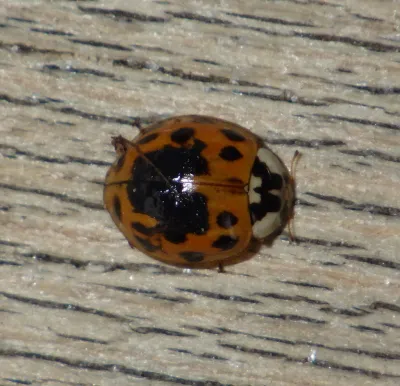
Asian lady beetles (Harmonia axyridis) are the most common lookalike. They are variable in color (orange, red, yellow) and may have many spots, but they are predators that eat aphids rather than plant tissue. Asian lady beetles often have an “M”-shaped black marking on the pronotum, while the Mexican bean beetle’s pronotum is largely unmarked.
Squash beetles (Epilachna borealis) are closely related plant-feeding lady beetles with a similar dome shape. However, squash beetles feed exclusively on cucurbits (squash, pumpkins, melons) rather than beans, and they have a different spot pattern with 14 larger spots.
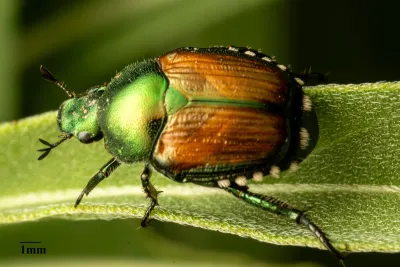
Japanese beetles share a similar size range but are easy to distinguish by their metallic green head and copper wing covers. Japanese beetles also skeletonize leaves, but they target a much broader range of plants.
Mexican Bean Beetle Behavior and Biology
Lifecycle and Development
Mexican bean beetles produce one to three generations per year depending on climate. In the Mid-Atlantic and northern states, one to two generations are typical, while southern regions may see up to three or four.
Overwintering adults shelter in leaf litter, brush, and woodland edges near areas where beans were grown. They enter dormancy in fall and remain inactive through the winter months. As temperatures warm in late May and early June, adults fly to nearby bean plantings to feed and reproduce.
Egg-laying begins shortly after adults arrive at host plants. Females deposit clusters of 40-75 bright yellow eggs on the undersides of bean leaves. A single female can lay 400-500 eggs over her lifetime. Eggs hatch in about 5-14 days depending on temperature.
Larval development occurs in four stages (instars) over approximately two to five weeks. Larvae feed almost exclusively on the undersides of leaves, scraping away the lower leaf surface and leaving the upper surface and veins intact. This produces the classic “skeletonized” or lace-like appearance that is the signature damage of this pest.
Pupation takes place on the plant. Larvae attach themselves to the underside of a leaf and transform into pupae. The pupal stage lasts about 10 days before new adults emerge.
The complete lifecycle from egg to adult takes roughly 30-40 days in warm summer conditions, which is why populations can build rapidly during the peak growing season.
Feeding Habits and Damage
Both adults and larvae are leaf feeders, but larvae cause the majority of damage. They feed by scraping leaf tissue from the underside, leaving behind a translucent, papery layer that soon browns and dies. This pattern of damage is called skeletonization.
Heavy infestations can defoliate entire bean plants. Severely damaged leaves dry out and drop, and the loss of photosynthetic area reduces pod development and yield. Pods themselves may also be attacked in severe cases, with beetles scraping the outer surface.
Mexican bean beetles strongly prefer plants in the genus Phaseolus, including snap beans, lima beans, and kidney beans. They also feed on soybeans, cowpeas, clover, and alfalfa, though beans remain the primary target. In garden settings, a small number of beetles can escalate quickly into a damaging population because of their high reproductive rate.
Habitat and Distribution
Mexican bean beetles are native to the Mexican Plateau and were first documented as a pest in the eastern United States in the early 1900s. They have since spread across most states east of the Rocky Mountains and into parts of southern Canada. The beetle thrives in warm, humid conditions and is most problematic in the Mid-Atlantic, Southeast, and Midwest regions where beans are widely grown.
Populations tend to be highest in areas with consistent bean production, since adults overwinter near previous host plantings. Wet, moderate summers favor population buildup, while hot, dry conditions can reduce survival.
Treatment Methods for Mexican Bean Beetles
Managing Mexican bean beetles effectively requires an integrated approach that combines monitoring, cultural practices, biological control, and targeted interventions when populations exceed thresholds.
Monitoring and Scouting
Regular scouting is the foundation of any management program. Begin checking bean plants in late May to early June when overwintering adults start arriving. Focus on the undersides of leaves where eggs, larvae, and feeding damage first appear. Yellow egg clusters and early-instar larvae are the first signs of a building population.
University extension programs generally recommend treating when you find an average of one or more larvae per plant, or when defoliation exceeds 20-30% before bloom. Thresholds are lower for fresh market beans than for processing or field crops.
Cultural Control Strategies
- Crop rotation reduces populations by breaking the cycle of adults overwintering near previous bean plantings and emerging close to new crops.
- Planting timing can help avoid peak beetle activity. Early plantings that mature before midsummer beetle populations build, or late plantings that avoid the first generation, may sustain less damage.
- Reflective mulches have shown promise in research trials for deterring adult colonization of small garden plots.
- Sanitation after harvest matters. Removing crop debris and nearby leaf litter eliminates overwintering habitat.
- Trap cropping with a small, early planting of highly attractive bean varieties can concentrate beetles in one area for easier management.
Biological Control Options
Pediobius foveolatus, a tiny parasitoid wasp, is the most successful biological control agent for Mexican bean beetles. This wasp, originally from India, lays its eggs inside Mexican bean beetle larvae. The developing wasp larvae consume the beetle larva from within. Several Mid-Atlantic states, including New Jersey and Connecticut, run annual programs that rear and distribute Pediobius to farmers and gardeners. Releases must be timed carefully to coincide with the first appearance of beetle larvae.
Natural predators such as predatory stink bugs, ground beetles, and spiders also feed on Mexican bean beetle eggs and larvae, though they rarely provide sufficient control on their own. Conserving these beneficial insects by minimizing broad-spectrum insecticide use helps support natural suppression.
Beauveria bassiana, an entomopathogenic fungus, has shown effectiveness against Mexican bean beetles in research settings. Commercial formulations of this fungus are available for organic and conventional use.
Physical Controls
For home gardeners, floating row covers placed over bean plantings before adults arrive can prevent colonization entirely. Covers must be removed at flowering to allow pollination. Hand-picking adults and larvae and crushing yellow egg masses on leaf undersides can also manage small populations effectively.
When to Seek Professional Help
Mexican bean beetle management often benefits from professional guidance when:
- Populations are high across a large garden or small farm planting
- Previous seasons have shown recurring, severe infestations
- Proper identification is needed to distinguish Mexican bean beetles from beneficial lady beetles
- Coordinated biological control releases require precise timing
A pest management professional can assess damage levels, confirm identification, and recommend the most effective combination of strategies for your situation.
References and Further Reading
- Virginia Tech - Mexican Bean Beetle: Natural History and Management (JIPM)
- UMass Amherst - Mexican Bean Beetle Fact Sheet
- New Jersey Dept. of Agriculture - Pediobius foveolatus Biological Control Program
- Connecticut Agricultural Experiment Station - Using Pediobius foveolatus for Mexican Bean Beetle Control
- Utah State University Extension - Mexican Bean Beetle
- Purdue Extension - Mexican Bean Beetles in Soybeans
Other Other Pests
Explore other species in the other pests family
Commonly Confused With
Mexican Bean Beetles are often mistaken for these similar pests
Where Mexican Bean Beetles Are Found
Hover over states to see their names. Green regions indicate where mexican bean beetles have been reported.
Common Questions about Mexican Bean Beetles
What does a Mexican bean beetle look like?
+
Mexican bean beetles are 6-9mm long with a dome-shaped body similar to a ladybug. They are copper to yellowish-orange with exactly 16 black spots arranged in three rows across their wing covers. Unlike most lady beetles, they have no spots on their pronotum (the plate behind the head).
Are Mexican bean beetles harmful to gardens?
+
Yes. Both adults and larvae feed on bean plants by skeletonizing the leaves, eating the tissue between the veins and leaving a lace-like pattern. Heavy infestations can completely defoliate snap beans, lima beans, and soybeans, reducing yields significantly.
How can I tell a Mexican bean beetle from a ladybug?
+
The key difference is color and diet. Beneficial ladybugs are typically red or orange with fewer spots and eat other insects. Mexican bean beetles are copper-orange with exactly 16 spots and eat plant leaves. Their larvae also differ: ladybug larvae are dark and alligator-shaped, while Mexican bean beetle larvae are yellow with branching spines.
When are Mexican bean beetles most active?
+
Adults emerge from overwintering sites in late May to early June and are most active from June through August. In warmer regions, they can produce two to three generations per summer, which means populations build throughout the growing season.
What plants do Mexican bean beetles eat?
+
Mexican bean beetles primarily feed on legumes. Their preferred hosts include snap beans, lima beans, soybeans, and cowpeas. They may also feed on clover, alfalfa, and other leguminous plants, but beans in the genus Phaseolus are their strongest preference.
Where do Mexican bean beetles overwinter?
+
Adults overwinter in leaf litter, brush piles, and wooded areas near previous bean plantings. They become dormant through the winter and emerge when temperatures warm in late spring, flying to nearby bean fields or gardens to begin feeding and laying eggs.
How do Mexican bean beetle larvae look?
+
The larvae are soft-bodied, oval, and about 9mm long when fully grown. They are bright yellow to orange and covered with rows of branching spines along their backs. You will usually find them feeding on the undersides of bean leaves.

With five years of hands-on experience in the pest control industry, George Schulz is a registered technician with the Virginia Pest Management Association and a proud third-generation professional in a family business that's been protecting homes for over 57 years. He manages and trains a team of service pros while also leading internal research efforts—recently spearheading a deep-dive review of thousands of documents on pest control materials to hand-pick the most kid and pet friendly, most effective solutions tailored specifically for homes in the DC metro area.