Velvet Mites Identification Guide
Trombidiidae
Velvet mites are large, bright red arachnids known for their fuzzy appearance. These outdoor mites feed on insect eggs and small arthropods and pose no threat to humans or property.
Taxonomy
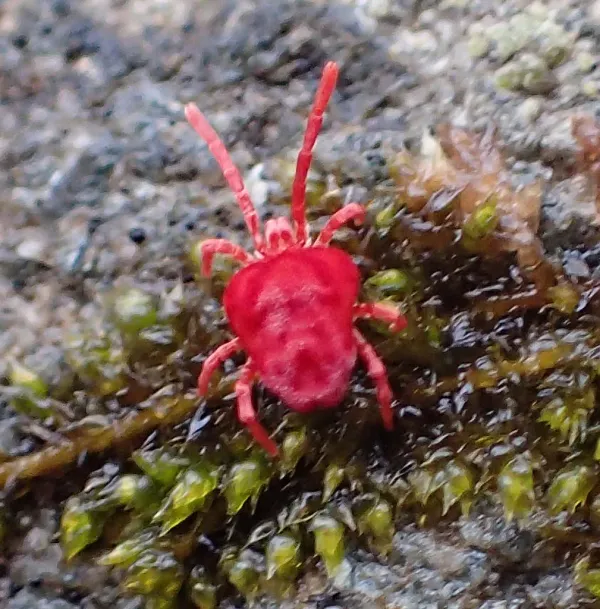
Velvet Mites Coloration
Common color patterns to help identify velvet mites
Velvet Mites
Seasonal Activity
When velvet mites are most active throughout the year
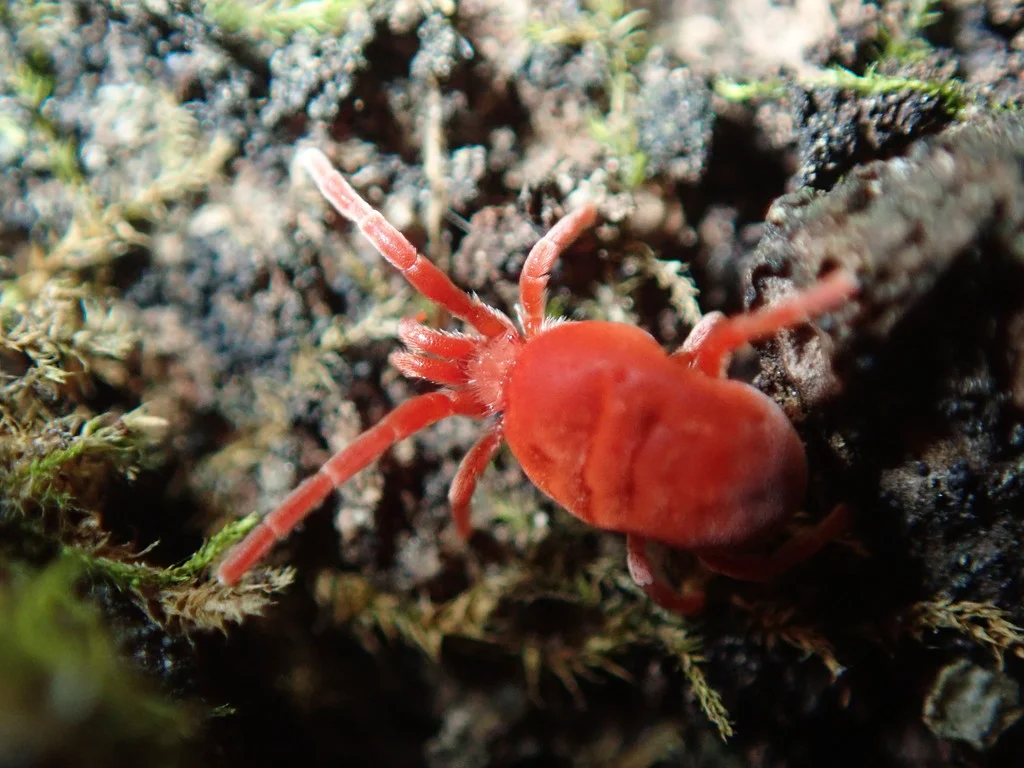
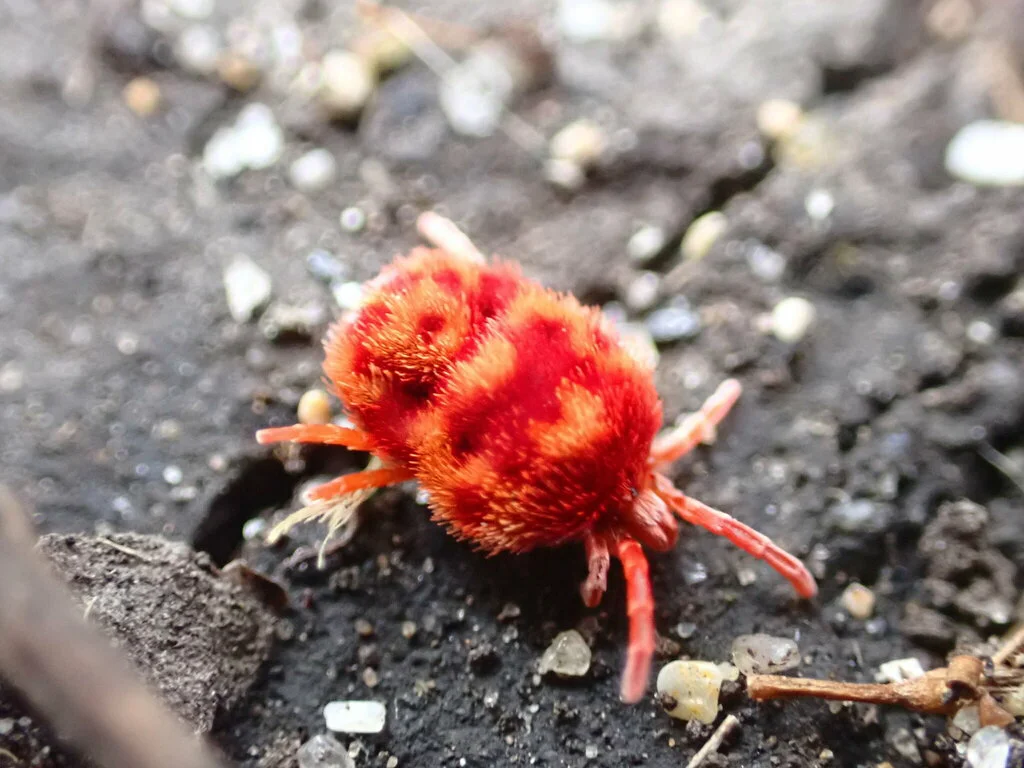
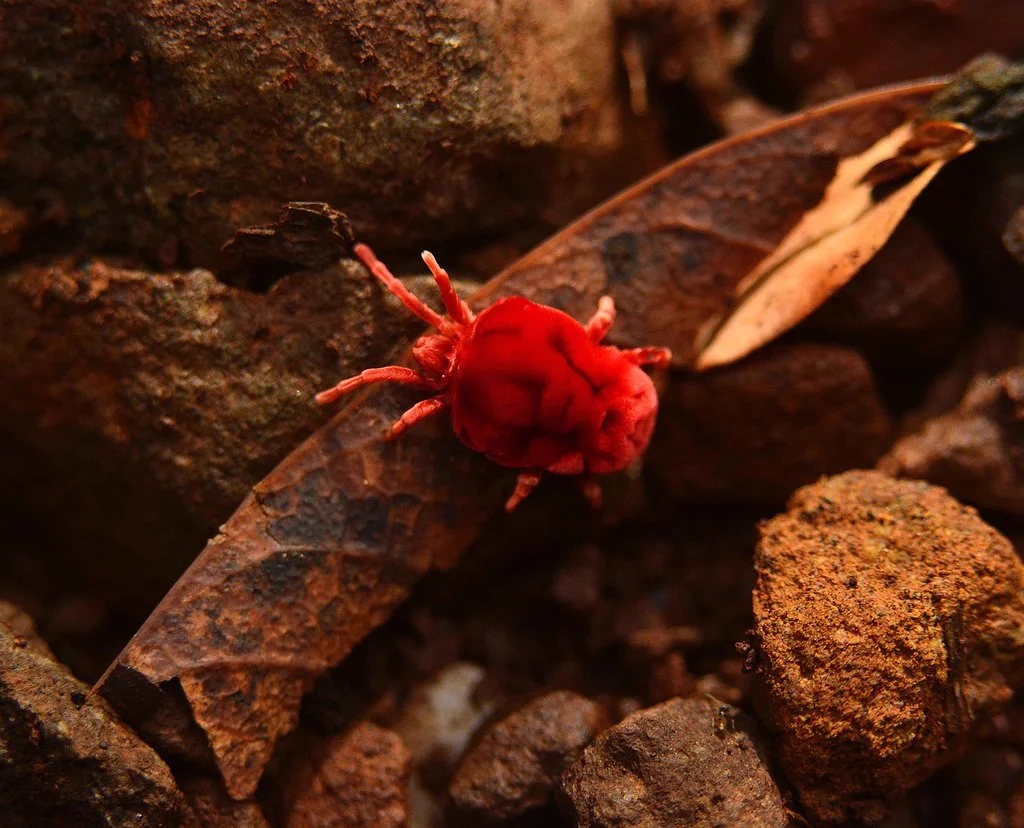

Where Velvet Mites Are Found
Hover over states to see their names. Green regions indicate where velvet mites have been reported.
Velvet Mite Identification Guide
Physical Characteristics
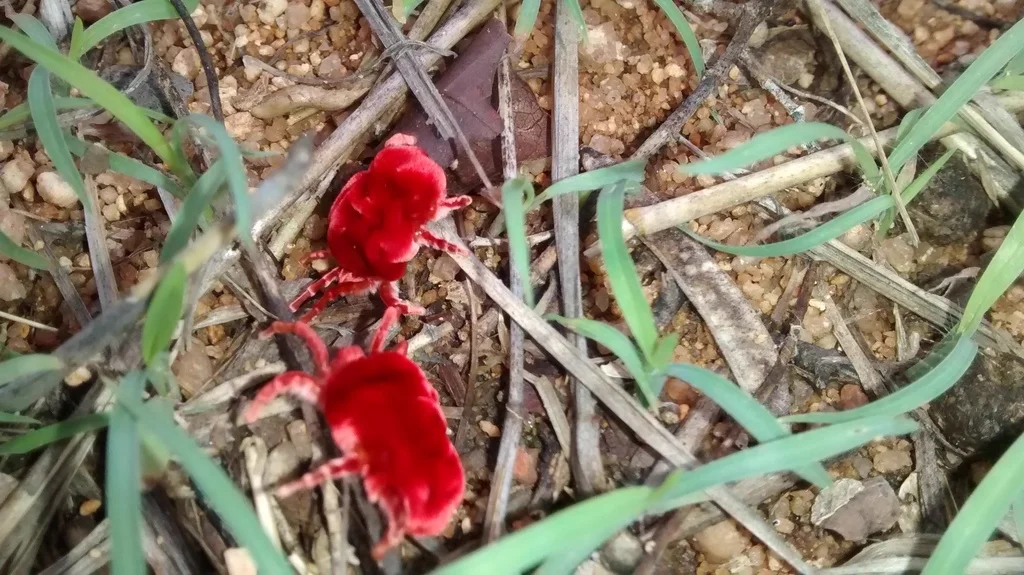
Velvet mites are some of the most eye-catching arachnids you might find in your yard. These bright red or orange mites have a dense coat of fine hairs called setae. This gives them their soft, velvety look. Unlike many other mites that need a magnifying glass to see, velvet mites are fairly large. Most are 2 to 4 millimeters long. Some giant velvet mites in the genus Dinothrombium can grow up to 12 millimeters.
Their bodies are round or slightly oval with eight legs. This shows they are arachnids, not insects. The bright color warns predators that they taste bad. Most animals that try to eat velvet mites quickly learn to avoid them.
Common Species
Several velvet mite species live throughout North America:
- Trombidium holosericeum: A common species found in Europe and parts of North America
- Dinothrombium magnificum: A giant velvet mite found in the southwestern United States, mainly Arizona
- Angelothrombium species: Found in dry areas of California and the Southwest
- Allothrombium species: Spread across temperate North America
Velvet Mite Behavior and Biology
Life Cycle
Velvet mites go through several life stages: egg, pre-larva, larva, protonymph, deutonymph, tritonymph, and adult. They switch between active and resting stages throughout their development. Most species breed only once per year.
The larval stage is unique because velvet mite larvae are parasites. They attach to grasshoppers, beetles, and other ground-dwelling insects. They feed on the insect’s body fluids before dropping off. Once they reach the nymph and adult stages, they become active hunters. Homeowners dealing with Velvet Mites may also encounter Mite, which can appear in similar environments.
Feeding Habits
Adult velvet mites are active hunters that play a role in soil health. They hunt and eat:
- Insect eggs, including pest species
- Other mites and their eggs
- Small bugs and arthropods
- Springtails and other tiny soil creatures
- Snail and slug eggs
Because they eat pest eggs and harmful mites, velvet mites can help reduce pest numbers in gardens and yards. Like predatory mites, they are beneficial arachnids that play a role in natural pest control.
Mating Behavior
Velvet mites have interesting mating habits. Male mites place sperm packets on small twigs or plant stalks. They then create silken trails leading to the sperm. Females follow these trails. If the female likes the male, she will position herself to receive the sperm. Some species perform circular dances and tap each other to communicate.
Habitat and Emergence
Velvet mites live in the leaf litter of woods, forests, and gardens with moist soil. They spend most of their time below the surface but come out after rainfall. This is why some people call them “rain bugs.”
The wet conditions after rain make it easier for them to move around. You may see many velvet mites on the ground after summer storms. In the Southwest, giant velvet mites come out in huge numbers after the first monsoon rains.
Velvet Mites vs. Other Red Mites
It is important to correctly identify velvet mites. They look different from other red mites that might cause problems:
| Feature | Velvet Mites | Clover Mites |
|---|---|---|
| Size | 2-12 mm (easy to see) | Less than 1 mm (very tiny) |
| Texture | Fuzzy, velvety | Smooth |
| Location | Outdoors in soil and leaf litter | Often invade homes |
| Front legs | Normal length | Very long |
| Behavior | Hunt alone | Form large groups |
Treatment Options for Mites
Velvet mites stay outdoors and do not invade homes. They do not bite people or damage property. For this reason, treatment is rarely needed for velvet mites themselves.
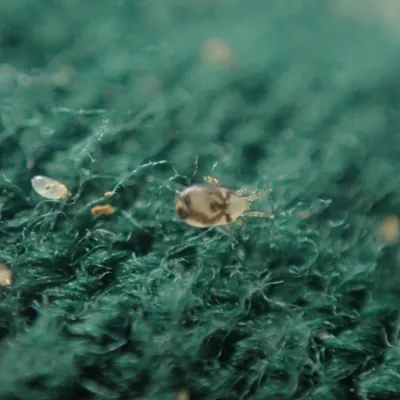
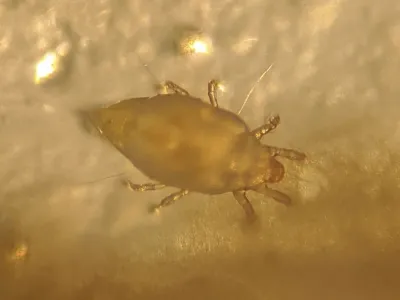
However, if you see small red mites inside your home, you likely have a different species. Clover mites are tiny red mites that often enter homes through cracks around windows and doors. They can appear in large numbers during spring and fall.
When to Seek Help
Contact a pest control professional if you notice:
- Small red mites inside your home
- Red stains on walls, curtains, or windowsills (a sign of crushed clover mites)
- Large numbers of tiny mites gathering on sunny exterior walls
- Mites that seem to be coming from your lawn or foundation
A professional can identify the exact type of mite and suggest the right treatment. For clover mites and similar pest species, treatment usually involves sealing entry points, reducing moisture around the home, and applying treatments to the perimeter.
Related Reading
- Concrete Mites: Identification & Treatment - Learn about a closely related red mite found on patios and sidewalks.
- Are Tiny Red Spiders Dangerous? spiders - Find out whether small red arachnids around your home pose any risk.
- What Are the Tiny Red Bugs? - A guide to identifying the small red crawlers on your property.
References
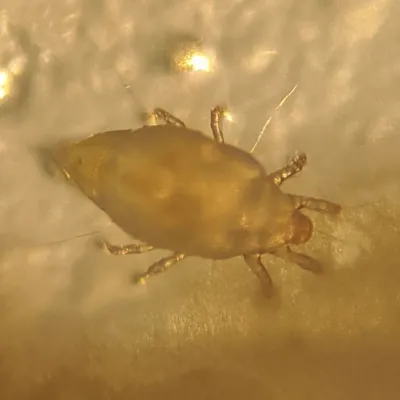
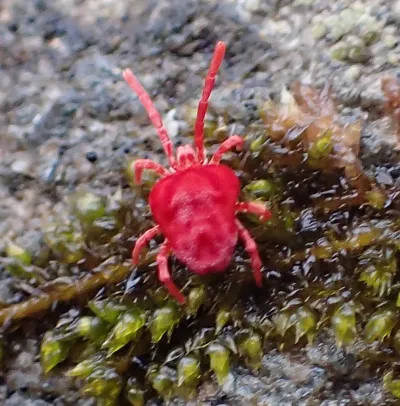
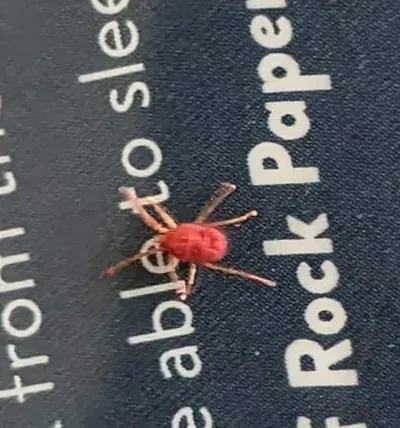
Other Mites
Explore other species in the mites family
Commonly Confused With
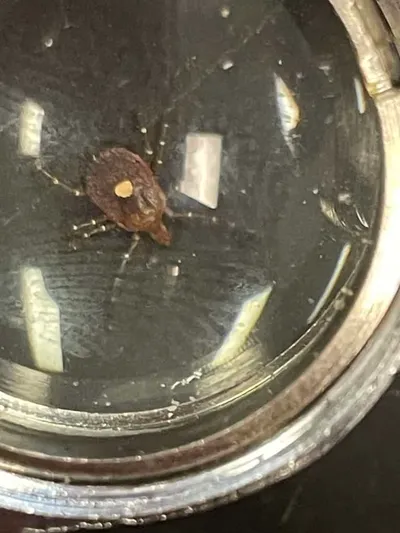
Velvet Mites are often mistaken for these similar pests
Where Velvet Mites Are Found
Hover over states to see their names. Green regions indicate where velvet mites have been reported.
Common Questions about Velvet Mites
Are velvet mites harmful to humans?
+
No, velvet mites do not harm humans. They do not bite, sting, or carry diseases. Their bright red color warns predators that they taste bad, not that they are dangerous to people.
What do velvet mites eat?
+
Adult velvet mites hunt insect eggs, small bugs, and other mites. Their larvae attach to insects like grasshoppers and feed on their body fluids. They help control pest populations in your yard.
Why are velvet mites so brightly colored?
+
The bright red or orange color warns predators that velvet mites taste bad. This type of warning coloration helps them avoid being eaten by birds and other animals.
Where do velvet mites live?
+
Velvet mites live in moist areas like leaf litter, forest floors, and rich topsoil. They often come out after rain, which is why some people call them rain bugs.
How big do velvet mites get?
+
Most velvet mites are 2 to 4 millimeters long. You can see them without a magnifying glass. Some giant species can grow up to 12 millimeters, making them among the largest mites in the world.
Should I be concerned if I find velvet mites in my yard?
+
Velvet mites in your yard are not a problem. They eat insect eggs and harmful mites, which helps control other pests. They stay outdoors and do not enter homes.
How can I tell the difference between velvet mites and clover mites?
+
Velvet mites are much larger (2 to 12mm) than clover mites (less than 1mm). Velvet mites have a fuzzy texture and stay outdoors in soil. Clover mites are tiny, smooth, and often invade homes through windows.

With five years of hands-on experience in the pest control industry, George Schulz is a registered technician with the Virginia Pest Management Association and a proud third-generation professional in a family business that's been protecting homes for over 57 years. He manages and trains a team of service pros while also leading internal research efforts—recently spearheading a deep-dive review of thousands of documents on pest control materials to hand-pick the most kid and pet friendly, most effective solutions tailored specifically for homes in the DC metro area.