Sarcoptic Mange Mites Identification Guide
Sarcoptes scabiei
Sarcoptic mange mites are microscopic parasitic mites that burrow into the skin of mammals, causing intense itching and skin irritation. In humans, this condition is called scabies, while in animals it is known as sarcoptic mange.
Taxonomy
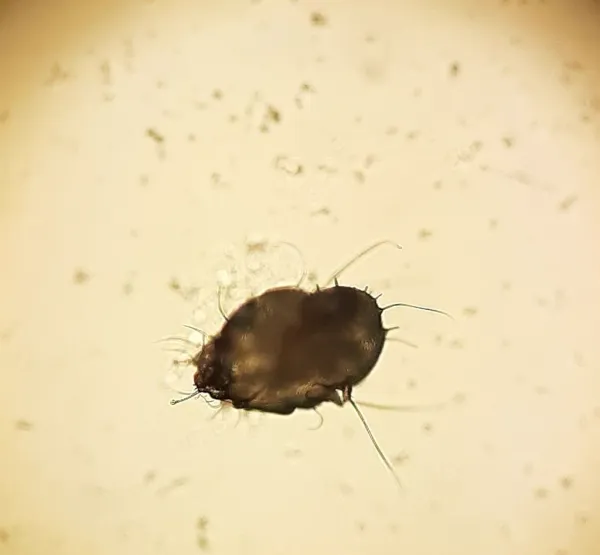
Sarcoptic Mange Mites Coloration
Common color patterns to help identify sarcoptic mange mites
Sarcoptic Mange Mites
Seasonal Activity
When sarcoptic mange mites are most active throughout the year

Where Sarcoptic Mange Mites Are Found
Hover over states to see their names. Green regions indicate where sarcoptic mange mites have been reported.
Sarcoptic Mange Mites Identification Guide
Physical Characteristics
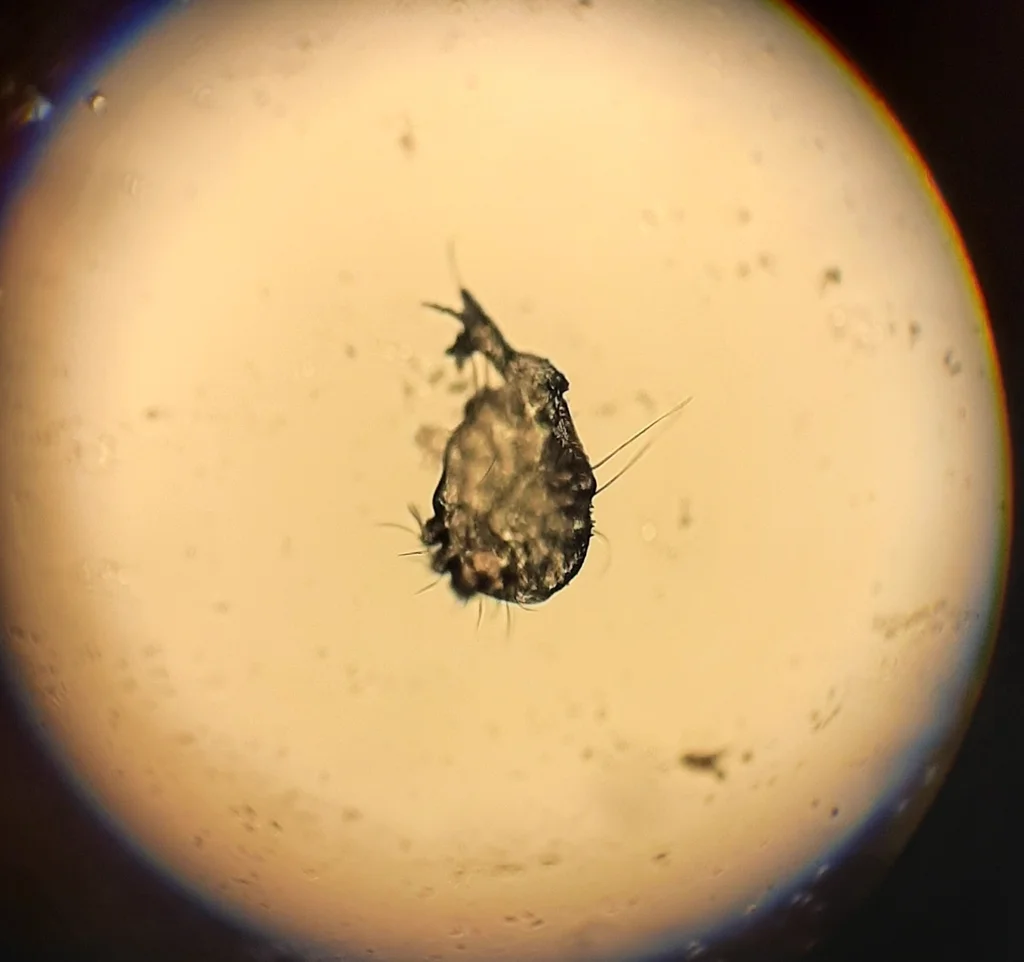
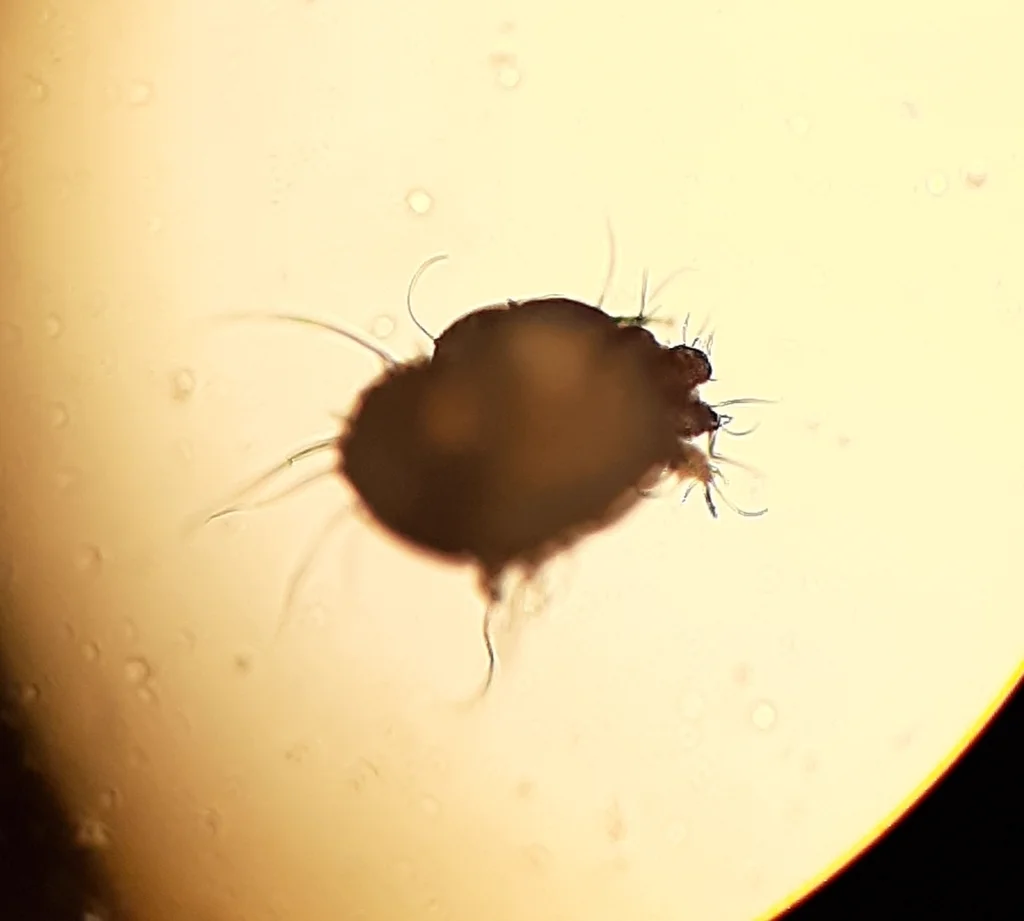
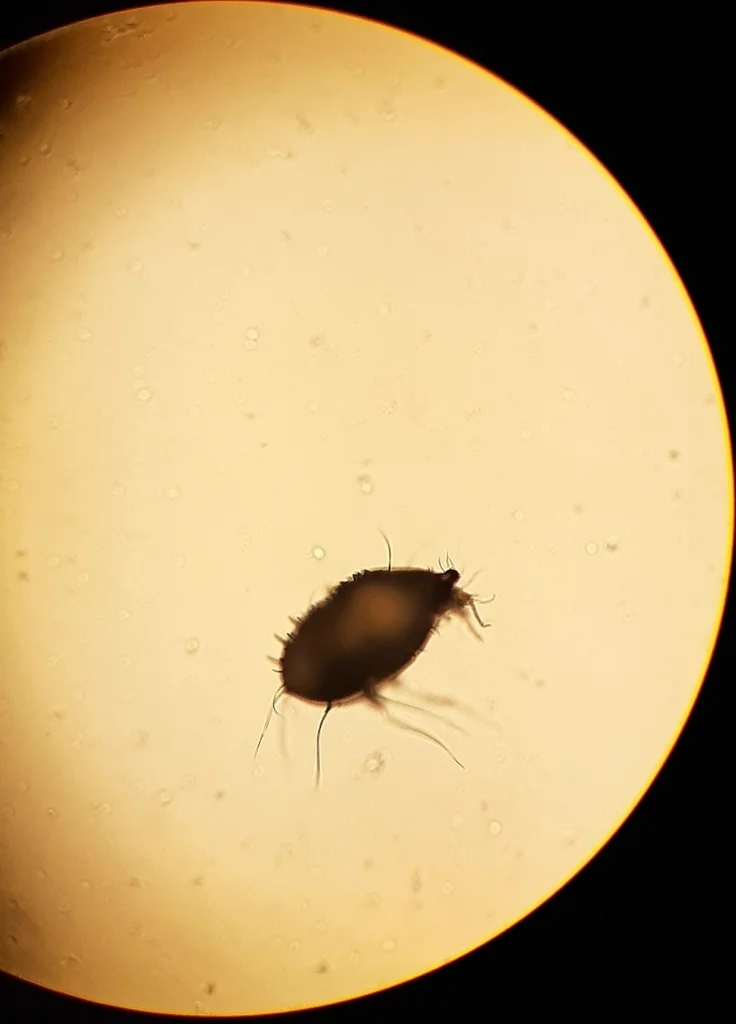
Sarcoptic mange mites are tiny parasites that you cannot see without a microscope. They are closely related to notoedric mange mites that primarily affect cats. Adult females are about 0.3 to 0.5 mm long. Males are a bit smaller at around 0.25 mm. These mites have an oval body shaped like a turtle shell. The top side is rounded while the bottom is flat. Small spines cover the upper body and help the mites grip inside skin tunnels.
Like all mites in the arachnid family, adults have eight legs. Two pairs sit at the front and two pairs at the back. The back legs are short and stay close to the body. Females have tiny sucker pads on their front two leg pairs. Males have these suckers on their first, second, and fourth leg pairs. These mites have no eyes. Instead, they have special mouthparts built for digging into skin.
Host-Specific Varieties
Several varieties of Sarcoptes scabiei are recognized based on their preferred hosts:
- Sarcoptes scabiei var. hominis: infests humans and causes scabies
- Sarcoptes scabiei var. canis: primarily affects dogs
- Sarcoptes scabiei var. bovis: infests cattle
- Sarcoptes scabiei var. suis: affects pigs
- Sarcoptes scabiei var. equi: infests horses
- Sarcoptes scabiei var. cuniculi: affects rabbits
While these varieties prefer certain hosts, they can spread between species. However, these cross-species cases usually clear up on their own.
Sarcoptic Mange Mites Behavior and Biology
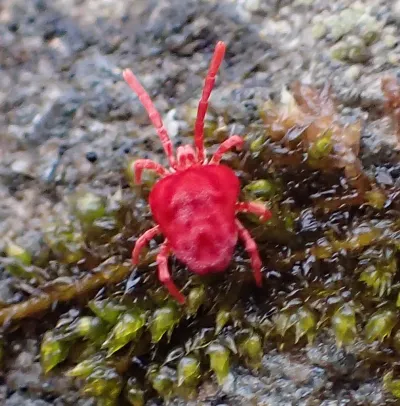
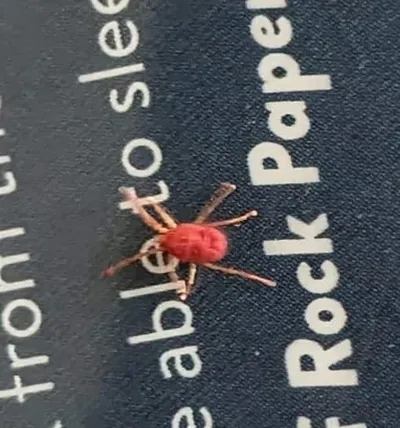
Lifecycle A related species, Velvet Mites, shares similar characteristics.
Sarcoptic mange mites spend their whole life on a host animal or person. The life cycle has four stages: egg, larva, nymph, and adult. After mating on the skin surface, the female digs into the outer skin layer. She uses her mouthparts and sharp edges on her front legs to burrow in. A related species, Chiggers, shares similar characteristics.
Once inside the skin, the female digs tunnels up to a centimeter long. She lays 2 to 3 eggs per day while she burrows. This goes on for the rest of her life, which lasts 1 to 2 months. The oval eggs are very small, about 0.1 to 0.15 mm long. They hatch in 3 to 4 days and release six-legged larvae. A related species, Spider Mites, shares similar characteristics.
The larvae crawl out of the burrows onto the skin surface. They find hair follicles where they feed and shed their skin. After molting, they become eight-legged nymphs. Nymphs molt one or two more times before becoming adults. The full growth from egg to adult takes about 3 weeks. Only about 10% of eggs grow into adult mites under the best conditions. A related species, Bulb Mites, shares similar characteristics.
Transmission
These mites spread mainly through direct skin-to-skin contact. Long or close contact with an infested person or animal is usually needed. The pregnant female mite is the stage that spreads most often. Mites can also spread through shared bedding, clothes, or other items. This is less common but can happen because mites live 1 to 3 weeks off a host.
Clinical Signs
In animals, sarcoptic mange starts with intense itching and small red bumps on the skin. The ears, elbows, and areas with thin hair are often affected first. As the problem gets worse, the skin becomes thick and crusty. Scratching can lead to bacterial infections. Hair loss is very common in animals with mange.
In humans, scabies mites create visible tunnels that look like tiny raised wavy lines on the skin. These lines are often gray or skin-colored. Common spots include the hands, wrists, elbows, armpits, and waistline. The intense itching comes from an allergic reaction to the mites and their waste. Itching is often worse at night.
Note: This information is for educational purposes only and is not medical advice. Always consult a doctor or veterinarian for health concerns.
Treatment Methods for Sarcoptic Mange Mites
Sarcoptic mange and scabies need medical treatment to get rid of the mites. Doctors treat human cases while veterinarians handle animal cases. Treatment usually includes these methods:
-
Skin creams and lotions: Doctors often prescribe creams with permethrin or sulfur to kill mites. Animals may get medicated baths or spot-on treatments from a vet.
-
Oral medicine: Pills like ivermectin work well against these mites. Vets may prescribe them for pets. Some modern flea and tick products also kill sarcoptic mites in dogs.
-
Cleaning the home: Mites can live off a host for a short time. Wash all bedding, clothes, and fabric items in hot water. Dry them on high heat. Seal items you cannot wash in plastic bags for at least 72 hours.
-
Treating everyone: All people and pets in the home should be checked and treated at the same time. This stops the mites from spreading back and forth. Even those without symptoms may carry mites.
-
Follow-up visits: Itching may last 2 to 4 weeks after treatment ends. This happens because the body still reacts to dead mites and eggs. Follow-up visits make sure the mites are gone.
To prevent mange, avoid contact with infested animals or people. Keep up with regular vet visits for your pets. Many monthly flea and tick products also protect against these mites.
References
Other Mites
Explore other species in the mites family
Commonly Confused With
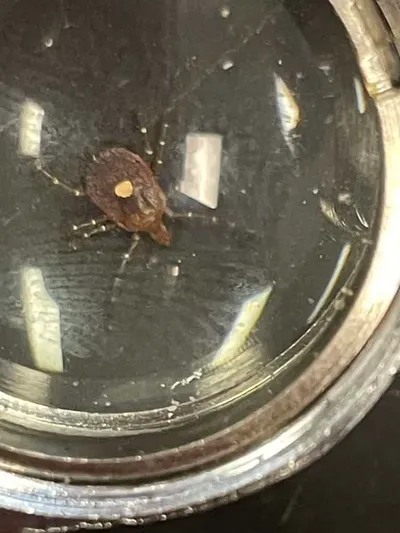
Sarcoptic Mange Mites are often mistaken for these similar pests
Where Sarcoptic Mange Mites Are Found
Hover over states to see their names. Green regions indicate where sarcoptic mange mites have been reported.
Common Questions about Sarcoptic Mange Mites
What is sarcoptic mange?
+
Sarcoptic mange is a highly contagious skin condition caused by the Sarcoptes scabiei mite. The mites burrow into the outer layer of skin, causing intense itching, hair loss in animals, and a characteristic rash in humans where the condition is called scabies.
Can sarcoptic mange mites spread from animals to humans?
+
Yes, sarcoptic mange mites can temporarily transfer from infested animals to humans. However, the animal variety cannot complete its life cycle on human skin, so infestations typically resolve on their own within a few weeks after contact with the infested animal stops.
How do I know if my pet has sarcoptic mange?
+
Common signs include intense scratching, hair loss especially around the ears, elbows, and legs, red and crusty skin, and thickened skin in chronic cases. If you notice these symptoms, consult a veterinarian for proper diagnosis and treatment.
How long can sarcoptic mange mites survive off a host?
+
Sarcoptic mange mites can survive off their host for 1 to 3 weeks depending on environmental conditions. They survive longer in cool, humid environments and shorter periods in hot, dry conditions.
Is sarcoptic mange the same as scabies?
+
Yes, they are caused by the same species of mite. When the condition affects animals, it is called sarcoptic mange. When it affects humans, it is called scabies. Different host-specific varieties exist, such as Sarcoptes scabiei var. canis for dogs and Sarcoptes scabiei var. hominis for humans.
How is sarcoptic mange diagnosed?
+
Veterinarians typically diagnose sarcoptic mange through deep skin scrapings examined under a microscope. However, mites can be difficult to find, so treatment is often started based on clinical signs and response to therapy. Blood tests for antibodies are also available.
Can sarcoptic mange be prevented?
+
Prevention involves avoiding contact with infested animals, maintaining regular veterinary check-ups for pets, and using preventative parasite treatments as recommended by your veterinarian. Many modern flea and tick preventatives also provide protection against sarcoptic mites.

With five years of hands-on experience in the pest control industry, George Schulz is a registered technician with the Virginia Pest Management Association and a proud third-generation professional in a family business that's been protecting homes for over 57 years. He manages and trains a team of service pros while also leading internal research efforts—recently spearheading a deep-dive review of thousands of documents on pest control materials to hand-pick the most kid and pet friendly, most effective solutions tailored specifically for homes in the DC metro area.