House Mouse Mites Identification Guide
Liponyssoides sanguineus
House mouse mites are blood-feeding parasites that live on house mice. When mice are removed or die, these tiny mites may bite humans, causing itchy skin irritation and potentially transmitting rickettsialpox.
Taxonomy
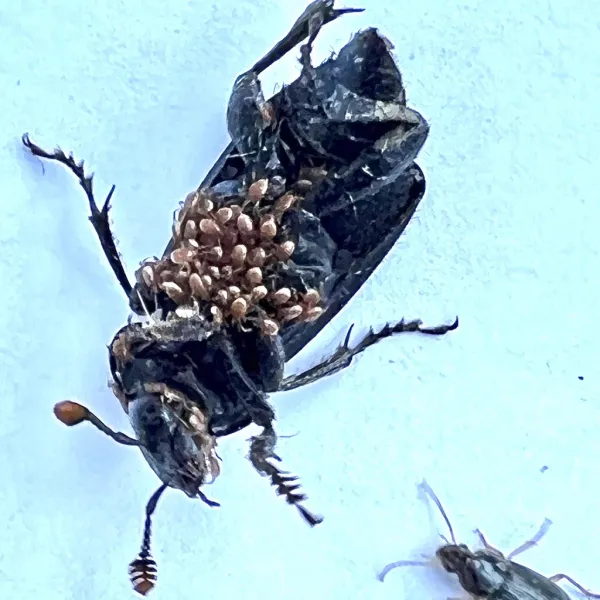
House Mouse Mites Coloration
Common color patterns to help identify house mouse mites
House Mouse Mites
Seasonal Activity
When house mouse mites are most active throughout the year

Where House Mouse Mites Are Found
Hover over states to see their names. Green regions indicate where house mouse mites have been reported.
House Mouse Mite Identification Guide
Physical Characteristics
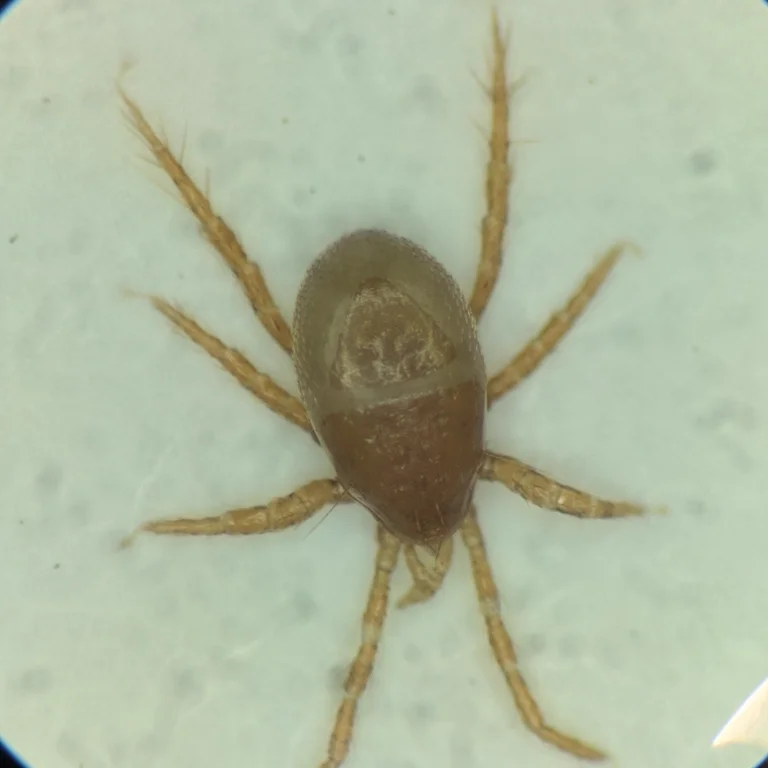
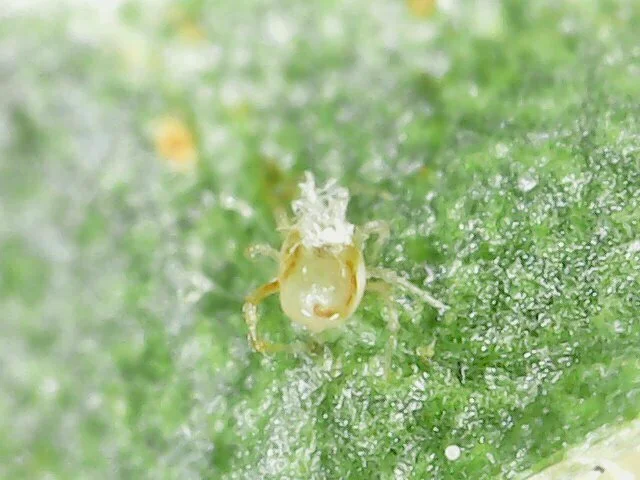
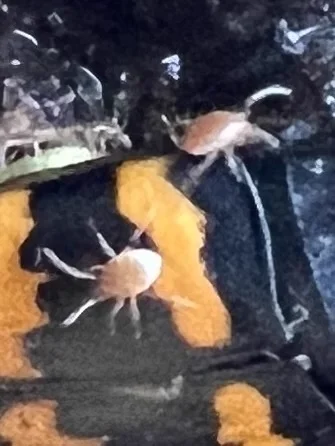
House mouse mites are very small parasites that feed on blood. They measure between 0.5 and 1 millimeter long. You can barely see them without a magnifying glass. They often look like tiny moving specks.
Before feeding, these mites look pale gray or tan. You can almost see through them. After a blood meal, they swell up and turn reddish-brown or dark red.
Like all mites, house mouse mites have eight legs. They are related to spiders and ticks, not insects. Their bodies are oval and have no segments. With a microscope, you can see their sharp mouthparts used for feeding on blood. House mouse mites have rounder bodies than tropical rat mites. They belong to the same group of biting mites as bird mites and rodent mites.
Distinguishing Features
These traits help tell house mouse mites apart from similar pests:
- Size: Under 1 mm, smaller than most ticks
- Body shape: Oval and rounded
- Color change: Pale when hungry, reddish after feeding
- Leg arrangement: Eight legs with front pair stretched forward
- Habitat: Found near house mice
House Mouse Mite Behavior and Biology
House mouse mites must feed on blood to survive and have young. Unlike ticks that stay attached for days, these mites feed fast. They take just a few minutes, then go back to hiding near the nest. They feed mostly at night when mice are resting.
Life Cycle
House mouse mites go through five life stages: egg, larva, protonymph, deutonymph, and adult. The whole cycle takes just 7 to 10 days in warm, humid conditions. Only two stages need blood meals. The larva does not feed at all.
Females lay eggs in mouse nests, not on the mouse. One female can lay many batches of eggs in her lifetime. This fast breeding lets mite numbers grow quickly when mice are around.
Host Preferences and Human Bites
The house mouse is the main host for this mite species. The mites stay close to mouse nests and trails.
Humans are not their preferred hosts. Mites only bite people in certain cases:
- When mice die or are removed from a building
- After pest control gets rid of the mice
- When mice leave an area on their own
- When there are too many mites for the available mice
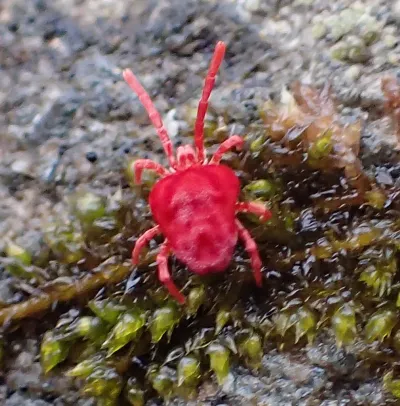
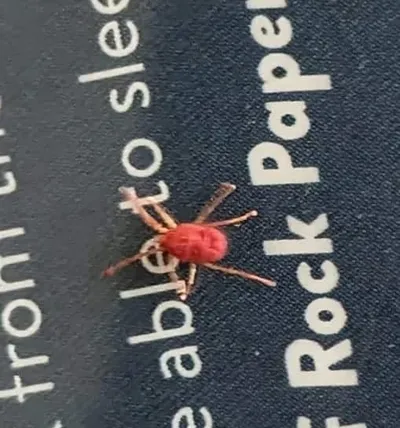
When mice are gone, hungry mites leave their nests. They search for any warm-blooded animal they can find. They may travel through a building and bite anyone they meet. One mouse nest can hold hundreds of mites. This can cause many bites once the mice are gone. A related species, Velvet Mites, shares similar characteristics.
Habitat Requirements
House mouse mites do best in warm, damp areas near their mouse hosts. In buildings, you often find them in:
- Wall spaces near mouse nests
- Areas around pipes and furnaces where mice like the warmth
- Basements and crawl spaces where mice live
- Behind appliances and in storage areas
- Insulation where mice build nests
The mites can travel far from nests while looking for hosts. This is why people sometimes get bitten in rooms far from where mice were living.
Health Concerns: Rickettsialpox
House mouse mites are the only known carriers of rickettsialpox. This disease comes from a bacteria called Rickettsia akari. It was first found in New York City in 1946. Since then, cases have been reported in cities across the United States. It also occurs in parts of Europe, South Africa, Korea, and Russia.
Disease Transmission
Rickettsialpox spreads when an infected mite bites a person. The bacteria live in the mite’s saliva. They enter the body through the bite wound. Not all house mouse mites carry the bacteria. Even when exposed, not everyone gets sick.
Symptoms of Rickettsialpox
Based on MedlinePlus, symptoms usually show up 6 to 15 days after the bite. They include:
- A painless, firm red bump at the bite that turns into a blister (up to 2.5 cm wide)
- Fever and chills
- Headache
- Muscle pain
- Light sensitivity
- Cough and sore throat
- Swollen lymph nodes
- A rash like chickenpox that spreads across the body
Treatment and Prognosis
Rickettsialpox is a mild illness. It usually goes away on its own in 7 to 10 days. Treatment with the antibiotic doxycycline can cut symptoms down to just 24 to 48 hours. The disease is rarely serious. Most people fully recover with proper care.
Signs of House Mouse Mite Infestation
Finding a mite problem often starts with spotting a mouse problem. Look for these signs:
- Itchy bites you cannot explain, mostly on the upper body, arms, and neck
- Bite marks that appear at night or in the morning
- Recent or current mouse activity in the building
- Multiple people in your home getting similar bites
- Tiny moving specks on walls or furniture near where mice lived
- Bites that start right after mouse removal or control work
Treatment Methods for House Mouse Mites
Good mite control starts with fixing the mouse problem. Mites cannot live long without mice. Getting rid of mice is the key to any control plan.
Mouse Elimination
The lasting fix for mite problems is to remove all mice from your property. This can be done with snap traps, live traps, or bait stations. For bad or ongoing problems, you may need professional rodent control.
Nest Location and Removal
Finding and removing mouse nests gets rid of the main source of mites. Nests may be in wall spaces, crawl spaces, behind appliances, or in stored items. Wear gloves and a dust mask when handling old nests. They may contain mites, droppings, urine, and other hazards.
Environmental Treatment
Treating areas where mice nested can reduce mite numbers faster. Products with pyrethrins, deltamethrin, or silica gel are often used. Apply them to wall spaces, cracks, and other spots where mites may hide.
Entry Point Sealing
Stopping future mouse problems stops future mite problems. Mice can fit through holes as small as a dime (about 6mm). Common entry points include:
- Gaps around pipes and utility lines
- Cracks in foundations
- Spaces under doors
- Holes in walls or siding
- Openings around vents
Sealing these spots keeps new mice from moving in and starting the mite cycle again.
Treating House Mouse Mite Bites
Most bites heal on their own without medical care. To ease symptoms:
- Apply over-the-counter hydrocortisone cream to reduce itching
- Take antihistamines as directed
- Do not scratch, as this can cause infection
- Keep bite areas clean and dry
See a doctor if you get a fever, headache, or spreading rash after being bitten. While rickettsialpox is rarely serious, antibiotics can help you recover faster.
Health Note
House mouse mite bites can be very uncomfortable. In rare cases, these mites may spread rickettsialpox. This page is for learning only and is not medical advice. If you are worried about mite bites or illness, please see a doctor.
References
Other Mites
Explore other species in the mites family
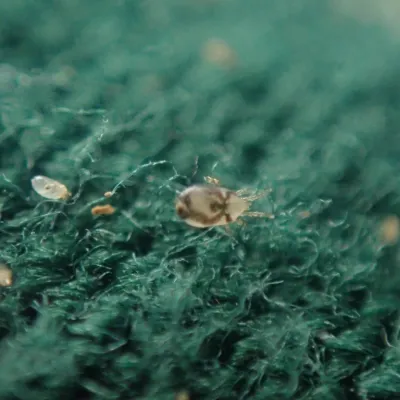
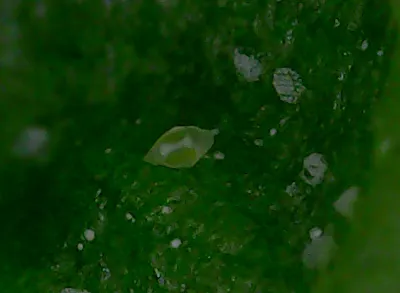
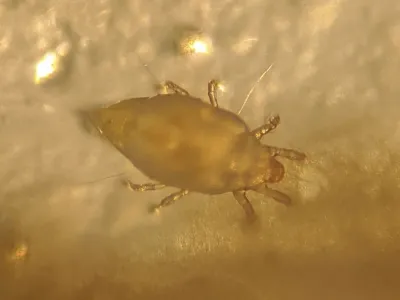
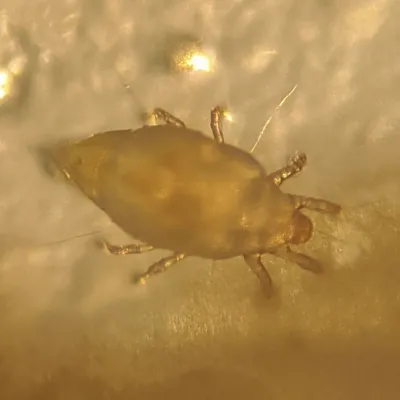
Commonly Confused With
House Mouse Mites are often mistaken for these similar pests
Where House Mouse Mites Are Found
Hover over states to see their names. Green regions indicate where house mouse mites have been reported.
Common Questions about House Mouse Mites
What is a house mouse mite?
+
The house mouse mite (Liponyssoides sanguineus) is a tiny blood-feeding parasite that primarily lives on house mice. These mites are barely visible to the naked eye, measuring less than 1 millimeter in length. They feed on mouse blood but will bite humans when their mouse hosts are no longer available.
Do house mouse mites bite humans?
+
Yes, house mouse mites can and do bite humans. This typically happens when their mouse hosts die or are removed from a building. The hungry mites then search for alternative blood sources and may bite people, causing itchy red welts similar to mosquito bites.
Can house mouse mites transmit disease?
+
Yes, house mouse mites are the only known vector of rickettsialpox, a bacterial infection caused by Rickettsia akari. While rickettsialpox is generally mild and treatable with antibiotics, it can cause fever, headache, and a chickenpox-like rash. Most cases occur in urban areas, particularly in the northeastern United States.
How long can house mouse mites survive without a host?
+
House mouse mites can survive for several weeks without a blood meal while actively searching for new hosts. This is why bites often occur for weeks after mouse removal from a home. Eventually, without access to mice, the mite population will die off.
How do I know if I have house mouse mites?
+
Signs of house mouse mite infestation include unexplained itchy bites (especially on the upper body), a recent or current mouse problem, bites that appear mainly at night, and tiny moving specks near areas where mice were living. The mites are extremely small and difficult to see without magnification.
Where do house mouse mites live in a home?
+
House mouse mites live in and around mouse nests. They hide in wall voids, behind baseboards, in insulation, and near warm areas like furnaces and pipes. The mites prefer warm, humid locations close to their mouse hosts.
How do you get rid of house mouse mites?
+
Eliminating house mouse mites requires removing all mice from the property first. Once mice are gone, the mites will eventually die off. Treating nest areas with appropriate products, removing old nests, and sealing entry points to prevent future mouse infestations are all important steps.

With five years of hands-on experience in the pest control industry, George Schulz is a registered technician with the Virginia Pest Management Association and a proud third-generation professional in a family business that's been protecting homes for over 57 years. He manages and trains a team of service pros while also leading internal research efforts—recently spearheading a deep-dive review of thousands of documents on pest control materials to hand-pick the most kid and pet friendly, most effective solutions tailored specifically for homes in the DC metro area.