Packard Grasshopper Identification Guide
Melanoplus packardii
The Packard grasshopper is a large, tan-colored grasshopper native to western North American prairies. Known for its distinctive twin dorsal stripes and preference for sandy soils, this species can damage crops when populations surge.
Taxonomy
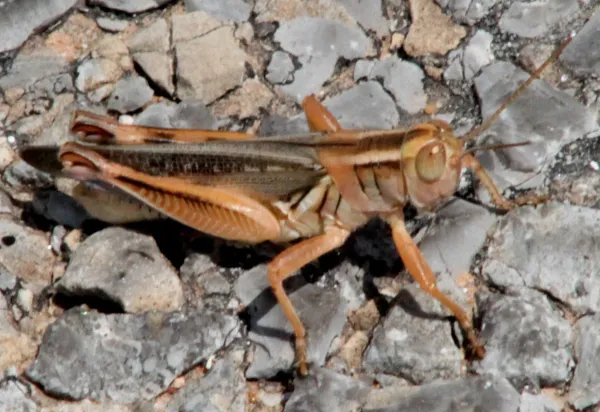
Packard Grasshopper Coloration
Common color patterns to help identify packard grasshopper
Packard Grasshopper
Seasonal Activity
When packard grasshopper are most active throughout the year

Where Packard Grasshopper Are Found
Hover over states to see their names. Green regions indicate where packard grasshopper have been reported.
Packard Grasshopper Identification Guide
Physical Characteristics
The Packard grasshopper is one of the larger grasshopper species in North America. It is still smaller than the two-striped and differential grasshoppers. Males measure 22 to 33 mm long. Females are bigger at 26 to 37 mm. Their large size makes them easy to spot in prairie habitats.
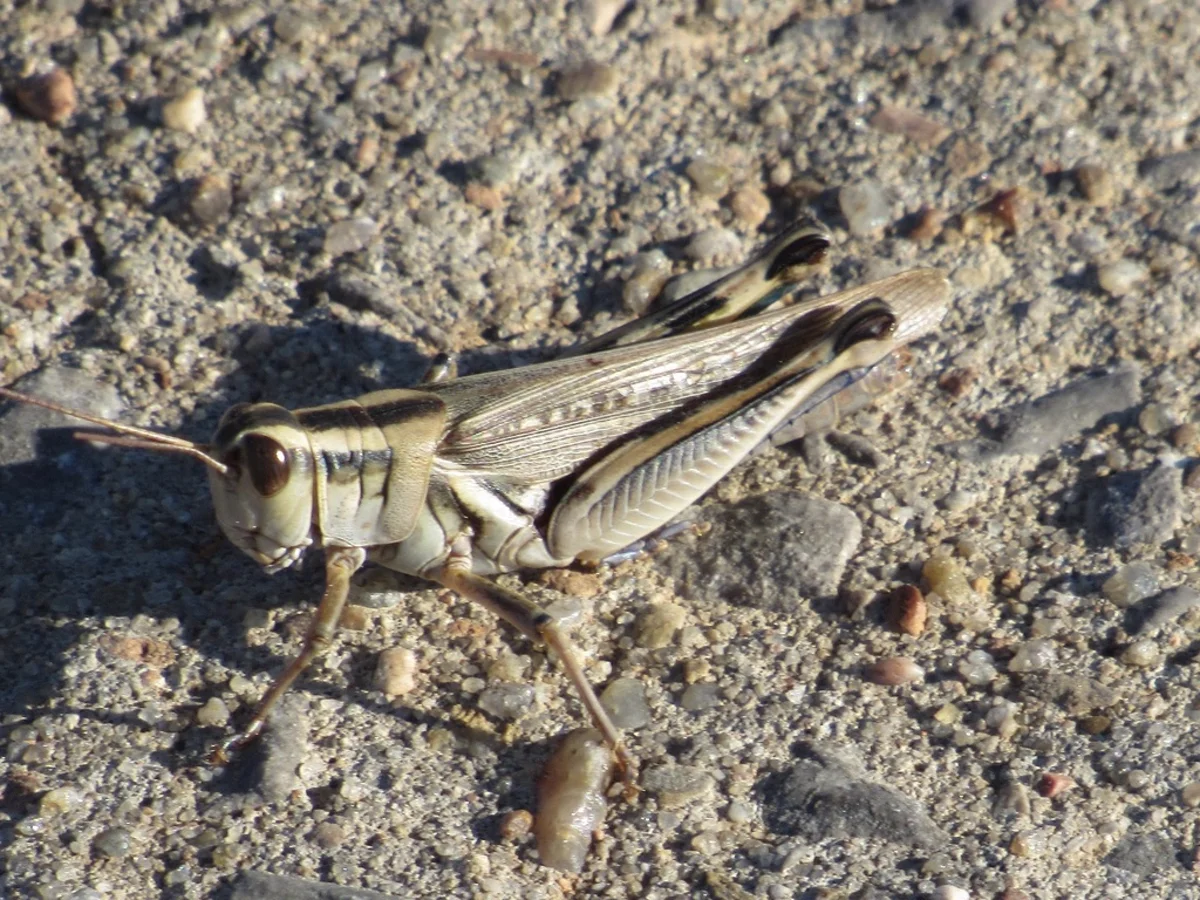
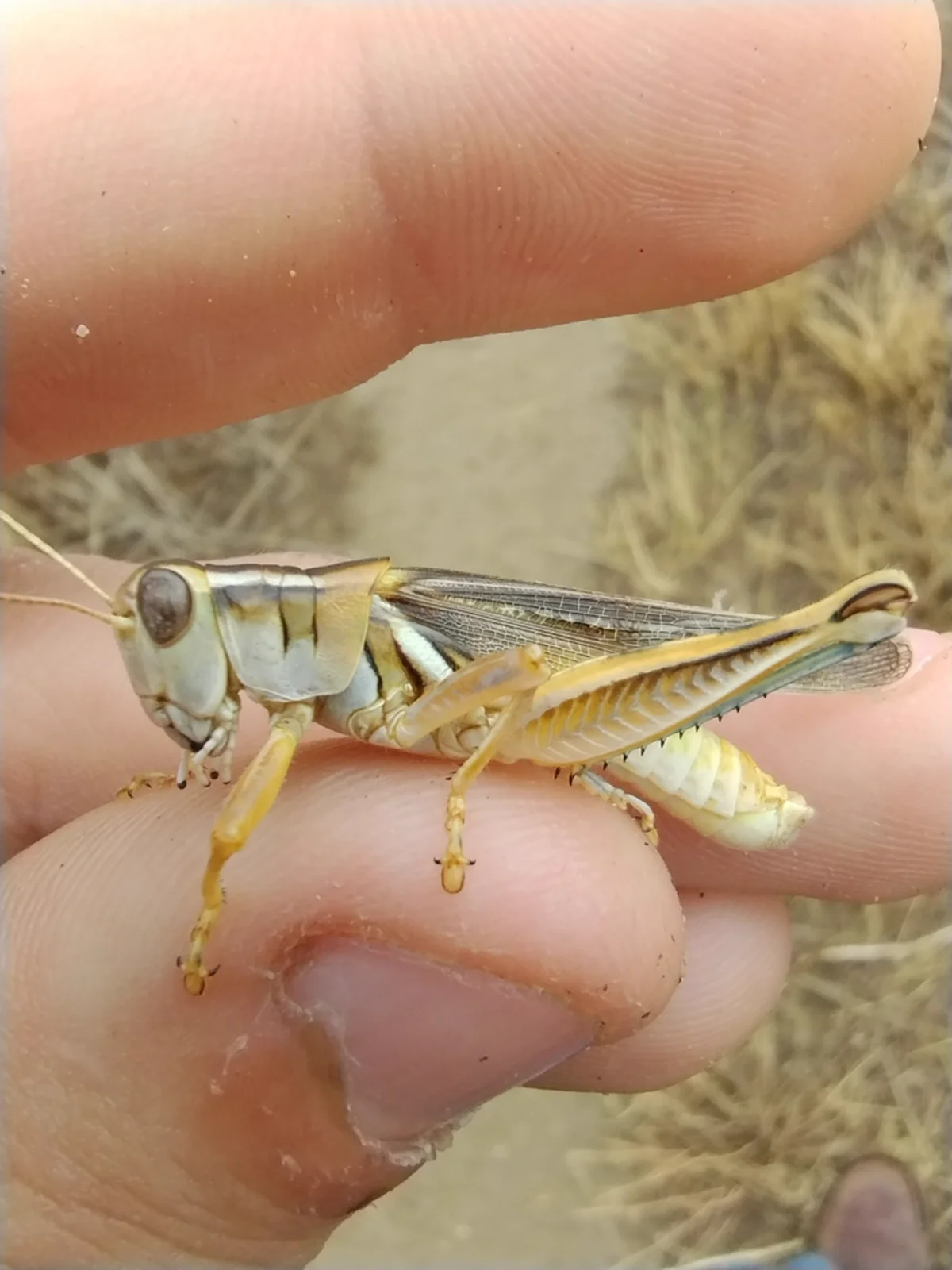
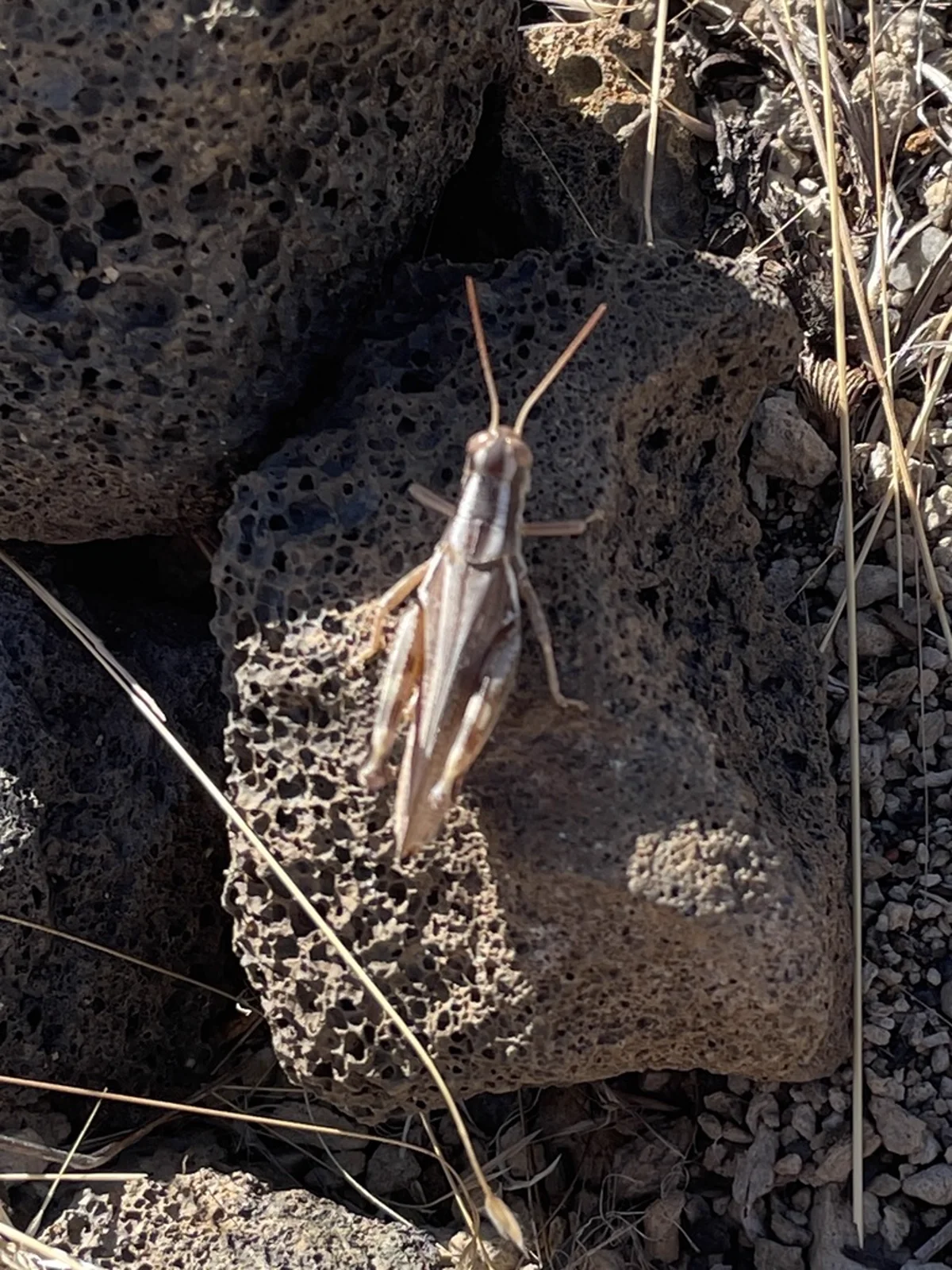
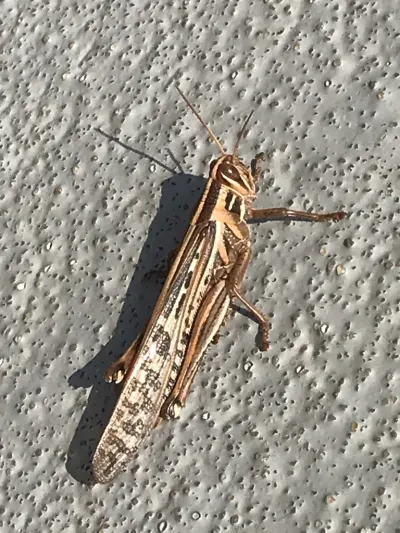
Adults have bright colors of tan, brown, yellow, and gray. The best way to identify them is by the two light tan or yellowish stripes on the head and back. These stripes run from behind the eyes to where the wings start. Unlike the two-striped grasshopper, the stripes stop at the wing bases. Yellow bands on the thorax have black borders.
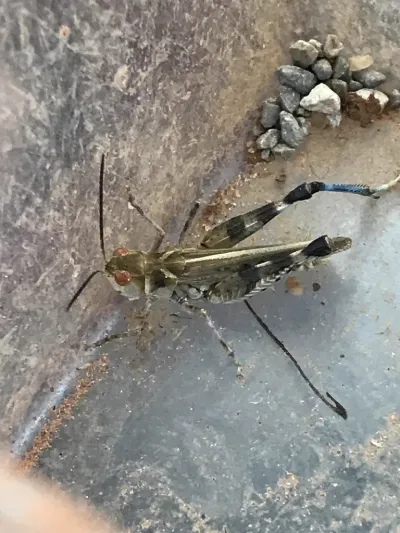
The wings are long and reach past the end of the body by up to 6 mm. The back legs have either red or blue lower segments. This color helps tell them apart from similar species. The front wings are gray without any special markings.
Young grasshoppers go through five growth stages before becoming adults. When they first hatch, they are pale green to yellow-brown with dark speckles. As they grow, they turn greenish-tan with brown spots on the head and sides.
Similar Species
Packard grasshoppers belong to a group of similar-looking species. Telling them apart often requires a close look:
- Striped Sand Grasshopper (Melanoplus foedus): Looks almost the same and needs expert study to tell apart
- Two-striped Grasshopper (Melanoplus bivittatus): Larger with pale stripes that continue along the length of the wings
- Migratory Grasshopper (Melanoplus sanguinipes): Smaller with different leg colors and no twin stripes on the back
Look for the twin stripes that end at the wing bases. Also check if the back legs are red or blue. These are the easiest ways to identify Packard grasshoppers.
Packard Grasshopper Behavior and Biology
Life Cycle
Packard grasshoppers have one generation per year. Females lay egg pods in the soil during August and September. They prefer bare ground in grain fields, roadsides, and field edges. Each pod holds about 20 eggs in a curved mass about 1.25 inches long.
The eggs start to develop, then go dormant to survive winter. Unlike many other grasshoppers, Packard grasshopper eggs break their dormancy during winter. Hatching happens between early May and mid-July. The exact timing depends on soil temperature and moisture.
After hatching, the young grasshoppers grow for 47 to 63 days before becoming adults. Warmer weather speeds up growth. At 77 degrees Fahrenheit, they mature in about 47 days. Cooler weather can stretch this to 70 days or more.
Adults appear in early July and begin mating about 20 days later. Females need about three weeks to mature before they can lay eggs. Each female produces 94 to 153 eggs during her life, placing them in 4 to 8 separate pods in the soil. Adults live about 50 days after reaching full size. A related species, High Plains Grasshopper, shares similar characteristics.
Feeding Habits A related species, Bigheaded Grasshopper, shares similar characteristics.
Packard grasshoppers prefer to eat forbs rather than grasses. Scurfpeas make up most of their diet in native prairies. Studies show about 85 percent of what they eat is forbs. Only 7 to 13 percent is grass. A related species, Pallid-Winged Grasshopper, shares similar characteristics.
They also eat legumes like milkvetch, woolly loco, and sweetclover. In pastures, they feed on brome and other planted grasses. Each grasshopper eats 30 to 100 mg of plant material per day. A related species, Clear-Winged Grasshopper, shares similar characteristics.
When numbers grow near farms, these grasshoppers switch to eating crops. They feed on alfalfa, beans, and grain crops. They chew on leaves, stems, and flowers, leaving ragged damage behind. A related species, Carolina Grasshopper, shares similar characteristics.
Habitat and Movement
Packard grasshoppers live in prairies and rangelands across western North America. They are found from Texas and Arizona all the way north to the Canadian provinces. Their range extends from the Great Plains to the Pacific states.
These grasshoppers like loose, sandy soils with little grass cover. They do well in many types of prairie habitats. In mountains, they can live in meadows up to 9,000 feet high. Grasshoppers in the south tend to be paler than those in the north.
This species has adapted well to disturbed areas. They live along roadsides, fence lines, field edges, and abandoned farmland. This lets them build up numbers near farms before moving into crops.
Packard grasshoppers are strong fliers. They can travel more than 10 miles in a single season. Some have even been found at 11,000 feet and on glaciers in Montana.
Daily Activity
Packard grasshoppers are cold-blooded and need heat from the sun to be active. They rest on bare soil at night. In the morning, they bask in the sun to warm up. It takes 2 to 3 hours to reach full activity when the soil is about 80 degrees and air is around 70 degrees.
On the hottest summer days, they climb up on plants to cool off. When soil gets above 120 degrees and air above 90 degrees, they rest on plant stems 2 to 10 inches off the ground.
Treatment Methods for Packard Grasshoppers
Packard grasshoppers live mainly in western prairies and rangelands. Most homeowners in the eastern United States will not see large numbers of them. However, people in the Great Plains and western states may need to control them during outbreak years.
Cultural and Mechanical Controls
The first step in control is removing good habitat for grasshoppers. Keep weedy areas mowed. Cut down tall plants along fence lines and property edges where females lay eggs. Tilling egg-laying sites in fall or early spring destroys eggs before they hatch.
Row covers and fine mesh netting can protect vegetable gardens. Use them from July through September when grasshoppers are most active. This works best for small garden beds.
Packard grasshoppers prefer sandy, loose soil for laying eggs. Watch areas with bare soil and thin plant cover near your garden. Treating these spots can stop grasshopper populations from getting started.
Bait-Based Controls
Nosema locustae bait can reduce grasshopper numbers over time. This protozoan parasite infects grasshoppers that eat treated bran. The disease then spreads through the population. It works best against young nymphs and may take a season or more to show results.
Carbaryl bran baits also work well for grasshopper control. Grasshoppers eat the treated bran and die within days. Apply baits along field borders and areas where grasshoppers gather.
Chemical Control Options
When grasshopper numbers are high and damage is bad, insecticide treatment may be needed. Apply sprays to field borders, roadsides, and areas where grasshoppers gather. Focus on these spots rather than treating entire properties.
Contact sprays with pyrethroids kill grasshoppers quickly when sprayed directly on them. These products work best on young grasshoppers. Adults are bigger and harder to kill. Good coverage is key for these sprays to work.
The best time to treat is May and June when grasshoppers are still young. Before they grow wings, they cannot fly away or return. Once adults can fly, control gets much harder because they can quickly come back from nearby areas.
Prevention Tips
Check your property in late spring for young grasshoppers. Look near field edges, roadsides, and areas with thin plant cover. Finding them early lets you act before numbers get out of control.
Keep your plants healthy with good watering and fertilizing. Strong plants can handle some feeding damage and bounce back. Weak or stressed plants suffer more harm from the same amount of feeding.
Keep your yard well-maintained with regular mowing and weed control. This removes the habitat grasshoppers need to thrive and lay eggs near your property.
References
Other Grasshoppers
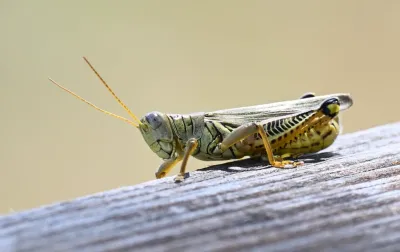
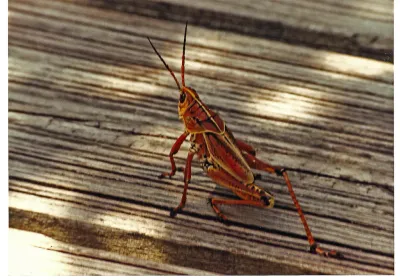
Explore other species in the grasshoppers family
Commonly Confused With
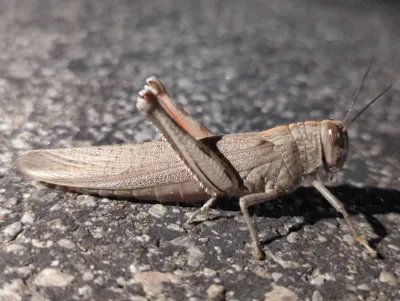
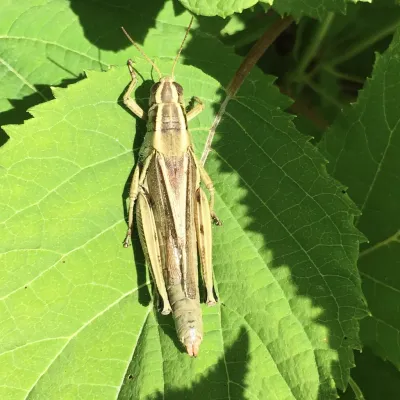
Packard Grasshopper are often mistaken for these similar pests
Where Packard Grasshopper Are Found
Hover over states to see their names. Green regions indicate where packard grasshopper have been reported.
Common Questions about Packard Grasshopper
How do I identify a Packard grasshopper?
+
Packard grasshoppers are large grasshoppers measuring 22 to 37 mm long with tan, brown, and yellow coloring. Their most distinctive feature is two pale yellowish stripes that run from behind the compound eyes to the base of the wings. The hind tibiae are either red or blue, which helps distinguish them from similar species.
Where do Packard grasshoppers live?
+
Packard grasshoppers inhabit the Great Plains and western prairies of North America, from Texas north through the Canadian prairie provinces. They prefer loose, sandy soils and thrive in tallgrass, shortgrass, mixed-grass, and desert prairies. They can also be found at elevations up to 9,000 feet in mountain meadows.
What do Packard grasshoppers eat?
+
Packard grasshoppers primarily feed on forbs, especially scurfpeas, which make up about 85 percent of their diet. They also consume legumes like milkvetch and sweetclover, various weeds, and some grasses. When near cropland, they readily eat alfalfa, pulses, cereals, and small grains.
Are Packard grasshoppers harmful to crops?
+
In their natural rangeland habitat, Packard grasshoppers cause little damage because they prefer plants with low forage value. However, they have adapted to cropland and can develop large populations that cause serious damage to small grains, alfalfa, and legume crops, particularly in the northern Great Plains and Canadian prairies.
When are Packard grasshoppers most active?
+
Packard grasshoppers are most active during warm, sunny days from late June through September. Adults emerge in early July after nymphs complete their development. They need external heat to be active, spending mornings basking on warm soil before feeding and mating during the warmest parts of the day.
How long do Packard grasshoppers live?
+
Adult Packard grasshoppers live approximately 50 days after reaching maturity. Eggs are laid in late summer and remain dormant through winter, hatching the following spring between May and early July. The complete life cycle from egg to adult death spans about one year, with one generation produced annually.
Can Packard grasshoppers fly?
+
Yes, Packard grasshoppers are strong fliers with long wings that extend beyond their abdomen. They can disperse more than 10 miles during the season and have been found at elevations above 11,000 feet and even on glaciers, demonstrating significant flight capability.

With five years of hands-on experience in the pest control industry, George Schulz is a registered technician with the Virginia Pest Management Association and a proud third-generation professional in a family business that's been protecting homes for over 57 years. He manages and trains a team of service pros while also leading internal research efforts—recently spearheading a deep-dive review of thousands of documents on pest control materials to hand-pick the most kid and pet friendly, most effective solutions tailored specifically for homes in the DC metro area.