High Plains Grasshopper Identification Guide
Dissosteira longipennis
The High Plains grasshopper is one of the largest band-winged grasshoppers in North America, historically known for devastating swarms that destroyed rangeland and crops across the Great Plains during the 1930s. Though now rare, this species remains a potential threat during outbreak conditions.
Taxonomy
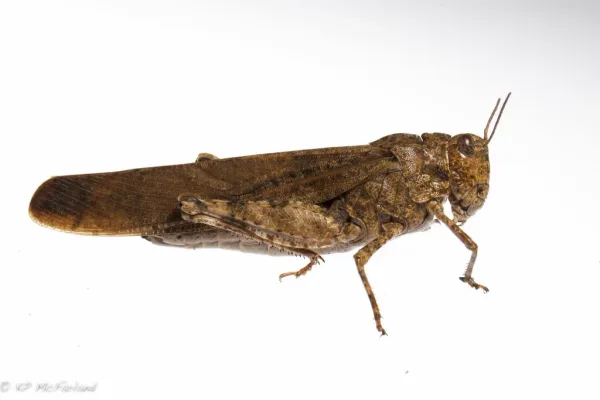
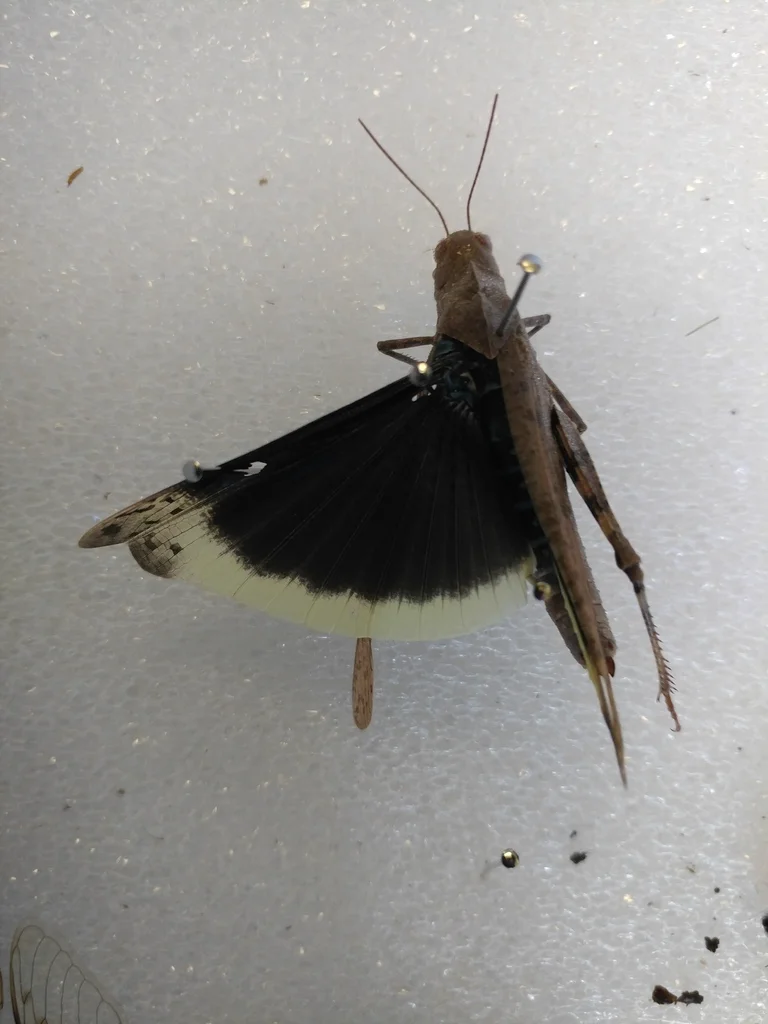
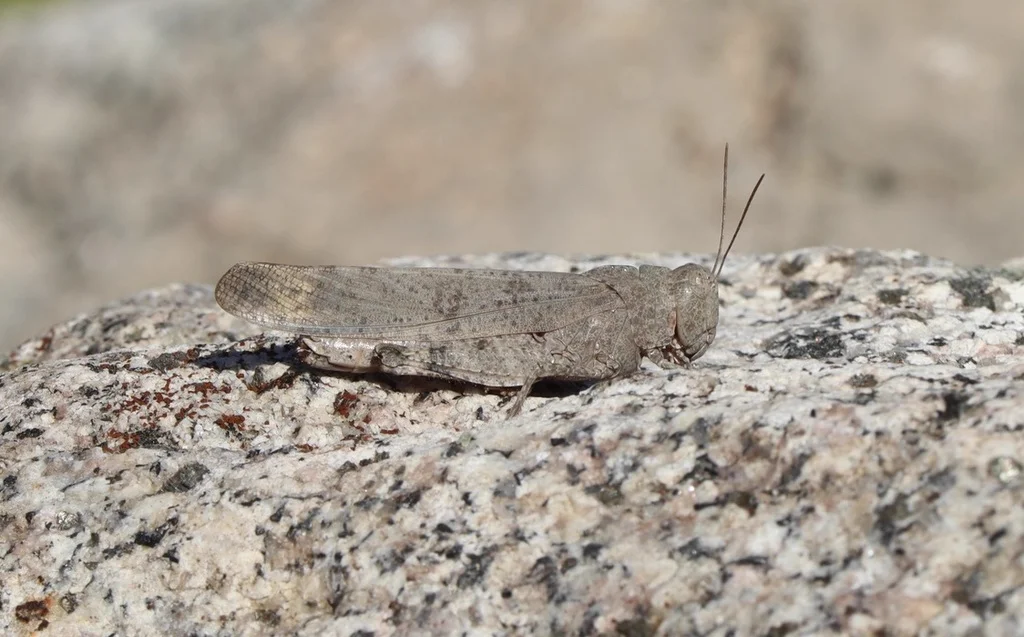
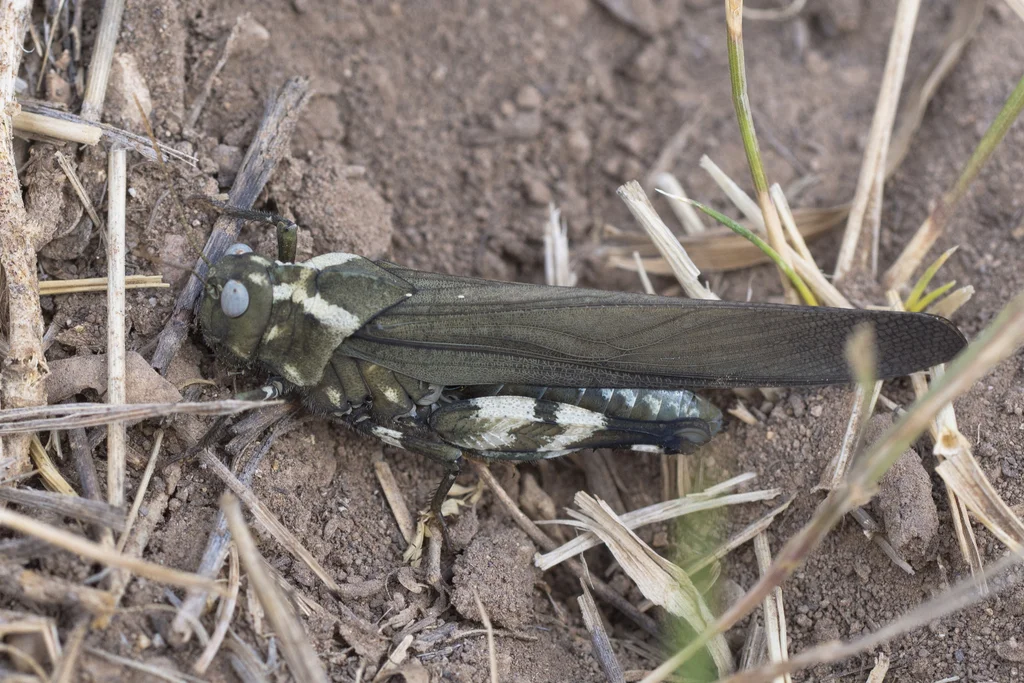
High Plains Grasshopper Coloration
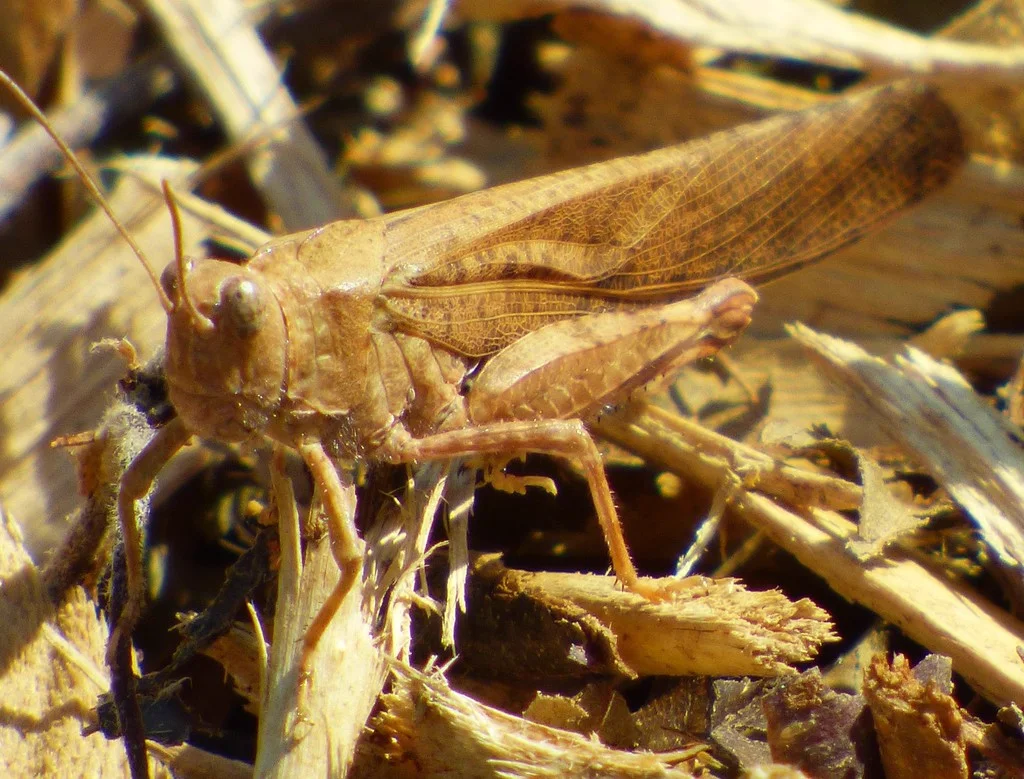
Common color patterns to help identify high plains grasshopper
High Plains Grasshopper
Seasonal Activity
When high plains grasshopper are most active throughout the year

Where High Plains Grasshopper Are Found
Hover over states to see their names. Green regions indicate where high plains grasshopper have been reported.
High Plains Grasshopper Identification Guide
Physical Characteristics
The High Plains grasshopper is one of the largest grasshoppers that damage North American rangeland. Males measure about 40 mm long. Females are larger at 50 to 60 mm. Male wingspans range from 63 to 85 mm. Female wingspans reach 82 to 102 mm. Males weigh about 647 mg and females average 1,371 mg. This makes them much heavier than most other rangeland grasshoppers.
The body is slender and flattened from side to side. The face is vertical with a rounded top. The antennae are thin and thread-like. One key feature is the high crest on the thorax plate. This crest forms a sharp ridge with a deep notch cut into it.
The forewings are pale tan with many large brown spots across the surface. The most striking feature shows up in flight when the hindwings open. These hindwings have a large black area that covers most of the wing. Unlike the Carolina grasshopper, the outer edge of the hindwing is clear rather than yellow. This clear border gets wider toward the wing tip where dusky spots appear. The wing base is colorless near the body. It then changes to black in the middle. The back edge is greenish-yellow.
Leg color helps with identification. The inner surface of the back thigh is yellow with two large dark spots near the middle. Three broad black bands cross the inner face. The back shin is golden colored. This golden color helps tell this species apart from similar grasshoppers.
Similar Species
The High Plains grasshopper can be confused with other band-winged grasshoppers, particularly those in the same genus:
-
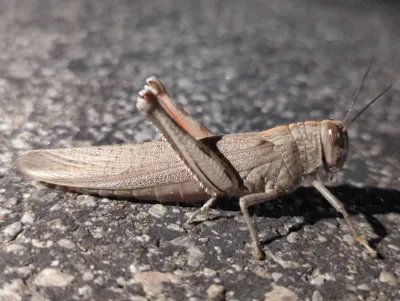
Carolina Grasshopper (Dissosteira carolina): Also has black hindwings, but the outer margin is bordered in pale yellow rather than transparent. Carolina grasshoppers prefer disturbed areas and roadsides rather than shortgrass prairie.
-
Spurcate Grasshopper (Dissosteira spurcata): Smaller with different hindwing patterning and range primarily in the southwestern United States.
-
California Rose-winged Grasshopper (Dissosteira pictipennis): Has rose or pink coloration on the hindwings rather than clear margins.
Several features set the High Plains grasshopper apart from similar species. These include its large size, clear hindwing edges that widen at the tip, golden back legs, and its link to shortgrass prairie habitat.
High Plains Grasshopper Behavior and Biology
Habitat Requirements
The High Plains grasshopper lives only in shortgrass prairie areas. This ecosystem is dominated by short grasses, mainly blue grama and buffalograss. The habitat also has some taller grasses. These include western wheatgrass, needleandthread, sand dropseed, red threeawn, and galleta hilaria.
The best habitat is found at 4,000 to 6,000 feet elevation across the Great Plains. The soil in these areas is sandy loam that soaks up rain well. This helps grass grow. Bare ground between grass clumps gives the grasshoppers places to warm up in the sun and lay eggs.
Daily Activity and Behavior A related species, Two-Striped Grasshopper, shares similar characteristics.
Although known as a strong flier, the High Plains grasshopper spends most of its time on bare ground. During normal years, adults rest flat on bare ground within an inch of grass clumps. They do not look for shelter at night. Instead, they stay on the soil surface. A related species, Migratory Grasshoppers, shares similar characteristics.
These grasshoppers feed in a set pattern. They walk up to a grass plant and taste it. Then they start eating a leaf tip or stem while staying flat on the ground. If leaves are higher up, the grasshopper angles up at about 45 degrees against the plant to reach the food. A related species, Differential Grasshopper, shares similar characteristics.
Life Cycle and Reproduction A related species, Packard Grasshopper, shares similar characteristics.
High Plains grasshoppers go through three life stages: egg, nymph, and adult. Females lay eggs in the soil during late summer. They place them in protective pods that spend winter underground. Eggs hatch in late spring to early summer when the soil warms up enough. A related species, Bigheaded Grasshopper, shares similar characteristics.
Records show that hatching dates vary by location. During the 1939 outbreak, first nymphs were found on June 5 in New Mexico and Texas. In Colorado, they appeared on June 15. In 1997, first adults showed up in late June to early July in Bent and Otero Counties, Colorado. A related species, Pallid-Winged Grasshopper, shares similar characteristics.
Nymphs go through five growth stages over 40 to 55 days. The timing depends on temperature and elevation. Each time they shed their skin, the nymphs look more like adults. Wing buds get bigger with each molt. Working wings appear after the final molt.
Historic Outbreaks
The High Plains grasshopper became famous during the huge outbreak of 1934 to 1940. Cyrus Thomas first described the species in 1872. It was thought to be rare until swarms were seen in Colorado in 1890. The first known outbreak happened the next year.
During the 1930s outbreak, huge swarms formed from egg beds. As young grasshoppers hatched, they spread outward and ate all grasses in their path. Older nymphs marched in bands looking for food. Once they became adults, swarms flew far from where they started. They destroyed any plants they found.
The damage was total. The swarms ate all rangeland grasses along with wheat, barley, corn, and millet crops. This outbreak happened during the Dust Bowl era. Together, they caused massive farm losses across the Great Plains.
No similar outbreak has happened since 1940. The species still survives and breeds in good habitats. However, it is rarely found in grasshopper surveys during normal years.
Treatment Methods for High Plains Grasshoppers
High Plains grasshoppers are hard to manage. They live in limited habitat and outbreaks are hard to predict. During normal years, populations stay low and cause little damage. When conditions are right for an outbreak, quick action is needed to stop major losses.
Monitoring and Early Detection
Regular monitoring of shortgrass prairie provides the foundation for grasshopper management. Survey techniques include sweep net sampling, visual transect counts, and egg pod sampling in areas where females lay eggs. High Plains grasshoppers can build populations quickly under good conditions. Early detection allows for action before damage becomes severe.
Pay close attention to areas with sandy loam soils, blue grama grass, buffalograss, and patches of bare ground. These features mark prime High Plains grasshopper habitat.
Cultural and Mechanical Controls
Land management affects grasshopper numbers over time. Keeping grass healthy and thick reduces the bare ground these grasshoppers need for sunning and egg laying. But the native shortgrass prairie has lots of bare ground naturally. So getting rid of all bare ground is not practical or good for the ecosystem.
How land is grazed also matters. Too much grazing creates more bare ground and may help grasshoppers grow in number. Moderate grazing keeps grass healthy while avoiding conditions that lead to outbreaks.
Biological Controls
Natural enemies help control grasshopper numbers. Birds, rodents, and other insects eat eggs, nymphs, and adults. Diseases from fungi, bacteria, and other organisms can kill many grasshoppers. This happens most in crowded populations.
Nosema locustae is a parasite sold as bait. It infects grasshoppers that eat the treated material. The disease spreads when other grasshoppers eat infected ones. This control works best on young nymphs. It may take one to two seasons to reduce numbers much.
Fungi like Metarhizium and Beauveria also attack grasshoppers. They have been used in large-scale control programs. These fungal agents work best in humid conditions. The dry shortgrass prairie may not always have enough moisture for them to work well.
Chemical Control Options
When numbers get high enough to cause damage, insecticides may be needed. This prevents major loss of forage and crops. Carbaryl baits are often spread along field edges and where grasshoppers gather. The bait draws in feeding grasshoppers and kills those that eat it.
Reduced Agent Area Treatments (RAATs) apply insecticides in strips, treating only part of the area. Grasshoppers moving through untreated zones will reach treated zones over time. This method uses less insecticide while still controlling the pests.
For best results, treat young nymphs before they grow wings and start moving. Once adults can fly, control gets much harder. They can travel long distances from untreated areas.
Prevention and Preparedness
High Plains grasshopper outbreaks have not happened in decades. But the species could still cause one. Watching population trends through yearly monitoring helps spot early signs of buildup. This allows action before numbers get too high.
Working together across property lines is key for good grasshopper control. Adult High Plains grasshoppers can fly far. Local efforts may fail if untreated areas send more grasshoppers. The best response comes when landowners, farm agencies, and pest control experts work as a team.
References
- High Plains Grasshopper - University of Wyoming Field Guide
- High Plains Grasshopper Fact Sheet - USDA Agricultural Research Service
- High Plains Grasshopper - U.S. Fish & Wildlife Service
- High Plains Grasshopper - Grasshoppers of the Western U.S.
- Encyclopedia of the Great Plains - Grasshoppers
- Dissosteira longipennis - Wikipedia
Other Grasshoppers
Explore other species in the grasshoppers family
Commonly Confused With
High Plains Grasshopper are often mistaken for these similar pests
Where High Plains Grasshopper Are Found
Hover over states to see their names. Green regions indicate where high plains grasshopper have been reported.
Common Questions about High Plains Grasshopper
How do I identify a High Plains grasshopper?
+
High Plains grasshoppers are among the largest rangeland grasshoppers, with females reaching 50 to 60 mm in length. They have pale tan forewings with brown spots and distinctive black hindwings with a transparent outer margin that widens at the tip. The hind tibiae are golden colored, and the inner hind femur is yellow with two dark markings.
Where are High Plains grasshoppers found?
+
High Plains grasshoppers inhabit the shortgrass prairie of the Great Plains, primarily between 4,000 and 6,000 feet elevation. Their range includes eastern Colorado, southwestern Nebraska, western Kansas, the panhandles of Texas and Oklahoma, eastern New Mexico, and parts of Wyoming, Montana, and the Dakotas.
Are High Plains grasshoppers dangerous?
+
High Plains grasshoppers can cause significant agricultural damage during outbreaks. During the 1934-1940 outbreak, swarms completely devoured rangeland grasses and destroyed wheat, barley, corn, and millet crops. While outbreaks have not occurred since 1940, the species retains the potential for population explosions under favorable conditions.
What do High Plains grasshoppers eat?
+
High Plains grasshoppers are general grass feeders. They primarily consume shortgrasses like blue grama and buffalograss, but also feed on midgrasses including western wheatgrass, sand dropseed, and red threeawn. During outbreaks, they devour any available vegetation including crops.
Why are High Plains grasshoppers rare now?
+
High Plains grasshoppers have not formed outbreak populations since 1940. The reasons for their decline are not fully understood, but changes in land use, grazing practices, and natural population cycles may be factors. The species continues to survive and reproduce in favorable habitats but at low densities.
When are High Plains grasshoppers most active?
+
Adults are most active during warm, sunny days from June through September. They spend most of their time on bare ground within their shortgrass prairie habitat. Despite being strong fliers capable of long-distance migration, they typically rest horizontally on bare ground near grass clumps during non-outbreak years.
How do High Plains grasshoppers differ from Carolina grasshoppers?
+
Both species belong to the genus Dissosteira and have black hindwings. However, High Plains grasshoppers are larger with a transparent outer margin on the hindwings that widens at the apex, golden hind tibiae, and a preference for shortgrass prairie. Carolina grasshoppers have a yellow hindwing border and prefer disturbed areas and roadsides.

With five years of hands-on experience in the pest control industry, George Schulz is a registered technician with the Virginia Pest Management Association and a proud third-generation professional in a family business that's been protecting homes for over 57 years. He manages and trains a team of service pros while also leading internal research efforts—recently spearheading a deep-dive review of thousands of documents on pest control materials to hand-pick the most kid and pet friendly, most effective solutions tailored specifically for homes in the DC metro area.