Clear-Winged Grasshopper Identification Guide
Camnula pellucida
The clear-winged grasshopper is a major agricultural pest known for its transparent hindwings and ability to devastate grains and rangelands. This early-season species can form massive swarms that strip vegetation across thousands of square miles.
Taxonomy
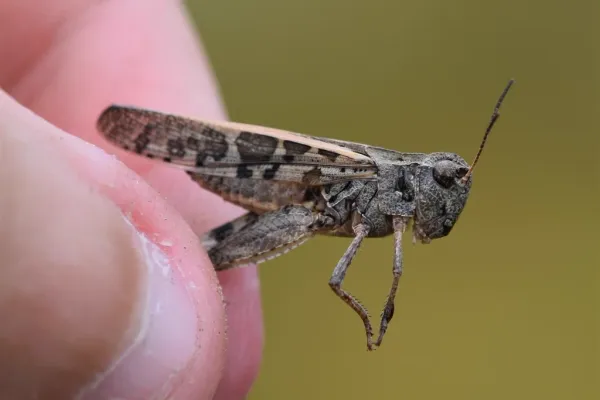
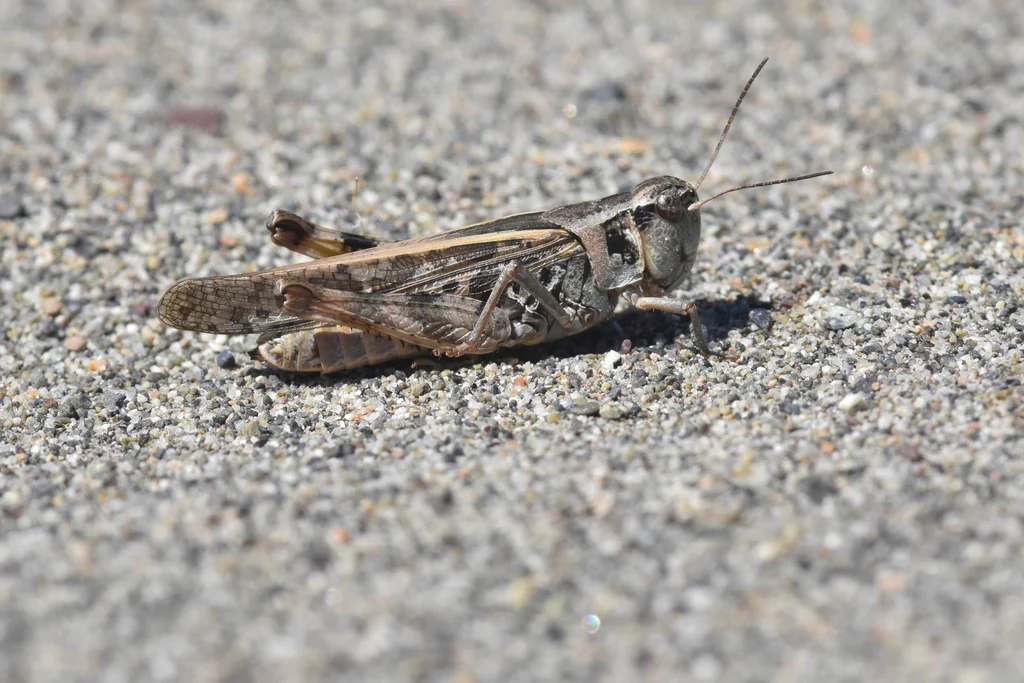
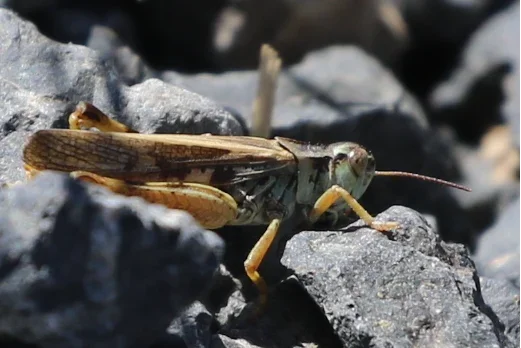
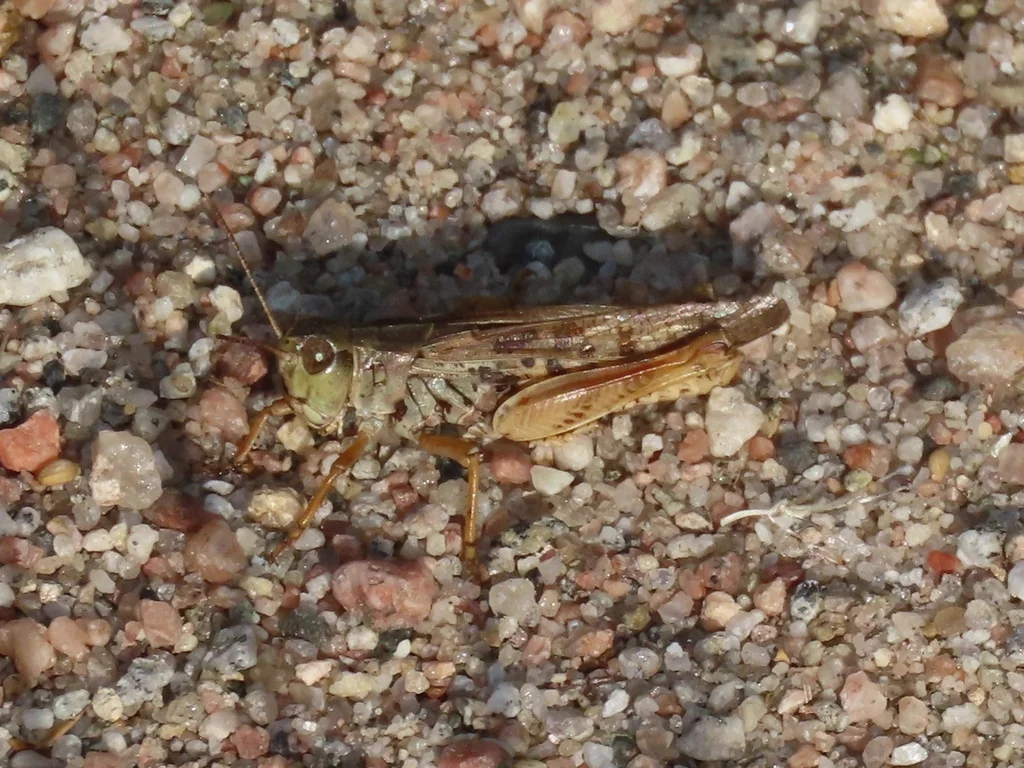
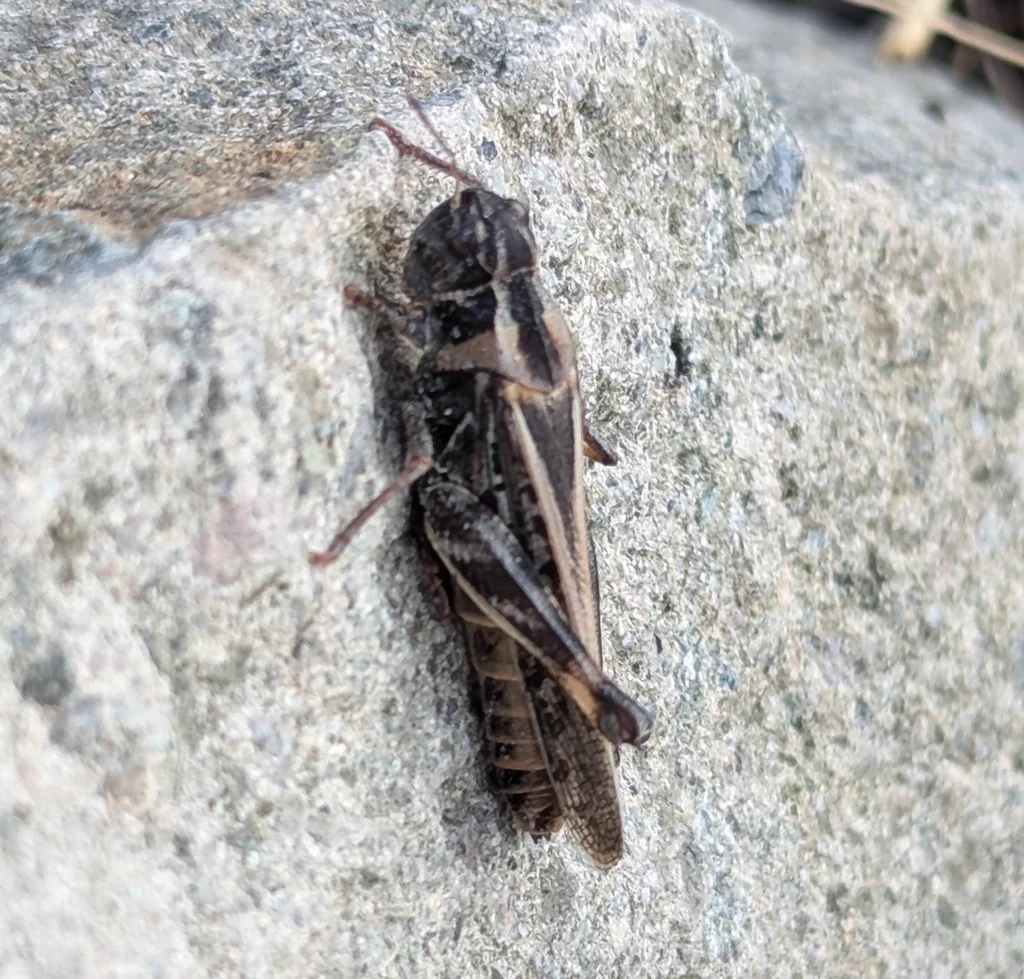
Clear-Winged Grasshopper Coloration
Common color patterns to help identify clear-winged grasshopper
Clear-Winged Grasshopper
Seasonal Activity
When clear-winged grasshopper are most active throughout the year

Where Clear-Winged Grasshopper Are Found
Hover over states to see their names. Green regions indicate where clear-winged grasshopper have been reported.
Clear-Winged Grasshopper Identification Guide
Physical Characteristics
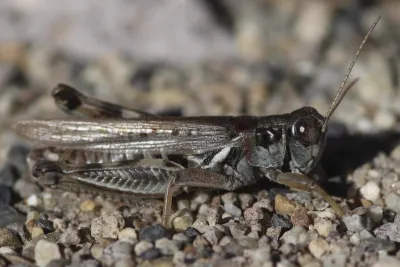
Clear-winged grasshoppers are small to medium-sized insects. They stand out among band-winged grasshoppers because their hindwings are completely see-through. Most band-winged species flash colorful wing patterns during flight. But the clear-winged grasshopper has no colored bands at all. This makes them easy to identify once you know what to look for.
Males measure 20 to 25 mm long. Females are larger at 25 to 31 mm. The body color ranges from yellow to grayish-brown. Black markings cover the head and thorax.
The head has triangular pits on the sides of the face called foveolae. A black bar runs under the antennae, across the lower eyes, and onto the sides of the head. This dark facial marking is one of the best ways to identify them.
The pronotum is the shield-like structure behind the head. It is flat and smooth with a low ridge running down the center. The sides have clearly defined edges. The forewings have oval spots that form a V-shape when the wings fold at rest.
The hind legs have yellow or amber coloring on the inner femur and yellowish tibiae. Unlike some grasshoppers with bold leg patterns, the clear-winged grasshopper’s leg markings are subtle.
Similar Species
Clear-winged grasshoppers can be confused with several other band-winged species:
- Carolina Grasshopper (Dissosteira carolina): Has black hindwings with yellow borders that flash during flight
- Migratory Grasshopper (Melanoplus sanguinipes): Does not have see-through hindwings and has a different body shape
- Other Band-Winged Grasshoppers: Most have colored or banded hindwings you can see during flight
The completely clear hindwings make positive identification relatively easy when the grasshopper takes flight. No other common band-winged species shares this trait.
Clear-Winged Grasshopper Behavior and Biology
Life Cycle
Clear-winged grasshoppers produce one generation per year. Females lay eggs in late summer and fall. Each female uses prongs at the tip of her abdomen to drill into firm soil. She deposits about 175 eggs in roughly eight separate pods over her lifetime. They prefer to lay eggs in areas with short plants like mowed roadsides, sparse pastures, and overgrazed hilltops.
Eggs start developing right after being laid. Growth continues until the embryo is about halfway developed. This takes roughly 400 day-degrees of heat. Then the eggs enter a dormant state called diapause. They stay dormant through winter and need at least 70 days of cold at around 41 degrees Fahrenheit before they can hatch.
When soil warms above 55 degrees Fahrenheit in spring, the eggs finish developing and hatch. This makes clear-winged grasshoppers an early-hatching species. Nymphs emerge from egg beds that can hold huge numbers of eggs. Some beds contain 3,000 to 100,000 eggs per square foot.
Nymphs pass through five growth stages called instars. First stage nymphs have striking cream, tan, and black coloring. The ridge on the pronotum starts smooth but develops a notch as the nymph grows. In warm weather with good food, nymphs reach adulthood in about 26 days. Cooler conditions or poor food can stretch this to 40 days or more. A related species, High Plains Grasshopper, shares similar characteristics.
Feeding Habits A related species, Two-Striped Grasshopper, shares similar characteristics.
Clear-winged grasshoppers eat mainly grasses. They prefer juicy plants, especially western wheatgrass, reed canarygrass, barley, and wheat. They also feed heavily on fescues, bluegrasses, bromes, and slender hairgrass. A related species, Differential Grasshopper, shares similar characteristics.
The species is most nutritionally successful on diets of red fescue, various bluegrass species, wheat, crested wheatgrass, and intermediate wheatgrass. This grass-focused diet makes them especially damaging to rangelands and grain crops. A related species, Packard Grasshopper, shares similar characteristics.
Clear-winged grasshoppers rank among the most destructive grasshopper species for small grains and pasture grasses. They cause the most damage early in the growing season when they can completely destroy spring wheat before harvest. A population density of just 20 adults per square yard can consume the entire available yield of forage grasses on rangelands. A related species, Bigheaded Grasshopper, shares similar characteristics.
Outbreaks on rangelands have devastated grass forage across areas exceeding 2,000 square miles. Research shows that feeding during the nymphal stages alone reduces Kentucky bluegrass yield by 5.1 pounds of dry weight per acre for each grasshopper per square yard present. A related species, Pallid-Winged Grasshopper, shares similar characteristics.
Movement and Swarm Behavior
Clear-winged grasshopper numbers follow a boom-and-bust pattern. They can stay hidden for five to ten years. Then they slowly build up over three to four years before hitting peak numbers. Outbreaks happen when weather is good, food is plentiful, and predators are scarce.
When nymphs hatch at high densities, food depletion and crowding trigger dispersal behavior. Young nymphs move toward the nearest green vegetation. Older instars march in cohesive bands, traveling together across the landscape. These marching bands can cover considerable distances as they search for food.
Adults historically migrated in huge flying swarms at both low and high altitudes. Flights could cover distances from one hundred to several hundred yards. However, in recent decades only smaller swarms undertaking shorter flights have been documented.
Not all populations exhibit migratory behavior. Some populations remain relatively sedentary. For example, grasshoppers in sodded pastures near Harney, Minnesota showed little movement, with nymphs developing to adulthood close to their hatching sites and adults showing minimal tendency to migrate.
Clear-winged grasshoppers are active during the day and rest at night. In the morning, they crawl out of hiding and sit on warm surfaces to heat up. As the day warms, they become active and feed through most of the daylight hours. When the ground gets too hot, they climb plant stems to cool off.
Treatment Methods for Clear-Winged Grasshoppers
Managing clear-winged grasshoppers works best when you understand their early-season activity and outbreak patterns. Landowners and farmers often use a mix of control methods to protect crops and forage.
Cultural and Mechanical Controls
Habitat modification offers the first line of defense against clear-winged grasshopper infestations. Since females prefer to lay eggs in areas with short, sparse vegetation, maintaining taller, denser plant cover can discourage egg-laying. However, heavily grazed pastures and mowed roadsides remain vulnerable as egg-laying sites.
Tilling suspected egg-laying areas in fall or early spring can destroy overwintering eggs before they hatch. This approach works best for small areas where tillage is practical and does not conflict with other land management goals.
For gardens and small agricultural plots, row covers and fine mesh netting can physically exclude grasshoppers from valuable plants. Installing barriers before grasshopper populations build up provides the best protection.
Trap strips can concentrate grasshoppers in limited areas for easier monitoring and treatment. Leaving bands of attractive green vegetation along field edges draws grasshoppers to predictable locations where they can be managed without treating entire properties.
Biological Controls
Many animals eat clear-winged grasshoppers. Birds like meadowlarks and hawks eat large numbers of nymphs and adults. Having good bird habitat on your land helps keep grasshopper numbers down over time.
Nosema locustae is a parasite sold as bait for grasshopper control. Grasshoppers eat the treated bran and get sick. The disease spreads when healthy grasshoppers eat dead ones. This product works best on young nymphs. It may take one to two years to really cut population numbers. It works well for treating large areas.
Certain fungi like Metarhizium and Beauveria naturally infect grasshoppers. These fungal diseases can wipe out large numbers, especially in humid weather. Some large farms use these fungi as part of their control programs.
Weather can kill large numbers of grasshoppers. Drought, cold snaps, and harsh winters take a heavy toll. In some years, winter kills 100 percent of eggs, causing populations to crash on their own.
Chemical Control Options
When grasshopper populations are high and damage is imminent, insecticide treatments may be necessary to protect crops and forage. Carbaryl baits attract grasshoppers with treated bran flakes. Applying baits along field borders and in areas where grasshoppers concentrate maximizes effectiveness while minimizing environmental impact.
Contact insecticides with pyrethroids kill grasshoppers quickly on treated plants. These products work best on nymphs, which are easier to kill than adults. Good coverage is key to getting results.
Timing is critical for chemical control success. Treatments applied to young nymphs before wing development achieve the best results. Once clear-winged grasshoppers mature and become capable of flight, they can quickly reinvade treated areas from surrounding land.
Prevention Tips
Monitor for early-season nymph emergence in late spring. Small grasshoppers gathering near egg-laying sites signal the beginning of the season and provide an opportunity for early intervention when control is easiest.
Create diverse plant communities that attract grasshopper-eating birds. Varied vegetation provides habitat for predators that help keep grasshopper numbers in check.
Keep plants healthy with proper watering and feeding. Strong plants can handle some grasshopper damage and bounce back. Stressed plants suffer much worse damage.
Work with neighbors when possible. Clear-winged grasshoppers move easily between properties. Treating your land alone may not help if grasshoppers keep coming from next door.
References
Other Grasshoppers
Explore other species in the grasshoppers family
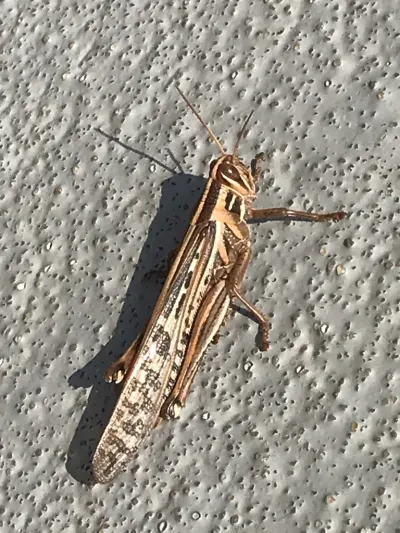
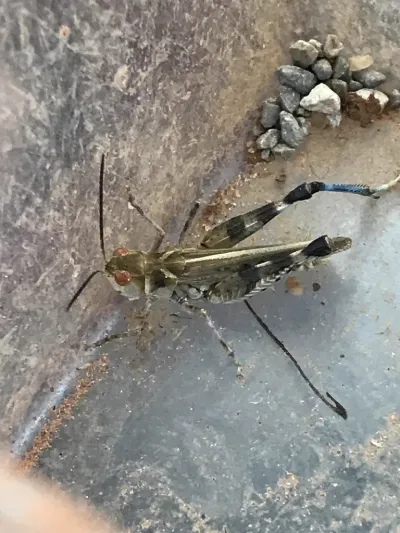
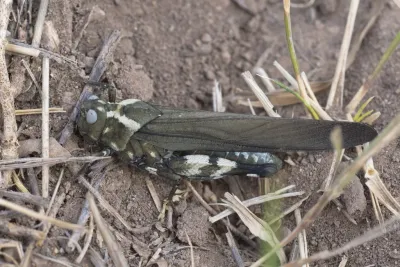
Commonly Confused With
Clear-Winged Grasshopper are often mistaken for these similar pests
Where Clear-Winged Grasshopper Are Found
Hover over states to see their names. Green regions indicate where clear-winged grasshopper have been reported.
Common Questions about Clear-Winged Grasshopper
How do I identify a clear-winged grasshopper?
+
Clear-winged grasshoppers are small to medium-sized, measuring 20 to 31 mm. Their most distinctive feature is their completely transparent hindwings, making them the only band-winged grasshopper with clear hindwings. They have yellow to grayish-brown bodies with black markings, including a black triangular band behind each eye. The forewings display oval spots that form a V-shape when wings are folded.
Are clear-winged grasshoppers harmful to gardens and crops?
+
Yes, clear-winged grasshoppers are among the most destructive grasshopper species in North America. They primarily feed on grasses but can devastate wheat, barley, and other cereal crops. A population density of just 20 adults per square yard can consume an entire season's forage yield. During outbreaks, swarms have destroyed vegetation across areas exceeding 2,000 square miles.
When are clear-winged grasshoppers most active?
+
Clear-winged grasshoppers are early-season species. Eggs hatch in spring, and adults appear from mid-May through September. They are most damaging in early summer when they can completely destroy spring wheat crops. They are diurnal insects, most active during warm, sunny days when they bask on warm surfaces in the morning and feed actively throughout midday.
Where do clear-winged grasshoppers live?
+
These grasshoppers inhabit diverse grassland environments including mixed-grass prairies, bunchgrass areas, and mountain meadows up to 10,800 feet elevation. They are found across northern North America from Alaska to Nova Scotia, south to California and the northern Great Plains. They prefer to dwell among vegetation rather than on bare ground.
Do clear-winged grasshoppers form swarms?
+
Yes, clear-winged grasshoppers can form massive swarms during outbreak years. Eggs beds may contain 3,000 to 100,000 eggs per square foot. When nymphs hatch in such high densities, they deplete local food and begin marching in cohesive bands. Adults historically formed huge flying swarms, though recent years have seen only smaller, shorter flights.
What is the difference between clear-winged grasshoppers and other grasshoppers?
+
The clear-winged grasshopper is unique among band-winged grasshoppers because its hindwings are completely transparent with no colored bands. Most other band-winged species have yellow, red, or black banding on their hindwings. The clear-winged grasshopper also has distinctive light stripes along its forewings that converge near the middle when at rest.
How long do clear-winged grasshoppers live?
+
Clear-winged grasshoppers complete one generation per year. Eggs laid in fall develop about halfway, then enter dormancy requiring at least 70 days of winter chilling. In spring, eggs hatch and nymphs develop to adults in 26 to 40 days depending on temperature and food quality. Adults live through summer and fall, dying after laying eggs.

With five years of hands-on experience in the pest control industry, George Schulz is a registered technician with the Virginia Pest Management Association and a proud third-generation professional in a family business that's been protecting homes for over 57 years. He manages and trains a team of service pros while also leading internal research efforts—recently spearheading a deep-dive review of thousands of documents on pest control materials to hand-pick the most kid and pet friendly, most effective solutions tailored specifically for homes in the DC metro area.