Carolina Grasshopper Identification Guide
Dissosteira carolina
The Carolina grasshopper is one of North America's largest and most conspicuous grasshoppers, easily identified by its black hindwings bordered in yellow. These band-winged grasshoppers are commonly seen flying over dirt roads and bare ground during warm summer days.
Taxonomy
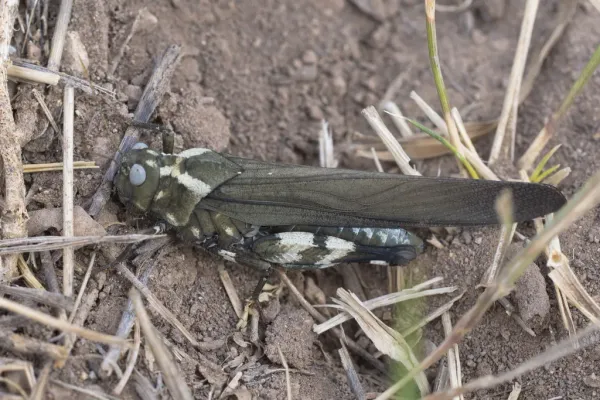
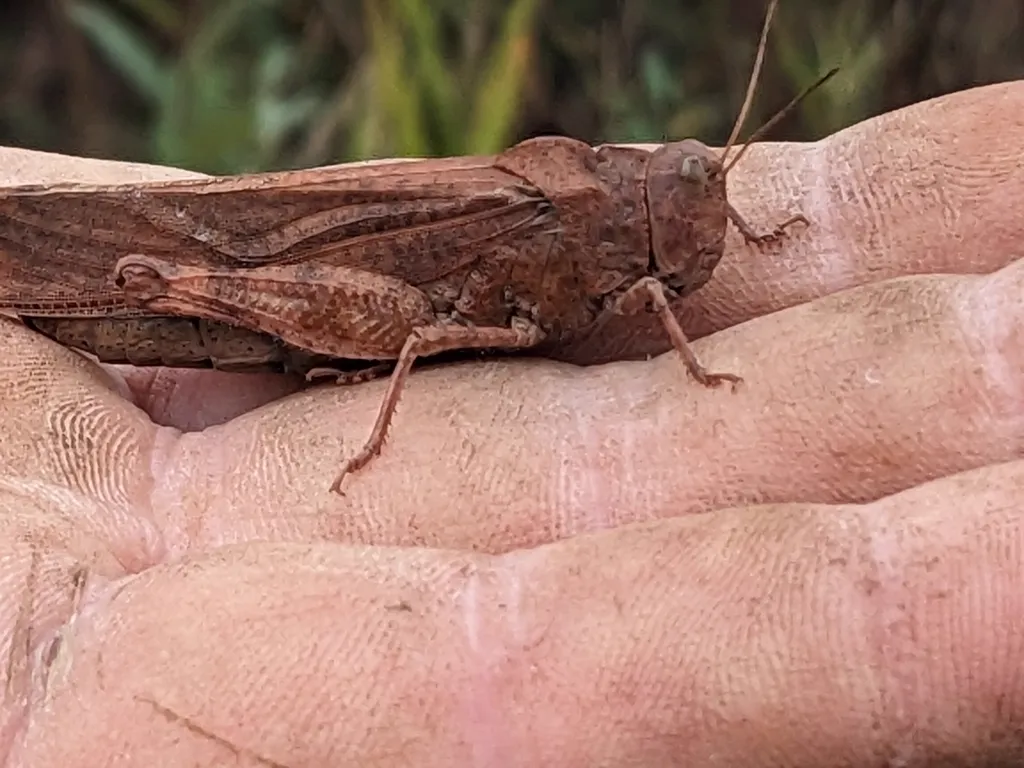
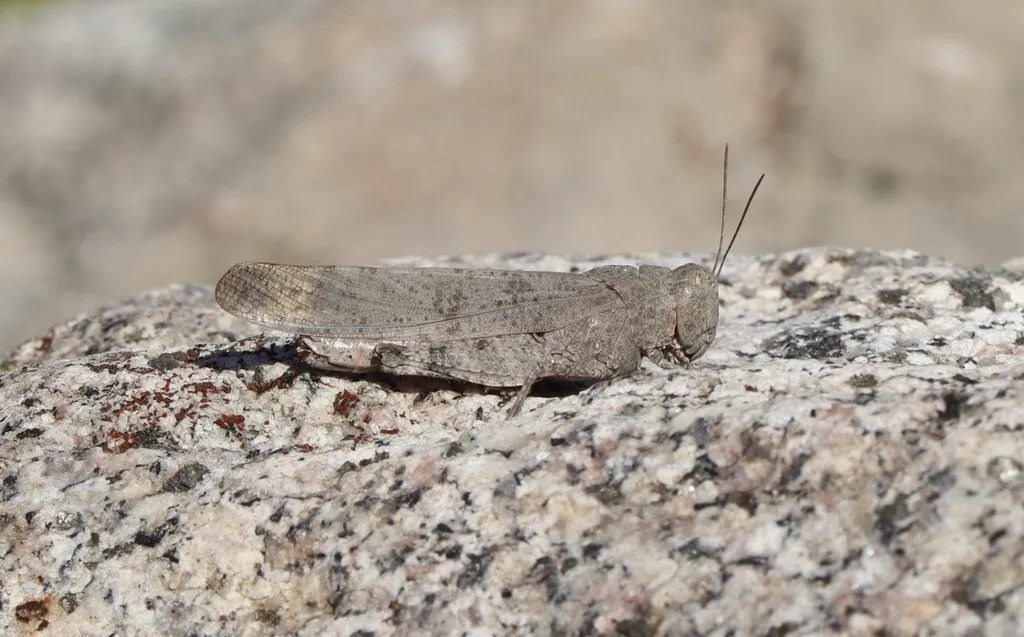
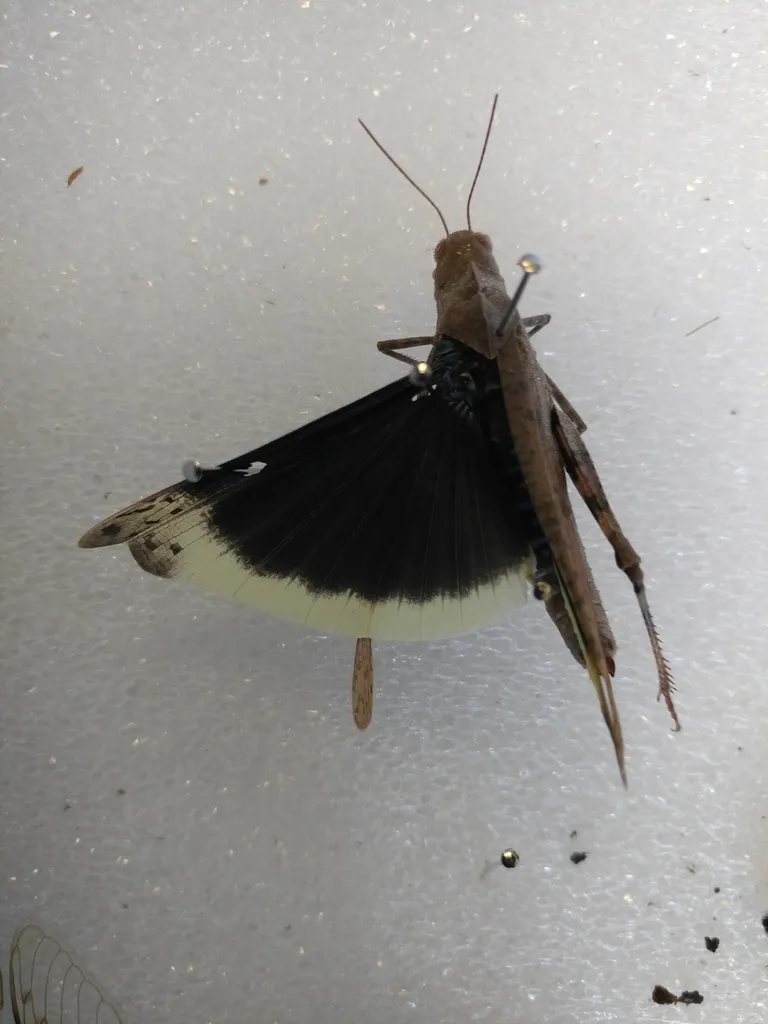
Carolina Grasshopper Coloration
Common color patterns to help identify carolina grasshopper
Carolina Grasshopper
Seasonal Activity
When carolina grasshopper are most active throughout the year

Where Carolina Grasshopper Are Found
Hover over states to see their names. Green regions indicate where carolina grasshopper have been reported.
Carolina Grasshopper Identification Guide
Physical Characteristics
The Carolina grasshopper ranks among North America’s largest grasshopper species. Males measure 32 to 45 mm in length with a wingspread of approximately 75 mm, while females are larger at 40 to 58 mm with wingspreads reaching 80 to 102 mm. Males weigh about 570 mg live weight, while females average 1,467 mg.
The most reliable way to identify a Carolina grasshopper is by its hindwings. When this grasshopper takes flight, it reveals striking black hindwings bordered by a pale yellow margin. This color pattern makes the insect highly conspicuous in flight, even from a distance. The transition from camouflaged resting position to the contrasting flight display happens in less than 9 milliseconds.
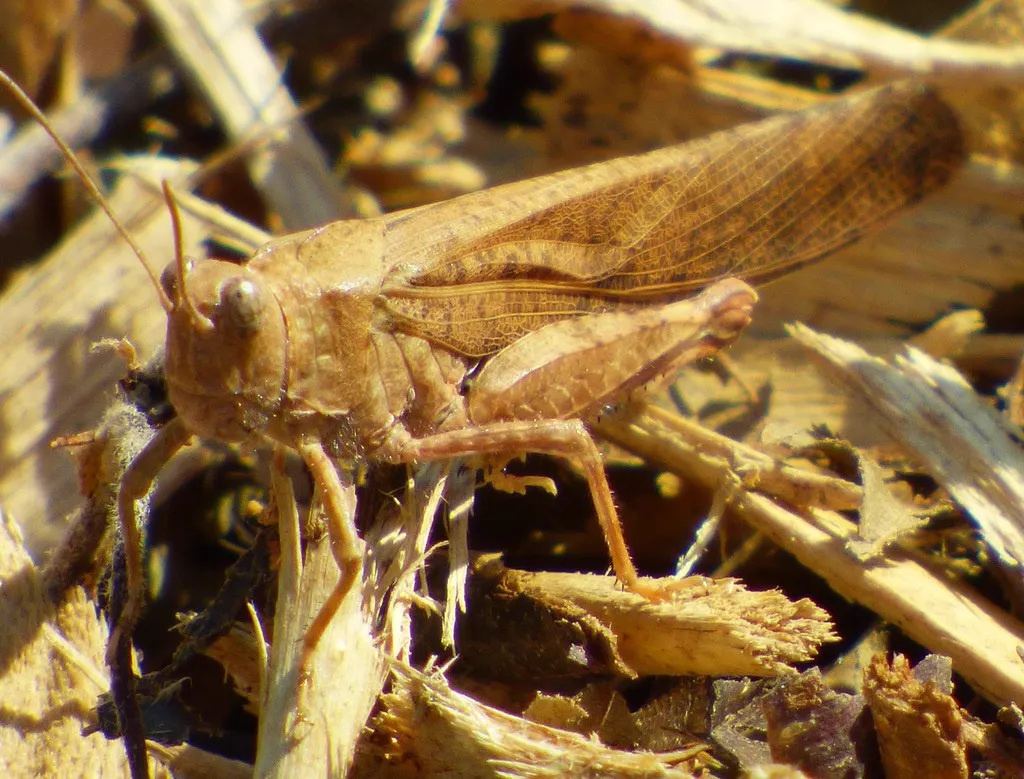
At rest, Carolina grasshoppers blend remarkably well with their surroundings. The forewings, called tegmina, display mottled patterns of tan, brown, or gray with faint speckling. Body color varies considerably and often matches the local soil, ranging from tan and brown to gray and even reddish tones on red soils. The head has a nearly vertical face with short, filiform antennae that have darker terminal segments.
The pronotum, the plate covering the thorax, has a strongly elevated median ridge that is cut once. This crest gives the grasshopper a distinctive profile when viewed from the side.
Similar Species
Carolina grasshoppers can be confused with other band-winged grasshoppers in the family Acrididae:
- Pallid-winged Grasshopper (Trimerotropis pallidipennis): Has pale yellowish hindwings rather than black with yellow borders
- Clear-winged Grasshopper (Camnula pellucida): Smaller with transparent hindwings
- Three-banded Grasshopper (Hadrotettix trifasciatus): Has banded hindwings with multiple dark bands
The combination of large size, black hindwings with yellow margins, and the distinctive crackling flight sound makes Carolina grasshoppers readily identifiable once you know what to look for.
Carolina Grasshopper Behavior and Biology
Daily Activity Patterns
Carolina grasshoppers are terrestrial and diurnal, though they may be attracted to lights on warm summer nights. Their daily routine follows a predictable pattern tied to temperature. Adults and nymphs shelter overnight under vegetation and emerge about two hours after sunrise to bask in the morning sun.
This morning basking period lasts two to three hours. The grasshoppers position themselves on bare ground or rocks to absorb heat from the sun. Once sufficiently warmed, they become active walkers and fliers.
As ground temperatures rise above 43 degrees Celsius (109 degrees Fahrenheit) and air temperatures exceed 32 degrees Celsius (90 degrees Fahrenheit), the grasshoppers begin a behavior called stilting. They raise their bodies off the hot ground by extending their legs. As temperatures continue to rise, they climb onto vegetation, positioning themselves 2.5 to 7.5 mm above the substrate. They orient their bodies to face the sun so only the front of the head receives direct rays while the rest of the body stays shaded. A related species, High Plains Grasshopper, shares similar characteristics.
Courtship and Reproduction A related species, Two-Striped Grasshopper, shares similar characteristics.
Male Carolina grasshoppers court females through both visual and acoustic displays. A male will sit horizontally on bare ground in sunlight and produce a calling signal by rubbing one hind leg at a time against the tegmen in a behavior called alternate stridulation. This calling can continue for five minutes or longer until a female approaches. A related species, Migratory Grasshoppers, shares similar characteristics.
The hovering flight display also attracts mates. Males fly up and hover while crepitating their wings, producing the characteristic crackling sound. This display draws both females and competing males, sometimes creating small aggregations on the bare ground beneath the hovering male. A related species, Differential Grasshopper, shares similar characteristics.
Mating can last as long as 16 hours. Females require approximately nine weeks after reaching adulthood before they are ready to lay eggs. They deposit their eggs in the soil during late summer and early autumn, drilling into firm ground and laying large clutches that usually contain more than 40 eggs in curved pods buried about 1.5 inches deep.
Life Cycle
Carolina grasshoppers are intermediate-hatching species. In eastern Wyoming, egg hatching may begin in early June or be delayed until late June, depending on spring temperatures. Development time from hatching to adult varies with elevation and temperature. Nymphs complete five instars over about 40 days at lower elevations (4,700 feet) or 55 days at higher elevations (6,100 feet).
Adult emergence timing varies by region. Adults may appear as early as May in New Mexico and eastern Nebraska, early July in eastern Wyoming, and late July in western Idaho. Once they acquire functional wings, adults fly and disperse extensively. They have been found in city centers several miles from typical habitat, demonstrating significant dispersal capability.
Habitat and Diet
Carolina grasshoppers favor weedy grasslands and disturbed areas. Prime habitat includes blowouts, field margins, roadsides, weedy fence rows, railway cuttings, and disturbed rangeland. They are particularly attracted to bare ground where they bask, court, and become highly conspicuous flying about dirt roads during warm daylight hours.
The diet consists of both grasses and forbs, with the actual composition depending on available vegetation. In areas reseeded with cultivated grasses, they may feed almost exclusively on those grasses. In naturally colonized disturbed sites, their diet shifts to include both native grasses and weeds. Laboratory studies show they readily consume downy brome, smooth brome, western wheatgrass, wheat, barley, dandelion, and kochia.
Treatment Methods for Carolina Grasshoppers
Carolina grasshoppers are classified as minor pests of rangeland grasses. They are most abundant in disturbed areas where weeds provide their primary food source. During favorable conditions, populations may increase and disperse, occasionally damaging crops including alfalfa, corn, sorghum, cotton, and potatoes.
Cultural and Mechanical Controls
Managing habitat provides the foundation for grasshopper management. Since Carolina grasshoppers prefer disturbed, weedy areas with bare ground, maintaining healthy, dense vegetation reduces favorable conditions. Eliminating weedy patches along fence lines, roadsides, and field edges removes preferred feeding and egg-laying sites.
Tilling suspected egg-laying areas in fall or early spring can destroy overwintering eggs before they hatch. Focus on bare or sparsely vegetated areas adjacent to fields where females typically deposit eggs.
Row covers and mesh netting can protect small garden areas during peak grasshopper season, though Carolina grasshoppers generally cause less damage to cultivated gardens than other species.
Biological Controls
Many natural predators help control Carolina grasshopper populations. Birds, pallid bats, Carolina wolf spiders, praying mantis, and great black wasps all prey on these grasshoppers. Encouraging diverse habitat that supports these predators provides ongoing natural control.
Nosema locustae, a protozoan parasite sold as bait, can be effective against grasshopper nymphs. It works best when applied early in the season to young nymphs. The disease spreads through the population over time, though it may take a season or two to show significant results.
Chemical Control Options
When grasshopper populations reach damaging levels, insecticide baits containing carbaryl can provide effective control. Apply baits to field borders and areas where grasshoppers concentrate rather than broadcasting across entire properties.
Contact insecticides offer quick knockdown but work best on nymphs. Adults are harder to control due to their size and strong flying ability. For best results, apply treatments early in the season before nymphs develop wings and begin dispersing.
Prevention Tips
Monitor open areas and roadsides in late spring for hatching nymphs. The appearance of small grasshoppers signals the start of the season and provides an opportunity for early intervention.
Maintain diverse landscapes with flowering plants that attract beneficial insects and birds. These natural predators provide continuous pest suppression without chemical inputs.
Keep garden plants healthy through proper watering and fertilization. Vigorous plants tolerate moderate feeding damage and recover more quickly than stressed plants.
References
Other Grasshoppers
Explore other species in the grasshoppers family
Commonly Confused With
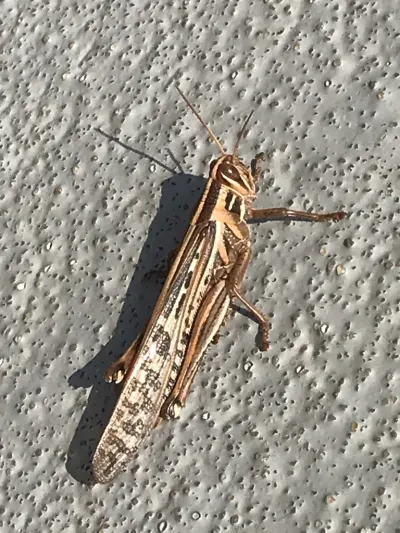
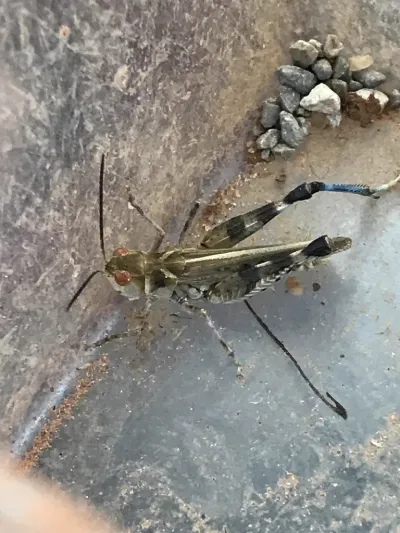
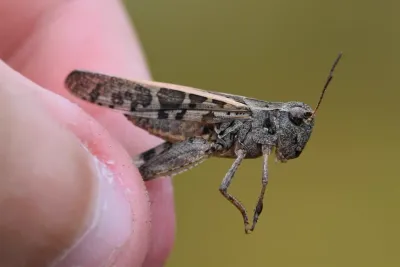
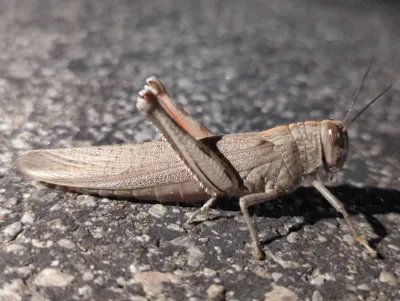
Carolina Grasshopper are often mistaken for these similar pests
Where Carolina Grasshopper Are Found
Hover over states to see their names. Green regions indicate where carolina grasshopper have been reported.
Common Questions about Carolina Grasshopper
How do I identify a Carolina grasshopper?
+
Carolina grasshoppers are large, measuring 32 to 58 mm long. They have mottled brown, tan, or gray forewings that camouflage them on bare ground. Their most distinctive feature is their black hindwings with a pale yellow border, which flash when they fly.
Why do Carolina grasshoppers fly along roads?
+
Carolina grasshoppers prefer bare, open areas like dirt roads, paths, and disturbed ground for basking, courtship, and egg laying. They habitually fly short distances over these surfaces, making distinctive crackling sounds with their wings before landing.
Are Carolina grasshoppers harmful to gardens?
+
Carolina grasshoppers are considered minor pests. They feed on both grasses and weeds, and their diet depends largely on what vegetation is available. They typically cause less crop damage than other grasshopper species and prefer disturbed areas over cultivated gardens.
What is the crackling sound Carolina grasshoppers make when flying?
+
The crackling or clattering sound comes from crepitation, where the grasshopper snaps its hindwings rapidly during flight. Males use this sound combined with their conspicuous black and yellow wing display during courtship to attract females.
When are Carolina grasshoppers most active?
+
Carolina grasshoppers are diurnal, meaning they are active during daylight hours. They emerge from shelter in the morning to bask in the sun for two to three hours, then begin walking and flying. Peak activity occurs during warm, sunny summer afternoons.
Where do Carolina grasshoppers lay their eggs?
+
Females lay eggs in the soil during late summer and early autumn. They deposit large clutches of more than 40 eggs in curved pods buried about 1.5 inches deep. The eggs overwinter in the soil and hatch the following spring or early summer.
How far can Carolina grasshoppers fly?
+
Carolina grasshoppers are strong fliers capable of traveling several miles. Adults have been found in the centers of large cities, demonstrating their dispersal ability. Once they develop functional wings, they fly and disperse extensively throughout the summer.

With five years of hands-on experience in the pest control industry, George Schulz is a registered technician with the Virginia Pest Management Association and a proud third-generation professional in a family business that's been protecting homes for over 57 years. He manages and trains a team of service pros while also leading internal research efforts—recently spearheading a deep-dive review of thousands of documents on pest control materials to hand-pick the most kid and pet friendly, most effective solutions tailored specifically for homes in the DC metro area.