Plasterer Bees Identification Guide
Colletidae
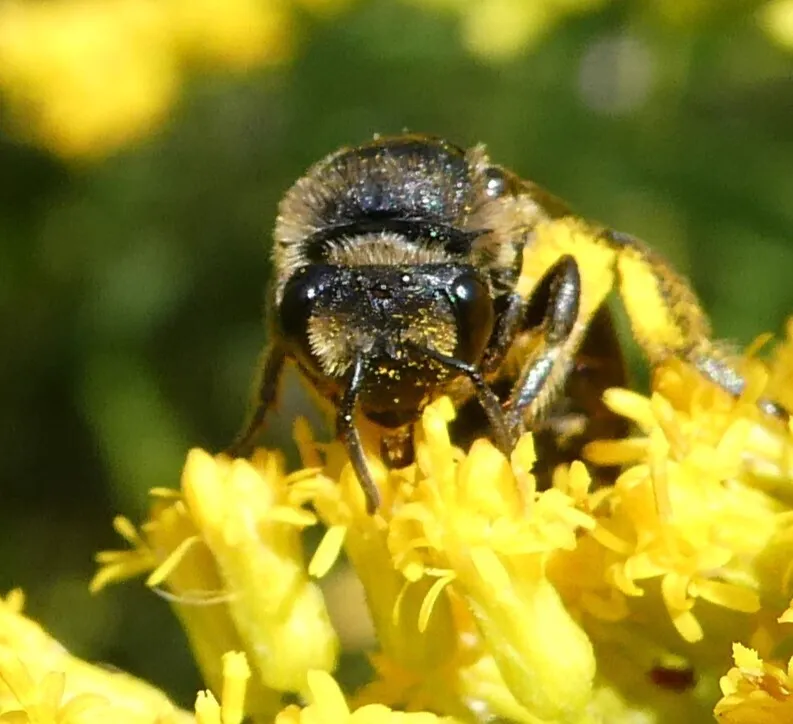
Solitary ground-nesting bees named for the cellophane-like material they use to line their burrows. These docile bees rarely sting unless handled.
Taxonomy
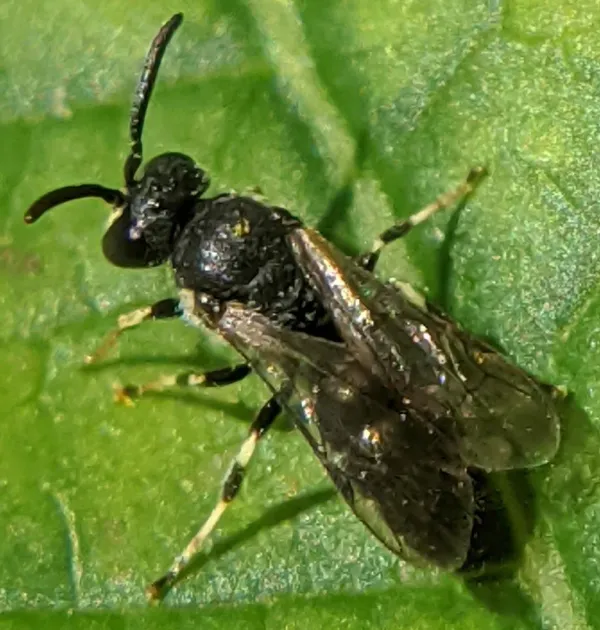
Plasterer Bees Coloration
Common color patterns to help identify plasterer bees
Plasterer Bees
Seasonal Activity
When plasterer bees are most active throughout the year

Where Plasterer Bees Are Found
Hover over states to see their names. Green regions indicate where plasterer bees have been reported.
Plasterer Bees Identification Guide
Physical Characteristics
Plasterer bees are medium-sized solitary bees. They measure 8 to 15 millimeters long, about the same size as honeybees. However, they have features that set them apart.
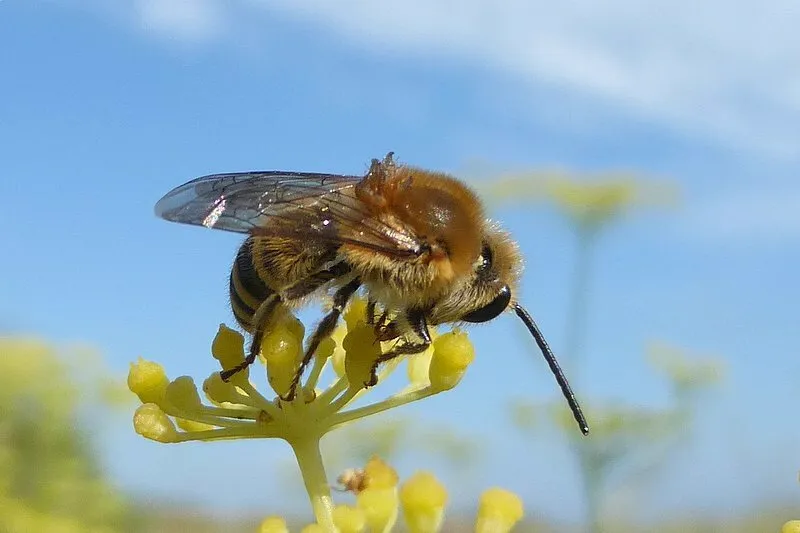
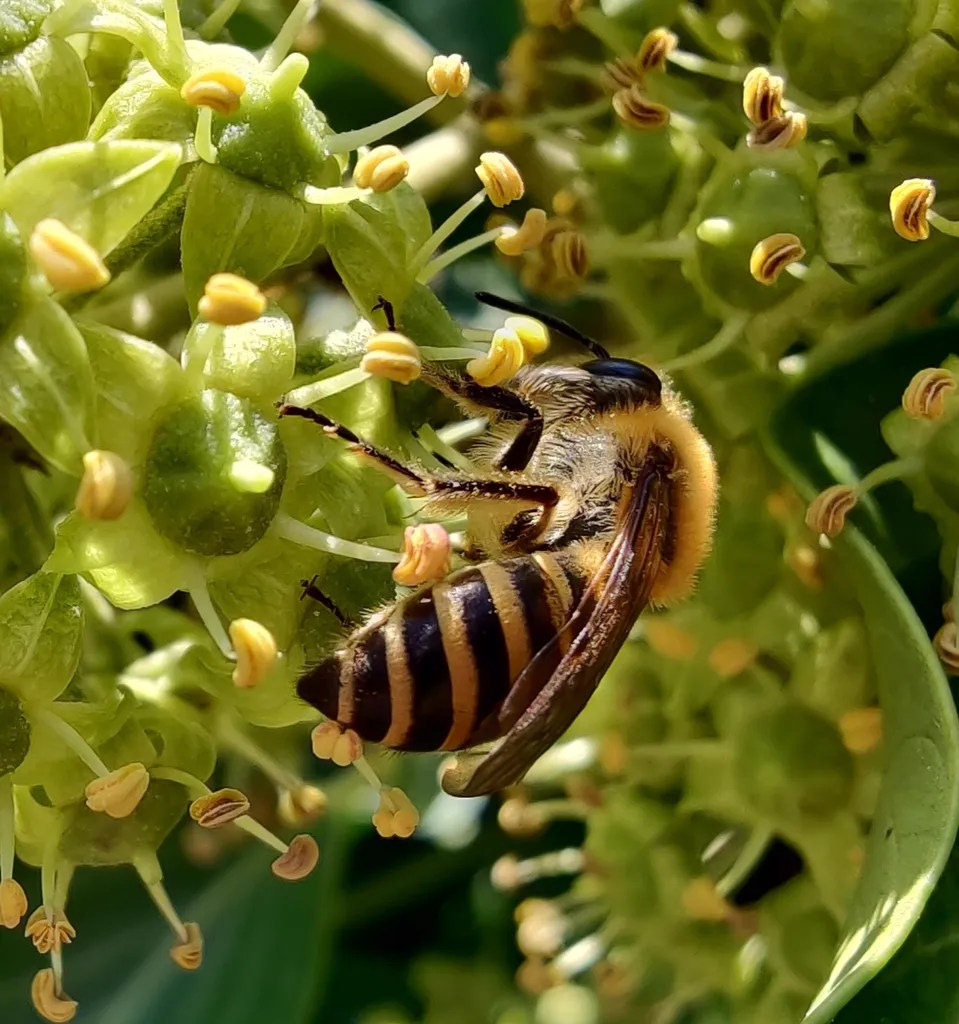
Most plasterer bees have dark bodies. Colors range from black to dark brown with pale hair bands on the abdomen. The head and thorax have fuzzy hair that may be whitish, light gray, or yellowish-brown. Their compound eyes are bare. This is different from honeybees, which have short hairs on their eyes.
A key way to identify plasterer bees is their heart-shaped or triangular face. They also have short tongues that are split at the tip or flat. This limits them to flowers with shallow or open petals.
Common Species in North America
The family Colletidae has over 2,500 species worldwide. About 160 species live in North America. The most common types include:
-
Cellophane Bees (Colletes spp.): The largest group, with about 100 species in North America. These bees appear in early spring. They have pale bands on their abdomens.
-
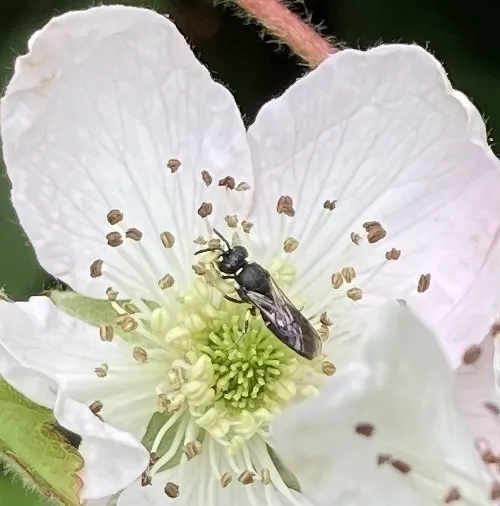
Yellow-faced Bees (Hylaeus spp.): Small, slender bees that are mostly black with yellow or white facial markings. They carry pollen inside their body rather than on body hairs.
-
Polyester Bees: Named for the polyester-like coating they use to line their nests. These bees can nest in moist soils and areas that flood.
Plasterer Bees Behavior and Biology
Plasterer bees are solitary insects. Each female builds and stocks her own nest without help from other bees. There is no queen or worker system like honeybees and bumblebees have.
Nesting Habits A related species, Masked Bees, shares similar characteristics.
Female plasterer bees dig their nests in well-drained, sandy soil with thin grass. They like spots with morning sun. The burrow goes several inches to over six inches deep. It ends in one or more cells where eggs are laid. A related species, Cuckoo Bees, shares similar characteristics.
What makes plasterer bees unique is how they build their nests. Females make a cellophane-like coating from their salivary glands. They apply this to the walls of each cell using their short tongues. The coating dries to form a waterproof lining. This protects eggs and larvae from moisture and fungus. A related species, Long-Horned Bees, shares similar characteristics.
Some species also nest in hollow plant stems, holes in wood, or cracks in masonry. Wall-nesting plasterer bees use existing cracks rather than digging into solid materials. A related species, Digger Bees, shares similar characteristics.
Life Cycle A related species, Small Carpenter Bees, shares similar characteristics.
Plasterer bees have one generation per year. In spring, males emerge first and look for females near nesting areas. Males die within a few weeks after mating.
Females spend their short adult life building nests and filling cells with food. Each cell gets a mix of pollen and nectar before the female lays a single egg. She then seals the cell and moves on to the next one.
Larvae hatch and feed on the stored food through summer. They become pupae in late summer or fall. They spend winter as adults inside their sealed cells. The next spring, the new generation comes out to start the cycle again.
Foraging Behavior
Adult plasterer bees visit many types of flowering plants. They prefer flowers with shallow or open petals that fit their short tongues. They visit plants in the aster, carrot, and legume families. This includes wildflowers, fruit trees, and vegetable crops.
Plasterer bees emerge in early spring. They are among the first bees active each year. They pollinate early-blooming fruit trees and spring wildflowers when other bees are still dormant.
Treatment Approaches for Plasterer Bees
Plasterer bees are solitary and not aggressive. They rarely sting and cause little property damage. However, treatment may be needed in certain situations.
When Treatment is Recommended:
- A household member has a bee sting allergy
- Nests are in high-traffic areas where people walk barefoot
- Large numbers are nesting near pools, playgrounds, or patios
- Wall-nesting species are using cracks in your home’s masonry
Treatment Methods:
For ground-nesting plasterer bees, pest control companies typically apply a residual insecticide to the soil around nest entrances. This is most effective in the evening when bees have returned to their burrows. For wall-nesting species, insecticidal dust can be applied to entry points.
Habitat Changes:
You can discourage plasterer bees from nesting in unwanted areas:
- Watering: Regular watering makes soil less appealing. Plasterer bees prefer dry, well-drained sites.
- Thick grass: Encouraging dense lawn growth removes the bare soil patches they need.
- Mulching: Heavy mulch in garden beds covers bare soil and prevents nesting.
Timing Considerations:
Adult plasterer bees are only active for 4-6 weeks each spring. After females finish their nests, they die off. The nesting area will look empty for the rest of the year. The small entrance holes fill in naturally over time.
Professional Inspection:
If you are not sure whether you have plasterer bees or yellowjackets, get a professional inspection. Yellowjackets nest in single large holes and are very aggressive. They need immediate treatment. Plasterer bees make multiple small holes and are much less of a concern.
References
Other Bees
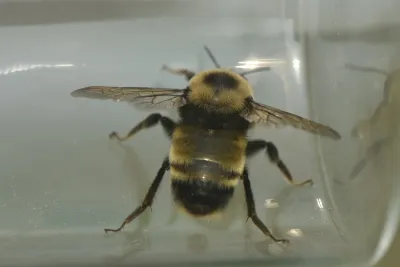
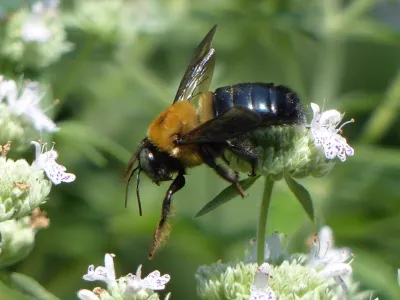
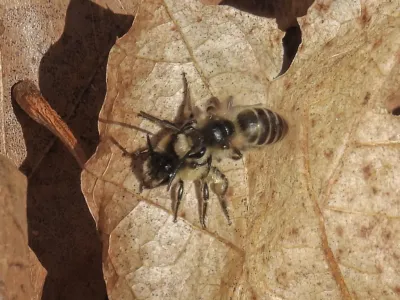
Explore other species in the bees family
Commonly Confused With
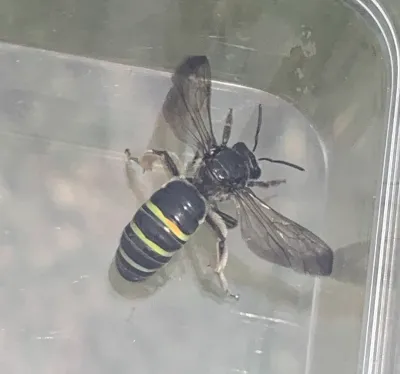
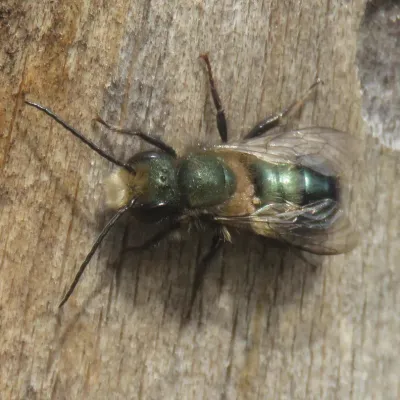
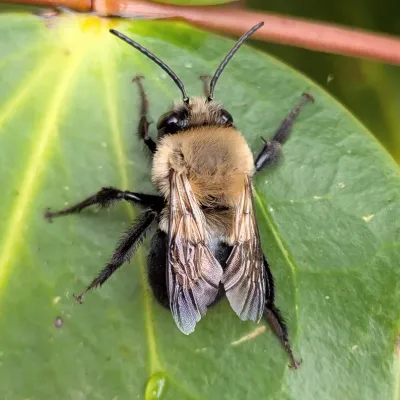
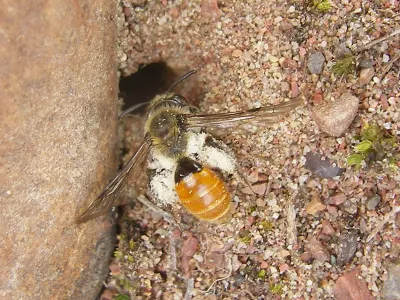
Plasterer Bees are often mistaken for these similar pests
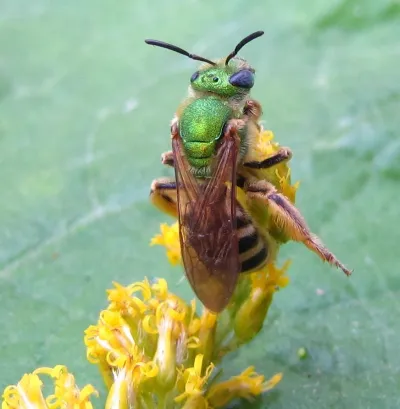
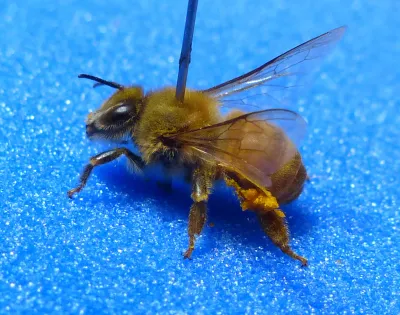
Where Plasterer Bees Are Found
Hover over states to see their names. Green regions indicate where plasterer bees have been reported.
Common Questions about Plasterer Bees
What are plasterer bees?
+
Plasterer bees are solitary ground-nesting bees in the family Colletidae. They get their name from the cellophane-like material they secrete to line their underground burrows. This protective coating helps waterproof their nest cells and protect developing larvae from moisture and fungi.
Are plasterer bees dangerous?
+
No, plasterer bees are extremely docile and rarely sting. Female plasterer bees can sting if directly handled or stepped on, but they are not aggressive and do not defend their nests like social wasps. Male plasterer bees cannot sting at all.
Do plasterer bees damage lawns or property?
+
Plasterer bees cause minimal damage. Their small burrows actually help aerate the soil. Some species may nest in existing cracks in mortar or masonry, but they do not excavate sound materials. They simply use existing imperfections in walls or structures.
How do I identify plasterer bees?
+
Plasterer bees are similar in size to honeybees, typically 8-15mm long. Most species have dark bodies with pale hair bands on the abdomen and fuzzy hair on the head and thorax. They have bare eyes (unlike honeybees which have hairy eyes) and a heart-shaped face.
When are plasterer bees most active?
+
Plasterer bees are most active in spring and early summer, typically from March through June. They emerge when temperatures warm and spring flowers begin blooming. The adults are only active for 4-6 weeks each year.
How can I tell plasterer bees apart from other ground bees?
+
Plasterer bees can be distinguished by their relatively slender build, bare compound eyes, and the distinctive pale bands on their abdomen. They tend to be darker colored than mining bees (Andrena) and less metallic than sweat bees. Their short, bilobed tongue is a key identifying feature for entomologists.
Should I remove plasterer bees from my yard?
+
Treatment may be needed if nests are in high-traffic areas or if someone has a bee sting allergy. Plasterer bees are not aggressive and their nesting is temporary, lasting only 4-6 weeks. A pest control professional can assess your situation and recommend the best approach.
Do plasterer bees return to the same location each year?
+
Yes, new generations of plasterer bees often emerge near where they hatched. Offspring that developed in burrows the previous year will create new nests in the same general area. This is normal behavior and not a sign of an infestation.

With five years of hands-on experience in the pest control industry, George Schulz is a registered technician with the Virginia Pest Management Association and a proud third-generation professional in a family business that's been protecting homes for over 57 years. He manages and trains a team of service pros while also leading internal research efforts—recently spearheading a deep-dive review of thousands of documents on pest control materials to hand-pick the most kid and pet friendly, most effective solutions tailored specifically for homes in the DC metro area.