Little Black Ants Identification Guide
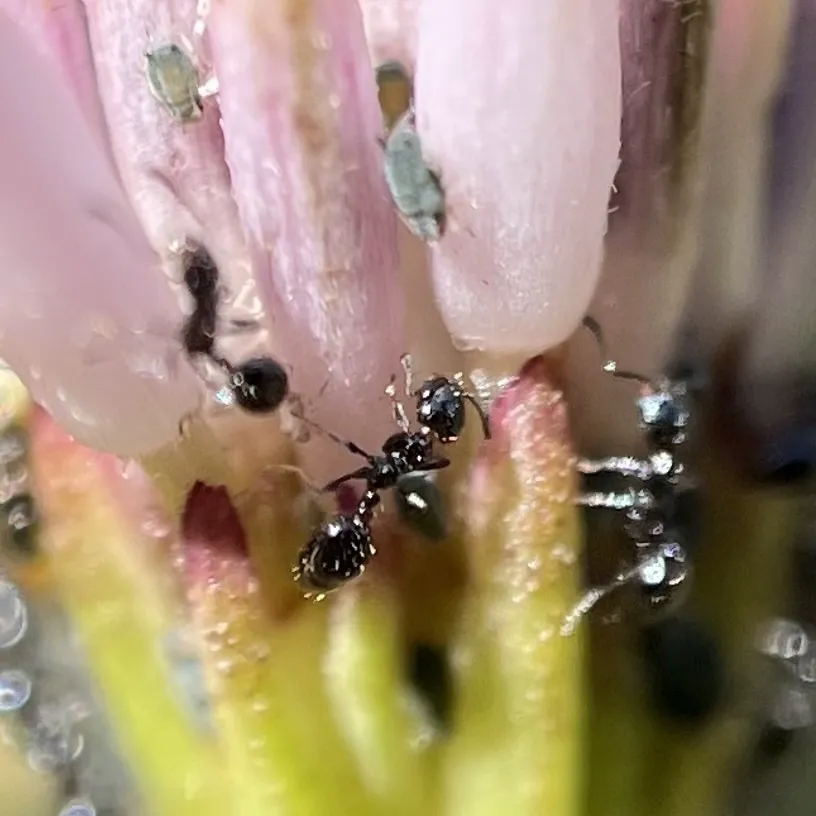
Monomorium minimum
Little black ants are tiny, shiny black ants that commonly invade homes in search of sweet and greasy foods. They form visible foraging trails and can nest both outdoors under stones and indoors in wall voids, making them a persistent nuisance pest across North America.
Taxonomy
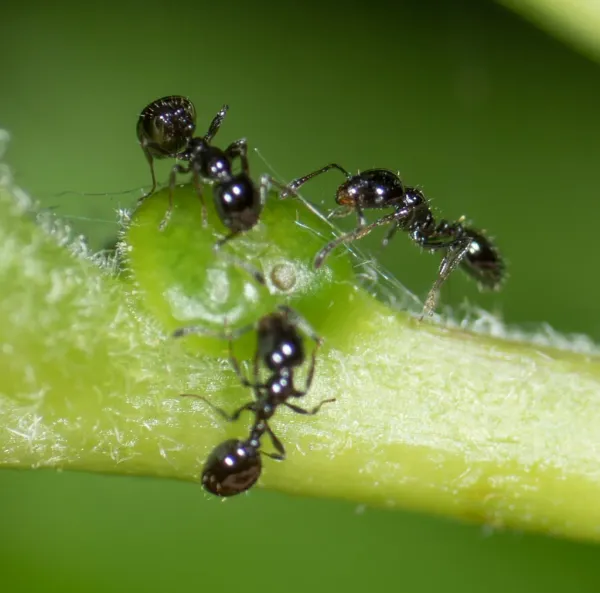
Little Black Ants Coloration
Common color patterns to help identify little black ants
Little Black Ants
Seasonal Activity
When little black ants are most active throughout the year
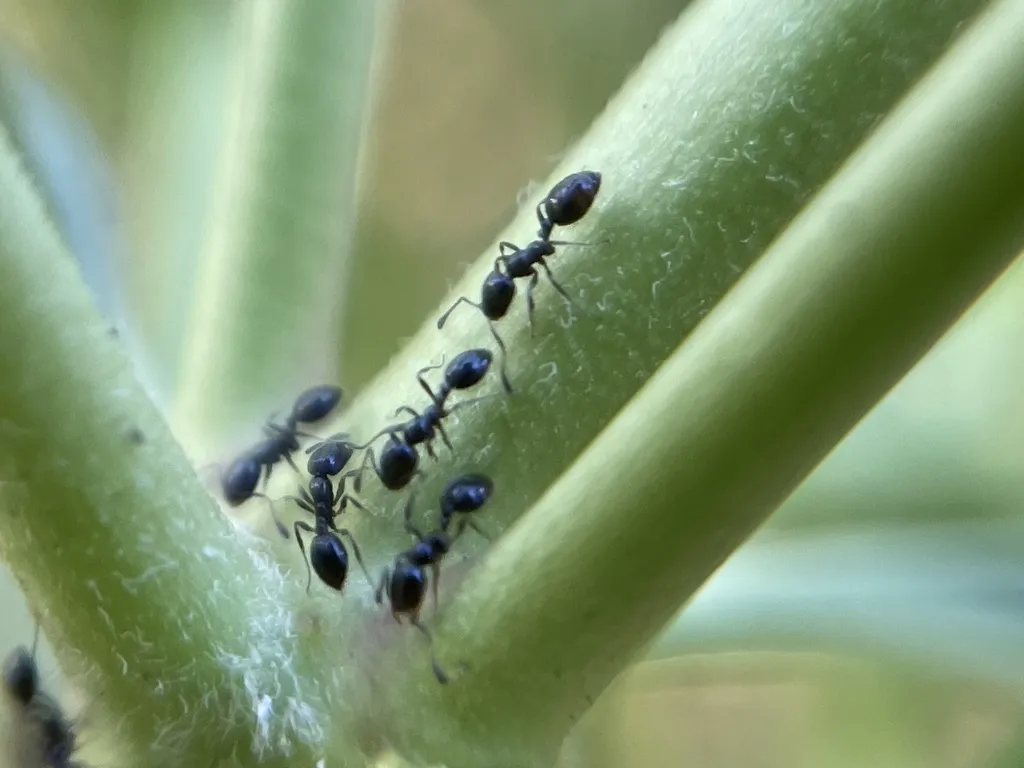
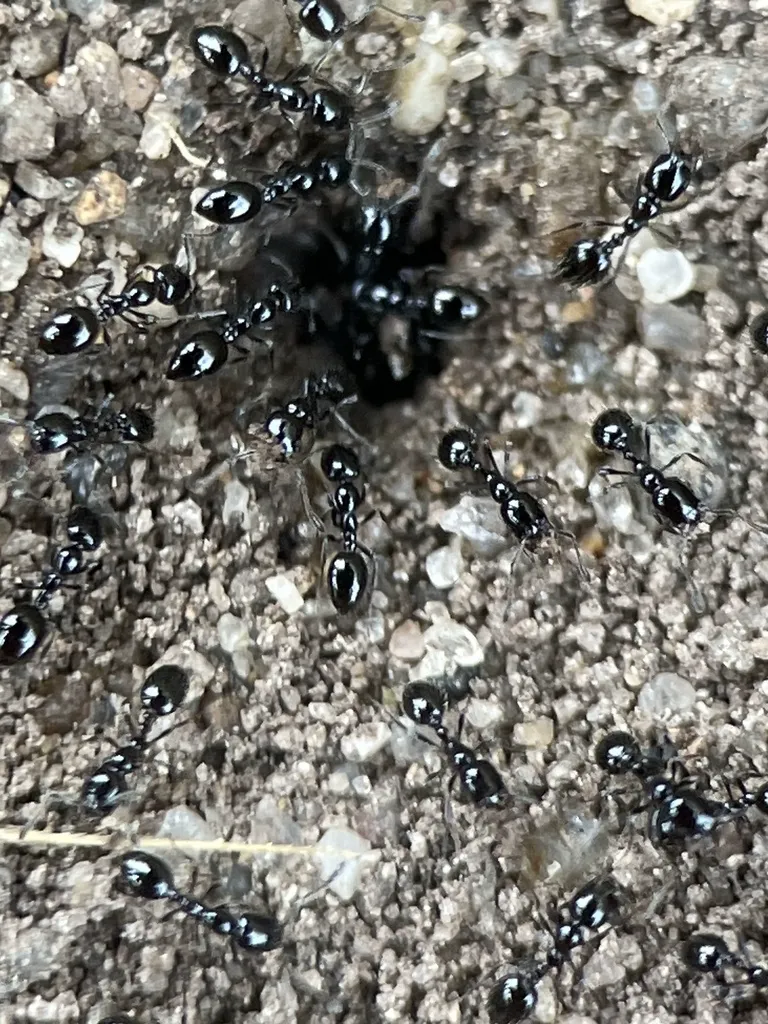
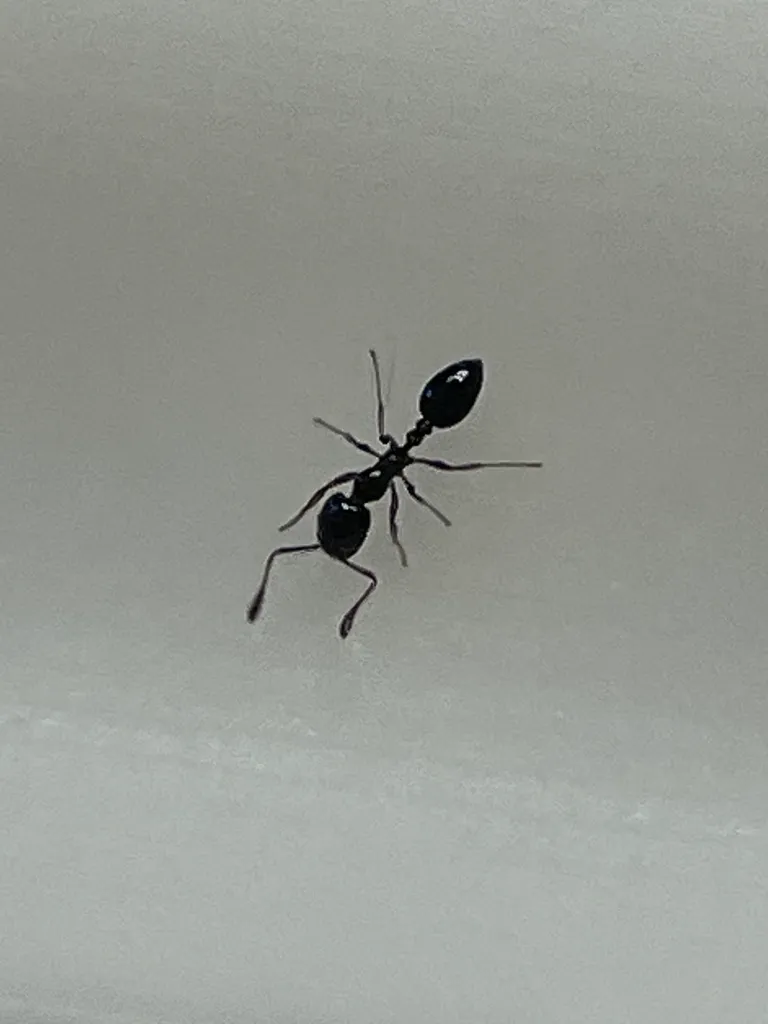

Where Little Black Ants Are Found
Hover over states to see their names. Green regions indicate where little black ants have been reported.
Little Black Ants Identification Guide
Little black ants (Monomorium minimum) are among the most common ant pests found in homes across North America. True to their name, these tiny ants are jet black to dark brown and small enough to squeeze through the tiniest cracks in your foundation. In Northern Virginia, we see them invading kitchens and bathrooms throughout the warmer months, forming visible trails along countertops and baseboards.
Physical Characteristics
Little black ants are remarkably small, typically measuring just 1/16 inch (1.5-2 mm) in length. Their bodies are shiny black to dark brown with a smooth, almost polished appearance. Key identification features include:
- Size: Workers are about 1/16 inch; queens are larger at 1/8 inch
- Color: Shiny jet black to dark brown
- Antennae: 12 segments with a distinctive 3-segmented club at the tip
- Waist: Two-segmented (petiole and postpetiole)
- Thorax: Smoothly rounded without spines
During summer months, you may see winged reproductives (alates). These are larger than workers and have transparent wings. They emerge from established colonies to mate and start new nests, typically from June through August. If you see flying ants in your house, it may indicate a mature colony nearby.
Ants Commonly Mistaken for Little Black Ants
Several ant species look similar and often get misidentified:
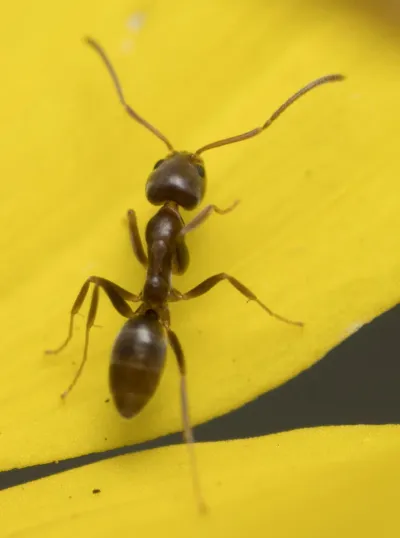
- Odorous House Ants (Sugar Ants) - Similar size and color, but release a rotten coconut smell when crushed. Little black ants lack this distinctive odor.
- Pharaoh Ants - Very small but yellowish-brown to tan, not black. They’re more common in commercial buildings and apartments.
- Pavement Ants - Slightly larger with visible striations on the head and thorax. They also have small spines on the thorax that little black ants lack.
- Rover Ants (Brachymyrmex species) - Similar tiny size and dark coloring, but rover ants have 9-segmented antennae without a club (little black ants have 12 segments with a 3-segmented club). Rover ants also appear slightly lighter brown and have a smoother, less shiny body.
The shiny, uniformly dark appearance and small size are the easiest ways to recognize little black ants. Unlike pavement ants, their bodies appear smooth rather than textured. For a visual comparison, see our ant identification chart.
Little Black Ant Behavior and Biology
Little black ants are social insects that live in colonies containing hundreds to several thousand workers. Colonies are often polygynous, meaning they have multiple queens, which allows them to grow and recover quickly from disruptions.
Diet and Foraging
Little black ants are true omnivores. They’ll eat almost anything, including:
- Sweets like sugar, honey, syrup, and fruit
- Greasy and protein-rich foods
- Other insects (dead or alive)
- Honeydew from aphids (which is why you often see them tending aphid colonies on plants)
- Pet food and crumbs
Foragers follow pheromone trails between the nest and food sources. When you see a line of ants marching across your counter, they’re following an invisible chemical highway laid down by scout ants. These trails can persist for days, which is why ants seem to keep coming back to the same spots.
Nesting Habits
Little black ants are opportunistic nesters that exploit a variety of sites:
Outdoor nests:
- Under stones, bricks, and landscape timbers
- In soil and lawn areas
- Under mulch and leaf litter
- In rotting wood and tree stumps
Indoor nests:
- Wall voids and behind baseboards
- Under carpets and flooring
- In masonry and brick
- Near moisture sources like leaky pipes
- Inside woodwork and cabinetry
Their small size is an advantage. Little black ants can establish colonies in cracks and crevices too small for larger ant species. This makes them particularly difficult to locate and eliminate.
Reproductive Cycle
Colonies produce winged males and queens (alates) in late spring and summer. Mating flights typically occur from June through August in the Mid-Atlantic region. After mating, queens shed their wings and seek out sites for new colonies. A single queen can live for several years and produce thousands of offspring.
Because little black ant colonies often have multiple queens, they can recover quickly even after significant worker losses. This polygynous structure is one reason DIY treatments often fail.
How We Treat for Little Black Ants
Our approach focuses on eliminating the entire colony, not just the foragers you see. Little black ants respond well to the same integrated treatment strategy we use for other household ant species.
Interior Inspection and Treatment
A licensed technician begins by inspecting the interior of your home, focusing on areas where ant activity has been observed. This includes kitchens, bathrooms, pantries, and basements. We look for foraging trails, potential entry points, and signs of nesting.
We apply a non-repellent insecticide to cracks, crevices, and voids where ants travel. Non-repellent products are essential because ants can’t detect them. Workers walk through treated areas and carry the material back to the nest, where it spreads through contact and grooming. This transfer effect eliminates the colony at its source, including hidden queens.
Exterior Perimeter Treatment
Next, we inspect and treat the exterior of your home, focusing on the foundation and perimeter. We look for outdoor nests under stones, in mulch, and near the foundation. A perimeter treatment creates a protective barrier that stops new ants from entering while the interior treatment works.
We also identify conducive conditions like wood rot, moisture buildup, or vegetation touching the house. Addressing these issues helps prevent future infestations.
Ongoing Protection
That’s why we provide tri-annual maintenance treatments (three times per year). Each visit reinforces the barrier around your home and catches any new activity early.
If you see little black ants between scheduled visits, just call us. We provide free unlimited callbacks to retreat the problem at no additional cost. That’s our Better Promise.
Why Professional Treatment Works Better
DIY contact sprays have two major problems. First, they only kill the ants they touch directly, leaving the colony intact. Second, some ant species respond to stress by “budding,” where the colony splits into multiple satellite colonies, making the problem worse.
Our non-repellent products work differently. Ants spread the material among their population naturally through normal contact and grooming behaviors. The active ingredient reaches the queens and brood, eliminating the entire colony from within. Our research team has removed 9 harsh chemicals common in the pest control industry, choosing products like Alpine and Essentria that we’d use in our own homes.
Other Ants
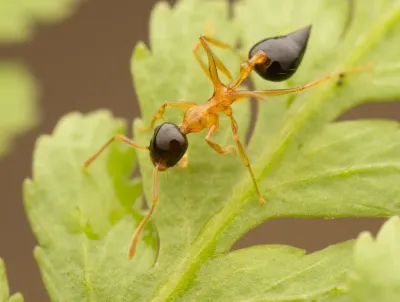
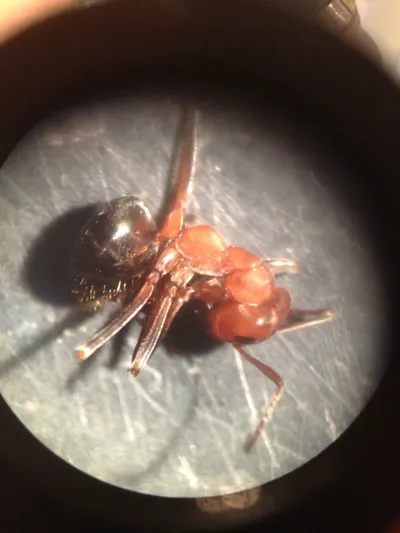
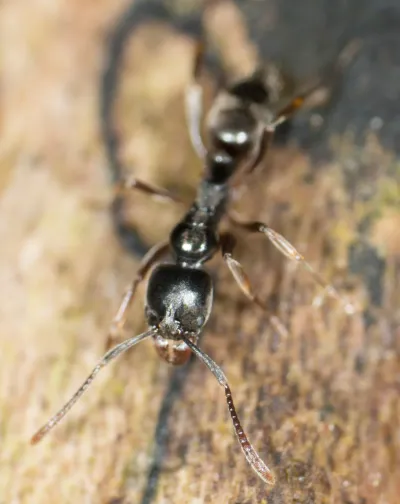
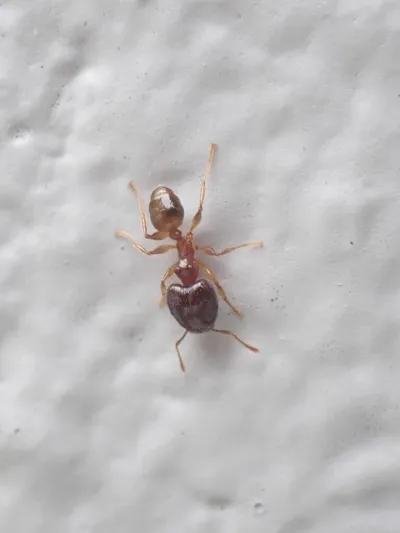
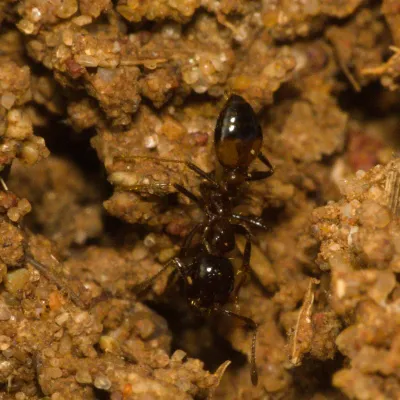
Explore other species in the ants family
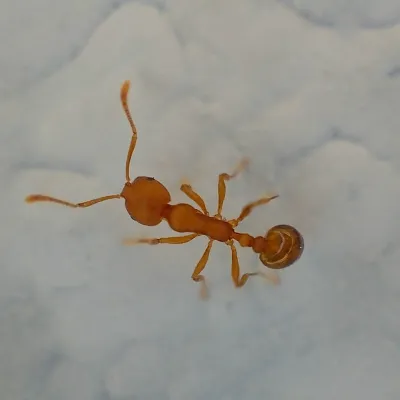
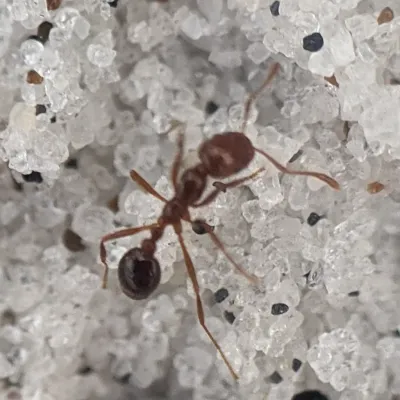
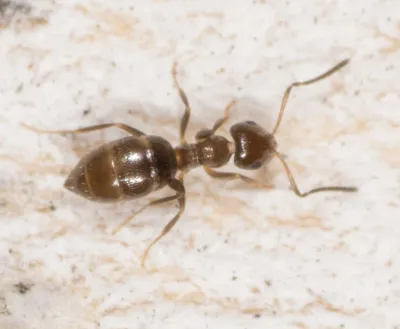
Commonly Confused With
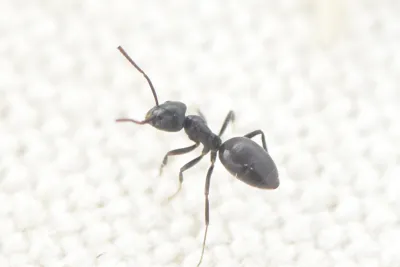
Little Black Ants are often mistaken for these similar pests
Where Little Black Ants Are Found
Hover over states to see their names. Green regions indicate where little black ants have been reported.
Common Questions about Little Black Ants
How do I identify little black ants?
+
Little black ants are very small (about 1/16 inch) with shiny, jet-black to dark brown bodies. They have 12-segmented antennae with a 3-segmented club, two nodes between the thorax and abdomen, and a smooth, rounded thorax without spines. Their small size and shiny appearance help distinguish them from similar species.
Are little black ants dangerous?
+
Little black ants are primarily nuisance pests. They don't sting in any significant way and don't cause structural damage like carpenter ants. However, they can contaminate food as they forage through kitchens and pantries, and large infestations can be frustrating to deal with.
Where do little black ants nest?
+
Outdoors, they nest under rocks, logs, mulch, and in soil or rotting wood. Indoors, they colonize wall voids, behind baseboards, under carpets, and in any small crevice near food or moisture. Their tiny size allows them to exploit spaces other ants can't access.
Why are little black ants in my kitchen?
+
Little black ants are omnivorous and strongly attracted to both sweet and greasy foods. Your kitchen offers everything they need: sugar, crumbs, pet food, and moisture near sinks. Once a scout finds food, it leaves a pheromone trail that brings the entire colony foraging into your home.
When are little black ants most active?
+
In the Mid-Atlantic region, little black ants are most active from May through September during [ant season](/ant-season/), with peak activity in summer. They produce winged reproductives (swarmers) from June through August. Indoor infestations can remain active year-round if the nest is inside heated spaces.
How do I get rid of little black ants?
+
DIY sprays often fail because they only kill foragers and can scatter colonies. Professional treatment uses non-repellent insecticides that ants carry back to the nest, eliminating the entire colony. Sanitation and sealing entry points are also essential for long-term control.
Will little black ants come back after treatment?
+
With our tri-annual maintenance treatments, we maintain a protective barrier around your home. Regular reapplication prevents reinfestation. If you see ants between visits, we'll come back at no extra charge as part of our Better Promise.
How are little black ants different from sugar ants?
+
Sugar ants (odorous house ants) produce a rotten coconut smell when crushed; little black ants don't have this odor. Little black ants are also shinier and slightly smaller. Both species respond well to the same treatment approach, so accurate identification isn't critical for control.

With five years of hands-on experience in the pest control industry, George Schulz is a registered technician with the Virginia Pest Management Association and a proud third-generation professional in a family business that's been protecting homes for over 57 years. He manages and trains a team of service pros while also leading internal research efforts—recently spearheading a deep-dive review of thousands of documents on pest control materials to hand-pick the most kid and pet friendly, most effective solutions tailored specifically for homes in the DC metro area.