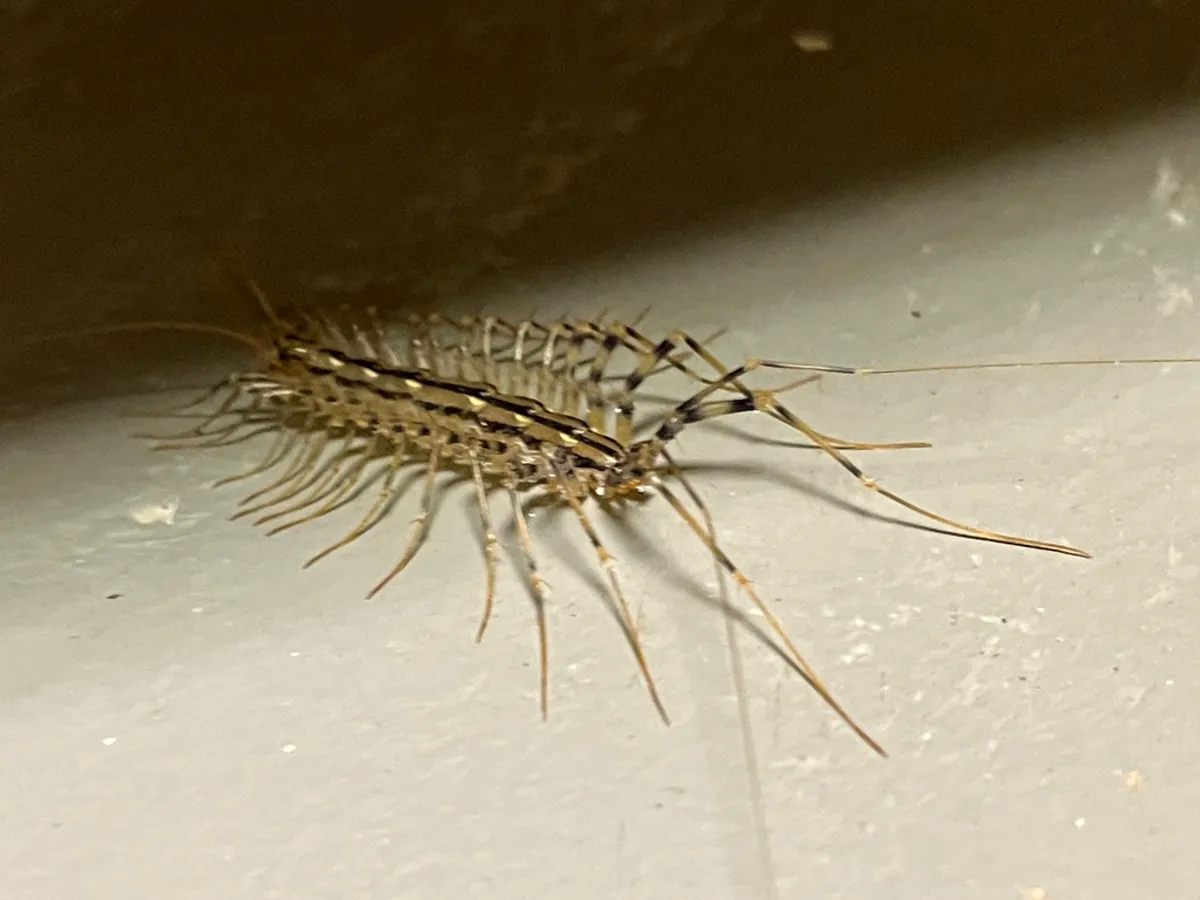

Few household pests cause as much alarm as the house centipede. Those long, spindly legs and lightning-fast movement across your bathroom floor or basement wall can make anyone jump. But despite their creepy appearance, house centipedes are actually one of the more misunderstood creatures that invade our homes.
I’ve been working in pest control since 2015 as a licensed technician, and house centipede calls are some of the most common we receive in the DC metro area. The good news is that getting rid of house centipedes is very achievable once you understand what attracts them and take the right steps.
What Do House Centipedes Look Like?
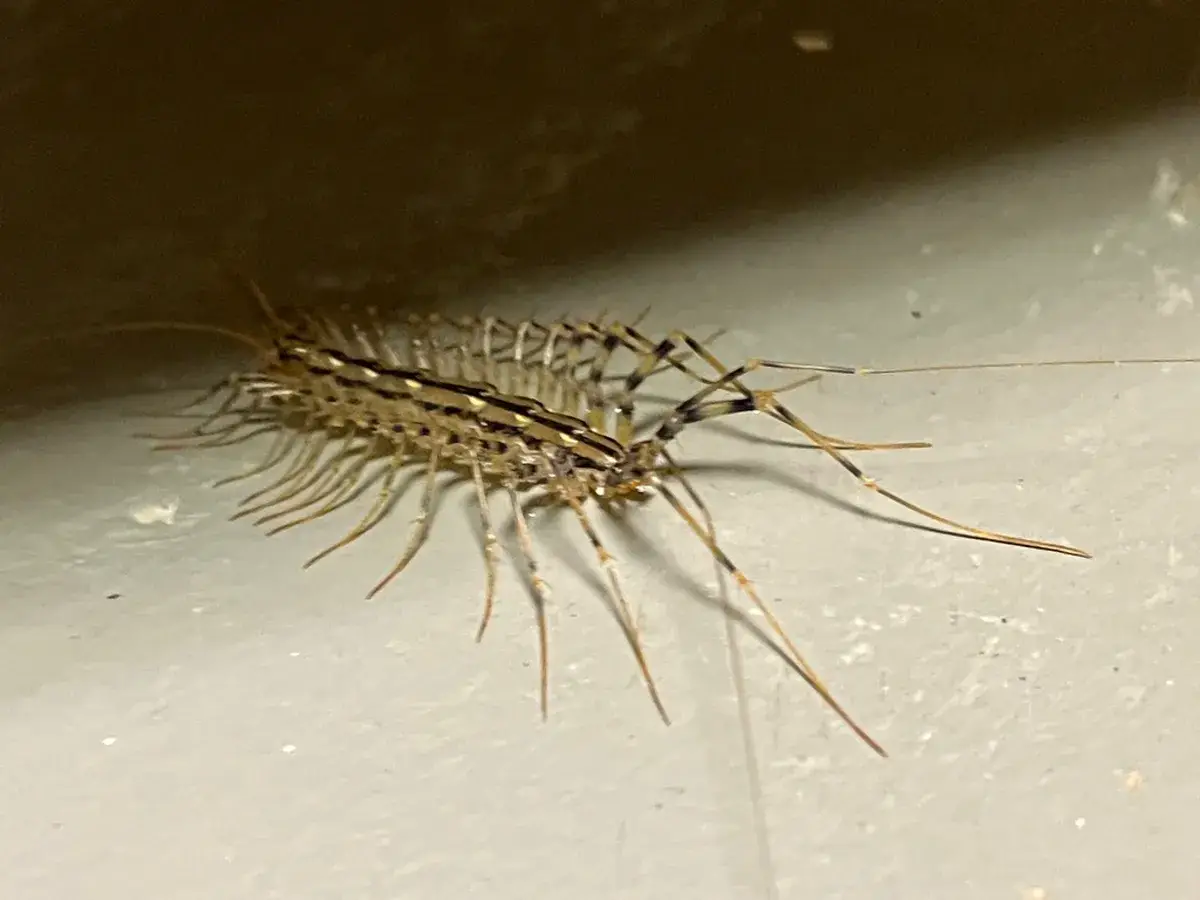
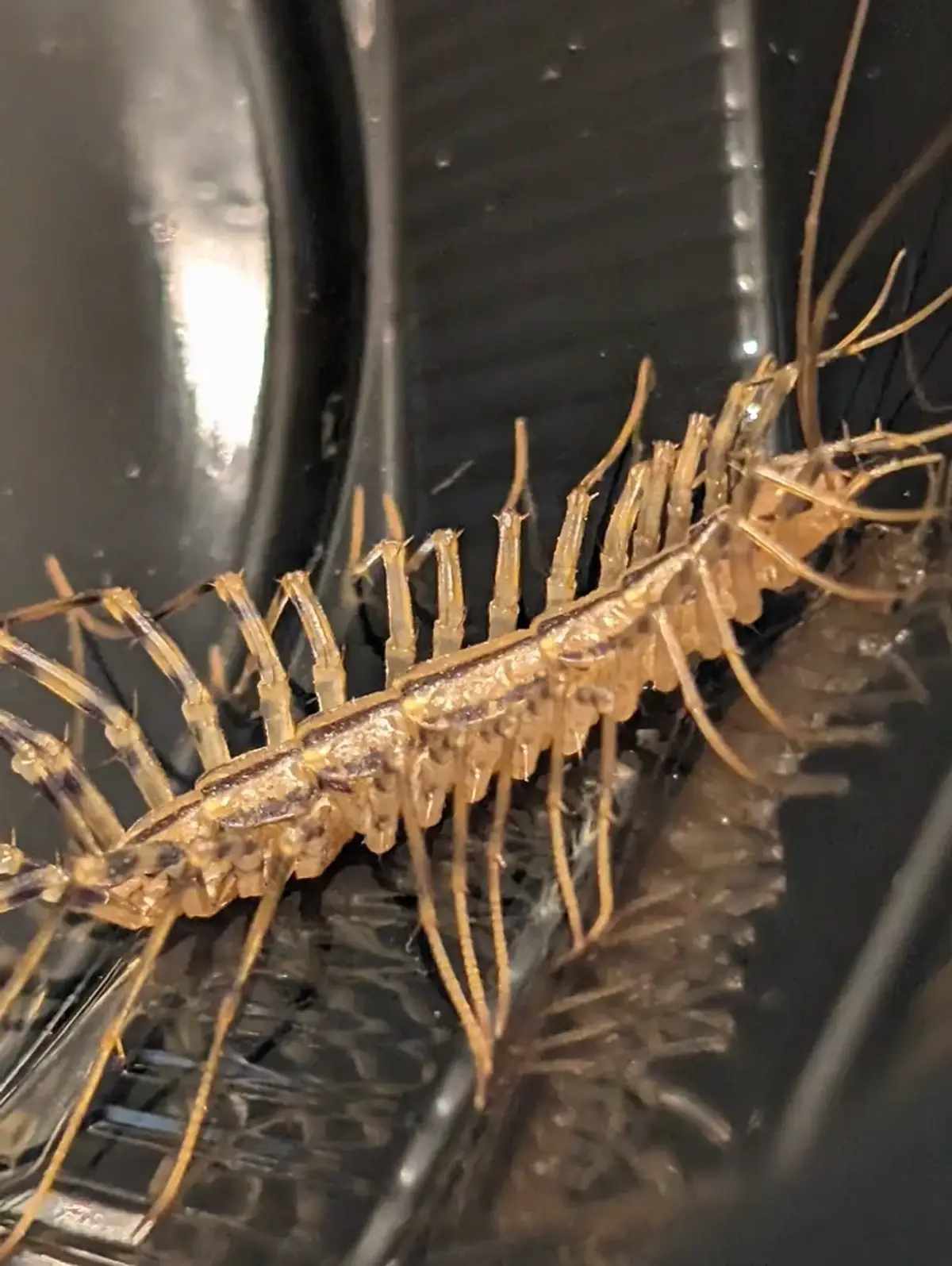
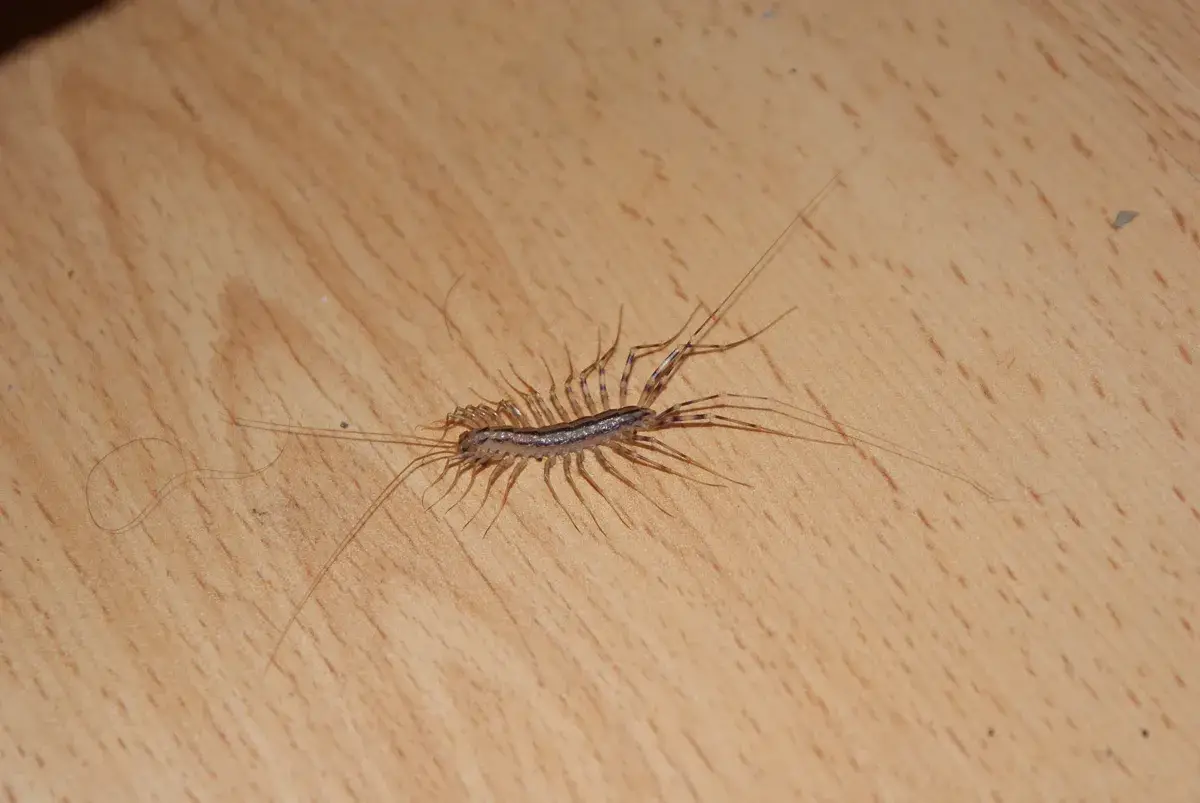
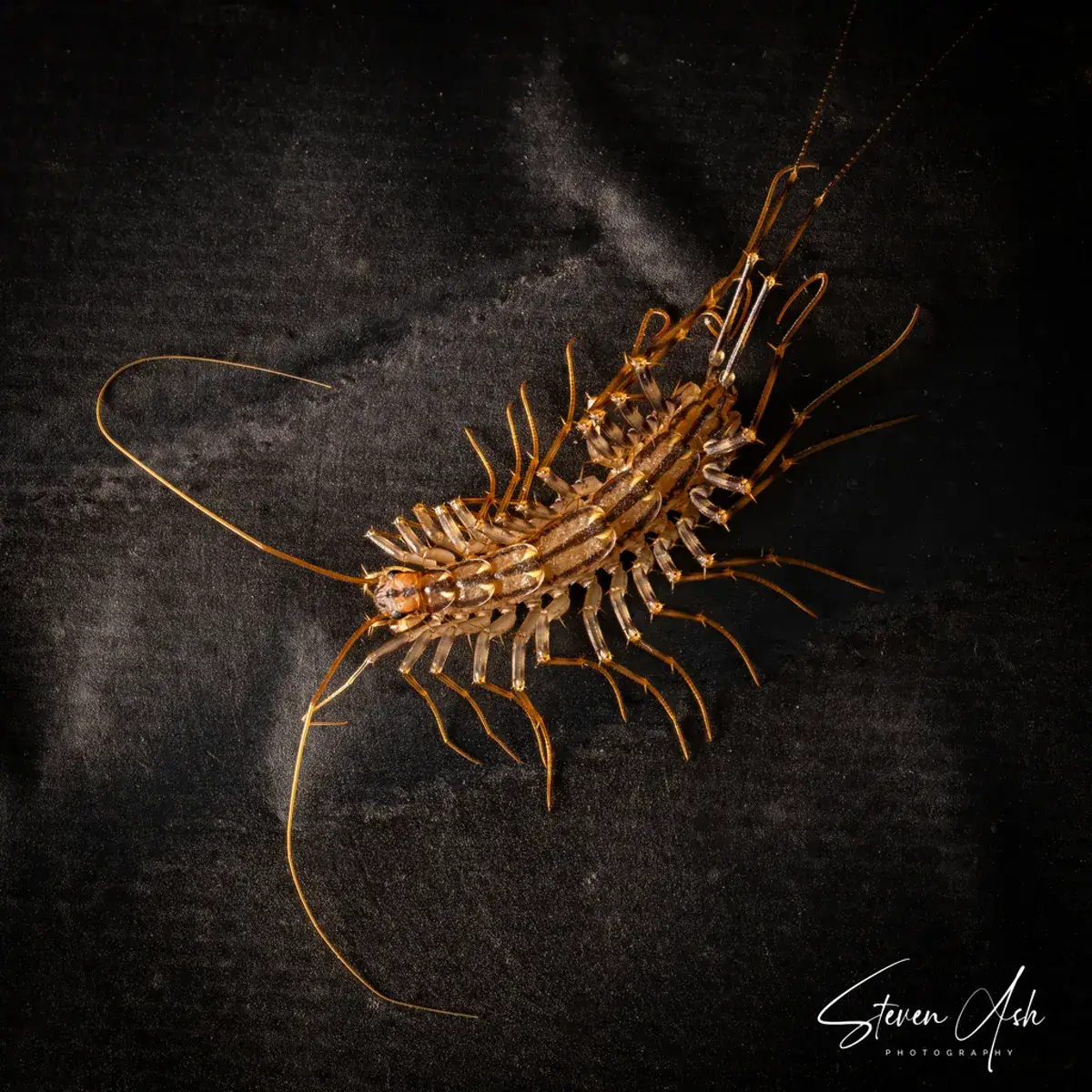
House centipedes (Scutigera coleoptrata) are easy to identify once you know what to look for. Their body is yellowish-gray with three dark stripes running down the back. Adult house centipedes have 15 pairs of legs, with the back pair being nearly twice the length of their body.
According to Penn State Extension, an adult house centipede’s body measures about one to one and a half inches long. However, including their legs and antennae, they can appear three to four inches in overall length. This makes them look much larger and more intimidating than they actually are.
Unlike most other centipedes, house centipedes have well-developed compound eyes that help them hunt prey. Their long back legs can actually look like antennae, making it difficult to tell which end is which when the centipede is at rest.
Why House Centipedes Enter Your Home
House centipedes don’t invade your home by accident. They’re seeking specific conditions that your home provides better than the outdoors.
Reason 1: Moisture and Humidity
Moisture is the primary factor that draws house centipedes indoors. Their breathing system requires high humidity to function properly. According to Clemson University Extension, centipedes thrive in humid environments and are frequently found in areas with high relative humidity. If your basement maintains 60% humidity or higher, it becomes an ideal centipede habitat.
Basements, bathrooms, laundry rooms, and crawl spaces naturally maintain higher moisture levels. Leaky pipes, condensation on cold water lines, and poor ventilation all contribute to the humid conditions centipedes prefer.
Reason 2: Food Sources
House centipedes are predators. They feed on spiders, cockroaches, silverfish, ants, carpet beetle larvae, pillbugs, and other small arthropods. If you’re seeing house centipedes regularly, it often means you have another pest population providing them with meals.
This is actually why some homeowners choose to tolerate house centipedes. As the University of Georgia CAES notes, they can be beneficial because they kill and eat unwanted pest insects. But most people understandably prefer not to have them skittering across their floors.
Reason 3: Shelter and Darkness
House centipedes are nocturnal hunters that spend daylight hours hiding in dark, protected spaces. Cluttered basements, stacked boxes, and undisturbed storage areas provide perfect daytime shelter. They also hide behind baseboards, in floor drains, and within wall voids.
How to Get Rid of House Centipedes
Eliminating house centipedes requires addressing the conditions that attract them. Simply killing individual centipedes won’t solve the problem if your home continues to offer what they need.
Step 1: Reduce Humidity Levels
This is the most important step. Install a dehumidifier in your basement or crawl space and maintain indoor humidity between 30-50%. At these levels, house centipedes struggle to survive and will seek moisture elsewhere.
Additionally, improve ventilation in problem areas. Run bathroom exhaust fans for 30 minutes after showers. Consider adding ventilation to crawl spaces. Fix any plumbing leaks immediately, including small drips you might otherwise ignore.
According to the University of Minnesota Extension millipedes, centipede control consists primarily of drying up and cleaning the areas that serve as habitat. Structural repairs may be necessary to ensure dryness, and placing a dehumidifier in damp areas is recommended.
Step 2: Seal Entry Points
House centipedes enter through gaps you might not notice. Focus on these common entry points:
- Foundation cracks - Seal with high-quality exterior caulk
- Gaps around pipes - The junction where plumbing penetrates walls is often overlooked
- Basement windows - Check for gaps in frames and weatherstripping
- Door thresholds - Ensure a tight seal, especially on exterior doors
- Utility penetrations - Cable, gas, and electrical entry points
For cracks smaller than 6mm, use silicone caulk. For larger gaps, use low-expansion foam first, then caulk over it for a clean finish.
Step 3: Eliminate Their Food Source
Remember that house centipedes eat other pests. Addressing your ant problems, spider populations, or silverfish infestations will reduce the food supply that sustains centipedes.
Using sticky traps in corners and along baseboards serves two purposes. They’ll capture centipedes directly, and they’ll help you identify what other pests are present that may be attracting them.
Step 4: Reduce Outdoor Habitat
Creating a less hospitable environment around your home’s exterior prevents centipedes from getting close enough to find entry points.
- Remove leaf litter and debris from around the foundation
- Maintain a bare soil border of at least 6-12 inches against the foundation
- Replace wood mulch with gravel or stone near the house
- Grade soil so it slopes away from your foundation for at least 10 feet
- Keep gutters clean and extend downspouts away from the house
One homeowner I spoke with had a problem with millipedes in her basement. After an inspection, we deduced that the cause was the high moisture content of the soil around her home. This same principle applies to house centipedes - addressing exterior moisture issues is just as important as interior humidity control.
Step 5: Apply Targeted Treatments
For persistent problems, applying residual insecticides can help. The Iowa State University Extension recommends treating centipedes behind baseboards and in cracks and crevices. Common active ingredients include:
- Bifenthrin
- Cyfluthrin
- Deltamethrin
- Permethrin
Apply treatments to typical hiding places: crawl spaces, dark basement corners, baseboard cracks, openings in concrete slabs, under shelves, and around stored boxes. A perimeter treatment around the foundation in late summer or early fall helps prevent entry.
Are House Centipedes Dangerous?
Despite their alarming appearance, house centipedes pose minimal risk to humans. They do possess venom that they use to subdue prey, but according to poison control experts, their bite is generally harmless to people.
House centipede bites are rare because these creatures are not aggressive. When disturbed, they prefer to flee at remarkable speeds - up to 0.4 meters per second. If a bite does occur, symptoms typically include:
- Mild pain similar to a bee sting
- Slight redness and swelling
- Symptoms that resolve within 48 hours
More severe reactions are very rare but can occur in sensitive individuals. If you experience fever, signs of infection, or allergic reaction symptoms like difficulty breathing, seek medical attention.
Professional House Centipede Control
Sometimes DIY methods aren’t enough. If you’ve addressed moisture issues, sealed entry points, and still see regular centipede activity, professional treatment may be necessary.
Our registered technicians at Better Termite & Pest Control use non-repellent products that centipedes walk through unknowingly. This approach is more effective than repellent sprays that simply redirect centipedes to other areas.
Professional treatment typically includes:
- Thorough inspection to identify entry points and moisture issues
- Crack and crevice applications in centipede hiding spots
- Perimeter treatment around your home’s foundation
- Recommendations for moisture control and exclusion work
With over 57 years serving the DC metro area and more than 1,000 five-star reviews, we’ve helped countless homeowners eliminate centipede problems. Our team includes licensed technicians with a combined 300 years of experience dealing with household pests throughout Northern Virginia, Maryland, and DC.
Preventing House Centipedes Long-Term
Once you’ve eliminated your current centipede problem, maintaining a centipede-free home requires ongoing attention to the conditions that attract them.
Monthly Maintenance Tasks
- Check humidity levels in basement and crawl space
- Inspect for new plumbing leaks
- Clear any clutter buildup in storage areas
- Check and replace sticky traps
Seasonal Maintenance Tasks
- Inspect and reseal foundation cracks in spring and fall
- Clean gutters and check drainage
- Trim vegetation away from the foundation
- Apply perimeter treatments before peak seasons
House centipedes are most active in spring and fall when they’re seeking shelter from changing outdoor conditions. Planning preventive treatments during these periods provides the best protection.
Take Action Against House Centipedes
Getting rid of house centipedes comes down to removing what attracts them: moisture, food, and shelter. By reducing humidity, sealing entry points, addressing other pest issues, and applying targeted treatments when needed, you can eliminate these creepy crawlers from your home.
If you’re dealing with persistent house centipede activity in your Alexandria, Reston, Potomac, or greater DC metro area home, our team is ready to help. Call us at 703-683-2000 or email info@bettertermite.com to schedule an inspection and get a customized treatment plan for your situation.